

Published August 28, 2026 08:57AM
For many enthusiasts of winter sports, there arrives a pivotal moment in their skiing journey when the simple act of descending a mountain ceases to be the sole objective. This stage typically follows a period of comfortable proficiency on groomed trails, where linking turns becomes second nature, and initial forays into steeper terrain, navigating icy patches, or venturing beyond established comfort zones with ski companions have begun. The subsequent, often more challenging, phase involves cultivating genuine confidence and mastery on the slopes. Skiing proficiently is intrinsically more enjoyable, and ultimately, enhanced enjoyment is a primary driver for continued participation in the sport.
The encouraging news for skiers aspiring to advance is that this elevation in skill does not invariably necessitate increased speed, heightened risk-taking, or the acquisition of complex, entirely new maneuvers. Instead, the pathway to mastery frequently involves the identification and elimination of ingrained habits that inadvertently complicate the skiing process. As the winter season approaches, numerous intermediate skiers express a readiness to transcend this widely recognized "intermediate plateau." Expert analysis and decades of instructional experience suggest that this progression can be effectively initiated through a series of nuanced, yet impactful, technical and mental adjustments.
The Intermediate Plateau: A Common Phenomenon in Skier Development
The concept of an "intermediate plateau" is a well-documented phase in skill acquisition across various physical disciplines, and skiing is no exception. Initial learning curves are often steep, with beginners rapidly grasping fundamental movements and experiencing significant progress. However, as basic competence is achieved, the rate of improvement can slow dramatically, leaving skiers feeling stagnant despite regular practice. Industry data from organizations like the National Ski Areas Association (NSAA) indicates that a significant percentage of recreational skiers identify themselves as "intermediate," suggesting a broad demographic eager for advanced techniques but potentially lacking the precise guidance to achieve them. This plateau is not merely a technical hurdle but often includes psychological components, such as fear of speed, apprehension on challenging terrain, or a reluctance to deviate from familiar patterns.
Historically, ski instruction has evolved considerably to address this. Early techniques, particularly before the advent of modern shaped skis in the late 20th century, often emphasized more aggressive body movements to maneuver longer, straighter skis. The introduction of shaped skis, while democratizing the sport by making initial turn initiation easier, inadvertently allowed some fundamental technical flaws to persist, as skiers could "muscle" turns rather than executing them with precision. This technological shift, while beneficial for accessibility, has sometimes masked the need for refined technique, making the transition to advanced skiing less intuitive for those who developed habits suited to the forgiving nature of modern equipment.
Seven Strategic Adjustments for Enhanced Skiing Confidence
Drawing upon collective wisdom from certified ski instructors, sports scientists, and veteran professional skiers, a consensus emerges on specific minor adjustments that yield substantial improvements. These seven principles are not revolutionary but represent a refinement of foundational techniques, designed to foster greater connection to the snow, improved balance, and enhanced adaptability.
1. Prioritizing Feet-First Turn Initiation
One of the most prevalent errors observed among intermediate skiers is the tendency to initiate turns by rotating the entire upper body. While modern shaped skis can indeed facilitate a turn even with this compensatory movement – by tilting shoulders and leaning the torso – this approach diminishes the skier’s direct connection to the skis and significantly reduces the ability to react fluidly to changes in snow conditions or terrain.
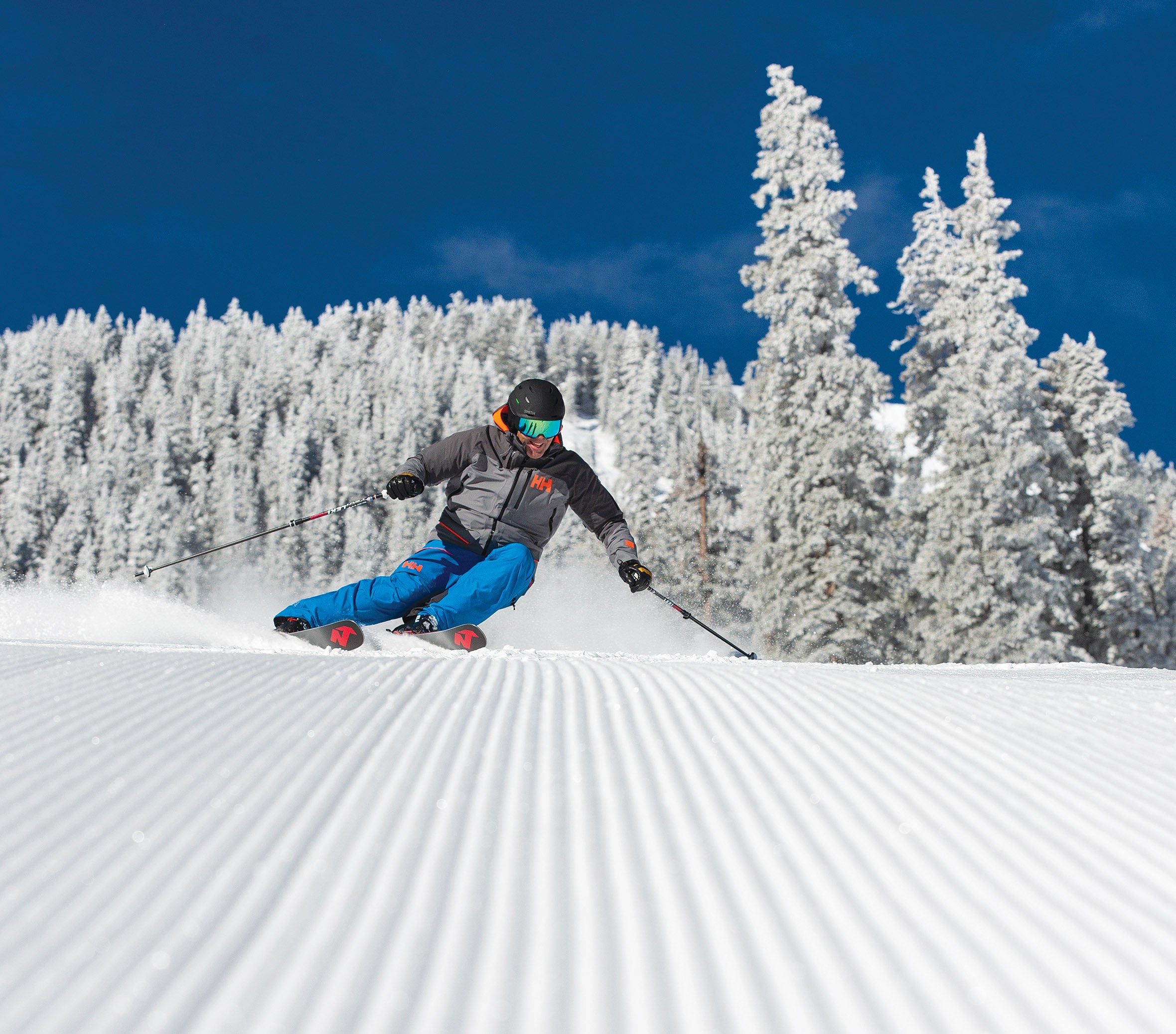
Instead, expert instructors advocate for a "ground-up" approach. As a new turn commences, the emphasis shifts to gently rolling the feet and ankles onto their edges. This subtle movement should generate pressure along the big-toe side of the outside foot and the little-toe side of the inside foot. This foot-driven action then cascades upwards: the knees respond naturally, the hips follow the line of the turn, and the upper body remains relatively relaxed and balanced. "The mantra we teach is ‘feet first, body follows’," states Sarah Jenkins, a Level 3 PSIA-AASI certified instructor with over two decades of experience. "It’s about feeling the snow through your boots and allowing that sensation to guide your movements, rather than forcing the turn from your core. This provides a critical feedback loop, allowing for micro-adjustments that are impossible when you’re just throwing your weight around." This technique, by fostering a more tactile connection with the snow, provides increased processing time and enhances the skier’s capacity to respond to unforeseen variables.
2. Engaging the Front of the Skis on Firm Terrain
Challenging conditions, particularly icy patches or firm snow, are often unforgiving indicators of technical deficiencies. Many intermediate skiers exacerbate these situations by leaning backward or attempting to force the entire length of the ski onto its edge simultaneously. This can lead to skidding and a dangerous loss of control.
A more effective strategy involves proactively engaging the front of the skis. This begins by adopting a slightly open stance, allowing the legs ample room for independent movement. Crucially, maintaining consistent pressure against the front of the boot cuffs through ankle flexion is paramount. The turn should then be initiated by gently tipping both ski tips onto their new edges. This early engagement allows the ski’s shovel to "bite" into the snow, creating a carving action rather than a less controlled skid. While natural pressure will build on the outside ski as the turn progresses, particularly through its latter half, delaying edge engagement until deep into the turn compromises grip and stability. "On hardpack, early edge engagement through the tips is non-negotiable for control," explains Michael Rogan, a veteran ski tester and former national team coach. "It’s about anticipating the grip you need and applying it precisely, rather than reacting once you’re already losing traction." Practicing this on firm groomers, consciously feeling the new edges engage near the ski tips before the rest of the ski follows, is a fundamental drill for improved hardpack performance.
3. Strategic Turn Completion for Effective Speed Management
For skiers who find speed an ongoing adversary, the root cause may not be an inability to turn, but rather an premature termination of the turn. A foundational principle of skiing physics dictates that turn shape is the primary determinant of speed. Pointing skis more directly downhill will naturally accelerate a skier, whereas shaping a turn further across the hill—and even slightly uphill—will effectively reduce velocity.
Many intermediate skiers execute what they perceive as complete turns but disengage from the turn shortly after crossing the fall line. While this approach might suffice on gentle terrain, on steeper pitches, these truncated turns can rapidly lead to excessive speed and a feeling of being out of control. The solution is not necessarily to execute sharper, more aggressive turns or to abruptly brake, but rather to allow the skis to continue traveling across the hill for a longer duration. "Think of it this way: the steeper the slope, the more of the hill you might need to utilize to control your speed effectively," advises Dr. Elena Petrova, a biomechanics expert specializing in snow sports. "Learning to dynamically adjust your turn shape is one of the most significant leaps toward confident skiing across diverse terrain. Counterintuitively, longer turns aren’t always faster, and shorter turns aren’t always slower; it critically depends on where and how they are concluded."
4. Cultivating Versatility: Avoiding the "One-Turn Skier" Syndrome
Every skier tends to develop a favored turn style—perhaps expansive, high-speed arcs on freshly groomed blue runs, or rapid, tight turns that mimic mogul skiing. While having a preferred style is natural, relying exclusively on a single turn shape can be a significant limitation when the mountain demands adaptability.
Expert skiers are characterized by their versatility; they possess a diverse repertoire of turn shapes, including wide arcs, short pivots, rounded turns, more direct lines, and all variations in between. The essential skill lies in the ability to "change gears" in response to changing terrain and snow conditions. "Limiting yourself to one turn shape is like a musician only knowing one chord," notes David Miller, a performance coach for aspiring professional skiers. "The mountain presents a symphony of challenges. You need to be able to play different notes." Experimenting on familiar runs by alternating between sweeping arcs, tighter turns, and linking combinations of short and long turns allows skiers to observe how each shape influences speed, rhythm, and positioning on the slope. This conscious practice of adapting turn shape to the terrain’s demands is a rapid accelerator of overall skill development.
5. Maintaining Calm and Purposeful Hand Position
The position and movement of a skier’s hands often serve as an unwitting barometer for their overall balance and control. When skiers feel precarious or out of control, arms tend to flail, hands may instinctively reach backward or be thrown downhill in a desperate attempt to influence the turn. These uncontrolled movements are counterproductive, disrupting balance precisely when stability is most needed.
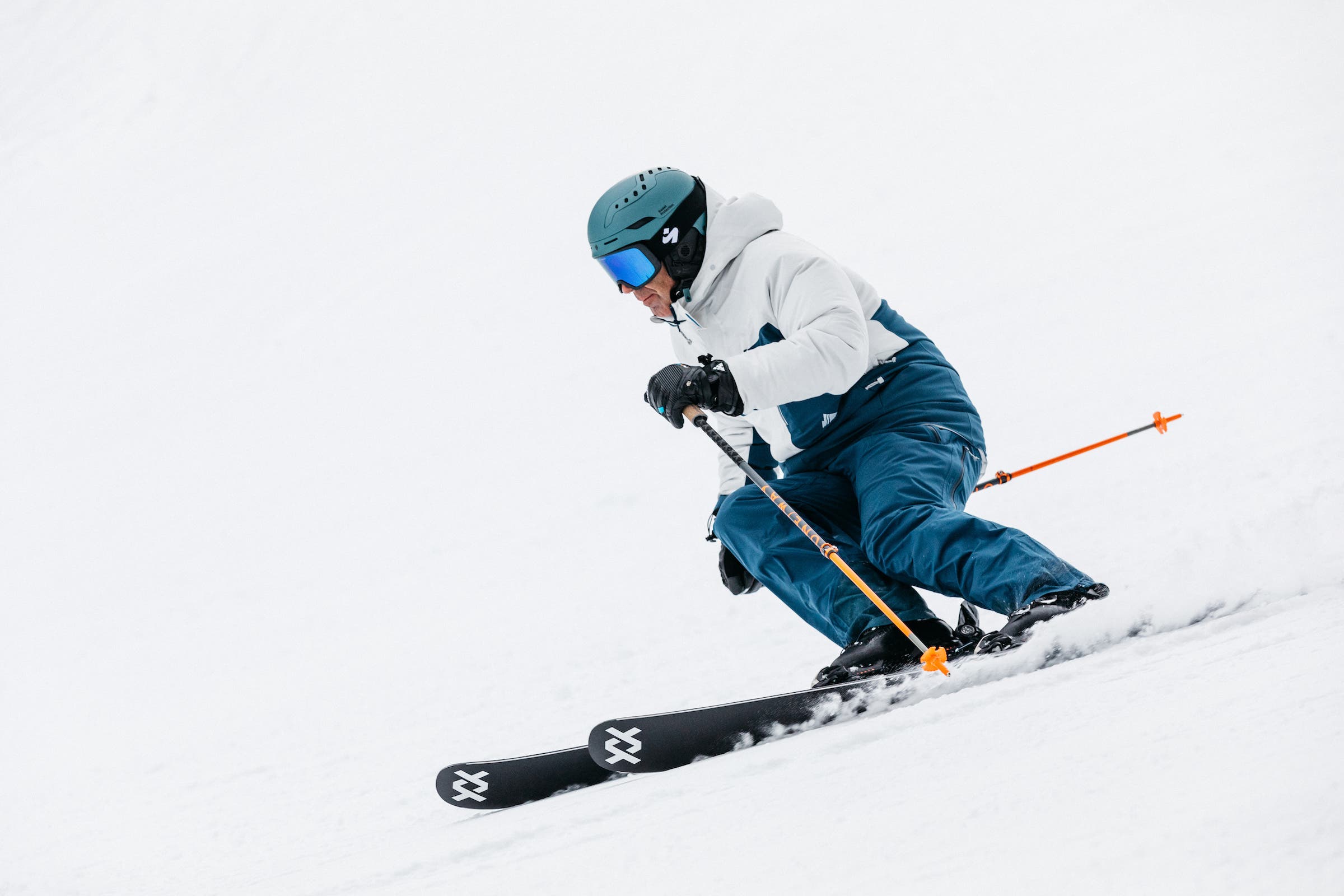
Calm, steady hands are integral to establishing a stable upper body platform, allowing the legs to perform their complex work beneath. Hands should be kept forward and relatively level, with elbows comfortably positioned in front of the chest. Visualizing a horizontal line connecting the hands and striving to keep this line consistently level throughout the turn, rather than allowing the downhill hand to drop towards the knee, promotes better upper body alignment. While this does not imply rigid, robotic arm movements—hands should remain relaxed and poised, particularly for pole planting—unnecessary arm gestures can destabilize the entire system. "We often tell our students: ‘Are your hands along for the ride, or are they trying to direct traffic?’" remarks Maria Rodriguez, a sports psychologist specializing in confidence building for athletes. "The former is the goal. Let your skis do the turning; your hands are there for balance and rhythm, not steering."
6. Proactive Planning: "Skiing the Run Before You Ski the Run"
Effective decision-making on challenging slopes is rarely best executed mid-descent. Before committing to terrain that pushes their comfort boundaries, proficient skiers habitually pause and formulate a plan. This pre-visualization often begins with observation from the lift, followed by a detailed assessment from the top of the run. Key elements to identify include changes in pitch, prominent terrain features, potential scraped-off sections, narrowing passages, or areas where speed management will be critical.
The run is then mentally segmented into manageable sections. This doesn’t require memorizing every undulation like a World Cup racer, but rather establishing a strategic roadmap: "I’ll traverse to that knoll, execute a few controlled turns through the steeper pitch, then open it up below those trees." Visualization is a powerful cognitive tool, not exclusive to elite athletes, that can transform an intimidating slope into a series of conquerable segments. "Instead of being overwhelmed by the entire mountain, focus on mastering the next 50 feet," advises Dr. Rodriguez. This strategy fosters confidence and reduces anxiety. However, it is crucial to maintain flexibility within this plan; conditions can change rapidly, and other skiers’ unpredictable movements necessitate the ability to adjust the pre-planned line in real-time. The plan serves as a confident guide, not an inflexible dictate.
7. Enhanced Vision: Looking Farther Ahead for Proactive Response
A hallmark of expert skiing is its apparent effortlessness and control, often stemming from what appears to be an abundance of time. This perception is largely due to effective visual scanning: the farther ahead a skier looks, the earlier they register upcoming terrain changes, obstacles, and potential hazards, thereby gaining more time to react. Conversely, fixating on the ski tips transforms every bump, icy patch, or pitch transition into an abrupt surprise, forcing reactive and often less controlled movements.
Instead, skiers should cultivate a habit of scanning the slope ahead, much like a driver continuously monitors the road. The gaze should extend toward the next section of terrain, not just the immediate few feet. As confidence grows, this forward vision evolves into "reading" the slope: identifying where the snow might be softer or firmer, where the pitch steepens, and where the optimal place to conclude the next turn might be. This integrated visual approach brings together many of the previously discussed skills. When turns are initiated from the feet, the upper body remains calm, and the skier has a clear sense of their intended path, skiing transitions from a reactive struggle to a proactive, fluid dance with the mountain. It signifies moving beyond merely responding to the terrain to actively "skiing" it with intent and confidence.
Industry Perspectives and Broader Implications
The collective emphasis on these refined techniques by ski instructors and industry professionals underscores a broader commitment to skier development and safety. John Smith, CEO of a major North American resort group, notes, "Our primary goal is to foster a lifelong love for skiing. When skiers hit that intermediate wall, it can be frustrating. Providing clear, actionable pathways to improvement is crucial for retention. Confident skiers are safer skiers, and they’re also more likely to return, invest in better equipment, and introduce others to the sport."
The implications of fostering advanced skills extend beyond individual enjoyment. From an economic standpoint, retaining and progressing intermediate skiers contributes significantly to the vitality of the ski industry, boosting revenue for resorts, ski schools, and equipment manufacturers. Furthermore, enhanced technique is directly correlated with reduced injury rates. A study published in the Journal of Sports Science and Medicine indicated that advanced skiers, despite often engaging in more challenging terrain, exhibit lower rates of certain common ski injuries due to superior control and adaptability. Psychologically, mastering new skills provides a profound sense of accomplishment and increases overall well-being, reinforcing the positive feedback loop that encourages continued participation.
In conclusion, the journey from competent intermediate to confident expert skier is less about radical transformation and more about precise refinement. By focusing on fundamental adjustments—from initiating turns with the feet and engaging the ski’s forebody on firm snow, to strategically completing turns for speed control, cultivating turn shape versatility, maintaining a stable upper body, pre-planning descents, and adopting proactive vision—skiers can systematically dismantle the intermediate plateau. These seemingly minor adjustments, when consistently applied, unlock a deeper connection to the sport, transforming skiing into a more controlled, enjoyable, and ultimately, safer experience. The winter ahead presents an opportune moment for skiers to embrace these insights and elevate their performance to new, exhilarating levels.
