

Published August 29, 2026 06:00 AM
For many seasoned skiers, the allure of a black diamond run is undeniable. Yet, the true test of skill and nerve often lies beyond the simple designation of "difficult." Understanding the unique character, topographical nuances, and strategic demands of North America’s most challenging descents is paramount. This guide transcends mere bragging rights, offering an in-depth exploration of six iconic runs, providing critical insights into their terrain, optimal approach strategies, and the specialized equipment essential for success.
The landscape of extreme skiing in North America is defined by a blend of geological marvels, historical legacies, and the relentless pursuit of vertical. From the formidable chutes of the Rocky Mountains to the icy moguls of the East, these runs represent the pinnacle of on-piste challenge, demanding not only advanced technique but also astute situational awareness and unwavering mental fortitude. Each slope tells a story of ambition, pioneering spirit, and the enduring human desire to conquer natural barriers. This article aims to arm the intrepid skier with the knowledge required to transform apprehension into calculated confidence, preparing them for an unforgettable encounter with some of the continent’s most legendary terrain.
Banana Chute, Crested Butte, Colorado: A Testament to High-Altitude Technicality
Nestled in the heart of Colorado’s Elk Mountains, Crested Butte is renowned for its steep, rugged terrain, and Banana Chute stands as a visual and physical testament to this reputation. Unlike many challenging runs whose difficulties are only apparent from the precipice, Banana Chute offers a panoramic declaration of its severity, visible from the town below. This unique characteristic transforms the descent from a personal accomplishment into a publicly verifiable feat, allowing skiers to literally point to their achievement on the hulking face of Crested Butte mountain itself.
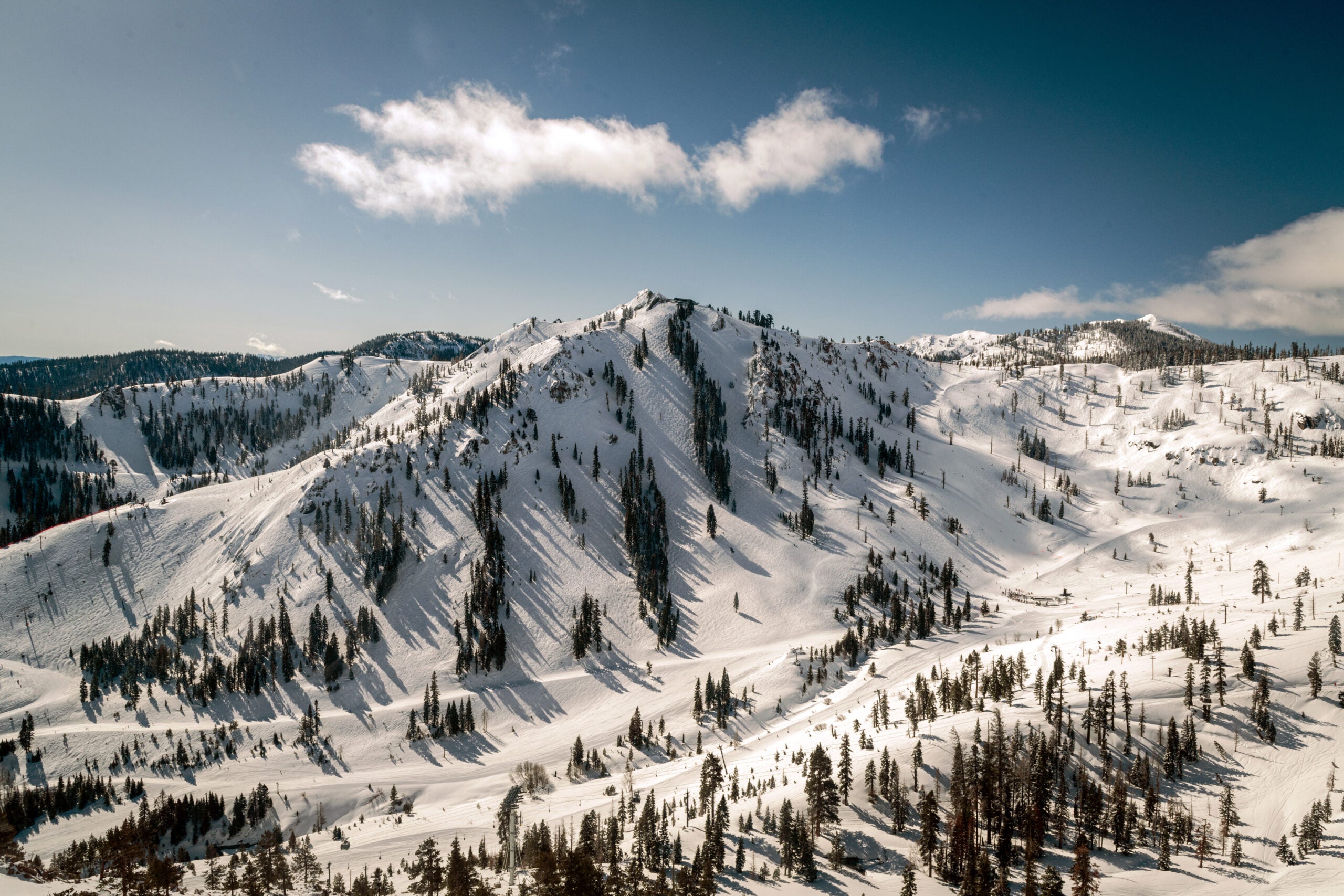
Banana Chute begins its dramatic plunge from an elevation approaching 11,000 feet, carving an impressive 3,000 vertical feet down the mountain’s west face. Its distinctive "banana" curve is more than just a namesake; it dictates a consistent, sustained pitch that, when graced with ideal snow conditions, delivers some of Crested Butte’s most exhilarating skiing. However, the fickle nature of mountain weather means that less-than-optimal conditions can transform the chute into a formidable rock garden, demanding precision and adaptability. The resort, celebrated for its "Extreme Limits" terrain, has a long history of challenging skiers, with early developments in the 1960s and 70s focusing on opening up its steepest aspects, cementing its status as a destination for advanced and expert skiers.
-
Terrain Analysis and Strategic Approach:
Access to Banana Chute is available via two primary entrances: from the High Lift mid-station or from just below the summit of Silver Queen. Skiers should anticipate an initial phase characterized by exposed rocks, particularly early in the season or during lean snow years. This mandates cautious entry and immediate focus. Following this initial rock band, the run evolves into a steep, sustained descent that gradually constricts into a narrow choke point. The key to navigating this section lies in maintaining controlled speed and executing precise, rhythmic turns. Experienced local skiers often advise seeking out the protected snow that tends to accumulate on the left side of the main bowl, offering a softer, more predictable surface. As the terrain tightens within the choke, vigilance is paramount to prevent speed from escalating uncontrollably. The lower section of Banana Chute introduces a different challenge: a dense scattering of small evergreens. These "tree traps" have a notorious knack for catching ski tips, demanding quick reflexes and careful line selection. The run finally culminates in the "Hockey Rink," a wider, flatter area providing a welcome respite after the relentless descent. -
Equipment Recommendations:
For Banana Chute, the ideal ski profile leans towards a relatively wide, yet soft, all-mountain ski. The width provides necessary floatation and stability in varied snow conditions, while a softer flex allows for easier manipulation and absorption of uneven terrain. Crucially, skiers should avoid excessively long skis. The narrow choke and the need for agile pivots necessitate a shorter, more maneuverable ski that can respond quickly to sudden changes in direction and tight spaces. A mid-fat (around 95-105mm underfoot) ski with a moderate rocker profile would be an excellent choice, offering a balance of float, edge hold, and quick turning capability.
KT-22, Palisades Tahoe, California: A Multifaceted Alpine Arena
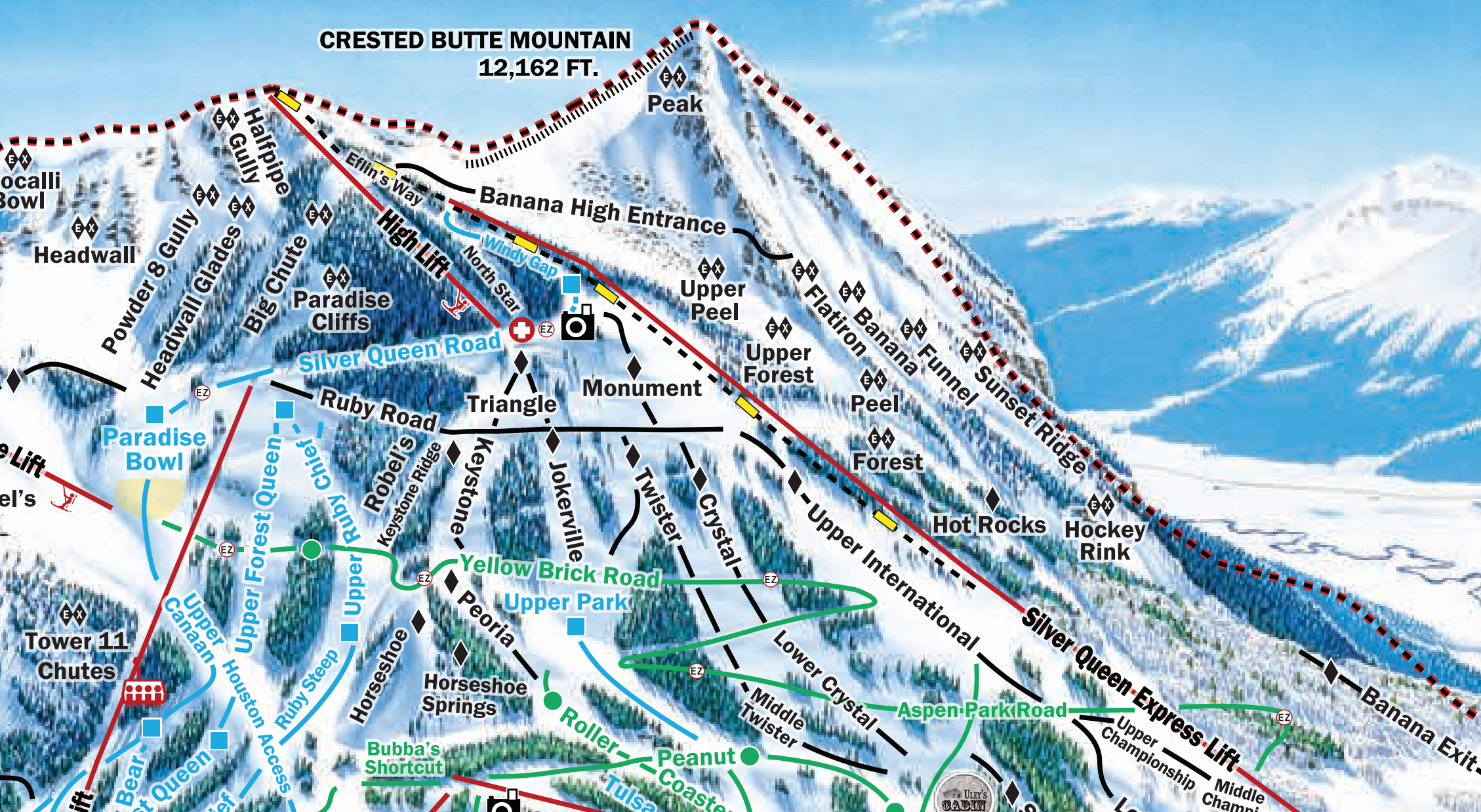
KT-22 at Palisades Tahoe is not merely a ski run; it is a sprawling, multi-faceted alpine arena, revered as a quintessential proving ground for expert skiers. This 2,000-vertical-foot zone, serviced by its own iconic lift, encompasses an astonishing variety of challenging features: formidable cliff bands, tight chutes, expansive bowls, dense glades, and relentless mogul fields. It’s a microcosm of extreme skiing, all conveniently accessible from a single chairlift, making it a high-octane playground for those seeking diverse and demanding terrain.
The nomenclature of KT-22 carries a rich history, dating back to 1946. It commemorates Sandy Poulsen, the intrepid wife of Palisades Tahoe founder Wayne Poulsen, who, upon hiking the 8,200-foot peak, famously executed 22 kick turns on her descent. This anecdote underscores the inherent steepness and challenge that has characterized the area from its very inception. Today, the legendary "Funi" (Funitel) and the KT-22 chairlift serve as gateways to this hallowed terrain, which, due to its popularity, often sees fresh powder disappear rapidly. Local veterans frequently emphasize the importance of an early alarm to secure first tracks, a testament to the area’s enduring appeal among powder hounds. Palisades Tahoe, formerly Squaw Valley, has a deep Olympic heritage, hosting the 1960 Winter Games, further cementing its place in ski lore as a destination for world-class athleticism and terrain.
-
Terrain Analysis and Strategic Approach:
From the vantage point of the KT-22 chair, the terrain presents an immediately intimidating vista, a visual promise of the challenge that awaits. For a constructive introduction, expert skiers often recommend traversing left towards Red Dog Ridge and its accompanying tree runs. This area frequently benefits from post-storm wind deposits, preserving powder conditions long after the more exposed faces have been skied out. Once committed to a descent, establishing and maintaining a consistent rhythm of controlled turns is crucial. The terrain within KT-22 is characterized by unpredictable rolls, transitioning rapidly from relatively moderate pitches to aggressively steep sections. These transitions offer ample opportunity for speed to accelerate beyond control, underscoring the necessity of disciplined skiing. Straight-lining is generally ill-advised due to the variable snow, hidden obstacles, and changing pitch. Depending on one’s confidence and skill level, skiers can progressively explore more consequential terrain, or opt to "lap" the trees and bowls, refining their technique until their legs succumb to the burn. The sheer variety implies that a single run down KT-22 can encompass multiple micro-environments, each demanding a slightly different approach. -
Equipment Recommendations:
A versatile mid-fat all-mountain ski (typically 90-100mm underfoot) serves as an excellent starting point for KT-22. This width provides a good balance of float in softer snow and edge hold on firmer sections. When significant snowfall occurs, a wider powder ski (105mm+) would be beneficial for maximizing floatation. However, excessive width can be detrimental. KT-22’s varied terrain, with its tight glades, moguls, and sudden pitch changes, rewards a ski that can turn quickly and responsively as much as it rewards one that floats effortlessly. A ski with a moderate turning radius and a blend of camber underfoot with tip and tail rocker offers the best compromise for handling the diverse conditions and demands of this legendary face.
Dave Murray Downhill, Whistler Blackcomb, British Columbia: The Olympic Speed Test
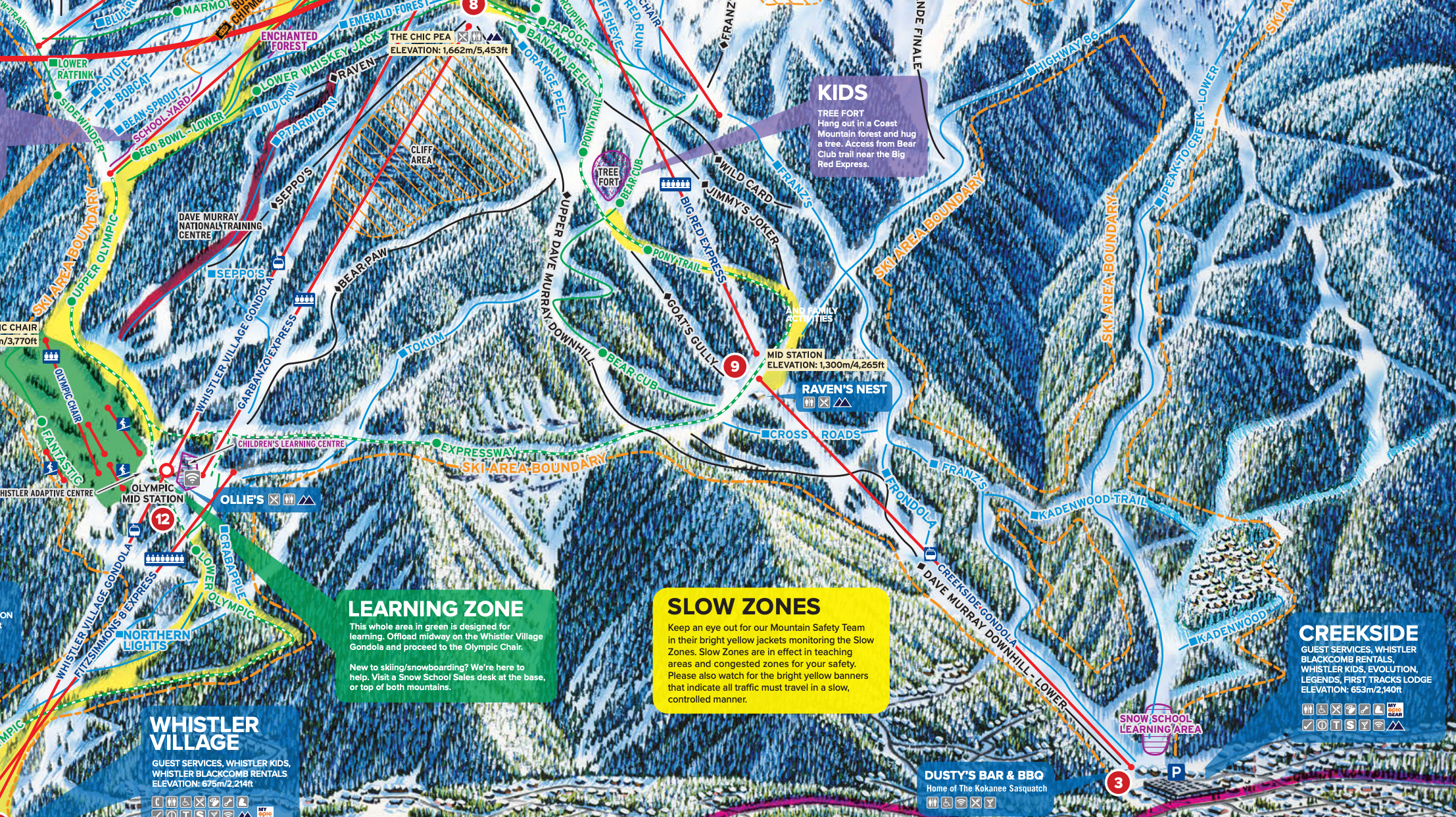
While some runs test technical precision in confined spaces, the Dave Murray Downhill at Whistler Blackcomb is a monument to controlled velocity and aerodynamic efficiency. Named after Canadian national ski team member Dave Murray, who tragically passed away in 1990, this run embodies the spirit of speed and aggressive carving. Dropping over 3,300 vertical feet across a distance of just over 1.5 miles (approximately 2.4 kilometers), it is among the longest downhill courses in the world, a true alpine "Autobahn." It gained international prominence as the site of the men’s and women’s downhill and super-G events during the 2010 Vancouver Winter Olympics, a testament to its formidable profile and suitability for elite-level competition. The course, meticulously designed and maintained, features a relentless succession of rollers, sweeping turns, and opportunities for significant air, challenging skiers to balance raw speed with precise navigation.
-
Terrain Analysis and Strategic Approach:
The Dave Murray Downhill commences with an immediate surge of speed, initiating with a straight shot over the "Double Trouble" rollers. Maintaining a low, aerodynamic tuck through this section is crucial for preserving momentum. The run then sweeps into the infamous "Toilet Bowl," a naturally banked turn that demands clean, powerful carving as the trail temporarily narrows. Emerging from this, skiers encounter "Weasel," a massive right-hand sweeper that transitions into a steep, approximately 45-degree pitch. This section often features a substantial roller capable of launching unprepared skiers airborne, underscoring the need for vigilant speed control and a solid stance.Mid-course, a critical juncture involves crossing "Expressway," requiring acute awareness of intersecting traffic. Following this, "Fall Away" presents a blind turn that can abruptly lead into the woods if not approached with caution and pre-planned line. The lower section of the Dave Murray Downhill accelerates even further, characterized by a series of steep pitches and sharp, high-speed turns. "Hot Air" is a prolonged, spectacular jump opportunity for those inclined and adequately skilled, providing a final moment of exhilaration before the finish. The ultimate challenge is to conclude the run with a full straight tuck to the bottom, pushing physical limits until the leg muscles feel like rubber – a clear indication of a truly committed descent. The sheer length and sustained intensity of this run require exceptional cardiovascular endurance and muscular stamina.
-
Equipment Recommendations:
When the Dave Murray Downhill is meticulously groomed for speed, as it often is, it becomes the ideal canvas for long Giant Slalom (GS) or Super-G (SG) race skis. These skis are engineered for high-speed stability, powerful edge hold on firm snow, and a large turning radius that complements the sweeping arcs of the course. Their length (typically 185-215cm for men’s GS/SG) provides the necessary stability at extreme velocities. For recreational skiers looking to tackle the run, a high-performance, stiff, carving-oriented ski in the 70-85mm waist width range, on the longer side of their recommended length, would be appropriate. The focus should be on skis that excel at holding an edge at speed and maintaining composure through variable snow conditions at high velocity.
Corbet’s Couloir, Jackson Hole, Wyoming: The Ultimate Leap of Faith
Corbet’s Couloir at Jackson Hole Mountain Resort is not merely a run; it is a legendary rite of passage, an iconic challenge that transcends conventional skiing to become a test of nerve, commitment, and raw athletic prowess. Its genesis dates back to 1960, when Barry Corbet, a pioneering Jackson Hole instructor and guide, peered into the terrifying chasm and prophetically declared, "This will be a run. People will ski that." His words became prophecy, and the couloir was eventually named in his honor.
Corbet’s Couloir remains Jackson Hole’s quintessential "put-up-or-shut-up" line. The physical act of skiing the couloir is only half the battle; the other, arguably more significant half, is the mental hurdle of convincing oneself to commit to the initial, daunting drop. Its fame is amplified by events like the "Kings and Queens of Corbet’s" competition, which showcases some of the world’s best freeskiers tackling its notorious entrance, further cementing its mythical status in the annals of extreme skiing. Jackson Hole itself, established in 1966, is known globally for its rugged, big-mountain terrain and steep-and-deep powder, making Corbet’s the crown jewel in its challenging offerings.
-
Terrain Analysis and Strategic Approach:
The entrance to Corbet’s Couloir is the focal point of the entire experience. Depending on the season’s snowfall, the initial drop can vary dramatically, ranging anywhere from a manageable 10 feet to a stomach-churning 30 feet. This variability adds an element of unpredictability, requiring skiers to assess conditions carefully before committing. Once the decision to drop is made, immediate focus shifts to the landing: skis must be pointed downhill, and balance must be recovered instantly. The top section of the couloir itself can be highly rutted, bumpy, and often icy, leading to rapid acceleration. There is little room for error or hesitation in these critical initial moments.Upon successfully navigating the entrance, skiers are afforded a brief moment to breathe and regain composure. The couloir then gradually opens into a broader apron, providing more space to execute controlled turns and scrub off accumulated speed. From this point, while the pitch remains substantial, it eases slightly, allowing for more strategic line selection based on prevailing snow conditions and individual confidence. The remainder of the ride, though still steep and demanding, is a reward for the initial leap of faith, culminating in a sense of profound accomplishment.
-
Equipment Recommendations:
The choice of skis for Corbet’s Couloir is highly dependent on snow conditions. For hard-packed, chalky, or icy conditions, a sturdy all-mountain ski (around 90-100mm underfoot) with strong edge hold is advisable. After a significant storm, a wider powder ski (105mm+) will provide essential floatation for softer landings and deeper turns. Regardless of ski choice, a helmet is not merely recommended but absolutely non-negotiable. The terrain beneath the snow can conceal rocks and debris, and a fall or an unexpected "backseat" landing can have severe consequences. The emphasis should be on a ski that is predictable, stable, and allows for quick recovery and maneuverability in a high-consequence environment.
Outer Limits, Killington, Vermont: The Beast of Eastern Moguls
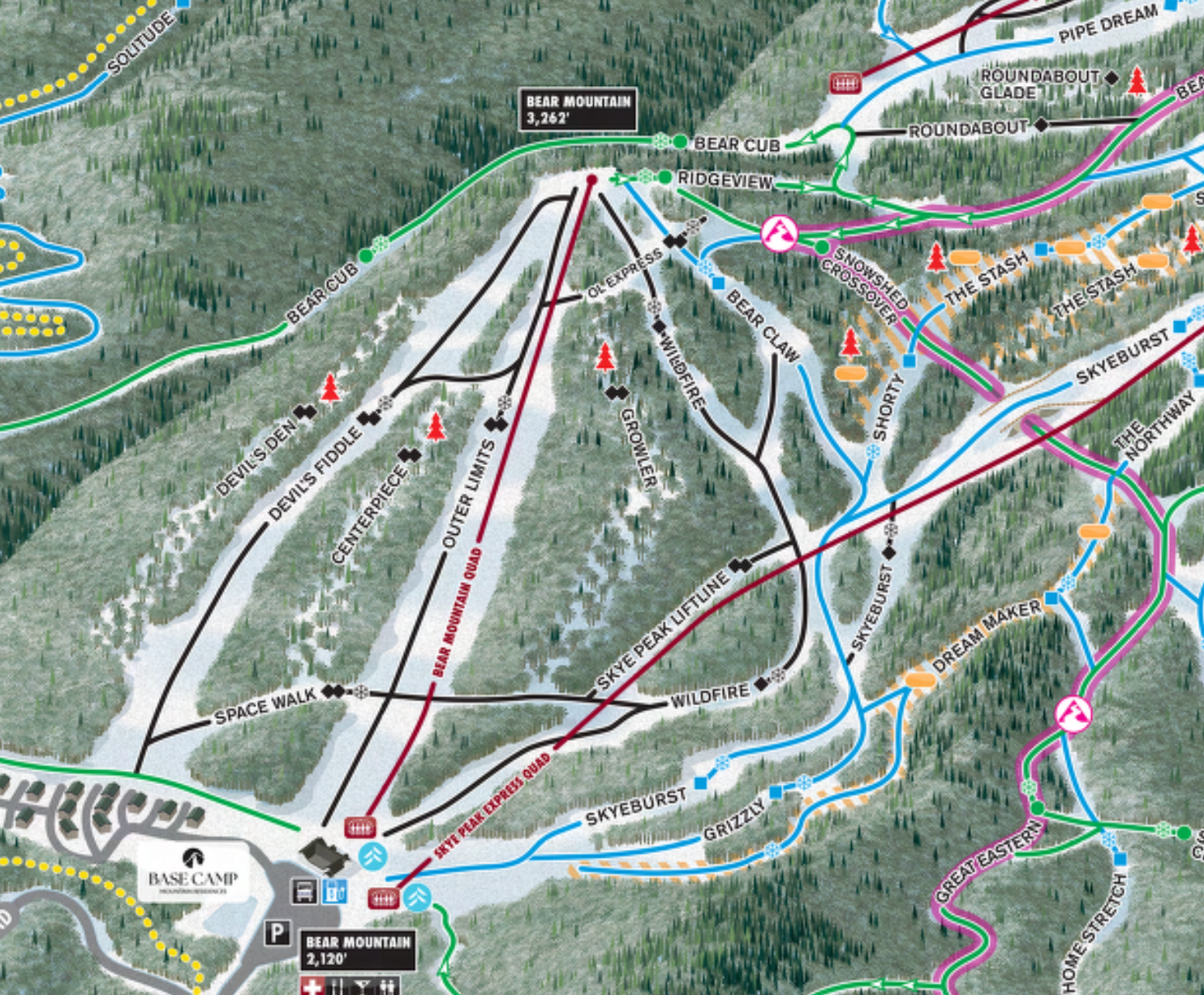
Outer Limits at Killington Resort, famously known as "The Beast of the East," holds a storied place in the annals of Eastern skiing. Originally conceived and cut as a potential alpine training hill for the 1980 Olympics, its extreme pitch quickly rendered it unsuitable for that specific purpose. Instead, this unforeseen characteristic serendipitously birthed one of the East Coast’s longest, steepest, and most notoriously challenging mogul runs. Outer Limits is a relentless, thigh-burning descent that epitomizes the unique demands of Eastern skiing: tenacious snow, often firm or icy, combined with monstrous, unforgiving bumps. Killington, established in 1958, has always prided itself on its extensive terrain and long season, and runs like Outer Limits contribute significantly to its reputation as a destination for serious skiers.
-
Terrain Analysis and Strategic Approach:
From the summit, skiers face an immediate choice: the slightly wider line directly beneath the chairlift, or the marginally narrower route veering to the left. Regardless of the chosen entry point, the pitch becomes alarmingly serious within moments. The middle section of Outer Limits constitutes the heart of the challenge, characterized by a relentless, unbroken succession of moguls. This segment offers very little opportunity for respite, demanding continuous focus, fluid movements, and exceptional leg strength. Skiers must commit to a rhythm, absorbing the bumps and directing their skis through the troughs with precision.Experienced Eastern skiers often advise seeking out the softer snow that tends to accumulate along the edges of the run, particularly after a fresh snowfall. This can provide momentary relief from the incessant pounding of the central mogul field. A tactical approach involves skiing the run in sections, allowing for brief stops to recover and reassess, rather than attempting a non-stop descent, which can lead to premature fatigue and loss of control. While the lower portion of Outer Limits does offer a slight easing of the pitch and a rounding out of the moguls, the cumulative fatigue in the thighs often means this distinction is barely noticed by the time the bottom is reached.
-
Equipment Recommendations:
For tackling Outer Limits, the optimal ski choice leans towards a relatively short ski with minimal sidecut. A shorter ski enhances maneuverability, allowing for quicker pivoting and turn initiation in the tight confines of mogul troughs. Minimal sidecut prevents unexpected "hooking" or catching of edges in the irregular, often firm, bumps. Skis in the 80-90mm waist width range with a forgiving flex would be appropriate. Additionally, shorter ski poles can be advantageous, facilitating quicker pole plants and maintaining a more compact, agile stance crucial for rhythmic mogul skiing. The emphasis here is on agility and precise control rather than outright speed or float.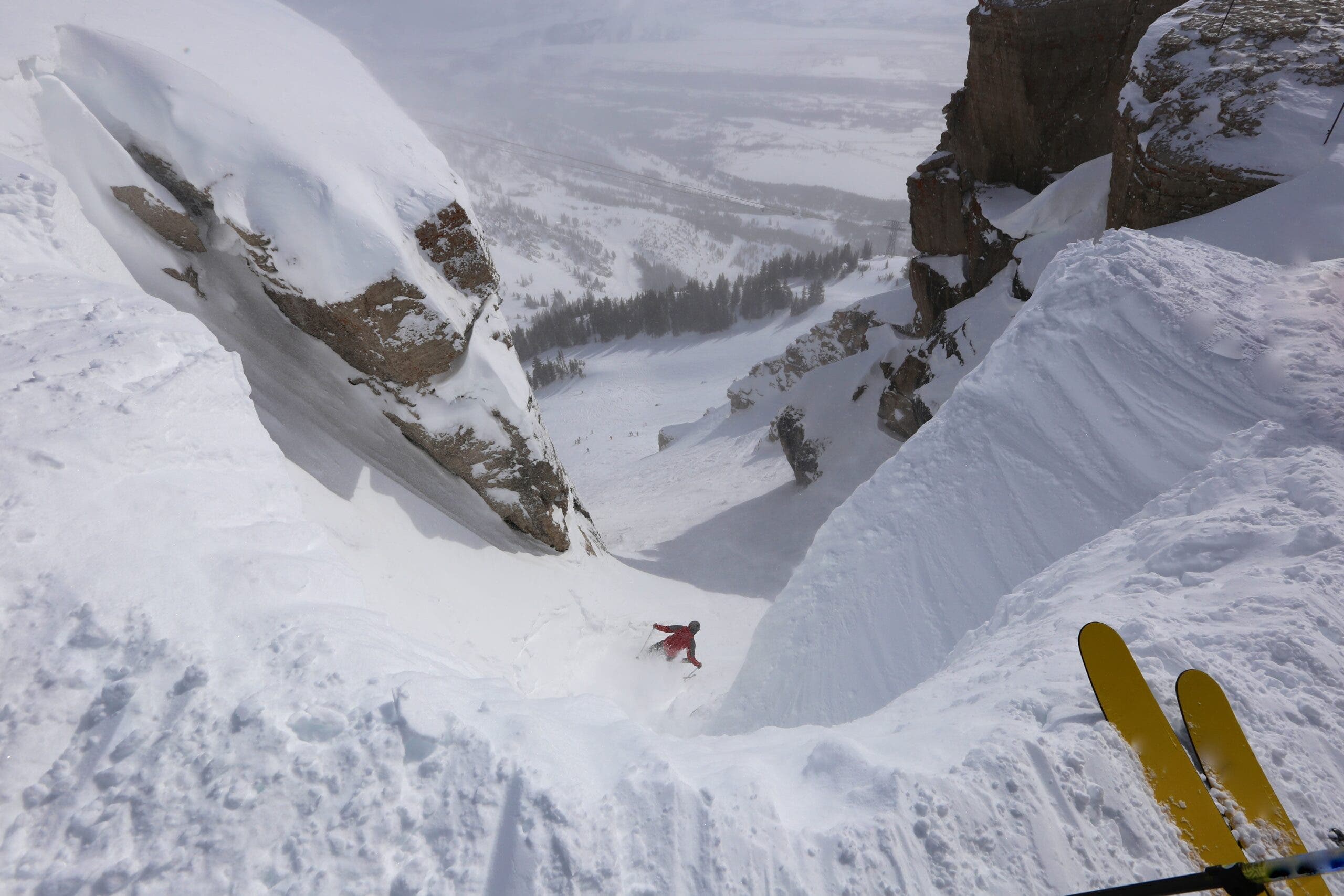
National, Stowe, Vermont: The Historic Ice-Skating Rink
National, one of Mt. Mansfield’s celebrated "Front Four" trails at Stowe Mountain Resort, is steeped in American skiing history. Cut in 1952 specifically for the U.S. Championships, it stands as the oldest of this legendary quartet, which also includes Liftline, Starr, and Goat. This heritage underscores its design as a high-performance racecourse, translating directly into its current status as a formidable challenge for recreational skiers. National plunges 1,590 vertical feet over a horizontal distance of 3,875 feet, boasting an impressive average pitch of 36 degrees. Its northeast-facing aspect is a critical determinant of its character: it meticulously preserves snow but, more importantly, retains ice long after other, sunnier trails have softened, adding a significant layer of technical difficulty unique to New England skiing. Stowe, with its origins tracing back to the 1930s, is one of America’s most historic ski resorts, and its Front Four trails are cornerstones of its legacy.
-
Terrain Analysis and Strategic Approach:
The upper section of National is notorious for its combination of icy conditions, steep pitch, and often awkward, irregular mogul lines. Skiers are generally advised to avoid battling the direct line down the middle, which can be heavily trafficked and consequently more challenging. Instead, selecting a side—often the right side—can offer more consistent snow and a more manageable bump pattern. While the left side can also be viable, the presence of snowmaking equipment often complicates line choice and terrain consistency. The demand here is for meticulous edge control and constant vigilance, as the unforgiving Eastern ice can punish even minor errors.Below "Birch Tree," the pitch of National eases slightly, providing a brief reprieve. This section often presents a dichotomy: the right side may be groomed, offering a high-speed carving opportunity, while the left can develop enormous, challenging moguls, demanding a transition in technique. As the run approaches its conclusion, the final steep pitch can surge back to an angle approaching 40 degrees before finally giving way to a comparatively easy run-out. It is a common adage among Stowe locals that "skiing only the bottom doesn’t count," emphasizing that the true challenge lies in conquering the entirety of this historic, demanding trail. The variable snow conditions and consistent steepness require adaptability and strong foundational technique.
-
Equipment Recommendations:
For National, the imperative is for a narrow and nimble ski. A ski with a waist width in the 65-80mm range is ideal, as it allows for extremely quick edge-to-edge transitions, crucial for maintaining control on icy, steep terrain. The ski should be short enough to maneuver effectively through tight spaces and awkward bump lines, enabling rapid changes in direction. A ski with strong camber underfoot and a relatively stiff flex will provide the necessary edge hold and stability on hardpack. A precise, carving-oriented ski that can "get quickly to its edge" is paramount for confidently navigating the demanding and often icy conditions characteristic of this historic Eastern classic.
The Broader Implications of Conquering Extreme Terrain
Tackling North America’s most challenging ski runs is more than just an athletic pursuit; it is an immersive experience that shapes a skier’s abilities, resilience, and appreciation for the mountain environment. These descents, from the psychological leap of Corbet’s to the sustained endurance test of Dave Murray Downhill, serve as benchmarks in a skier’s progression. They demand not only highly refined technical skills—such as dynamic balance, precise edge control, expert mogul technique, and high-speed stability—but also critical mental attributes. Decision-making under pressure, risk assessment, adaptability to rapidly changing conditions, and sheer mental toughness are all honed on these formidable slopes.
The implications extend beyond personal achievement. These iconic runs often represent the core identity of their respective resorts, attracting a dedicated cohort of expert skiers who seek out such challenges. They drive innovation in ski design, pushing manufacturers to develop more capable and specialized equipment. Furthermore, they contribute significantly to the culture of skiing, fostering a community that celebrates courage, skill, and a deep respect for the power and beauty of the mountains. Safety remains paramount, and official responses from resort management consistently emphasize the importance of appropriate skill levels, proper equipment, and adherence to safety protocols, including wearing helmets and skiing within one’s abilities. Conquering these runs is not just about the descent; it’s about the journey of preparation, the moment of commitment, and the enduring satisfaction of meeting a monumental challenge head-on.
