

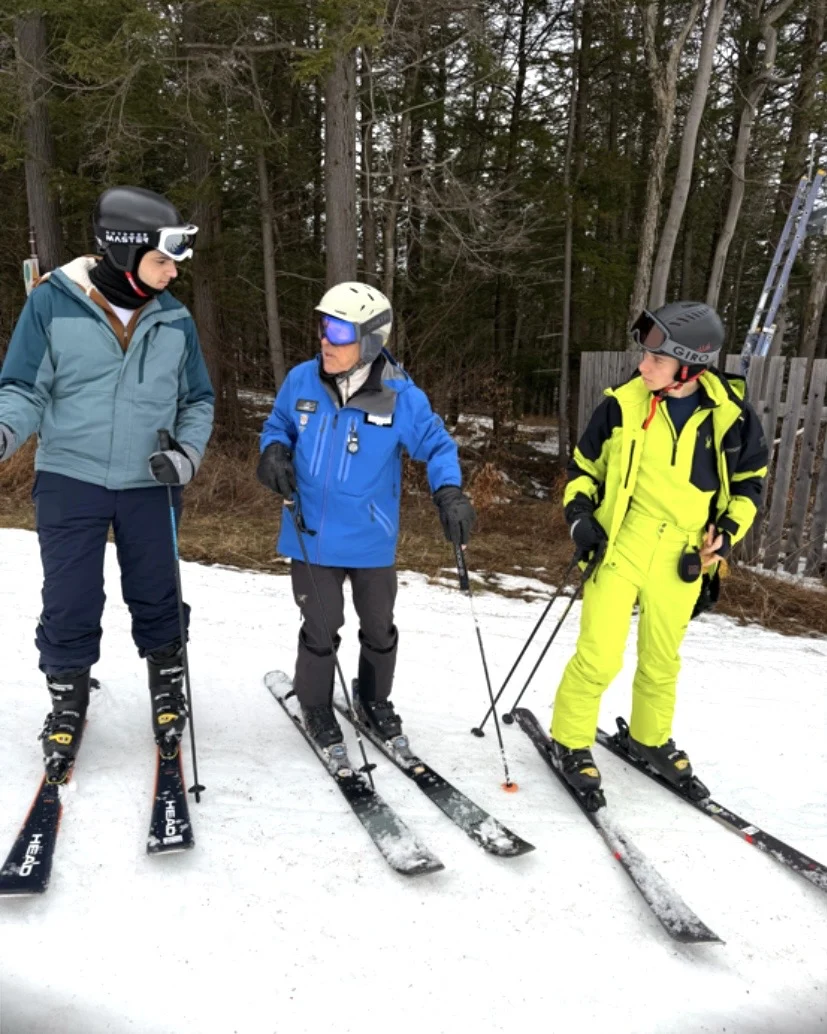
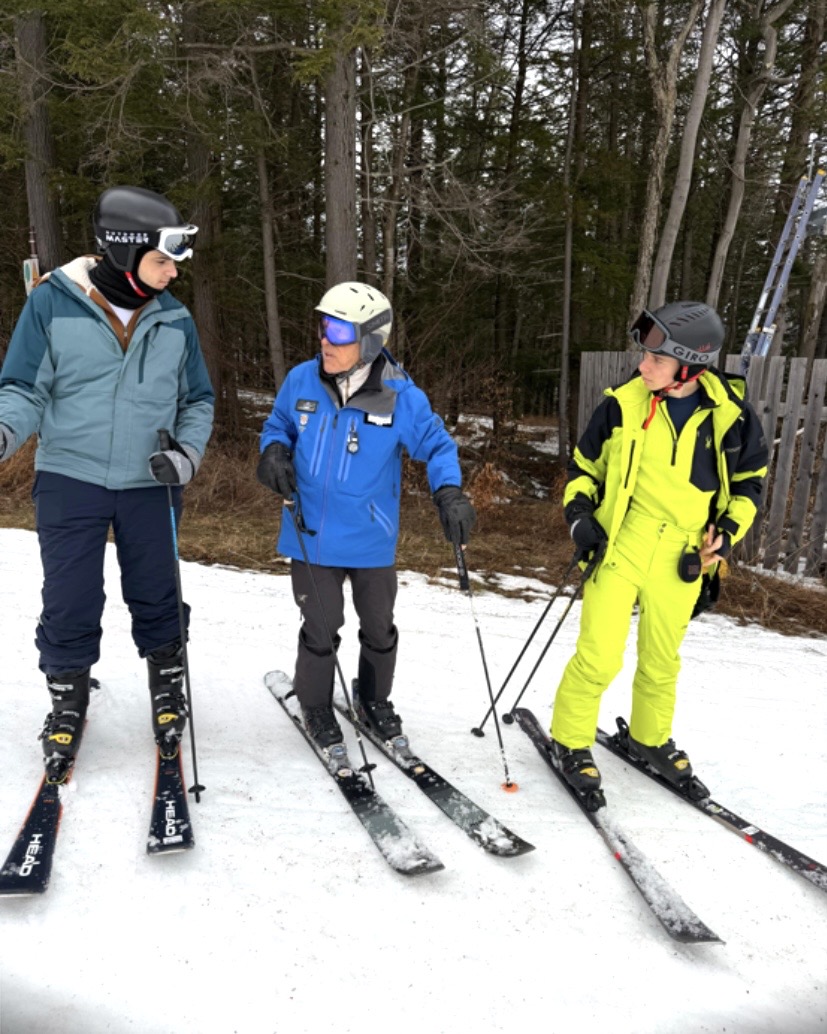
On a brutally cold day in early 2026, as the Otis Quad chairlift crested the unloading ramp at New York’s Hunter Mountain, a piercing shot of wind swirled the freshly fallen snow. The jacket thermometer of Leslie Surprenant, an Alpine Level II and Children’s Specialist 1 instructor, registered a frigid -5°F, with the biting wind making the "real feel" plummet to an estimated -30°F. While many guests sought refuge and warmth within the lodge, some even jockeying for prime spots near the fireplace, a small, resolute group stood ready to embrace the elements. Among them was Ralph Perlberger, poised for another run down the mountain, undeterred by the extreme conditions. It was Ralph’s 95th birthday, and true to his unwavering philosophy of skiing in every snow condition and weather, he was joined by his wife, Carol, and two fellow ski instructor friends, David Raindorf and Steve Cohen. Surprenant, proud of Ralph’s remarkable grit, introduced him to the women from her weekly clinic, who were visibly inspired by his presence.
A Living Legend on the Slopes
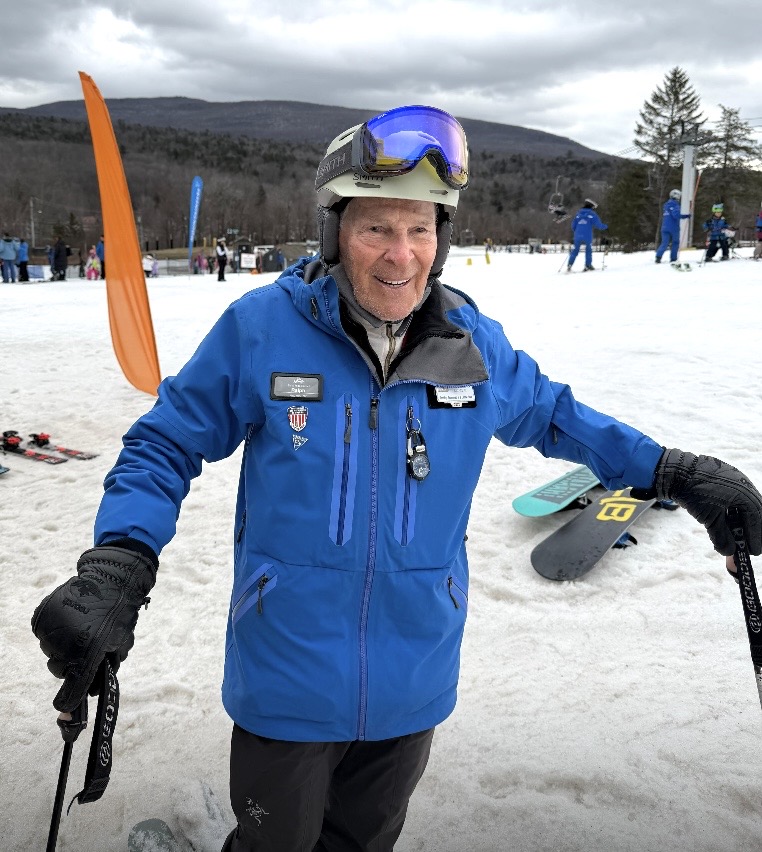
Ralph Perlberger is not merely a nonagenarian who skis; he is a Professional Ski Instructors of America (PSIA) Level II alpine instructor who actively teaches, embodies a profound passion for the sport, and serves as a living testament to human resilience. His dedication to skiing and instructing at Hunter Mountain for 24 seasons has made him a revered figure within the ski community. As the group gathered, their skis squeaking on the cold, dry snow, Surprenant announced Ralph’s milestone birthday. A chorus of "Happy Birthday" rang out, muffled by frozen face masks, yet full of genuine admiration. Ralph, grinning, thanked them before gracefully leading the way down West Side Glide, an intermediate trail that winds gracefully among the pines and hemlocks of the Catskills, a symbol of his enduring connection to the mountain.
His presence on the mountain consistently garners respect and astonishment. Victoria Mercado, Senior Manager of Hunter Mountain’s Ski and Ride School, articulated this sentiment, stating, "Ralph is an inspiration. He’s not only skiing, but teaching! Skiing and riding keep you young. When I watch Ralph ski, I can’t believe he’s 95. His energy, skill, and passion on the mountain defy his age. It’s an absolute pleasure to work alongside him." This sentiment is echoed by his peers. David Raindorf once confided to Surprenant, "When I grow up, I want to be Ralph," while Steve Cohen added, "Ralph is my idol." These declarations underscore the profound impact Perlberger has on those around him, transcending professional admiration to become a symbol of aspirational living and dedication to a lifelong pursuit.
A Timeline of Resilience: From Darkness to the Light of the Slopes
Ralph Perlberger’s life story is one marked by extraordinary challenges and an indomitable spirit, offering a profound context to his joyful and vibrant presence on the ski slopes. His journey began in Amsterdam, Netherlands, where a peaceful childhood was abruptly shattered by the onset of World War II, setting the stage for a life defined by survival and an unyielding will to live fully.
1940: The Shadow of War Descends
In 1940, as Nazi Germany’s forces began their devastating sweep across Europe, Ralph’s father, foreseeing the escalating peril for his Jewish family, embarked on a critical mission to New York City. His goal was to arrange for the family’s immigration to the United States, a desperate bid for safety and a new life away from the gathering storm. Tragically, he arrived on May 10, the very day Nazi forces launched their invasion of the Netherlands, effectively severing his immediate connection to his family and trapping them in occupied territory, facing an increasingly grim future.
1941-1945: Imprisonment and the Holocaust
The following year, the Perlberger family’s nightmare began. Nine-year-old Ralph, his mother, and his two older brothers were forcibly removed from their Amsterdam home and imprisoned in Westerbork transit camp in the northeastern Netherlands. Westerbork served as a collection point for Jews and Roma people, from which they were systematically deported to extermination camps in Nazi-occupied Poland. In February 1944, the family was subjected to a harrowing transfer by railroad cattle car—an inhumane journey in overcrowded, unsanitary conditions—to the Bergen-Belsen concentration camp in Germany.
Bergen-Belsen, while not primarily an extermination camp, became notorious for its horrific conditions, where rampant disease, starvation, and unspeakable suffering claimed tens of thousands of lives. Despite enduring the ravages of typhus and typhoid fever, diseases that were epidemic and claimed countless victims, Ralph maintained an unwavering conviction that he and his family would survive. He attributes this profound sense of confidence, security, and hope to his parents, whose resilience and positive outlook shaped his own enduring spirit. Early in his imprisonment, in a remarkable display of youthful optimism amidst profound despair, he even imagined having a compelling story to share with friends once the war concluded, a testament to his innate hope.
Meanwhile, Ralph’s father in New York City was agonizingly unaware of his family’s precise fate, enduring years of profound uncertainty and separation. At war’s end, a glimmer of hope emerged: he learned that his family had miraculously survived and were located in the Russian-occupied village of Tröbitz, Germany. Their journey to Tröbitz was itself a testament to survival against overwhelming odds, having been on the "Lost Transport" train. This was one of three trains on which the Nazis, in a desperate and cynical maneuver, attempted to send approximately 7,500 Jewish prisoners to be exchanged for German prisoners held by the Allies, a scheme that ultimately failed amidst the chaos of the war’s final days.
The "Lost Transport" train’s journey was a torturous ordeal, lasting two weeks as it repeatedly stopped and rerouted due to destroyed tracks and the general disarray of the collapsing Third Reich. It never reached its intended destination, finally coming to a halt on a destroyed bridge over the Elster River, just outside Tröbitz. On April 23, 1945, Russian troops liberated the train’s emaciated and gravely ill prisoners, marking the end of their captivity but not their suffering. Hundreds had already perished en route from typhus, hunger, and dehydration. For five arduous months while their visa applications for the United States were pending, Ralph’s father, now aware of their survival, meticulously sent Red Cross packages containing vital food and hygiene products, a crucial lifeline across a war-torn continent that helped sustain them until they could finally reunite.
1946: A New Beginning in America
In February 1946, Ralph, his two brothers, and his mother finally immigrated to the United States, making their new home in the vibrant metropolis of New York City. The challenging process of assimilation began, with Ralph diligently learning English and excelling in school, demonstrating an intellectual curiosity and adaptability. Simultaneously, his father painstakingly reconnected with his family, rebuilding the bonds that had been violently severed by war, embarking on a path of healing and rediscovery. This period marked the dawn of a new chapter, one defined by recovery, growth, and the pursuit of a future free from persecution, a future that would eventually include a profound passion for skiing.
From Student to Ski Enthusiast: The Birth of a Passion
Ralph’s enduring love affair with skiing began unexpectedly during his academic pursuits, proving that life’s greatest passions can emerge at any stage. While studying economics at Stanford University, his father, keen to provide his sons with experiences he had been denied during his own youth, sent Ralph and his two older brothers to the renowned Sun Valley, Idaho, during a winter break. This inaugural trip to the slopes was transformative. Ralph was immediately captivated by the thrill of gliding down snow-covered mountains, a passion ignited that would burn brightly for the rest of his life. He seized every opportunity to ski, even as he embarked on the rigorous academic path of earning his law degree at Harvard University. This dedication to integrating skiing into his demanding schedule highlights the profound joy and solace he found in the sport, a counterbalance to his intellectual pursuits.
For decades, skiing remained a cherished personal pursuit, a source of adventure and exhilaration. Ralph diligently honed his skills across a variety of iconic ski destinations, from the challenging, steep terrain of Taos in New Mexico to the majestic peaks of Europe, and eventually, the familiar and beloved terrain of Hunter Mountain in the Catskills. These experiences, accumulated over many years, built a deep understanding and intuitive feel for the sport, transforming him into a highly proficient and experienced skier long before he ever considered teaching.
The Call to Instruct: "Keep at It and Don’t Give Up"
It wasn’t until 2002, when Ralph was already in his 70s, that an advertisement serendipitously caught his eye, altering the trajectory of his skiing journey from enthusiast to educator. For $85, he could participate in a weekend of instructor training and candidate selection at Hunter Mountain. If chosen, a second weekend of training and final selection would be free. Despite his extensive personal skiing experience, Ralph was among those selected to become an instructor candidate, a decision that, he readily admits, underscored how much more he still had to learn about the art of teaching and the nuanced mechanics of the sport, even after decades on the snow.
Through dedication and continuous learning, Ralph achieved his PSIA Level II alpine instructor certification, a testament to his unwavering commitment to mastering not just skiing, but the pedagogy of teaching it effectively to others. The Professional Ski Instructors of America and American Association of Snowboard Instructors (PSIA-AASI) sets the national standards for ski and snowboard instruction, with Level II indicating a high degree of technical skill, teaching proficiency, and professional conduct. He often credits fellow ski instructor and PSIA alpine examiner Charlie Knopp for delivering some of the best advice he ever received: "Lift your inside hip!" This seemingly simple instruction, for Ralph, unlocked a deeper understanding of efficient ski technique, particularly for initiating turns and maintaining precise edge control, a critical insight he now imparts to his students.
A Master Educator: Perlberger’s Teaching Philosophy
Ralph Perlberger is particularly beloved by the Hunter Mountain ski and ride school community, where his colleagues express profound awe and appreciation for his consistent presence and invaluable contributions. Luca Arrigoni, a member of the Eastern Alpine Development Team, recalls, "Ralph has a special place in my heart. I shadowed him as a new instructor and was inspired by his patient, gentle, and knowledgeable way with beginners. He still proudly wears the Hunter uniform, which shows his love for, and dedication to, the sport and teaching." This speaks volumes about his character and his commitment to both the mountain and the profession.
Ralph finds particular satisfaction in helping adult intermediate skiers, a demographic often grappling with ingrained habits that hinder progress. He often begins his lessons by asking students to describe how they make their skis turn. The most common response, he notes, is a shrug and an admission of "I don’t know" or "I just turn," indicating a lack of conscious awareness of their technique. Ralph observes that many intermediate skiers rely on leg rotation on flat skis, a less efficient, more strenuous, and often less controlled method. He believes a significant number of intermediates lack fundamental understanding of core concepts: maintaining their center of mass (CM) over their base of support (stance), effectively directing pressure to their outside skis, and controlling edge angles throughout the turn.
His coaching methodology is hands-on, experiential, and highly effective. He guides skiers to actively feel their shins against the tongue of their boots throughout all phases of a turn, fostering a crucial connection between their body and their equipment, which is essential for proper fore-aft balance. When he notices skiers leaning back, a common error that leads to fatigue, loss of control, and a burning sensation in the quadriceps, he gently instructs them to stop and observe the physical sensation in their quads. Students invariably report feeling "tired" or "burning," providing a direct, physical understanding of inefficient body positioning. Ralph then redirects them to notice their body’s relationship to their feet, reinforcing the importance of maintaining consistent shin contact with the front of their boots. In the end, Ralph proudly states that every one of his students improves, has fun, and expresses their gratitude, a true and consistent measure of his teaching effectiveness and his ability to connect with and empower learners.
Broader Impact and Implications: A Model for Lifelong Engagement
Ralph Perlberger’s story extends beyond the personal narrative of an inspiring individual; it carries significant implications for our understanding of aging, the ski industry, and the enduring power of human resilience.
The Power of Active Aging:
Perlberger stands as a compelling exemplar of the profound benefits of lifelong physical and mental engagement. In an era where discussions about aging often focus on decline and limitations, Ralph defies stereotypes with remarkable vigor. His ability to maintain the physical dexterity, balance, strength, and cognitive sharpness required for ski instruction at 95 years old underscores the profound advantages of an active lifestyle. Research consistently shows that engaging in complex physical activities, especially those involving dynamic balance and coordination like skiing, can significantly mitigate age-related decline, improve cardiovascular health, enhance cognitive function, and contribute to overall well-being. Ralph’s continued presence on the slopes challenges conventional notions of retirement, advocating instead for a dynamic, purposeful later life where passion continues to drive activity. He demonstrates that "skiing and riding keep you young" is not just a catchy phrase, but a lived reality, inspiring countless individuals to embrace physical activity at any age.
A Role Model for the Ski Industry:
For the Professional Ski Instructors of America (PSIA) Eastern/Education Foundation and the broader ski industry, Ralph Perlberger is an invaluable asset, representing the pinnacle of dedication and experience. He serves as an incredible role model for instructors of all ages, demonstrating the importance of dedication, continuous learning, and an unwavering passion for teaching. His long tenure and Level II certification highlight the value of experience and mentorship within the ski school community, which at Hunter Mountain, remarkably, spans eight decades of instructor ages. His presence helps attract and retain new instructors, inspiring them with the vision of a lifelong career in the sport and the possibility of continuous professional growth. Furthermore
