

The instructional strategy known as mirroring, defined as copying someone with the intention of understanding them, stands as a cornerstone in effective teaching and learning methodologies across various disciplines, with its profound impact now being rigorously explored and applied within the snowsports community. This ancient, evolutionarily ingrained capacity for observational learning has found a modern, scientific validation in brain-based learning approaches, particularly as demonstrated at prestigious international events like Interski 2023. By allowing instructors to step into their students’ movements and perspectives, mirroring not only accelerates skill acquisition but also cultivates deeper trust, empathy, and a more nuanced understanding of the learning process.
The Deep Roots of Observational Learning
Our inherent ability to learn by observing and mimicking others is not merely a pedagogical trick but a fundamental evolutionary survival strategy, etched into our biological makeup over millions of years. This foundational capacity, termed motor resonance, predates humanity, with evidence suggesting its emergence over 100 million years ago in many vertebrates. Animals from various species exhibit this innate ability: dog packs, for instance, demonstrate synchronous movements, matching speeds, turns, and changes in pace while navigating terrain. Young songbirds refine their complex vocalizations by meticulously listening to and imitating their parents.
Among primates, observational learning advanced significantly tens of millions of years ago, encompassing sophisticated behaviors. Chimpanzees learn intricate techniques like "termite fishing" – using tools to extract termites from their mounds – purely through observation. Bonobos engage in complex social interactions, including chasing games and specific greeting rituals, which are passed down and refined through mimetic learning within their communities.
The advent of intentional teaching, a more deliberate and structured form of knowledge transfer, likely evolved within our genus, Homo. This is particularly evident in the production of early stone tools, which were often too complex to be replicated solely through observation. The nuanced shaping of flint, requiring specific angles, forces, and sequences of strikes, necessitated purposeful demonstration and guided practice from experienced individuals to novices. This marked a critical juncture in human development, where active teaching became indispensable for the transmission of complex skills and cultural knowledge, laying the groundwork for all future educational endeavors. Modern learning theories, such as Albert Bandura’s Social Learning Theory, which posits that individuals learn through observing, imitating, and modeling others, are deeply compatible with these evolutionary insights. They illustrate how modern human psychological capacities are profoundly grounded in these ancient, adaptive evolutionary mechanisms, providing a scientific continuum from basic survival instincts to sophisticated pedagogical strategies.
Interski 2023: A Global Forum for Innovation
Interski, the quadrennial international congress for ski and snowboard instructors, serves as a pivotal global platform for sharing cutting-edge instructional methodologies, research, and best practices. In 2023, the event was held in Levi, Finland, drawing thousands of snowsports professionals from national associations worldwide. It is a crucial forum where the global snowsports community converges to collaborate, innovate, and collectively elevate the standards of instruction. It was in this dynamic environment that delegates, including representatives from the Professional Ski Instructors of America and American Association of Snowboard Instructors (PSIA-AASI), engaged with the Czech Republic National Team, who presented groundbreaking sessions on brain-based learning.
Brain-based learning is an educational paradigm that meticulously aligns instructional strategies with neuroscientific evidence regarding how the human brain processes, retains, and retrieves information. It leverages our understanding of brain function to optimize learning environments and techniques, moving beyond traditional rote memorization to foster deeper, more integrated understanding and skill acquisition. At Interski 2023, the Czech team’s presentations underscored the practical applications of these principles, demonstrating how a scientific understanding of neural processes can directly inform and enhance snowsports instruction.
Experiencing Mirroring on the Slopes of Levi
The practical on-snow session led by the Czech Republic National Team in Levi offered a compelling, experiential demonstration of brain-based learning, particularly the power of mirroring. A diverse group of approximately 40 participants, hailing from various national teams and instructional backgrounds, was directed to form a large circle. The initial instruction was deceptively simple: identify a partner solely through eye contact, without uttering a single word. What ensued was a minute of awkward silence, punctuated by hesitant, darting glances, yet within this brief period, connections were forged. Each participant eventually locked eyes with another, signaling mutual acknowledgment through subtle, non-verbal cues – a slight nod, a shared smile – before naturally sliding together to introduce themselves. This silent, intuitive process swiftly bypassed typical social barriers, fostering immediate, if superficial, bonds.
One participant, Angelo Ross of the Eastern Alpine and Children’s Examiner, found himself partnered with Angela Cesnik from the Australian National Team (APSI). After a brief, chuckled exchange over their phonetically similar names, they received the next instruction: stand face-to-face, roughly two feet apart, and again, without verbal communication, decide who would lead and who would follow in an upcoming, undisclosed activity. Remarkably, within seconds, a silent consensus was reached; Angela would lead.
The leaders were then instructed to perform a 60-second pantomime of their morning bathroom routine. Followers were tasked with reproducing these movements exactly, as if they were reflections in a mirror. This required intricate coordination: if Angela "brushed her teeth" with her right hand, Ross had to use his left. If she turned to her left, he had to turn to his right. The scene was undeniably comical – 40 strangers meticulously emulating each other’s private morning rituals, from eliminating "morning breath" to applying deodorant and wiping away "sleepy goobers." Yet, beneath the laughter, a significant process was unfolding. Participants implicitly negotiated the boundaries of personal disclosure, and through this shared, slightly absurd experience, genuine connections began to form. After one round, roles were reversed, allowing the other partner to lead.
Ross reflected on the swift bond formed with Cesnik, a stranger from the opposite side of the globe. Within minutes, they had established partnership, leadership, and gained intimate, albeit pantomimed, insights into each other’s routines, all through non-verbal communication and mirroring. This initial exercise, often dreaded as an "icebreaker," proved to be a profoundly effective clinic in fostering rapid rapport and opening channels for deeper interaction.
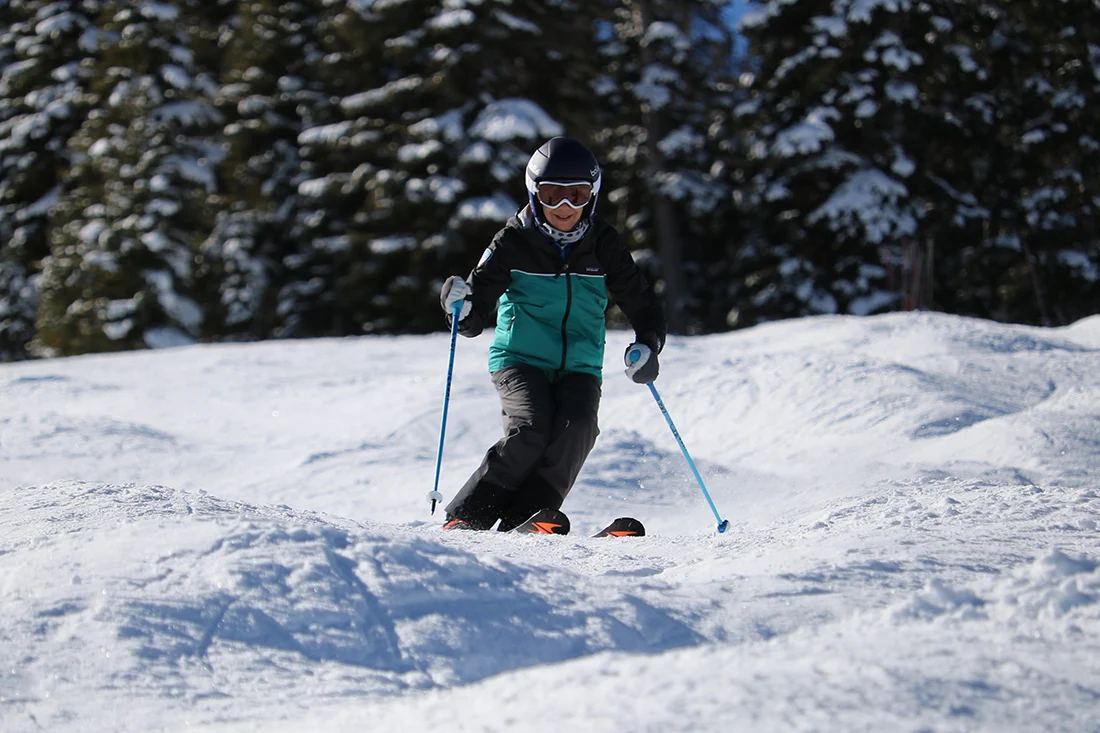
The session then moved to the snow, transitioning from "reflective mirroring" to "tandem mirroring." Participants now faced the same direction, with the original leader making predictable medium-radius turns. The follower skied closely behind, meticulously positioning their limbs, poles, helmet, and skis to precisely copy the leader’s every movement. At a predetermined stopping point, the follower articulated how the act of mirroring had influenced their technical performance. The roles then switched for the remainder of the run. During the subsequent lift ride, Ross and Cesnik engaged in further discussions, comparing their techniques, analyzing the impacts on their performance, and exchanging insights into the values and methodologies of APSI and PSIA-AASI. Their conversation extended to broader topics, including global politics, demonstrating the depth of connection facilitated by the preceding exercises. This intense, short-duration experience proved to be highly impactful, setting the stage for the afternoon indoor session where Czech researchers meticulously explained the neuroscientific underpinnings of their on-snow activities, elucidating why mirroring is so effective in facilitating trust, empathy, and understanding.
Expert Endorsement and PSIA-AASI Integration
The principles of mirroring are not new to seasoned snowsports educators, though the explicit framing as a "brain-based learning" strategy at Interski brought a fresh scientific lens. Legendary figures in American skiing have intuitively utilized these techniques for decades. Ellen Post Foster, a U.S. Ski & Snowboard Hall of Famer (Class of 2016) and a 2021 Colorado Snowsports Museum Hall of Famer, exemplifies this. Her illustrious career includes being the 1973 Junior National Champion of Exhibition Skiing, excelling in international freestyle competition in 1975 across aerials, ballet, moguls, and combined events, and serving on the PSIA National Demonstration Teams in 1980 and 1984. She is also a prolific snowsports author, having co-authored the current Teaching Snowsports Manual for PSIA-AASI.
Skiing with Foster is described as a unique experience. Known for her incredibly nimble touch and "silent running" style on snow, she often seemingly vanishes only to reappear. On one occasion, Ross recounted losing sight of her, only for her to reappear at the lift, explaining she had been intentionally following him "to understand my skiing." She then sought his permission to share her observations and provide feedback for improvement, which Ross readily accepted. This anecdote powerfully illustrates an instructor’s proactive use of mirroring not just for teaching but for diagnostic understanding. By mimicking a student’s movements, Foster gained firsthand kinesthetic insight into their technique, enabling her to offer far more precise and empathetic feedback than mere visual observation could provide. As a co-author of the PSIA-AASI Teaching Snowsports Manual, Foster has ensured that "following students" is explicitly recognized and promoted as a critical teaching skill, underscoring its value in understanding student performance and tailoring instruction.
Broadening the Application: Mirroring in Practice
Inspired by the Interski Levi experience, the strategic application of mirroring has expanded into various snowsports educational programs across the United States. In November, Ross integrated a similar format into the Rocky Mountain Telemark Education Staff Training. This program commenced with an indoor session designed to facilitate connection and trust among paired partners, followed by an outdoor session that demanded meticulous observation and candid feedback, echoing the Czech team’s methodology. The goal was to quickly build rapport and create an environment where instructors could openly analyze and critique each other’s movements.
Subsequently, in December, a modified on-snow version was implemented with a group of National Ski Patrol leaders during the Outdoor Emergency Transportation Conference at Killington, Vermont. This adaptation focused on facilitating partner observation and subsequent discussions regarding the applicability of diverse movement patterns in varying emergency transport scenarios. The feedback from both sessions was overwhelmingly positive, consistently highlighting themes such as "connecting quickly," "developing trust," and "deep learning." These results underscore mirroring’s efficacy not only in technical skill refinement but also in fostering critical interpersonal dynamics crucial for effective team collaboration and rapid instructional rapport.
Implications for Snowsports Education
The systematic integration of mirroring as a teaching and learning strategy holds profound implications for the snowsports industry, promising to enhance instruction, accelerate student progression, and enrich the overall learning experience.
-
Enhanced Understanding and Empathy: Mirroring compels instructors to physically inhabit their students’ movements, offering unparalleled insights into their kinesthetic experiences, challenges, and perceptions. This fosters a deeper sense of empathy, allowing instructors to move beyond mere observation to a truly embodied understanding of where a student might be struggling or excelling. This nuanced comprehension enables instructors to provide more targeted, compassionate, and effective feedback.
-
Accelerated Skill Acquisition: When students mirror their instructors, they engage in a powerful form of experiential learning. This kinesthetic mimicry, particularly through tandem mirroring, directly leverages the brain’s motor learning pathways, potentially accelerating skill acquisition. It encourages students to pay acute attention to subtle body positions, balance points, and timing, translating visual cues into physical execution more effectively. This direct, imitative practice can often bypass lengthy verbal explanations, leading to more intuitive and rapid skill development.
-
Building Trust and Rapport: The act of mirroring, especially in non-verbal or slightly humorous contexts like the Levi "bathroom routine," quickly breaks down social barriers and fosters a sense of shared vulnerability and camaraderie. This rapid development of trust between instructor and student, or among peers, creates a safer and more open learning environment where individuals feel more comfortable taking risks, asking questions, and accepting constructive criticism. This emotional connection is a vital, often overlooked, component of effective education.
-
Challenging the "One-Right-Way" Mentality: Mirroring activities, particularly when peers engage in synchronized skiing or riding, naturally expose participants to a variety of movement patterns. This exposure helps to dismantle the rigid "one-right-way" mentality that can sometimes permeate instructional cultures. By observing and mimicking different approaches, students and instructors alike gain a broader appreciation for diverse biomechanical solutions to similar skiing challenges, encouraging adaptability and creativity in technique. This sharpens the eye for subtle differences and validates the effectiveness of varied styles.
-
Alignment with PSIA-AASI Fundamentals: Mirroring aligns seamlessly with PSIA-AASI’s core teaching philosophies, which emphasize student-centered learning, experiential education, and fostering a deep connection between the student and the sport. By encouraging communication, facilitating trust, and increasing both understanding and skill development, mirroring inherently supports these fundamentals. It can be easily incorporated into common "Follow Me" activities, transforming them into more engaging, insightful, and impactful learning experiences. This approach can evolve into imaginative games, explorations of movement patterns, and scientific experiments on snow, all of which are recognized as best practices in contemporary teaching and learning.
In conclusion, mirroring, rooted in our evolutionary history and validated by modern neuroscience, is more than just a technique; it is a holistic approach to teaching and learning. By consciously integrating mirroring into instructional strategies, snowsports professionals can cultivate deeper understanding, build stronger connections, and significantly enhance the learning journey for their students. It is a time-tested, research-backed method that helps both instructors and students evolve their understanding, performance, and teaching of snowsports, ensuring a dynamic and empathetic educational future for the industry.
