

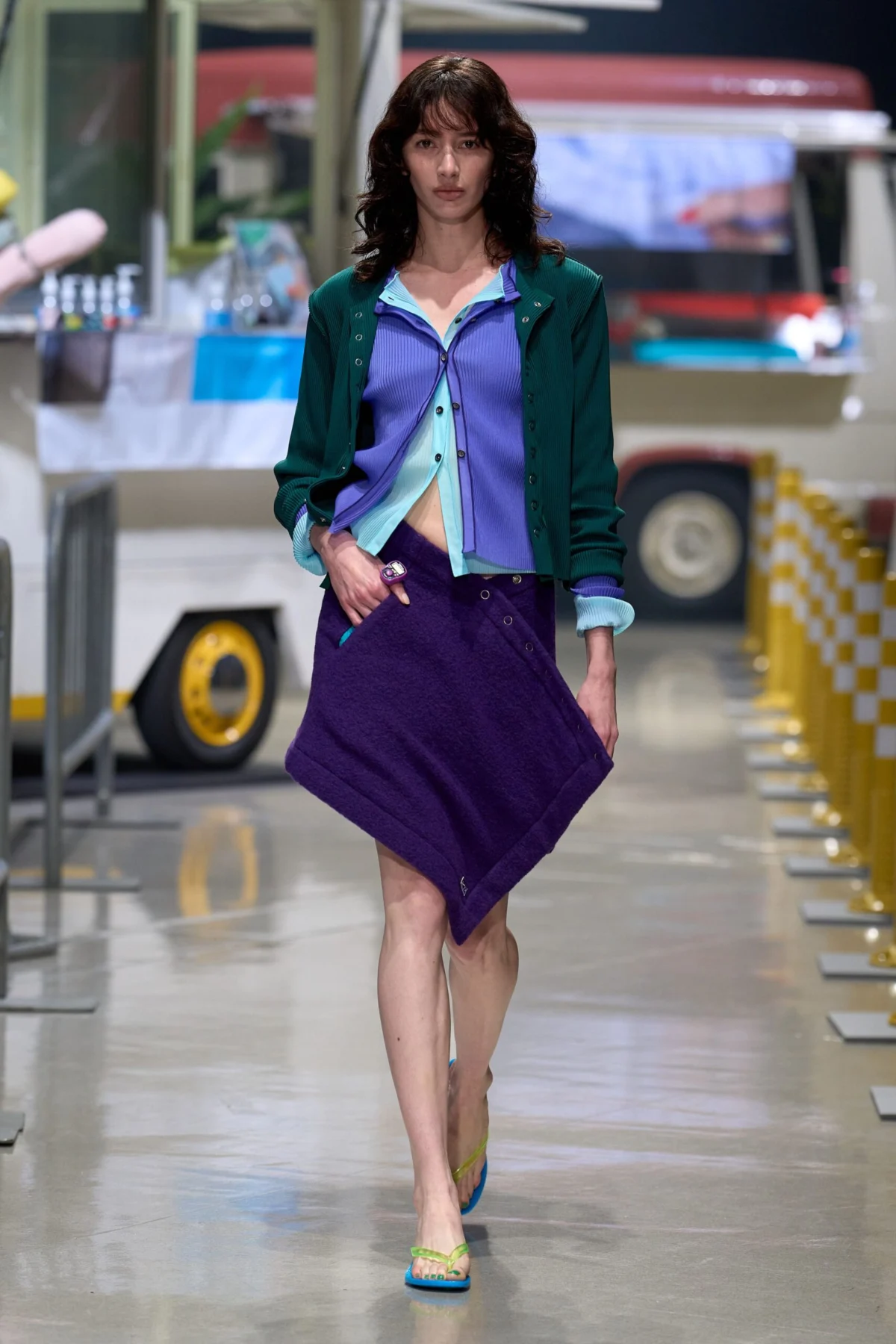
Kotoha Yokozawa, a 34-year-old designer whose previous tenure on Uniqlo’s design team imbued her with a keen understanding of mass-market appeal and innovative material application, has unveiled her latest collection, marking her triumphant return to the runway after a four-year hiatus. The show, a vibrant testament to her distinct and bold aesthetic, drew inspiration from the pulsating urban landscape of Nishi-Shinjuku, a district in Tokyo known for its dynamic energy, constant influx of tourists, and the eclectic tapestry of daily life. Yokozawa’s artistic vision, deeply rooted in her observations of this bustling environment, translated into a collection that pulsated with the rhythm of the city, from the casual conviviality of partygoers enjoying chuhai to the organized zeal of marathon runners and the ubiquitous presence of LUUP electric scooter docking stations.
The genesis of this collection, as explained by Yokozawa backstage, lies in her profound appreciation for the seemingly haphazard yet ultimately harmonious visual language of urban life. "I really like that slightly mismatched look of colors that runners wear, like they’ve bought different things and have to make it work," she stated, her words echoing the resourceful spirit that defines her design philosophy. This sentiment extends beyond mere aesthetics; Yokozawa firmly believes in the emotional resonance of color. "I think color has the power to lift your spirit, and I hope that comes across," she added. This conviction was powerfully demonstrated in the collection’s confident palette, which featured assertive punches of fuchsia, tangerine, mint, and lemon, creating a sporty and energetic ensemble that vividly captured the freneticism and exhilaration of Tokyo.
The collection itself showcased a thoughtful evolution of Yokozawa’s signature pieces. Stretch pleat tops, a recurring motif that has become synonymous with her brand, were reinterpreted and styled with sheer skirts and tightly fitted, cropped cardigans, offering a contemporary take on her established silhouettes. While the collection largely hit its mark, a few pieces, such as a "drab fluffy jacket" and "too-straightforward yoga pants," appeared less aligned with the overall vibrant narrative, suggesting a minor divergence from the collection’s prevailing spirit. However, the undisputed highlights emerged in the futuristic menswear pieces, artfully paired with popper-lined jeans, and in the slinky dresses adorned with intricate fabric cutouts. This latter detail, a thrifty yet ingenious technique, traces back to the nascent stages of Yokozawa’s brand.
"When I first started my brand, I didn’t have the money to commission a factory and I didn’t know much about patterns, so I’d cut it myself and attach leftover fabric," Yokozawa revealed, underscoring her entrepreneurial spirit and her commitment to sustainable practices long before they became a widespread industry trend. This early resourcefulness has now blossomed into a sophisticated design element, demonstrating how limitations can foster innovation. The use of fabric cutouts not only adds a unique textural and visual dimension to the garments but also serves as a poignant reminder of her journey from humble beginnings to a recognized force in the fashion landscape. This practice aligns with broader industry conversations around circular fashion and waste reduction, positioning Yokozawa as a designer who is both forward-thinking and grounded in practical solutions.
A Spectacle Beyond the Garments: The Immersive Set Design
The presentation of Yokozawa’s collection was elevated by a meticulously crafted set that mirrored the exhibition’s urban inspiration. Held on the ninth floor of Shibuya’s Hikarie building, the venue was transformed into a vibrant street scene, a testament to Yokozawa’s belief that fashion exists within a broader context. Two food trucks and a tuk-tuk were ingeniously transported onto the event floor, creating an immediate sense of place and immersion. The runway itself was strategically lined with traffic bollards and punctuated by oversized plants, further enhancing the illusion of a lively urban thoroughfare.
In a playful nod to the Y2K era, a period characterized by its embrace of digital novelties and nostalgic aesthetics, models were accessorized with plastic pedometers or Tamagotchis clipped to their waists. This detail resonated with the collection’s youthful energy and its engagement with cultural touchstones. Yokozawa articulated her holistic approach to design, stating, "I really enjoy creating spaces, props, and even small souvenirs just as much as I enjoy making clothes. They’re essential to my work." This perspective underscores her understanding of fashion as a multi-sensory experience, where the environment and accompanying elements play a crucial role in conveying the collection’s narrative. "Simply showing clothes isn’t what I like about fashion, it’s something that exists within a landscape," she concluded, emphasizing her commitment to crafting a complete immersive experience for the audience.
Contextualizing the Event: Tokyo Fashion Week’s Evolving Landscape
The presentation by Kotoha Yokozawa took place within the broader context of Tokyo Fashion Week (TFW), an event that has steadily grown in international prominence, showcasing the innovative spirit and diverse talent of Japanese designers. While specific dates for the "Tokyo Fall 2026" season are indicative of future planning and trend forecasting, the fashion calendar typically sees major fashion weeks occur in spring and autumn, with designers presenting collections for the subsequent season. For instance, a "Fall 2026" collection would typically be shown in early 2026, allowing for production and retail timelines.
Tokyo Fashion Week, in recent years, has been a crucial platform for emerging designers to gain international exposure, building upon the legacy of established Japanese fashion houses that have significantly impacted global style. The week not only highlights ready-to-wear collections but also serves as a nexus for discussions on sustainability, technological integration in fashion, and the unique cultural influences that shape Japanese design. Yokozawa’s return to the runway after a four-year break is significant, as it signals a renewed engagement with the physical fashion show format, which has seen a resurgence of interest post-pandemic, often augmented by digital presentations to reach a wider audience. The emphasis on immersive set design, as seen in Yokozawa’s show, is a growing trend, reflecting a desire to create memorable and impactful experiences that go beyond the mere display of clothing.
Supporting Data and Industry Trends
The fashion industry is increasingly reliant on data to understand consumer behavior and market trends. For a collection inspired by urban life and athletic wear, several data points are relevant. The global athleisure market, for example, has experienced substantial growth, projected to reach hundreds of billions of dollars in the coming years, driven by a growing emphasis on health, wellness, and comfort. This trend directly supports Yokozawa’s incorporation of sporty elements and vibrant, mood-lifting colors.
Furthermore, the rise of the "conscious consumer" has placed a greater demand on brands to demonstrate transparency and sustainability. Yokozawa’s early adoption of fabric-saving techniques aligns with this growing demand. The increasing popularity of rental fashion and resale platforms also indicates a shift towards more sustainable consumption patterns. While not explicitly stated in the original text, designers like Yokozawa who incorporate resourceful practices are likely to resonate with a segment of the market actively seeking ethically produced goods.
The influence of social media and digital platforms on fashion cannot be overstated. While Yokozawa’s show was a physical event, the visual impact of her vibrant palette, unique set design, and creative styling is highly conducive to social media sharing. Trends like Y2K fashion, which she referenced with the pedometers and Tamagotchis, have seen a significant resurgence, particularly among younger demographics influenced by platforms like TikTok and Instagram. This suggests that Yokozawa’s collection is tapping into current cultural zeitgeists, potentially leading to strong engagement and market interest.
Broader Impact and Implications
Kotoha Yokozawa’s collection and presentation offer several insights into the current state and future direction of fashion. Her ability to translate everyday urban observations into a cohesive and impactful collection demonstrates the enduring power of relatable narratives in fashion design. The Nishi-Shinjuku inspiration, with its blend of the mundane and the energetic, speaks to a growing appreciation for authenticity and lived experience in creative expression.
The emphasis on color as a mood enhancer aligns with the psychological impact of fashion, a field that continues to gain traction. In a world often grappling with uncertainty, clothing that offers a sense of joy and optimism is likely to be well-received. Yokozawa’s approach suggests that fashion can serve as a form of personal empowerment and a catalyst for positive emotional responses.
Moreover, her integrated approach to design, encompassing not only garments but also the environment and accessories, positions her as a creator of holistic experiences. This trend is likely to continue, with designers increasingly seeking to build immersive brand worlds that engage consumers on multiple levels. The success of such presentations can foster brand loyalty and create a more profound connection between the audience and the designer’s vision.
The inclusion of futuristic menswear pieces also hints at the evolving landscape of gender-neutral or fluid fashion. While not explicitly stated as such, the "futuristic men’s pieces" styled in a way that could be interpreted broadly suggests a move towards more inclusive and experimental approaches to menswear, a significant ongoing development in the fashion industry.
Finally, Yokozawa’s journey, from her early days of resourceful design to her current standing, serves as an inspiring narrative for aspiring designers. It underscores the importance of a strong creative vision, adaptability, and the ability to draw inspiration from the world around us. Her success in re-establishing her presence on the fashion circuit after a hiatus also highlights the resilience and dynamism of the fashion industry, which constantly reinvents itself through the contributions of talented individuals. The "Tokyo Fall 2026" season, as represented by Yokozawa’s vibrant and thoughtful collection, promises a future where fashion is not just about clothing, but about the stories it tells, the emotions it evokes, and the vibrant landscapes it inhabits.
