

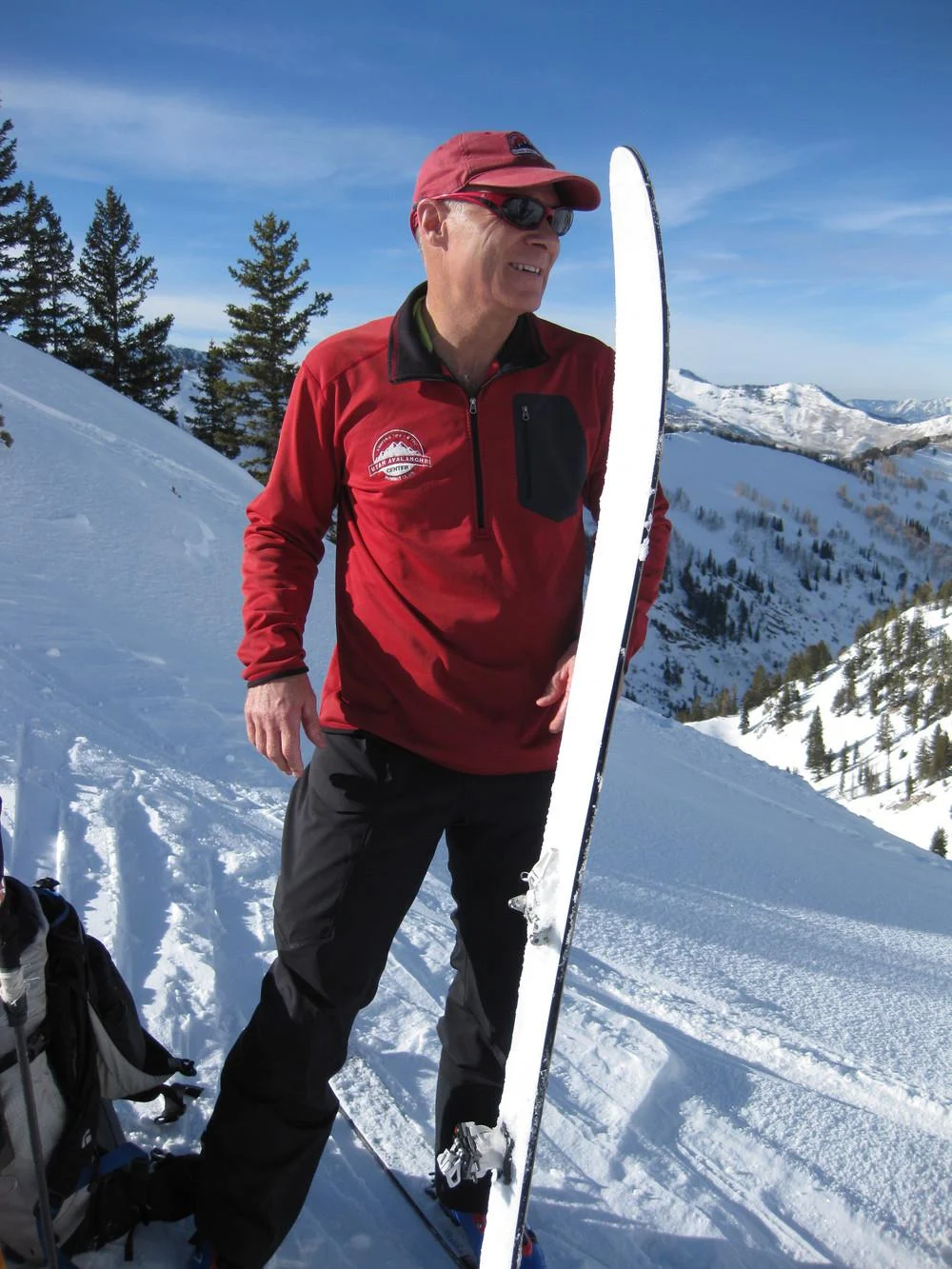
The Utah Avalanche Center has officially announced the retirement of its long-standing director, Bruce Tremper, who will conclude his distinguished career with the United States Forest Service at the end of August. Tremper, who has served as the director of the Utah Avalanche Center (UAC) for 29 years, is widely regarded as one of the most influential figures in the global avalanche safety community. His departure marks the end of an era for the Wasatch backcountry, during which the UAC evolved from a modest advisory service into a world-leading institution for snow science and public safety. To ensure a seamless transition in leadership, the Forest Service confirmed that Mark Staples, a seasoned forecaster from the Gallatin National Forest Avalanche Center, has been selected to succeed Tremper as the new director.
The leadership change comes at a time when backcountry recreation is seeing unprecedented growth, placing greater demand on the accuracy and accessibility of avalanche forecasting. Tremper’s career has been defined by a commitment to bridging the gap between complex atmospheric science and the practical needs of skiers, snowboarders, and snowmobilers. His work has not only shaped the safety protocols of the Intermountain West but has also established international standards for how avalanche danger is communicated to the general public.
A Chronology of Professional Excellence and Education
Bruce Tremper’s journey into the world of snow science began in the rugged mountains of Montana. He pursued his academic foundations at Montana State University (MSU) in Bozeman, an institution renowned for its contributions to cold-regions research. Under the mentorship of the esteemed Dr. John Montagne, Tremper earned a Master of Science degree, focusing on the mechanical properties of snow and the triggers that lead to slope failure. This academic rigor provided the framework for a career that would eventually balance theoretical research with high-stakes field operations.
Following his graduate studies, Tremper transitioned into the practical realm of avalanche mitigation. He gained foundational experience performing avalanche control work at Bridger Bowl and Big Sky Resort in Montana, where he utilized explosives and physical ski cutting to stabilize snowpacks for commercial recreation. This frontline experience proved invaluable when he moved to Alaska to work at the Alaska Avalanche Center. In the 49th State, Tremper collaborated with other luminaries of the field, including Doug Fesler, Jill Fredston, and Jim Woodmency. Alaska’s massive terrain and maritime snowpack offered a different set of challenges compared to the continental snowpack of Montana, further rounding out his expertise.
In 1986, Tremper was appointed Director of the Utah Avalanche Center. At that time, the center was in its relative infancy, and the primary method of disseminating information was through recorded telephone messages. Over the next three decades, Tremper oversaw a technological revolution within the agency. He was instrumental in transitioning the UAC from analog systems to a robust, internet-based platform that offers real-time data, high-definition video tutorials, and interactive maps.
Innovation in Communication: Icons and the Conceptual Model
One of Tremper’s most significant contributions to the industry was his focus on the "human factor" of avalanche safety. He recognized early on that providing technical data was insufficient if the public could not intuitively understand the level of risk. Under his leadership, the UAC became a pioneer in the use of icons to represent different types of avalanche problems—such as wind slabs, persistent weak layers, and wet snow. These visual aids allowed recreationists to quickly identify the specific nature of the day’s hazard, a practice that has since been adopted by forecasting centers worldwide.
In 2010, Tremper was a key member of the working group that developed the "Conceptual Model of Avalanche Danger." This project was a collaborative effort to standardize the avalanche danger scale across North America. Prior to this, different regions often used varying criteria to define "Moderate" or "High" danger, which created confusion for travelers moving between mountain ranges. The resulting North American Public Avalanche Danger Scale provided a unified framework based on the likelihood of an avalanche and the potential size of the event. This standardization is credited with saving lives by providing a clear, consistent language for risk management.
The 2002 Winter Olympics and Literary Impact
The scope of Tremper’s influence extended beyond daily advisories. During the 2002 Winter Olympic Games in Salt Lake City, he was placed in charge of backcountry avalanche safety. With the eyes of the world on the Wasatch Range, Tremper and his team were responsible for ensuring that the massive influx of international visitors and the infrastructure supporting the games were protected from snow-related disasters. The success of the safety program during the Olympics solidified the UAC’s reputation as a premier government agency.
Tremper is also an accomplished author and educator. For six years, he served as the editor of The Avalanche Review, the professional journal of the American Avalanche Association. He authored numerous peer-reviewed papers that pushed the boundaries of snow science, but perhaps his most lasting legacy is his work for the layperson. His books, including Staying Alive in Avalanche Terrain, are considered the "bibles" of backcountry safety. These publications shifted the focus of avalanche education toward decision-making and heuristics, teaching users how to recognize the mental traps that lead to accidents.
Furthermore, Tremper has been a staple instructor at the National Avalanche School for decades. His ability to translate complex geophysical phenomena into engaging, understandable lessons has influenced generations of professional ski patrollers and mountain guides.

Transition of Leadership: Mark Staples Takes the Helm
The appointment of Mark Staples as the incoming director signals a commitment to maintaining the high standards of research and public service established during Tremper’s tenure. Staples brings a wealth of experience that mirrors the diverse background of his predecessor. His career includes extensive work as a ski patroller and snow safety officer at Big Sky Ski Area, where he managed complex terrain in high-alpine environments.
Staples holds a Master of Science degree in Engineering from Montana State University, where his research focused on the structural integrity of snow and the mechanics of slab avalanches. This engineering perspective provides a unique analytical lens for forecasting. Before accepting the leadership role at the UAC, Staples spent eight seasons as a backcountry avalanche forecaster at the Gallatin National Forest Avalanche Center in Bozeman. He has also led several special projects for the National Avalanche Center, focusing on improving the technical accuracy of snowpack observations.
Industry analysts suggest that Staples’ background in both engineering and field forecasting makes him an ideal fit for the UAC. The Utah backcountry presents unique challenges, including a "shallow and weak" continental snowpack that is notoriously difficult to predict. Staples’ experience in the Gallatin Range, which shares similar snowpack characteristics, will be essential as he moves into the Wasatch.
Supporting Data and the Evolving Role of the UAC
The importance of the UAC’s mission is underscored by the rising statistics of backcountry use. According to data from the outdoor industry, the sale of alpine touring and splitboard equipment has seen a double-digit percentage increase nearly every year over the past decade. In Utah specifically, the proximity of the Wasatch Range to the Salt Lake City metropolitan area creates a unique "urban-wildland interface" where thousands of people can access high-consequence avalanche terrain within minutes of leaving their homes.
National statistics show that avalanche fatalities in the United States have averaged approximately 27 per year over the last decade. However, experts note that while the number of people entering the backcountry has skyrocketed, the fatality rate has not increased proportionally. This is largely attributed to the work of centers like the UAC, which provide the education and daily forecasting necessary for users to make informed choices.
The UAC operates through a unique public-private partnership between the U.S. Forest Service and the non-profit group "Friends of the Utah Avalanche Center." This model allows the agency to leverage federal resources for scientific forecasting while utilizing private donations for educational outreach and technological upgrades. Tremper was a vocal advocate for this partnership, recognizing that government funding alone was often insufficient to meet the rapidly growing needs of the skiing public.
Broader Implications for the Avalanche Industry
The retirement of a figure as prominent as Bruce Tremper marks a significant moment of transition for the entire snow science community. As the "old guard" of pioneers who established the first modern forecasting protocols begins to retire, the industry is looking toward a new generation of leaders who must navigate the challenges of climate change and shifting mountain snowpacks.
The implications of Tremper’s work are felt in the professionalization of the industry. His emphasis on standardized danger scales and clear communication has made it easier for international collaboration. Today, forecasters in the European Alps, the Canadian Rockies, and the Southern Alps of New Zealand utilize methodologies that Tremper helped refine.
As Tremper moves into retirement, he has expressed a desire to continue his involvement in avalanche safety through writing and independent projects. He and his wife, Susi, are expected to remain active members of the Wasatch skiing community. His departure from the Forest Service is not viewed as a total exit from the field, but rather a transition into a role where he can focus on mentorship and advocacy without the administrative burdens of directing a major agency.
The Utah Avalanche Center enters this new chapter with a solid foundation. With Mark Staples at the helm, the agency is positioned to continue its trajectory of innovation. The transition represents a passing of the torch between two Montana State University alumni who share a deep reverence for the mountains and a scientific dedication to keeping the public safe. While Tremper’s presence in the daily operations of the UAC will be missed, his influence is permanently etched into the snow and the culture of the Wasatch.
