

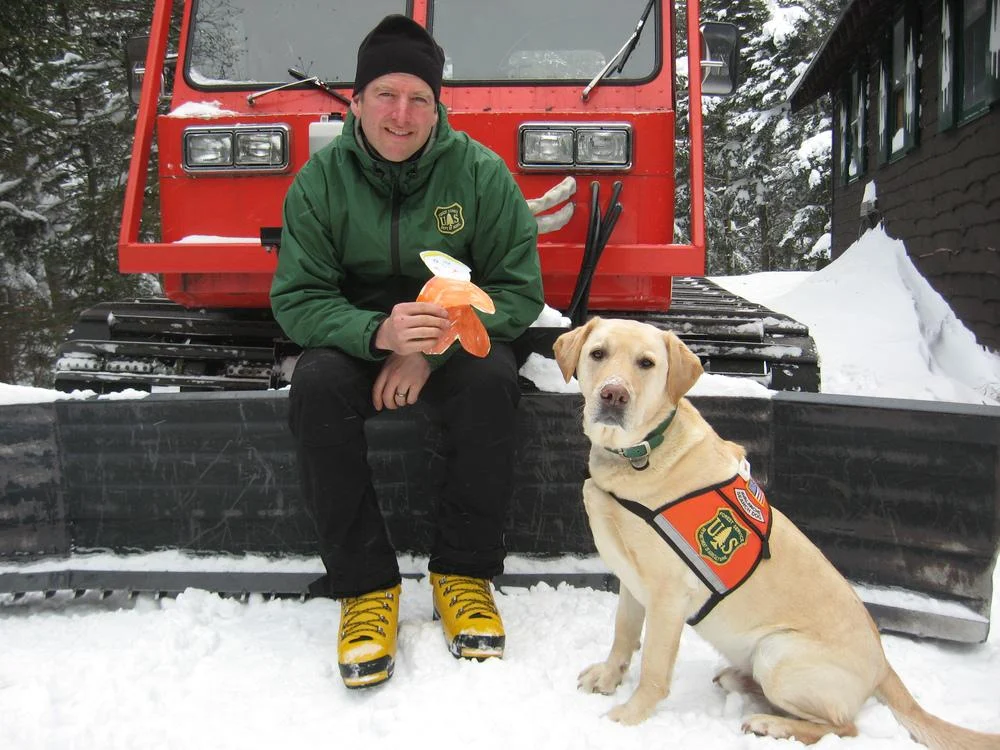
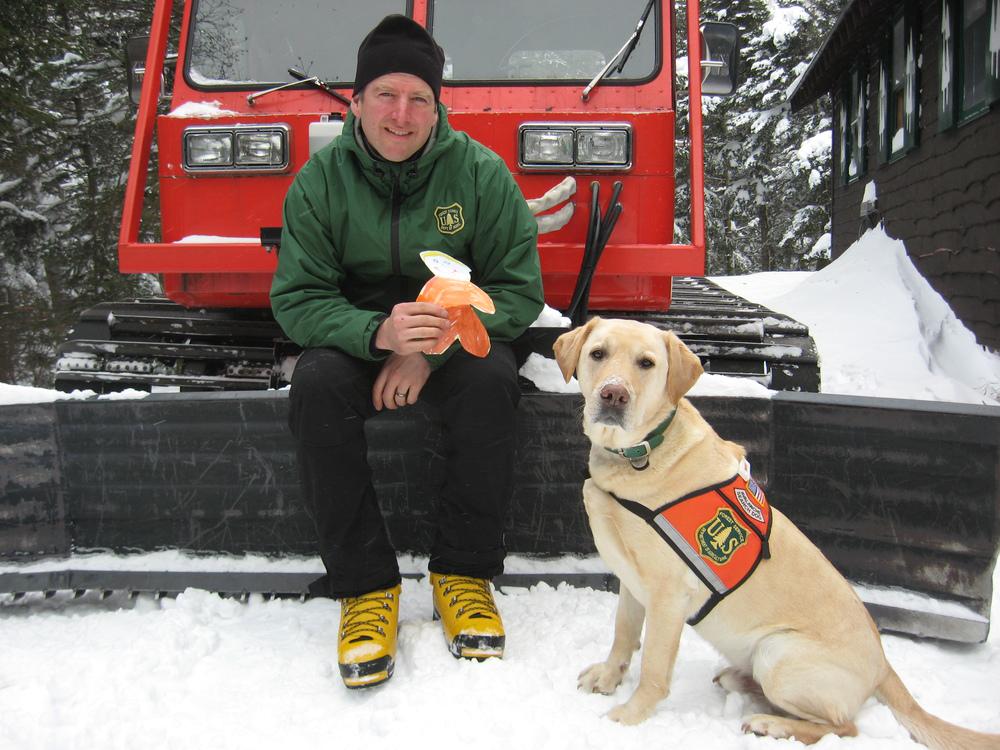
The Mount Washington Avalanche Center (MWAC) and the broader New England outdoor community are mourning the loss of Cutler, a dedicated avalanche search and rescue dog who served the White Mountain National Forest for over a decade. At 14 years old, Cutler passed away following a distinguished career that spanned 11 years of active duty, during which he became an iconic figure on the highest peak in the Northeastern United States. Working alongside his handler, Mount Washington Avalanche Center Director Chris Joosen, Cutler was more than a service animal; he was a critical component of the United States Forest Service’s safety infrastructure and a beloved ambassador for backcountry education.
A Career Defined by Vigilance and Versatility
Cutler’s tenure at Mount Washington was marked by an extraordinary level of commitment, with approximately 80% of his life dedicated to the safety of the thousands of skiers, hikers, and climbers who frequent the Presidential Range. In the high-stakes environment of the White Mountains, where weather conditions are often cited as some of the most erratic and dangerous in the world, the presence of a highly trained avalanche dog provides a layer of security that technology cannot always replicate.
During his 11 years of service, Cutler was a fixture in the rugged terrain of Tuckerman Ravine and Huntington Ravine. These glacial cirques are world-renowned for their steep backcountry skiing and technical ice climbing, but they also represent some of the most active avalanche paths in the eastern United States. Cutler’s primary role involved rapid response to reported slides, where his keen olfactory senses allowed him to scan large debris fields for the scent of buried individuals far faster than human search teams utilizing traditional probe lines.
Beyond the technical demands of search and rescue (SAR), Cutler excelled in a secondary but equally vital role: public relations and education. In an era where backcountry usage has seen a significant uptick, the MWAC faced the challenge of communicating complex safety data to a diverse public. Cutler served as a bridge between the professional Snow Rangers and the visiting public. His presence at the Hermit Lake Courtyard and at various trailheads made the Snow Rangers more approachable, allowing for informal "teachable moments" regarding avalanche beacons, shovels, probes, and the importance of reading the daily avalanche advisory.
The Chronology of a Working Life on the Mountain
Cutler’s journey began with intensive training, a process that requires both the dog and the handler to undergo hundreds of hours of certification. Avalanche dogs are typically trained using a "play-as-work" philosophy, where the search for a human scent is rewarded with a favorite toy or game. For Cutler, this training translated into a professional life characterized by high-altitude deployments and the ability to remain calm in the face of extreme wind and freezing temperatures.
From his initial certification to his senior years, Cutler’s timeline reflects the evolution of the Mount Washington Avalanche Center itself. During his first years on the mountain, Cutler was integrated into the daily patrols of the Snow Rangers. He was trained to travel via snowmobile, on foot through deep powder, and even to be hoisted if necessary. As he reached his mid-career, he became the face of the MWAC’s digital outreach, appearing in educational photos and blog posts that helped modernize the center’s communication strategy.
In his later years, even as his physical pace slowed, Cutler’s role as an educator became even more prominent. He remained a constant companion to Director Chris Joosen, often seen at the center’s headquarters or during morning briefings. His retirement from active field duty did not mark the end of his influence; he remained a symbol of the bond between the Forest Service and the community until his passing at the age of 14.
Technical Context: The Science of Avalanche Rescue Dogs
To understand the magnitude of Cutler’s contribution, it is necessary to examine the technical advantages that a canine brings to an avalanche rescue operation. Research in mountain rescue logistics indicates that a single trained avalanche dog can search a one-hectare area (approximately 2.5 acres) in approximately 30 minutes. In contrast, a human search team consisting of 20 people using avalanche probes would take approximately four hours to cover the same area with the same degree of thoroughness.
In the context of avalanche survival, time is the most critical variable. Statistics from the American Avalanche Association suggest that a victim buried in an avalanche has a 93% survival rate if recovered within the first 15 minutes. That rate drops precipitously to about 37% after 35 minutes, as the victim faces the dual threats of asphyxiation and hypothermia. By providing a rapid-search capability, Cutler offered a "golden hour" advantage that human-only teams simply could not match in the deep, dense snowpacks often found in the ravines of Mount Washington.
Furthermore, Cutler’s training allowed him to distinguish between "old" scent (gear left behind or previous tracks) and "live" scent, a nuance that is essential in high-traffic areas like Tuckerman Ravine where the debris may contain numerous abandoned items.
Official Responses and Community Impact
The announcement of Cutler’s passing prompted a significant outpouring of support from the mountaineering and search and rescue communities. Chris Joosen, who shared both his professional and personal life with Cutler, expressed profound gratitude for the dog’s service. In a tribute posted through the Mount Washington Avalanche Center’s official channels, Joosen highlighted not just the dog’s skills, but his temperament. He noted that Cutler had an innate ability to sense the mood of a rescue operation, providing a calming presence during stressful missions.
Peer organizations, including the Mountain Rescue Service (MRS) and various New Hampshire Fish and Game officers, have recognized Cutler as a pioneer in the region’s canine programs. His success helped solidify the argument for maintaining a permanent canine presence within the Forest Service’s winter operations on Mount Washington.
The community impact of Cutler’s life is visible in the thousands of interactions he had with the public. For many young hikers and skiers, meeting Cutler was their first introduction to the concept of mountain safety. This "soft" side of enforcement and education is credited with reducing the number of "preventable" incidents on the mountain, as visitors were more likely to heed warnings delivered by a ranger accompanied by a friendly, recognizable dog.
Broader Implications for Backcountry Safety
Cutler’s legacy extends into the future of the Mount Washington Avalanche Center’s mission. His career demonstrated that a successful avalanche program requires a multifaceted approach: rigorous science-based forecasting, rapid response capabilities, and effective public engagement.
The use of SAR dogs remains a cornerstone of mountain safety programs worldwide, from the Alps to the Rockies. However, the specific challenges of the White Mountains—characterized by high density "wet" snow, extreme icing, and dense scrub vegetation—require a specific type of resilience in a working dog. Cutler proved that these challenges could be met, setting a standard for future canine candidates in the region.
The implications of Cutler’s work also touch on the psychological aspects of rescue. For the Snow Rangers who work in a high-stress environment where they must often make life-or-death decisions regarding trail closures and rescue attempts, Cutler served as a source of emotional support. The "working dog" dynamic is a partnership that improves the mental well-being of the human handlers, a factor increasingly recognized in professional first-responder circles.
Conclusion and Legacy
As the Mount Washington Avalanche Center moves forward, the memory of Cutler will continue to influence how the organization approaches its work. Plans for future canine involvement in the Snow Ranger program are a direct result of the groundwork laid by Cutler and Chris Joosen. The center continues to emphasize the importance of the "human-canine bond" in ensuring that Mount Washington remains a place where adventure and safety can coexist.
In the 14 years of his life and the 11 years of his service, Cutler became an indelible part of the mountain’s history. He leaves behind a legacy of lives potentially saved through faster search times and countless individuals educated through his presence. As winter returns to the Presidential Range and the snow begins to accumulate in the ravines, the impact of Cutler’s career will remain a guiding light for the rangers who continue the watch over the "Home of the World’s Worst Weather."
The Mount Washington Avalanche Center remains committed to the high standards of safety and public service that Cutler embodied. While his physical presence will be missed in the ravines, his contribution to the culture of backcountry safety in the White Mountains is permanent. Through his work, Cutler helped transform a formidable landscape into a safer environment for all, proving that sometimes the most effective tool in modern mountain rescue is one that has been by humanity’s side for millennia.
