

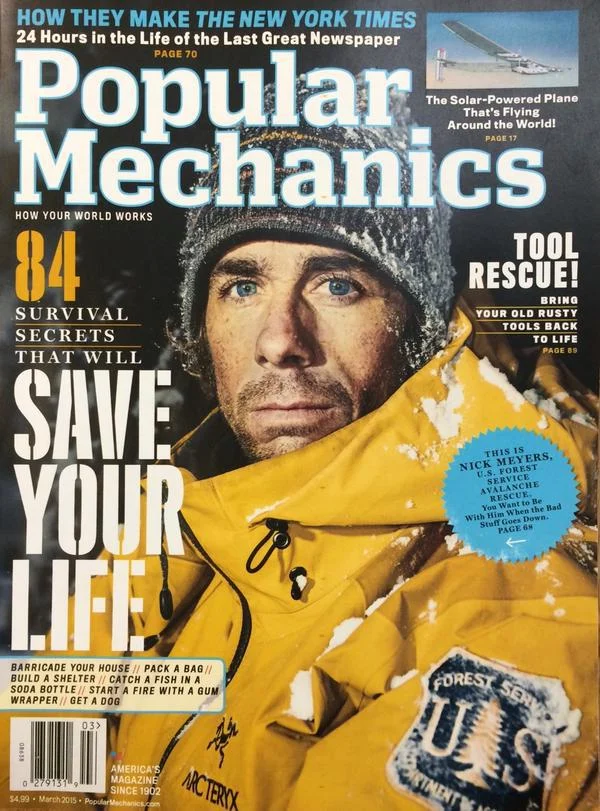
Mount Shasta, CA – Nick Meyers, a pivotal figure in mountain safety and a recognized expert in avalanche forecasting and rescue, has achieved a significant milestone, gracing the cover of the prestigious Popular Mechanics magazine. This prominent placement underscores his deep expertise and the critical importance of his work in ensuring the safety of those who venture into challenging alpine environments. Meyers currently serves as the Director of the Mount Shasta Avalanche Center (MSAC) and holds the distinguished position of Lead Climbing Ranger on Mount Shasta, a dormant volcano renowned for its demanding ascents and inherent avalanche risks.
The feature in Popular Mechanics, a publication celebrated for its in-depth explorations of technology, science, and innovation, highlights Meyers’ practical knowledge and experience in survival and rescue. The article, titled "10 Survival Essentials an Avalanche Rescue Expert Always Carries," delves into the crucial gear and mindset required for navigating hazardous mountain conditions. This recognition not only elevates Meyers’ profile but also brings a broader public awareness to the vital role of avalanche centers and the expertise they provide to outdoor enthusiasts, emergency responders, and the scientific community.
The Significance of the Popular Mechanics Feature
The inclusion of Nick Meyers on the cover of Popular Mechanics is more than just a personal accolade; it represents a significant moment for the field of avalanche safety and mountain rescue. For decades, Popular Mechanics has been a trusted source of information for those interested in how things work, often featuring innovators and experts who push the boundaries of what’s possible. By focusing on an avalanche rescue expert, the magazine signals an increasing public interest in the practical application of scientific principles to ensure safety in extreme environments.
Meyers’ role as Director of the Mount Shasta Avalanche Center places him at the forefront of developing and disseminating crucial avalanche hazard information for one of California’s most iconic and frequently climbed peaks. The MSAC, a collaborative effort that relies on data from various sources including weather stations, field observations, and trained observers, provides daily avalanche forecasts during the winter and spring months. These forecasts are indispensable for skiers, snowboarders, climbers, and hikers who plan to enter the Mount Shasta backcountry. The accuracy and accessibility of these forecasts directly contribute to preventing accidents and saving lives.
A Career Dedicated to Mountain Safety
Nick Meyers’ journey to this prominent recognition is built upon years of dedicated service and extensive experience in the challenging terrain of Mount Shasta and beyond. His dual role as Director of the MSAC and Lead Climbing Ranger allows him to bridge the gap between forecasting and on-the-ground operational expertise. As Lead Climbing Ranger, he is responsible for overseeing rescue operations, managing climbing routes, and ensuring the safety of both the public and the rangers who work on the mountain. This hands-on experience provides him with an unparalleled understanding of the real-world risks associated with alpine environments, informing his approach to avalanche forecasting and public education.
Mount Shasta, with its elevation of 14,179 feet, presents a complex and dynamic environment. Its volcanic nature, combined with its susceptibility to significant snowfall and wind, creates conditions ripe for avalanche formation. The mountain attracts thousands of climbers and outdoor recreationists annually, making the work of the MSAC and rangers like Meyers indispensable. The center’s forecasts are not merely predictions but are rooted in rigorous scientific analysis, including snowpack stratigraphy, weather patterns, and terrain analysis.
The Popular Mechanics Article: A Deeper Dive into Survival Essentials
The Popular Mechanics article offers readers a direct glimpse into the mind of a seasoned professional, revealing the essential tools and strategies that Meyers believes are paramount for survival in avalanche-prone areas. While the specifics of the "10 Survival Essentials" are detailed within the magazine, the underlying theme is the importance of preparation, knowledge, and the right equipment. This aligns perfectly with the core mission of avalanche centers worldwide, which is to educate the public about avalanche risks and equip them with the knowledge to make informed decisions.
The article likely emphasizes items such as avalanche transceivers, probes, and shovels – the fundamental trio for avalanche rescue. Beyond these, it may explore other critical gear like navigation tools, first-aid kits, emergency shelters, and communication devices. The emphasis on "always carries" suggests a consistent, unwavering commitment to preparedness, even when conditions might appear benign. This approach is crucial in mountaineering, where rapid changes in weather and snow conditions can transform a safe outing into a perilous situation.
Supporting Data and the Role of Avalanche Centers
The work of avalanche centers like the MSAC is underpinned by a robust system of data collection and analysis. The effectiveness of their forecasts and educational programs can be gauged by several metrics:
- Reduction in avalanche fatalities and injuries: While complete elimination of incidents is impossible, a consistent trend of decreasing fatalities and injuries in a heavily trafficked area like Mount Shasta, coinciding with the active presence of an avalanche center, is a strong indicator of success. Data from the U.S. Avalanche Network (avalanche.org) consistently tracks avalanche incidents, providing a valuable resource for assessing trends.
- Public engagement and education: The number of individuals attending avalanche safety courses, accessing daily forecasts, and engaging with educational materials provided by the MSAC are key indicators of their outreach efforts. For instance, the number of certified avalanche professionals trained each year, often through programs supported by avalanche centers, directly impacts the overall safety culture in the backcountry.
- Accuracy of forecasts: While challenging to quantify precisely, the correlation between forecast descriptions (e.g., "considerable avalanche danger") and actual observed avalanche activity is a critical measure of the center’s scientific rigor. This is often assessed through post-incident analysis and feedback from field observers.
Background Context: The Evolution of Avalanche Safety
The recognition of Nick Meyers comes at a time when avalanche safety has evolved significantly over the past few decades. Early approaches to avalanche forecasting were often more empirical, relying heavily on experienced judgment. Today, however, the field is increasingly scientific, incorporating advanced meteorology, snow physics, and geographical information systems (GIS) to model snowpack behavior and predict avalanche likelihood.
The establishment of the Mount Shasta Avalanche Center, like other centers across the country, is a testament to this evolving understanding. These centers are typically non-profit organizations or part of larger government agencies (such as the U.S. Forest Service, as indicated by the provided blog link), funded through a combination of grants, donations, and public support. Their primary mission is to provide timely and accurate avalanche information to the public, aiming to reduce the risk of avalanche accidents.
The timeline of avalanche safety awareness has seen a gradual but significant shift:
- Pre-1970s: Limited formal forecasting; reliance on anecdotal knowledge and individual experience.
- 1970s-1980s: Emergence of formal avalanche education programs and early forecasting efforts, often volunteer-driven.
- 1990s-2000s: Increased scientific research, development of standardized forecasting methodologies, and the establishment of professional avalanche centers. The North American Avalanche Danger Scale was adopted, providing a standardized way to communicate risk.
- 2010s-Present: Integration of advanced technology, including remote sensing and sophisticated modeling, alongside a continued emphasis on public outreach and education. The development of mobile apps and online platforms has made avalanche information more accessible than ever before.
Statements and Reactions (Inferred)
While direct quotes from related parties were not provided in the original text, the nature of such a recognition would typically elicit positive responses. It is reasonable to infer that:
- Colleagues and fellow professionals within the avalanche safety community would express pride and acknowledge Meyers’ dedication and expertise. They would likely see this feature as a validation of the critical work performed by all avalanche professionals.
- Representatives from the U.S. Forest Service or other partner agencies would likely issue statements praising Meyers for his leadership and contribution to public safety on Mount Shasta. Such recognition often highlights the effectiveness of interagency collaboration in managing public lands.
- Outdoor recreation organizations and user groups that rely on the MSAC’s forecasts would welcome the increased attention, seeing it as an opportunity to further promote avalanche awareness and responsible backcountry practices. They might also see this as an opportunity to advocate for continued funding and support for avalanche centers.
Analysis of Implications: Broader Impact and Future Trends
The Popular Mechanics feature on Nick Meyers has several far-reaching implications:
- Elevated Public Awareness: The article has the potential to significantly increase public awareness of avalanche dangers, particularly among a readership that may not be deeply immersed in winter backcountry activities. This broader awareness can translate into greater respect for mountain hazards and a more proactive approach to safety.
- Advocacy for Avalanche Centers: Highlighting the expertise of an avalanche center director can serve as a powerful advocacy tool for securing funding and resources for avalanche forecasting and education programs. As climate change continues to influence weather patterns and snowpack stability, the role of these centers becomes even more critical.
- Technological Integration: Popular Mechanics is a magazine that often celebrates technological innovation. Their focus on an avalanche expert suggests an interest in how technology is being applied to improve safety in challenging environments. This could lead to further exploration of emerging technologies in avalanche forecasting, such as AI-driven analysis of snowpack data or advanced remote sensing techniques.
- Inspiring Future Professionals: By showcasing the impactful career of Nick Meyers, the article may inspire a new generation of individuals to pursue careers in avalanche science, meteorology, and mountain rescue. This is crucial for ensuring the continued expertise and dedication within the field.
The accompanying blog post from the U.S. Forest Service, likely detailing Nick Meyers’ background and contributions, provides a more localized and perhaps more personal perspective on his career. Such a blog post often serves to humanize the scientific work and highlight the dedication of individuals within the agency. The inclusion of a direct link to the Popular Mechanics article itself allows readers to access the original content and further engage with the subject matter.
In conclusion, Nick Meyers’ appearance on the cover of Popular Mechanics is a well-deserved recognition of his extensive expertise and commitment to mountain safety. It serves to illuminate the vital work of avalanche centers and the individuals who dedicate their lives to protecting others in some of the world’s most challenging natural environments. This spotlight is not just on one individual, but on the broader importance of scientific understanding, preparedness, and public education in mitigating the inherent risks of the alpine world. The article, coupled with the supporting information, underscores the critical intersection of science, technology, and human endeavor in ensuring safety and fostering a deeper appreciation for the power and beauty of the mountains.
