

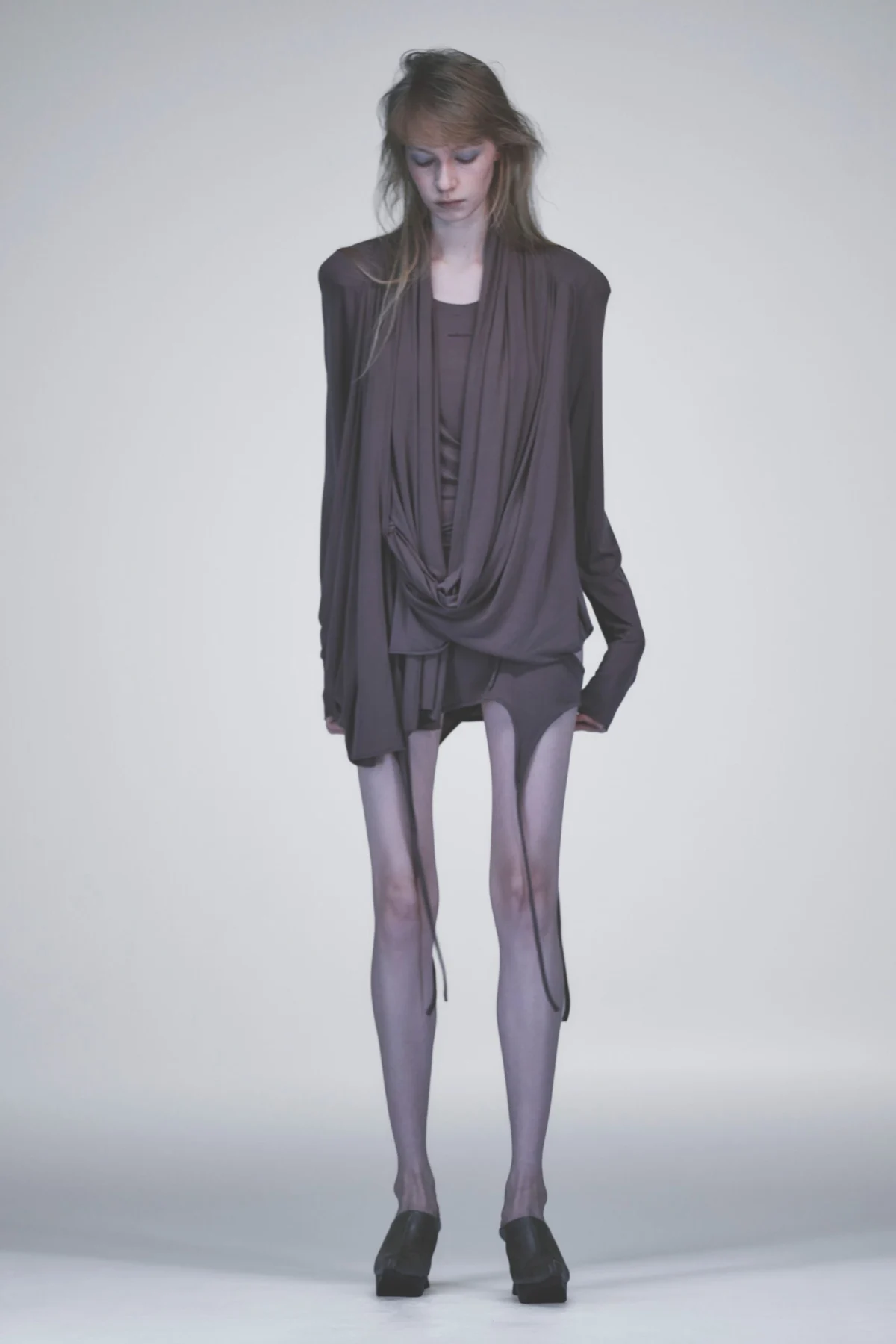
The air within the cavernous venue crackled with a palpable tension, a hushed anticipation that presaged Yuka Kimura’s latest offering for Mukcyen. On her sixth season helming the avant-garde brand, Kimura unveiled a collection aptly described by the designer herself as “Low Energy.” This stark yet evocative moniker belies a profound engagement with contemporary anxieties, a theme deeply rooted in Kimura’s recent immersion in Michelangelo Antonioni’s seminal 1964 film, Red Desert. The film, a haunting exploration of the psychological toll exacted by industrialization on the human psyche, served as a potent springboard for Kimura to contemplate its unsettling resonance with our present, hyper-digitalized reality.
Kimura articulated her vision, explaining that the relentless grind of physical factories and clanking machinery of Antonioni’s era has been supplanted by a ceaseless, often overwhelming, digital hum. "A messy, overwhelming variety of inputs," she characterized this modern deluge. "People are becoming increasingly sensitive to this kind of noise, or simply exhausted by it," Kimura stated, her words echoing the pervasive fatigue felt by many navigating the 21st century. "I created this collection to express that feeling." This sentiment manifested tangibly in the collection’s striking silhouettes. Hoods, springing assertively from the shoulders of impeccably tailored jackets, or draped with an almost mournful elegance, reminiscent of Alaïa’s iconic styles, from form-fitting bodices, immediately conveyed a sense of protective enclosure. "Good for when you don’t want to talk to anyone," Kimura mused, a sentiment that undoubtedly resonated with the fashion cognoscenti present, many of whom are at the forefront of demanding careers.
The designer, a striking 28-year-old whose distinctive appearance—platinum white hair and eyebrows, stark white makeup, and long nails painted a sophisticated ash gray—commands attention, meticulously considered how her chosen silhouettes and fabrics could best flatter and interact with the human form. This is not merely an aesthetic consideration for Kimura; it is a fundamental tenet of her design philosophy. "I consider things like which areas women might want to hide or reveal, and those details are really the core of what I do," she explained. The collection’s tight, sheer pieces, dubbed "second-skin" by Kimura, are designed to envelop the body with an almost primal intimacy, evoking the sensation of being tangled in bedsheets, a visual metaphor for introspection and vulnerability. "The idea is that by having the fabric cling to the skin rather than hanging loosely, it creates a sense of facing oneself," she elaborated. This approach speaks to a growing trend in fashion, where designers are increasingly exploring the psychological impact of clothing, moving beyond mere aesthetics to address wearer well-being and self-perception.
The runway presented a series of compelling juxtapositions. Asymmetric corsets and skirts were adorned with artfully disheveled lace hems, a deliberate disruption of conventional polish. Sheer black dresses cascaded fluidly from the throat to the ankles, creating an ethereal yet grounded presence. Scarves, emblazoned with what appeared to be newspaper print—a potent symbol of information overload and the transient nature of news—were artfully tied around the torso with robust rope, suggesting a need for structure amidst chaos. T-shirts featured innovative neckbands stretched taut across the sternum or were strategically opened to reveal slivers of hip, a daring interplay of concealment and exposure. The ensemble was completed with heeled mules boasting elongated, pointed toes. While not overtly aggressive, the effect was undeniably one of calculated intimidation, a subtle assertion of power in a world that can often feel disempowering.
The Psychological Underpinnings of "Low Energy"
Kimura’s intention behind this collection transcends mere sartorial expression; it delves into the psychological architecture of modern existence. The overarching goal, she articulated, was for the wearer to feel both attractive and confident, yet simultaneously protected. It’s about the pleasure of inhabiting one’s own body, but on one’s own terms, free from external pressures and expectations. "I want the wearer to change a little through the clothes," Kimura stated with conviction. "Even a small shift in mindset, that’s something only clothing can really do." This philosophy builds upon the brand’s established aesthetic, which often leans into a grungy, post-apocalyptic sensuality. For Mukcyen’s steadily growing community, this collection offers not just garments, but a form of armor, a conceptual toolkit to navigate the daily battles, even on days when their internal reserves feel depleted.
This sentiment aligns with broader cultural observations regarding digital fatigue. A recent study published in the Journal of Digital Psychology indicated that over 60% of individuals report feeling overwhelmed by the constant influx of digital information, leading to increased stress and decreased productivity. Fashion, as a powerful form of non-verbal communication and self-expression, can play a crucial role in mitigating these effects, offering individuals a sense of control and agency. Kimura’s "Low Energy" collection taps into this need for conscious disengagement and personal sanctuary.
Context of Tokyo Fashion Week and Mukcyen’s Trajectory
The Mukcyen presentation was a significant moment within the broader landscape of Tokyo Fashion Week, an event that has consistently served as a vital platform for emerging and established designers to showcase their innovative visions. Held annually, typically in March and October, Tokyo Fashion Week has cemented its reputation as a crucible for avant-garde design, often characterized by its experimental approach to silhouettes, materials, and conceptual narratives. This season, in particular, has seen a heightened focus on designers addressing contemporary social and psychological themes, reflecting a global shift within the fashion industry towards more meaningful engagement with the world.
Mukcyen, under Yuka Kimura’s direction, has steadily carved out a niche for itself within this competitive environment. Since its inception, the brand has been recognized for its distinctive blend of intellectual rigor and avant-garde aesthetics. Kimura’s tenure, now spanning six seasons, has been marked by a consistent exploration of themes related to identity, societal pressures, and the individual’s place within an increasingly complex world. Her ability to translate abstract concepts into tangible, wearable pieces has garnered a loyal following and critical acclaim, positioning Mukcyen as a brand to watch for its forward-thinking approach to fashion design. This collection, with its direct address of digital saturation and its proposed sartorial solutions, represents a confident evolution of the brand’s core tenets.
Design Elements and Their Symbolic Significance
The collection’s visual language is rich with symbolism. The extensive use of hoods, for instance, can be interpreted not only as a literal shield against unwanted interaction but also as a metaphorical retreat into oneself, a necessary act of introspection in a world that demands constant outward projection. The "second-skin" garments, with their tight embrace of the body, challenge conventional notions of comfort and vulnerability. By emphasizing the silhouette and the way fabric interacts with the skin, Kimura prompts a confrontation with the self, an acknowledgment of one’s physical presence and its inherent complexities.
The deliberate imperfection in the lace hems and the newspaper print scarves adds another layer of meaning. These elements disrupt the expected polish of high fashion, mirroring the inherent messiness and imperfection of modern life. The newspaper print, in particular, serves as a potent reminder of the overwhelming flow of information that bombards us daily, while the rope binding suggests an attempt to impose order and structure onto this chaos. Even the footwear, with its elongated, intimidating points, speaks to a desire for self-possession and a subtle reclaiming of power. These are not merely stylistic choices; they are carefully considered components of a larger narrative about navigating the modern condition.
Broader Implications and Future Outlook
The success of Yuka Kimura’s "Low Energy" collection at Tokyo Fashion Week carries broader implications for the fashion industry. It signals a growing demand for fashion that not only appeals to aesthetic sensibilities but also offers psychological resonance and functional utility, albeit in a conceptual sense. As consumers become increasingly attuned to the impact of their choices on their well-being, designers who can authentically address these concerns are poised to lead the industry forward. Mukcyen’s approach, which prioritizes thoughtful design that acknowledges and responds to contemporary anxieties, exemplifies this shift.
The collection’s emphasis on personal armor and self-preservation in the face of digital overload is particularly timely. In an era where burnout and mental health are paramount concerns, fashion that empowers individuals to create personal boundaries and cultivate inner strength holds significant value. The "Low Energy" collection is more than just a series of garments; it is a statement about resilience, self-awareness, and the enduring power of clothing to shape our perception of ourselves and our place in the world. As Mukcyen continues to grow, its commitment to these deeper narratives promises to resonate with a discerning audience seeking fashion that is both intellectually stimulating and emotionally supportive. The brand’s trajectory suggests a future where fashion serves as a vital tool for navigating the complexities of modern life, offering both aesthetic delight and profound psychological insight.
