

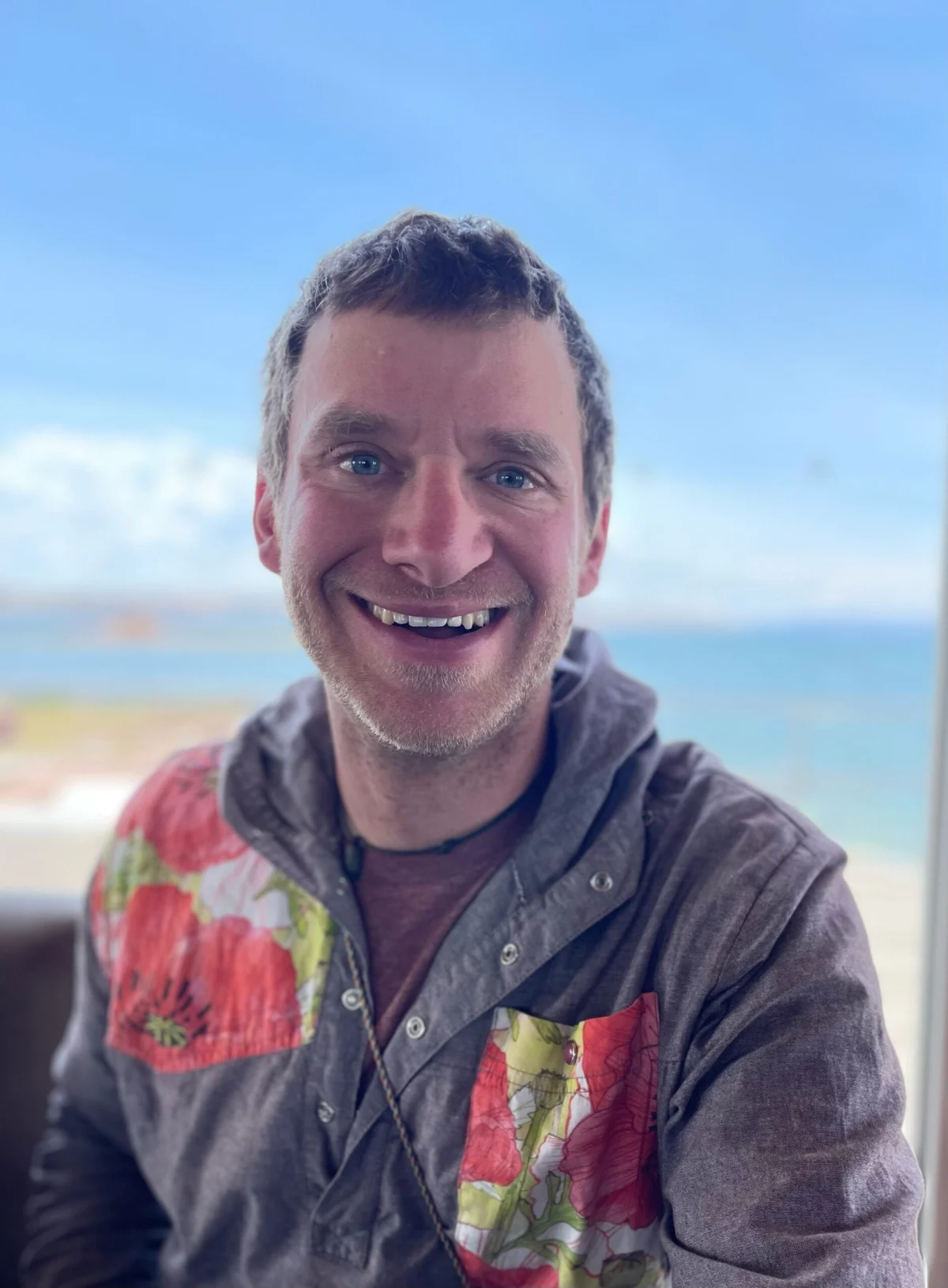
The intersection of outdoor recreation and climate advocacy has reached a critical juncture as organizations seek to mobilize the "Outdoor State"—a demographic of enthusiasts whose livelihoods and passions are directly threatened by a warming planet. At the forefront of this movement is Protect Our Winters (POW), a non-profit organization that has recently integrated the academic and philosophical expertise of Alex Lee, an Associate Professor of Philosophy at Alaska Pacific University. By bridging the gap between recreational enjoyment and moral obligation, the "Get Outside, Give a Shit" initiative serves as a strategic call to action, urging outdoor enthusiasts to transition from passive observers to active participants in environmental policy and conservation.
The Philosophical Framework of Modern Conservation
The involvement of Alex Lee marks a significant shift in how environmental organizations frame their messaging. Lee, an environmental philosopher and writer based in Anchorage, Alaska, focuses his research on applied environmental philosophy, climate change, and conservation policy. His work at the Institute of Culture and Environment examines the ethical dimensions of the climate crisis, specifically the moral obligations individuals and societies hold toward the natural world.
Lee’s contribution to the "Get Outside, Give a Shit" campaign provides a rigorous intellectual foundation for what is often seen as a purely emotional or recreational pursuit. In the context of environmental ethics, the campaign posits that the act of "getting outside" creates a relational bond between the individual and the ecosystem. This bond, Lee argues, generates a subsequent responsibility—or the "giving a shit" component—to protect those ecosystems from degradation. By framing environmentalism through the lens of moral philosophy, the initiative seeks to move beyond traditional "doom and gloom" climate narratives, instead focusing on the intrinsic value of wild places and the ethical imperative to preserve them for future generations.
Chronology of the Outdoor Advocacy Movement
To understand the current state of outdoor advocacy, it is necessary to examine the evolution of Protect Our Winters and the broader movement of "recreational activism."
- 2007: Professional snowboarder Jeremy Jones founds Protect Our Winters after witnessing the direct impact of climate change on glacial formations and snowpack reliability in the mountains. The organization initially focuses on the snowsports community.
- 2013-2015: POW expands its reach beyond skiing and snowboarding, beginning to recruit mountain bikers, climbers, and trail runners. This period marks the beginning of the "Outdoor State" concept, identifying outdoor enthusiasts as a potent political constituency.
- 2018: The organization intensifies its focus on non-partisan political advocacy, launching campaigns aimed at increasing voter turnout among the outdoor community during midterm elections.
- 2021-2022: POW plays a documented role in lobbying for the Inflation Reduction Act (IRA), which included the largest climate investment in United States history. The organization mobilized thousands of constituents to contact lawmakers, highlighting the economic risks climate change poses to the outdoor industry.
- 2023-Present: The appointment of experts like Alex Lee and the launch of the "Get Outside, Give a Shit" initiative signify a maturation of the movement, focusing on long-term systemic change and the integration of environmental philosophy into mainstream advocacy.
Economic Data and the Power of the Outdoor State
The strategic importance of the "Outdoor State" is supported by significant economic data. According to the U.S. Bureau of Economic Analysis (BEA), the outdoor recreation economy accounted for $1.1 trillion in gross economic output in 2022, representing 2.2% of the U.S. Gross Domestic Product (GDP). This sector grew faster than the overall U.S. economy, underscoring its resilience and its role as a major employer, supporting nearly 5 million jobs nationwide.
In states like Alaska, where Alex Lee conducts his research, the outdoor industry is a cornerstone of the regional economy. However, this economic engine is uniquely vulnerable to climate fluctuations. The "Get Outside, Give a Shit" campaign leverages these statistics to demonstrate that climate advocacy is not merely an ideological preference but an economic necessity. Data from the National Oceanic and Atmospheric Administration (NOAA) indicates that the winter season is the fastest-warming season for much of the United States, with significant reductions in snow cover and earlier spring melts. For the outdoor industry, these changes translate to shorter operational seasons, reduced revenue for mountain communities, and a decline in biodiversity within protected lands.
Scientific Context: The Alaskan Perspective
Alex Lee’s work in Anchorage places him at the epicenter of rapid climate shifts. Alaska is warming at more than twice the rate of the global average. The implications of this warming are multifaceted, affecting everything from permafrost stability to the migration patterns of salmon—a subject close to Lee, who is an avid fisherman.
Scientific reports from the Alaska Center for Climate Assessment and Policy (ACCAP) highlight that rising temperatures are leading to increased frequency of wildfires and the thinning of sea ice. For an environmental philosopher like Lee, these physical changes necessitate a re-evaluation of conservation policy. The "Get Outside, Give a Shit" initiative utilizes this regional data to illustrate a broader global trend: the environments that provide recreational and spiritual solace are the ones most immediately at risk. The campaign emphasizes that "wandering wild places" is a privilege that requires an active defense of the ecological systems that sustain those places.
Stakeholder Reactions and Industry Alignment
The push for integrated advocacy has seen a positive response from various sectors of the outdoor industry. Major brands, including Patagonia, REI, and Burton, have increasingly aligned their marketing and corporate social responsibility (CSR) goals with the objectives of POW and similar organizations.
"The outdoor community is no longer a fringe group of enthusiasts; we are a significant economic and political force," stated a representative from the Outdoor Industry Association (OIA) in a recent policy briefing. "Initiatives like ‘Get Outside, Give a Shit’ are essential because they translate the passion our customers feel for the outdoors into the civic engagement necessary to protect those spaces."
Furthermore, the scientific community has lauded the inclusion of philosophical perspectives in climate communication. Dr. Sarah Kapnick, Chief Scientist at NOAA, has previously noted that effective climate action requires a combination of "hard data and human connection." By utilizing Alex Lee’s background in ethics, POW is attempting to provide that human connection, making the abstract concepts of carbon sequestration and atmospheric warming tangible through the shared experience of outdoor recreation.
Strategic Objectives and Policy Implications
The "Get Outside, Give a Shit" campaign is structured around three primary strategic pillars designed to influence national and local policy:
- Voter Education and Mobilization: The initiative seeks to identify "climate-concerned" outdoor enthusiasts and provide them with the tools necessary to participate in the democratic process. This includes information on candidate platforms regarding public lands, renewable energy, and carbon pricing.
- Public Lands Protection: Advocacy efforts are focused on preventing the extraction of fossil fuels on sensitive public lands and promoting the expansion of protected areas. Lee’s research into conservation policy directly informs these efforts, providing a framework for why certain ecosystems must remain "wild."
- Renewable Energy Transition: The campaign supports the rapid deployment of renewable energy infrastructure. Recognizing that the "Outdoor State" often recreates in areas where energy infrastructure is visible, POW works to build community support for wind and solar projects that are essential for long-term climate stability.
The implications of this movement are significant. If the outdoor community can be successfully mobilized as a unified voting bloc, it has the potential to sway elections in "purple" states where outdoor recreation is a major economic driver, such as Colorado, Nevada, and Montana. This political leverage is the ultimate goal of the "Give a Shit" component of the campaign.
Analysis of Broader Impacts
The synthesis of environmental philosophy and recreational advocacy represents a sophisticated evolution in the environmental movement. For decades, environmentalism was often perceived as being at odds with economic growth or as an elitist concern. However, by grounding the movement in the multi-billion-dollar outdoor industry and the lived experiences of millions of Americans, organizations like POW are redefining the narrative.
Alex Lee’s role is symbolic of a broader trend toward interdisciplinary problem-solving. Climate change is not merely a technical or scientific challenge; it is a moral and cultural one. By addressing the "moral obligations" mentioned in Lee’s research, the "Get Outside, Give a Shit" campaign asks individuals to consider their legacy. It challenges the "wanderer of wild places" to ensure those places remain wild for those who follow.
As the 2024 election cycle approaches, the efficacy of this approach will be tested. The ability of the outdoor community to influence policy will depend on whether the passion found on the trail, the river, or the slope can be effectively channeled into the ballot box. The work of Alex Lee and Protect Our Winters suggests that the bridge has been built; the remaining task is to ensure the "Outdoor State" crosses it in sufficient numbers to effect meaningful change.
In conclusion, "Protected: Get Outside, Give a Shit" is more than a slogan; it is a call for a fundamental shift in the relationship between humans and the natural world. It acknowledges that while the enjoyment of nature is a right, the protection of nature is a duty. Through the integration of economic data, scientific reality, and philosophical inquiry, the movement seeks to ensure that the wild places currently being wandered remain protected for the centuries to come.
