

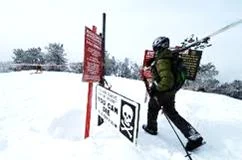
The allure of untouched powder and the thrill of venturing beyond the ropes are powerful draws for many skiers and snowboarders. However, these seemingly idyllic backcountry areas, often found adjacent to or on public lands surrounding ski resorts, present a stark reality: they are uncontrolled and unpatricated. Unlike the managed slopes within a ski area’s boundary, these "sidecountry" zones are not subject to avalanche control efforts by ski patrols. Furthermore, in the event of an accident, the responsibility for rescue falls solely on the individuals involved or their companions, a critical distinction that often goes unacknowledged by those venturing into these wilder terrains. This inherent lack of oversight and support infrastructure raises significant safety concerns, prompting questions about parental awareness and the true understanding of the risks undertaken by younger skiers.
The Expanding Frontier of Skiing
The phenomenon of sidecountry skiing, often referred to as "slackcountry" or "out-of-bounds" skiing, has gained considerable traction in recent decades. This trend is fueled by several factors, including the increasing accessibility of public lands and the desire for a more authentic, untamed skiing experience. Many of the United States’ premier ski destinations are strategically located on or near vast expanses of national forests, Bureau of Land Management (BLM) land, or other public territories. These areas offer a seemingly endless playground for those seeking to escape the groomed runs and lift lines.
Data from the U.S. Forest Service indicates that millions of acres of national forests are open to public recreational access, with winter sports being a significant component. The National Ski Areas Association (NSAA) has reported a steady increase in the number of skier visits annually, with figures often exceeding 50 million visits per season in recent years. While this overall growth is positive for the industry, it also signifies a larger pool of individuals potentially engaging in activities beyond the managed resort boundaries.
Understanding the Risks: Uncontrolled and Unpatrolled
The fundamental difference between in-bounds and out-of-bounds skiing lies in the concept of "control." Within a ski resort, trained avalanche mitigation teams actively monitor snowpack conditions, conduct controlled detonations of explosives to trigger avalanches in precarious areas, and post advisories to inform the public of potential hazards. This proactive approach aims to minimize the risk of skiers and snowboarders encountering dangerous avalanche conditions.
However, once a skier or snowboarder crosses the boundary line, they enter a realm where these safety measures cease to exist. Avalanche control is no longer conducted, and the responsibility for assessing snow stability and making safe travel decisions rests entirely with the individual. This is a critical point often overlooked. The "uncontrolled" nature of these areas means that inherent avalanche danger, as well as other potential hazards such as unmarked cliffs, trees, and crevasses, remain a constant threat.
The "unpatrolled" aspect further amplifies the risk. Ski patrols are not only responsible for avalanche mitigation but also for providing emergency medical services and coordinating rescues within the resort. In the sidecountry, if an accident occurs – be it an avalanche burial, a fall resulting in injury, or getting lost – there is no immediate ski patrol to call. Rescue efforts typically rely on local county search and rescue teams, which are often volunteer-based and may have limited resources, specialized equipment, and long response times, especially in remote or adverse weather conditions.
The Parental Blind Spot: A Crucial Concern
The article’s author, Doug, highlights a particularly concerning aspect of sidecountry access: the potential disconnect between parental expectations and the actual activities of their children. The scenario he presents – a parent waving goodbye in the ski area parking lot, unaware that their children might be venturing into "R-rated terrain" – underscores a critical gap in communication and awareness.
While specific data on the number of minors involved in sidecountry accidents is not readily available, anecdotal evidence and incident reports from avalanche organizations like the American Avalanche Association (AAA) suggest that a portion of avalanche victims are younger individuals who may lack the extensive experience and judgment necessary to navigate such hazardous environments. The AAA’s annual avalanche accident statistics consistently show a range of ages among those involved in incidents, with some victims being young adults or teenagers.
This "R-rated terrain" designation is a powerful metaphor. It implies a level of maturity, experience, and risk tolerance that may not be present in all individuals who are drawn to the allure of off-piste adventures. The term suggests that these areas are not for the faint of heart, requiring advanced skills in avalanche assessment, route selection, and backcountry travel.
A Deeper Dive into "Sidecountry: Rated R"
The linked PDF document, "Sidecountry: Rated R," offers a more in-depth exploration of these issues. While the content of the PDF is not directly provided, its title strongly suggests it delves into the inherent dangers and the often-underestimated risks associated with venturing beyond resort boundaries. Such a resource would likely cover:
- Avalanche Formation and Types: Explaining the scientific principles behind snowpack instability and the various types of avalanches.
- Snowpack Evaluation: Providing guidance on how to assess snow layers, identify weak layers, and recognize signs of instability.
- Route Selection and Travel Techniques: Detailing safe practices for ascending, traversing, and descending in avalanche terrain.
- Rescue Techniques: Emphasizing the importance of avalanche transceivers, probes, and shovels, and the critical need for effective transceiver searching and excavation skills.
- Essential Gear: Listing the non-negotiable equipment for backcountry travel, including avalanche airbags, communication devices, and first-aid kits.
- The Human Factor: Discussing the psychological biases that can lead to poor decision-making in the backcountry, such as complacency, peer pressure, and the desire for adventure overriding caution.
Chronology of Awareness and Education
The rise in sidecountry popularity is not a new phenomenon, but the increased accessibility and media attention have amplified its prevalence.
- Early Decades of Skiing: Resorts were often smaller, and the concept of "out-of-bounds" was more naturally understood as true wilderness.
- Mid-to-Late 20th Century: As resorts expanded and grooming technology improved, the distinction between managed and unmanaged terrain became more pronounced. The development of specialized backcountry equipment began to emerge.
- Late 20th and Early 21st Century: The internet and social media have played a significant role in popularizing backcountry skiing. Viral videos showcasing epic powder turns in off-piste locations have inspired many to seek similar experiences, sometimes without adequate preparation. Avalanche education courses, such as those offered by the American Institute for Avalanche Research and Education (AIARE) and the National Avalanche Center (NAC), have become more widespread, but participation is not universal.
- Present Day: The "sidecountry" has become a defined zone, with many resorts offering access gates that lead directly into public land. This physical proximity creates a blurred line between resort safety and backcountry risk.
Reactions and Perspectives from Related Parties
While direct quotes from specific individuals regarding this particular article are not available, we can infer the likely perspectives of various stakeholders:
- Ski Resorts: Many ski resorts, while benefiting from the proximity to public lands, are increasingly aware of the liability and safety implications of sidecountry access. They often post signage at boundary gates warning of uncontrolled terrain and the absence of ski patrol services. Some resorts may even have policies to discourage or restrict access to certain out-of-bounds areas due to extreme hazards.
- Avalanche Education Organizations: Groups like AIARE, NAC, and local avalanche centers are continuously working to educate the public about avalanche safety. They advocate for formal training and emphasize the importance of making informed decisions. They would likely support initiatives that raise awareness about the risks of sidecountry skiing, especially among younger or less experienced individuals.
- Search and Rescue Teams: These dedicated, often volunteer, organizations bear the brunt of rescue operations in uncontrolled terrain. They frequently express concerns about the increasing frequency of calls and the potential for delayed response times due to the remote and challenging nature of these environments. They would likely welcome any efforts to reduce the number of preventable accidents.
- Parents and Guardians: The concern raised by the author directly addresses parents. The implication is that many parents may not fully grasp the dangers their children are exposed to when they venture beyond resort boundaries, especially if the children themselves are not fully informed or equipped. This highlights a need for open dialogue and education within families.
Broader Impact and Implications
The issue of sidecountry access has far-reaching implications:
- Increased Demand on Rescue Services: A rise in sidecountry accidents places a significant strain on local search and rescue resources, which are often underfunded and reliant on volunteer efforts. This can impact their ability to respond to other emergencies within their jurisdiction.
- Liability Concerns: While ski resorts aim to mitigate liability by clearly marking boundary lines and posting warnings, there is always a potential for legal challenges in the event of severe accidents involving individuals who have accessed adjacent public lands.
- Conservation and Responsible Recreation: The popularity of sidecountry skiing also raises questions about the impact of increased human activity on fragile alpine ecosystems. Responsible recreation practices are crucial to minimize environmental damage.
- The Future of Skiing: As the desire for authentic outdoor experiences grows, the line between resort skiing and backcountry adventure will continue to blur. This necessitates a greater emphasis on education, responsible decision-making, and a thorough understanding of the inherent risks involved.
In conclusion, the "sidecountry" offers a compelling but perilous extension of the ski resort experience. The uncontrolled and unpatricated nature of these areas demands a level of expertise, preparedness, and informed decision-making that may not always be present, particularly among younger individuals. The critical question of parental awareness underscores the need for a more comprehensive approach to safety education, ensuring that all participants understand that venturing beyond the ropes means entering a world where the rules of the resort no longer apply, and the consequences of misjudgment can be severe.
