

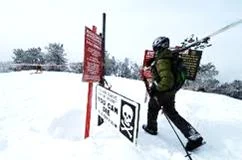
The allure of vast, untamed terrain beckons many skiers and snowboarders beyond the groomed runs and patrolled boundaries of ski resorts. These "sidecountry" areas, often directly adjacent to or easily accessed from ski resorts, offer a tantalizing blend of resort convenience and backcountry adventure. However, this accessibility comes with a significant caveat: a lack of avalanche control and rescue services typically provided within resort boundaries. This dichotomy presents a growing concern for ski areas, public land managers, and, most importantly, parents whose children might venture into these uncontrolled environments, a situation one expert has characterized as potentially leading to "R-rated terrain" after a seemingly innocuous goodbye in the ski area parking lot.
The Expanding Frontier: Ski Resorts and Public Lands
A significant number of ski areas in the United States are situated on, or in close proximity to, publicly owned lands. This cohabitation provides an immense recreational resource, offering skiers and snowboarders access to a much broader expanse of winter landscapes than the meticulously maintained slopes within resort boundaries. National Forests, Bureau of Land Management (BLM) lands, and other public domains often surround or interlock with ski resort infrastructure. This geographical reality has fueled the growth of sidecountry skiing and snowboarding, a practice where individuals utilize resort access points to enter adjacent undeveloped, uncontrolled terrain.
The appeal is undeniable. Riders can often ascend a resort lift, traverse a ridge or boundary, and find themselves in pristine, untouched powder. The ease of access means less arduous hiking compared to traditional backcountry expeditions, and the proximity to resort facilities can offer a sense of security or a quick retreat if conditions deteriorate. However, this convenience masks a fundamental difference in risk management.
Uncontrolled Terrain: The Absence of Resort Safeguards
Within the defined boundaries of a ski resort, a dedicated ski patrol operates year-round. Their responsibilities are multifaceted, encompassing avalanche control, trail grooming, first aid, and rescue operations. Avalanche control, in particular, is a critical safety measure. Using explosives or other methods, ski patrols deliberately trigger avalanches in high-risk areas during or after significant snowfall to clear potential hazards from designated ski runs. This proactive approach is designed to mitigate the risk of natural avalanches occurring on trails used by the public.
In stark contrast, sidecountry areas, by definition, fall outside these managed zones. Avalanche control is not conducted by resort personnel in these regions. The terrain is subject to the natural forces of weather and snowpack, making it inherently unpredictable and potentially dangerous. If an avalanche occurs in the sidecountry, or if a rider triggers one, the responsibility for rescue does not fall to the ski patrol. Instead, it defaults to the individuals themselves, their companions, or external rescue agencies, which may have limited resources or access to remote, avalanche-prone areas.
The Parental Dilemma: Knowing the "R-Rated" Risks
The observation by an unnamed expert, "after a parent waves goodbye in the ski area parking lot do they know what the kids are doing? Are they leaving the ski area for R-rated terrain?" highlights a critical disconnect. For parents dropping off their children at a ski resort, the expectation is often that their children will remain within the safe, patrolled environment. However, the ease with which younger or less experienced individuals can access sidecountry terrain, sometimes without fully understanding the inherent risks, is a significant concern.
"R-rated terrain" in this context refers to the uncontrolled nature of the backcountry, where the potential for serious injury or fatality due to avalanches, falls, or getting lost is significantly higher than on marked and maintained ski runs. The term implies a level of maturity, experience, and preparedness that may not always accompany those venturing into these areas. The line between a controlled ski resort and an uncontrolled backcountry zone can be as thin as a rope, a fence, or a simple sign indicating a boundary.
A Growing Trend: Statistics and Incident Reports
While specific, granular data on the exact number of individuals venturing into sidecountry areas is difficult to quantify, the trend is widely acknowledged within the winter sports community. Increased interest in backcountry skiing and snowboarding, often fueled by social media showcasing pristine powder turns, has undoubtedly contributed to more people exploring areas beyond resort boundaries.
Avalanche fatalities in the United States, as tracked by organizations like the Colorado Avalanche Information Center (CAIC) and the Utah Avalanche Center (UAC), consistently show a significant number of incidents occurring in uncontrolled terrain. While not all of these are directly linked to sidecountry access from resorts, a portion undoubtedly are. For instance, data from the CAIC over multiple seasons has indicated that a substantial percentage of avalanche fatalities occur in the backcountry, often involving individuals who may have accessed these areas from nearby resorts.
For example, a review of avalanche accident data from the 2022-2023 season revealed that while many incidents occur in remote backcountry locations, a notable number involve terrain that is relatively accessible, sometimes from ski resort access points. This underscores the blurred lines between managed and unmanaged winter environments.
Chronology of Concern: A Developing Awareness
The awareness of the sidecountry phenomenon and its associated risks is not new, but it has intensified in recent years. As ski resorts have expanded their footprints or as public lands adjacent to them have become more popular recreational destinations, the intersection of managed and unmanaged terrain has become more pronounced.
- Early Years: The concept of "slackcountry" or "sidecountry" skiing existed for decades, often practiced by experienced individuals who understood the risks. Access was typically more challenging, requiring significant hiking.
- Rise of Accessibility: With the development of more high-speed lifts and improved infrastructure, accessing terrain just beyond resort boundaries became easier. This broadened the appeal to a wider range of skiers and snowboarders.
- Social Media Influence: The proliferation of high-quality photography and videography from backcountry and sidecountry zones on platforms like Instagram and YouTube has significantly boosted interest, sometimes without a corresponding increase in risk awareness or education.
- Increased Incidents: Anecdotal evidence from ski patrols and rescue organizations suggests an increase in incidents in sidecountry areas, including avalanches, injuries, and rescues, leading to a more formal acknowledgment of the issue by resort operators and safety organizations.
- Educational Initiatives: In response, avalanche safety organizations and some ski resorts have begun to increase their outreach and educational efforts, emphasizing the importance of avalanche education courses, proper gear (transceiver, probe, shovel), and avalanche forecasts.
Expert Voices and Official Responses
While the article mentions an unnamed expert, the sentiment is echoed by numerous professionals in avalanche safety and ski resort management. Ski patrol directors and avalanche forecasters frequently voice concerns about the growing number of people venturing into uncontrolled terrain without adequate preparation.
"We see it all the time," stated a senior ski patroller at a Western U.S. resort, who wished to remain anonymous due to the sensitive nature of the topic. "People duck a rope line or hike over a ridge, thinking it’s just more of the same. They don’t check the avalanche forecast, they don’t have the right gear, and they certainly haven’t taken an avalanche safety course. It’s a recipe for disaster."
Official responses from ski resorts often involve clear boundary signage, educational materials distributed at ticket windows or on their websites, and sometimes even collaborations with local avalanche centers to promote safety messages. However, the legal and operational limitations of resorts in controlling behavior on adjacent public lands are significant. Resorts are generally not responsible for incidents occurring beyond their designated boundaries.
Public land management agencies, such as the U.S. Forest Service, also play a role. They are responsible for managing public lands for a variety of uses, including recreation. While they promote safe practices, their resources for active avalanche mitigation or extensive search and rescue in remote areas are often limited. They work in conjunction with avalanche centers to disseminate information about snowpack conditions and potential hazards.
Broader Impact and Implications: A Call for Education and Responsibility
The phenomenon of sidecountry exploration carries significant implications for several stakeholders:
- Ski Resorts: Resorts face the dual challenge of accommodating the desire for expanded terrain while mitigating potential risks associated with adjacent uncontrolled areas. They also bear a reputational risk if incidents occur that are perceived to be linked to their proximity.
- Public Land Managers: These agencies must balance providing access to public lands for recreation with ensuring public safety in potentially hazardous environments.
- Rescue Services: Increased activity in the sidecountry can place a strain on limited mountain rescue resources, often diverting them from other emergencies.
- Individuals and Families: The primary implication is for the individuals themselves and their families, who face the direct consequences of accidents. The lack of preparedness can transform an exciting adventure into a tragedy.
The underlying message from the expert’s observation is a critical call for parental awareness and individual responsibility. Parents need to understand where their children are going and what risks they might be taking. More importantly, individuals who choose to venture into sidecountry or backcountry terrain must equip themselves with the knowledge and gear necessary for survival. This includes:
- Avalanche Education: Taking a recognized avalanche safety course (e.g., AIARE Level 1 or equivalent) is paramount.
- Proper Gear: Carrying and knowing how to use an avalanche transceiver, probe, and shovel is non-negotiable.
- Avalanche Forecasts: Always checking the local avalanche forecast before heading out and understanding the conditions.
- Travel Habits: Traveling with a companion and practicing safe travel techniques in avalanche terrain.
- Risk Assessment: Making informed decisions based on current snowpack conditions, weather, and terrain.
The sidecountry offers a gateway to incredible winter experiences, but it demands respect for the power of nature and a commitment to safety. Without this respect and preparation, the allure of untamed terrain can indeed lead to consequences far more severe than a typical ski day, transforming a family outing into an encounter with "R-rated" risks. The article "Sidecountry: Rated R" serves as a potent reminder that accessibility does not equate to safety, and the thrill of adventure must always be tempered with knowledge and preparedness.
