

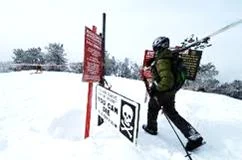
The landscape of American winter recreation is undergoing a profound transformation as the boundaries between managed ski resorts and the wild backcountry continue to blur. While many of the premier ski destinations in the United States are situated on or adjacent to expansive public lands, a growing disconnect exists between the perceived safety of these areas and the physical reality of the terrain. This "sidecountry"—a term used to describe out-of-bounds terrain accessed via resort lift infrastructure—offers a deceptive sense of security that experts warn can lead to fatal consequences. Unlike the groomed runs and mitigated slopes within a resort’s boundary, these adjacent areas are neither controlled for avalanches nor patrolled by professional staff. In these zones, the responsibility for safety, navigation, and rescue shifts entirely from the resort operator to the individual rider.
The Paradox of Proximity
The allure of the sidecountry lies in its accessibility. With a single lift ticket, a skier or snowboarder can ascend thousands of vertical feet and, by simply passing through a designated gate or ducking a rope, enter a wilderness environment. This proximity creates what safety experts call the "resort-side illusion." Because a heated lodge or a high-speed quad chairlift is visible in the distance, many recreators assume the snowpack is as stable as the runs they just left. However, the physical reality is that the moment a rider exits the managed boundary, they are entering "R-rated" terrain—a environment where the consequences of a mistake are adult-sized and often permanent.
Doug Chabot and other leading avalanche researchers have raised concerns regarding the demographic most at risk: younger skiers and snowboarders who may lack the experience to evaluate complex snowpack structures. A critical question posed to the community involves parental awareness and the "parking lot" phenomenon. In many instances, parents drop their children off at a ski area, assuming they are within the safety of a patrolled environment, unaware that those children may be spending their day in unmanaged, high-risk backcountry zones.
The Regulatory Framework of Public Land Access
To understand the complexity of sidecountry safety, one must examine the legal and regulatory framework governing ski areas in the United States. The vast majority of ski resorts in the Western U.S. operate under Special Use Permits issued by the United States Forest Service (USFS) or the Bureau of Land Management (BLM). These permits grant the resort the right to manage a specific acreage of public land for recreation.
Within these permitted boundaries, the resort is responsible for avalanche mitigation—often involving the use of explosives or "ski cutting" to trigger small slides before they become large threats—and providing emergency medical services. However, the land immediately adjacent to these boundaries remains "unimproved" public land. Under federal law and various state "Ski Safety Acts," the responsibility for safety on unimproved public land rests with the user. This jurisdictional divide is absolute; ski patrols are generally not required to monitor these areas, and in many cases, their insurance and operational mandates prevent them from performing routine sweeps of out-of-bounds terrain.
Analyzing the "Sidecountry" Misnomer
The term "sidecountry" itself has come under fire from safety advocates who argue that it minimizes the inherent risks of the terrain. By suggesting the land is "to the side" of the resort, the word implies a middle ground between the safety of the lodge and the isolation of the deep backcountry. In reality, there is no middle ground in snow science. A slope is either managed or it is not.
Experts prefer the term "lift-access backcountry." This terminology reinforces the fact that the snowpack in these areas is subject to the same natural forces—wind loading, temperature gradients, and persistent weak layers—as the most remote peaks in the wilderness. The lack of "compaction" (the process of many skiers packing down the snow, which helps stabilize certain layers) makes these areas significantly more prone to deep slab avalanches than the runs located just yards away inside the ropes.
Chronology of the Sidecountry Phenomenon
The rise of sidecountry skiing can be traced through several distinct phases over the last three decades:
- The Era of Closed Boundaries (Pre-1990s): Most ski areas maintained strict "closed boundary" policies. Leaving the resort was often grounds for pass revocation or even arrest for trespassing.
- The Open Boundary Shift (Late 1990s – Early 2000s): Following legal pressures and a desire to provide a more "European" style of skiing, many USFS-permitted resorts shifted to "open boundary" policies. Access gates were installed, allowing skiers to legally enter public lands from the top of the lifts.
- Technological Acceleration (2010s): The development of "frame" and "tech" bindings, which allow skiers to walk uphill with ease, combined with wider, more capable "fat" skis, made it easier for the average recreator to explore out-of-bounds terrain.
- The Information Age and Social Media (2015-Present): The proliferation of GoPro footage and social media "influencer" culture has glamorized out-of-bounds skiing. This has led to an influx of users who may have the athletic ability to ski steep terrain but lack the "mountain sense" or gear required to survive an avalanche.
Statistical Trends in Avalanche Incidents
Data from the Colorado Avalanche Information Center (CAIC) and the National Avalanche Center (NAC) highlight a sobering trend. While total avalanche fatalities in the United States have fluctuated, averaging approximately 25 to 30 per year, a significant percentage of these incidents occur in lift-access backcountry areas.
In many high-profile accidents, victims were found without essential rescue gear—specifically an avalanche transceiver, a probe, and a shovel. Statistical analysis suggests that a person buried in an avalanche has a 93% chance of survival if recovered within 15 minutes. That percentage drops to roughly 30% after 30 minutes. In the sidecountry, where there is no professional patrol to initiate an immediate response, the "companion rescue" performed by one’s partners is the only viable lifeline.
Search and Rescue: Responsibility and Jurisdictional Challenges
When an accident occurs in the sidecountry, the response is often far more complex than a standard resort injury. Because the incident takes place outside the resort boundary, the legal jurisdiction typically falls to the local County Sheriff’s office.
While many ski patrols will assist in a rescue if they have the resources and if it does not compromise the safety of the resort’s guests, they are not obligated to do so. A sidecountry rescue often requires the mobilization of volunteer Search and Rescue (SAR) teams. This process involves:
- Receiving a 911 call (which may be difficult due to spotty cell service).
- Verifying the location via GPS coordinates.
- Dispatching a team, which can take hours to reach the site.
- Potentially utilizing helicopter extraction, which is weather-dependent and extremely costly.
In some states, the cost of these rescues can be billed to the individual if they are found to have acted with "willful negligence," such as ignoring posted "High Avalanche Danger" warnings.
The Human Factor: Perception and Education
The core of the "Rated R" warning is the human factor. Psychological "heuristics"—mental shortcuts that lead to poor decision-making—are rampant in sidecountry environments. These include:
- The Social Proof Trap: "There are already tracks on that slope, so it must be safe."
- The Familiarity Trap: "I’ve skied this out-of-bounds run ten times this year and nothing happened."
- The Scarcity Trap: "The powder is disappearing fast; I need to get out there before anyone else."
To combat these biases, organizations like Avalanche.org and the American Institute for Avalanche Research and Education (AIARE) have expanded their outreach. The "Know Before You Go" program specifically targets the sidecountry demographic, emphasizing five key steps: Get the gear, get the training, get the forecast, get the picture, and get out of harm’s way.
Institutional and Industry Responses
The ski industry has begun to take more proactive steps to educate its guests. Many resorts now feature "Avalanche Awareness" centers at the base of the mountain or near boundary gates. These centers often include beacon basins—training grounds where skiers can practice using their transceivers to find buried targets.
Furthermore, some resorts have implemented "gate-only" access policies, where the only way to exit the resort is through a specific, marked gate equipped with educational signage and a "beacon checker" (an electronic device that detects if a skier’s transceiver is turned on and transmitting). These measures serve as a final "speed bump" to force recreators to pause and consider their preparedness before entering uncontrolled terrain.
Future Outlook for Mountain Safety
The challenge of sidecountry safety is unlikely to diminish as equipment becomes more accessible and the desire for untracked snow grows. The future of mountain safety relies on a cultural shift within the skiing and snowboarding community—a shift from viewing the sidecountry as an extension of the resort to viewing it as a serious, high-consequence wilderness.
The "Rated R" designation serves as a stark reminder that the mountains do not provide a safety net. Whether it is a teenager looking for an adrenaline rush or an experienced rider seeking fresh snow, the rules of the backcountry remain the same. The snowpack does not know you are near a resort; it only responds to the physical stresses applied to it. As the industry moves forward, the emphasis must remain on personal responsibility, continuous education, and a profound respect for the volatility of the winter environment. In the sidecountry, you are your own rescuer, your own guide, and your own safety officer. Being unprepared for that reality is a risk that no one should be willing to take.
