
The 2025-2026 winter season in the Western United States has been characterized by climate experts and hydrologists as a catastrophic "hot mess," marked by record-breaking temperatures and a precariously thin snowpack that has left the region’s water future in a state of uncertainty. While precipitation levels across the West remained near historical averages in several states, the absence of sustained cold temperatures transformed what should have been a robust alpine snowpack into a series of rain events and premature melt-out cycles. This seasonal failure has profound implications for the multi-billion-dollar outdoor recreation industry, municipal water supplies, and the ecological health of the nation’s most vital river basins.
A Season of Thermal Anomalies
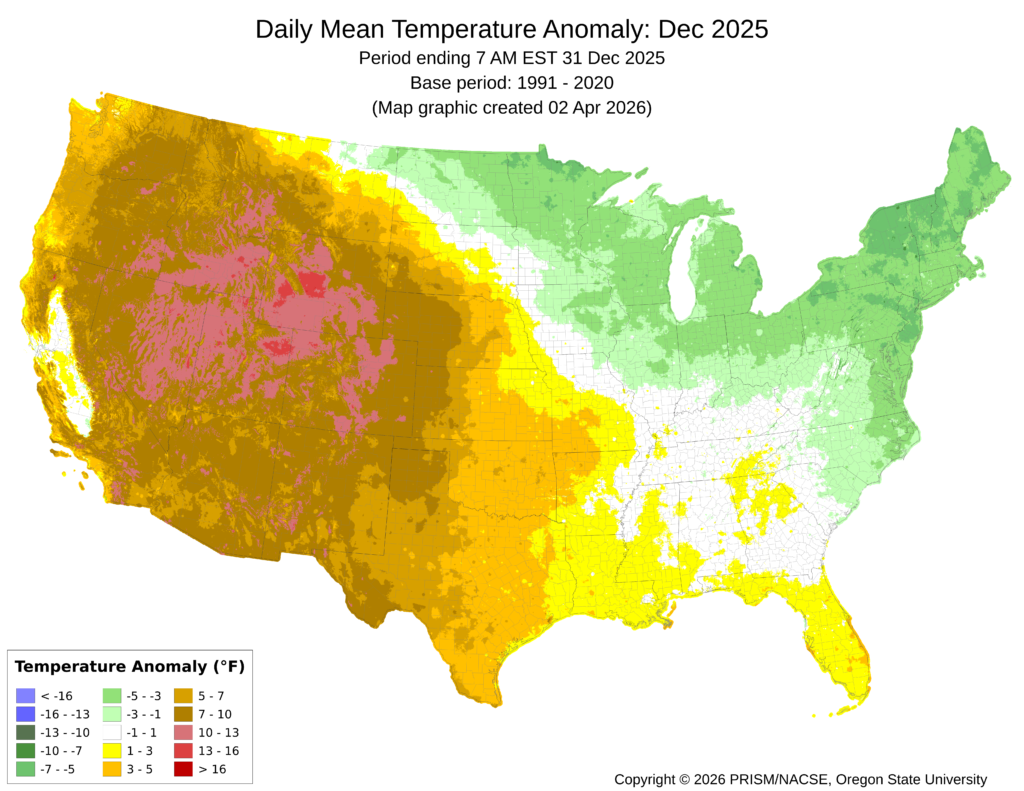
The primary driver of the 2025-2026 crisis was not a lack of moisture, but a significant and persistent thermal anomaly. According to data provided by the PRISM Climate Group, December 2025 served as a "nightmare" scenario for the Western United States. During a month typically reserved for the establishment of a foundational snow base, temperatures across the West surged to 5–15 degrees Fahrenheit above long-term averages. While the Northeast and Upper Midwest experienced temperatures roughly 5 degrees below average, the West remained trapped under a persistent high-pressure system that funneled warm, moist air into high-elevation zones.
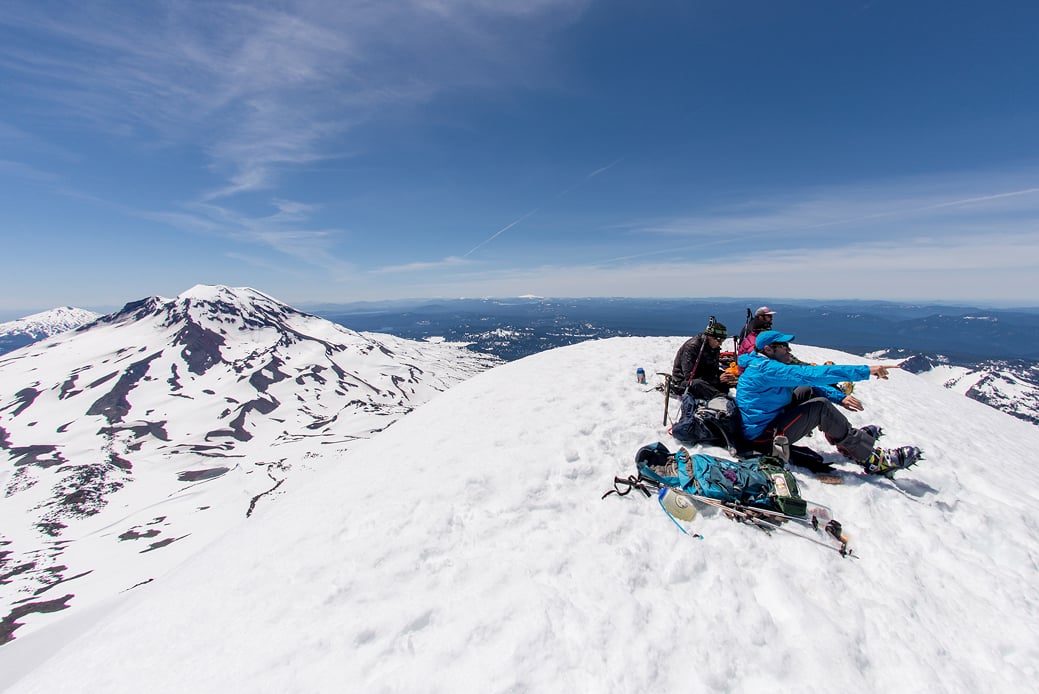
This temperature spike fundamentally altered the "recipe" for snow. In a standard water year, the combination of moisture and sub-freezing temperatures allows for the accumulation of snow water equivalent (SWE)—a metric used by hydrologists to measure the amount of liquid water contained within the snowpack. In 2025-2026, the moisture was present, but the cold was absent. Consequently, much of the precipitation fell as rain at elevations that historically support snow, leading to immediate runoff rather than seasonal storage.
Chronology of a Disappearing Winter
The progression of the 2025-2026 season was a series of delayed expectations and operational hurdles for stakeholders across the region.
Autumn 2025: Early Optimism
The season began with moderate optimism as early October storms brought light dustings to the Sierra Nevada and the Cascades. Water managers initially projected a "near-normal" year based on early atmospheric modeling.
December 2025: The Turning Point
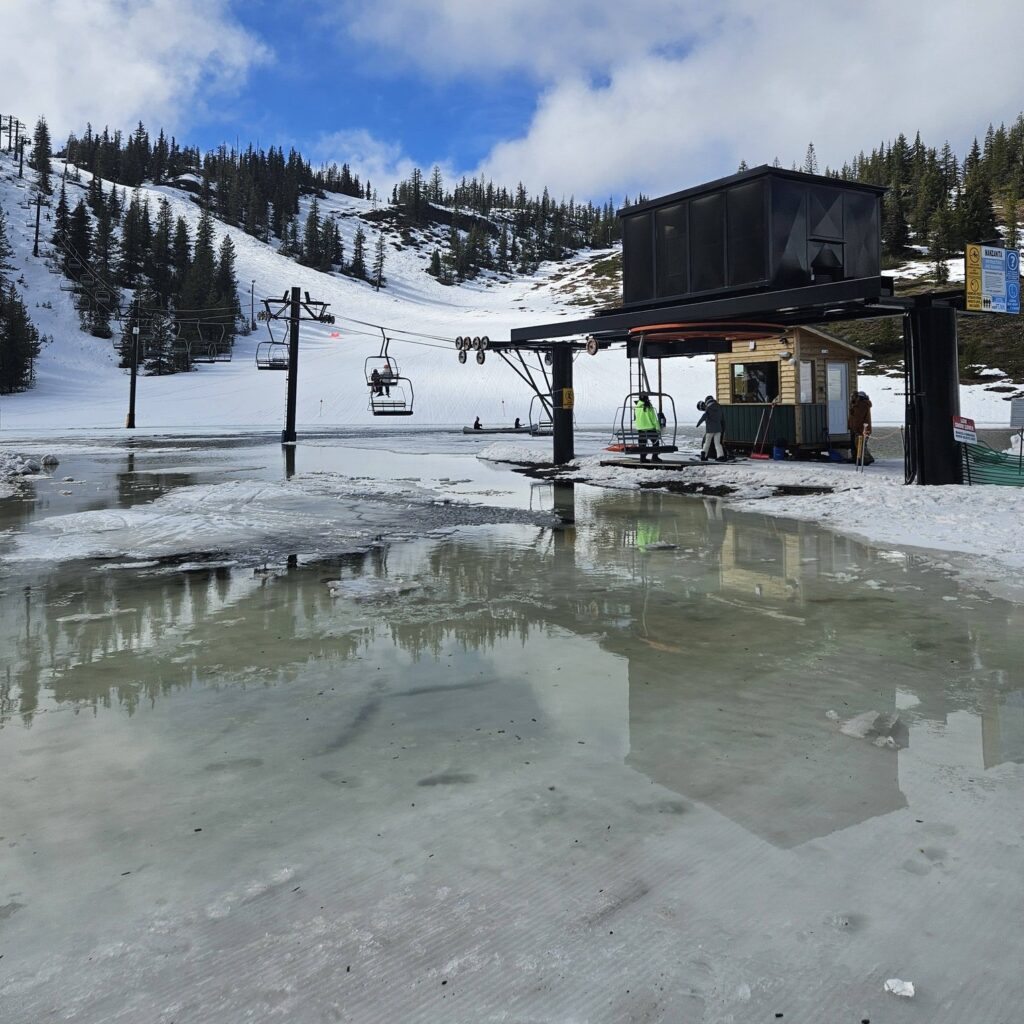
As December progressed, the thermal anomaly took hold. Ski resorts that typically open by late November found themselves pushing start dates to the New Year’s holiday. When the New Year arrived without a significant base, the "goalposts" were moved to Martin Luther King Jr. Day, then to President’s Day. In many locations, such as the Santiam Pass in Oregon, mid-March witnessed "unscheduled pond skims"—events where skiers attempt to skim across meltwater—occurring naturally due to rapid thawing.
Spring 2026: The Early Melt-Out
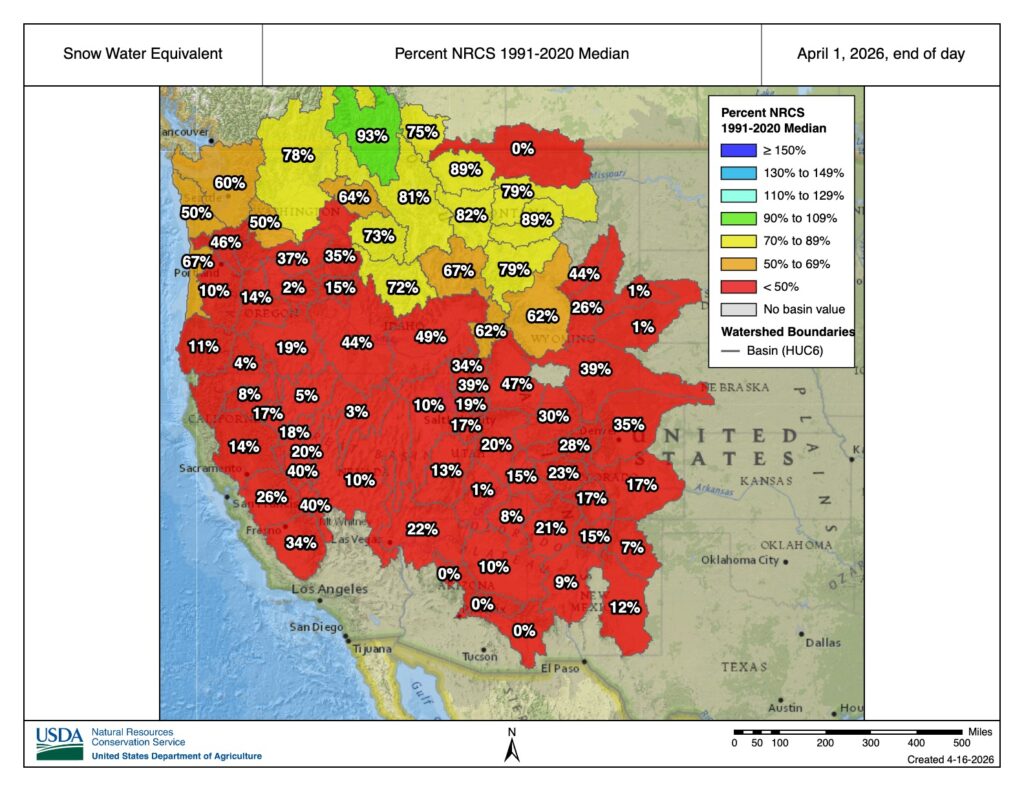
By April 1, 2026—the traditional benchmark for peak snowpack in the West—the data from the Natural Resources Conservation Service (NRCS) revealed a grim reality. SWE values across Oregon, Utah, and Colorado were a tiny fraction of their historical averages. In northwest Wyoming, Montana, Idaho, and Washington, precipitation was slightly higher, but the warmth ensured that the snow did not stay on the ground. By mid-April, many observation stations reported that the snow had completely vanished. These "snow-off" dates were recorded not just days or weeks early, but in some instances, two full months ahead of schedule.
Statistical Breakdown of the 2026 Snow Water Equivalent
The data from the 2025-2026 water year highlights a stark divergence between precipitation and storage. While Oregon and Utah ran slightly dry, the Pacific Northwest and parts of the Northern Rockies saw precipitation levels at 90-110% of the period-of-record average. However, the April 1 SWE maps tell a different story.
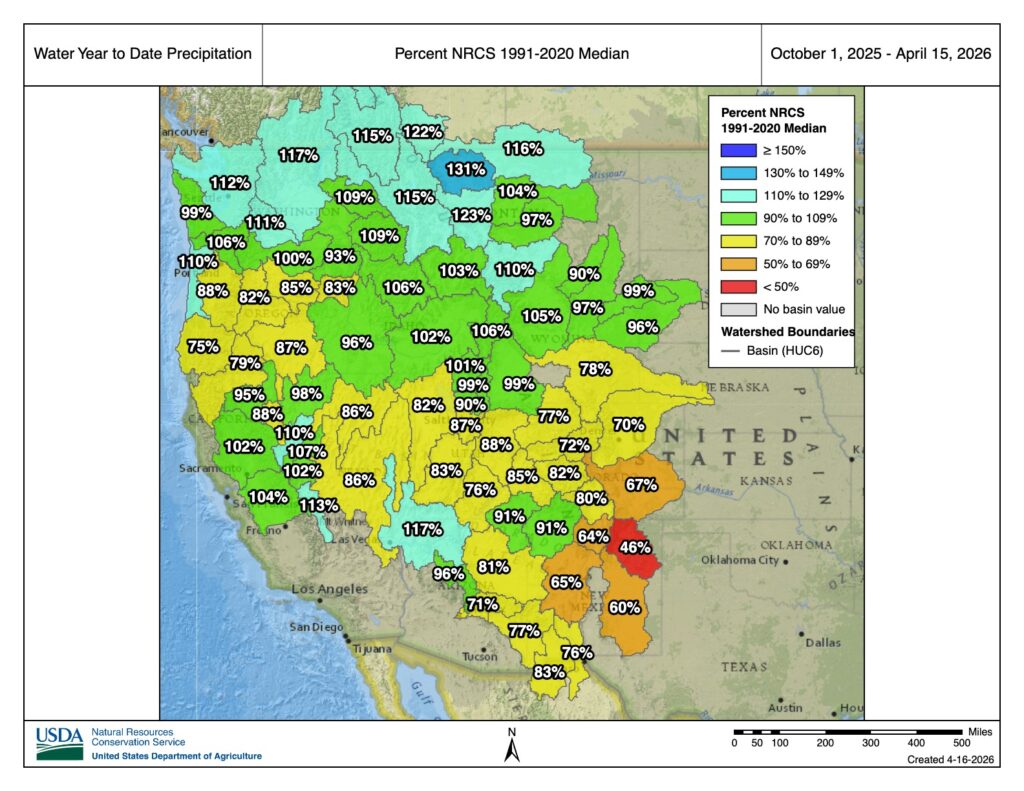
In many regions, the SWE was less than 50% of the long-term average. This discrepancy indicates that the "efficiency" of the winter—the ability of the environment to convert precipitation into stored snow—was at an all-time low. Several SNOTEL (Snow Telemetry) stations, which have monitored mountain snow for over 45 years, posted their worst peak values since their installation. The Hogg Pass SNOTEL site in Oregon, for example, showed a dramatic dip in its annual maximum SWE, continuing a volatile but downward trend that has concerned researchers for decades.
The Role of the Snowpack as a Natural Reservoir
To understand the gravity of the 2025-2026 season, one must view snow as a critical piece of infrastructure. Dr. David Hill, a professor at Oregon State University and a National Geographic Explorer, emphasizes that the seasonal snowpack acts as a "distributed reservoir."
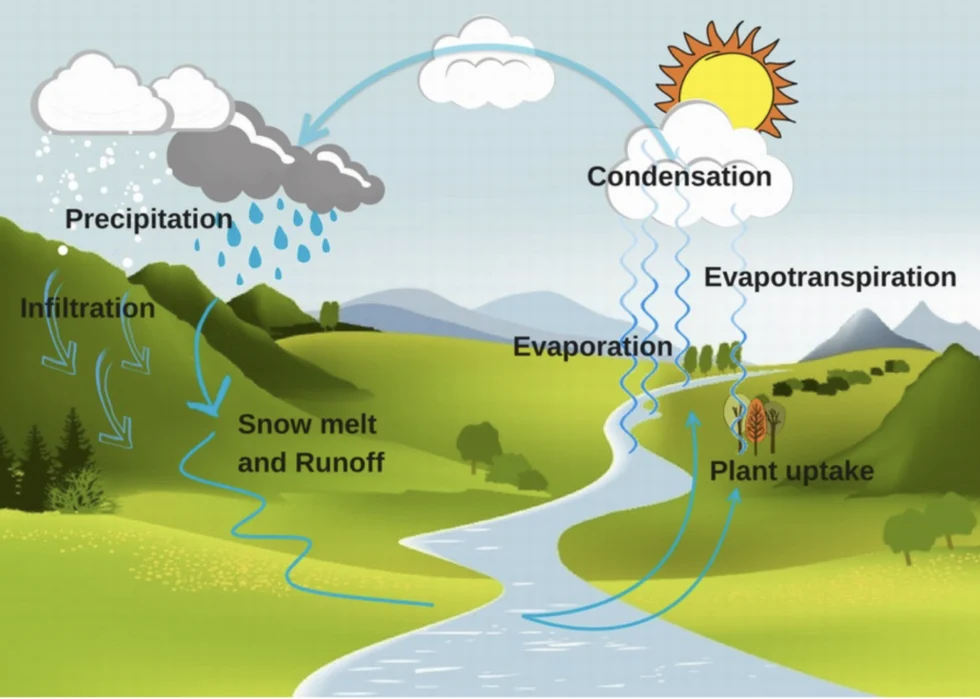
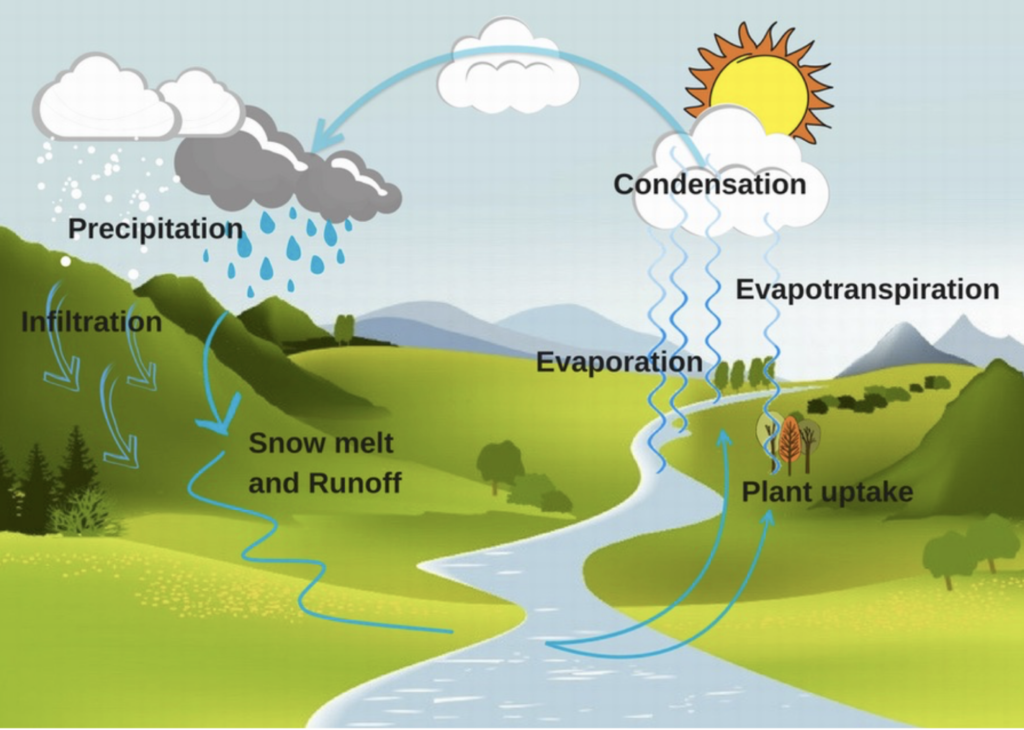
While the Earth is often called the "Blue Planet," less than one-hundredth of one percent of its water is available and accessible for human needs. Most of the planet’s water is saline or trapped in deep aquifers and polar ice caps. In the Western United States, society relies on the hydrologic cycle to move water from the oceans to the mountains, where it is stored as ice and snow.
The "superpower" of snow lies in its timing. By holding water in the high country through the winter and releasing it slowly during the late spring and early summer, the snowpack ensures a steady supply of cool water during the driest months of the year. This lag between precipitation and runoff is essential for:
- Flood Mitigation: Slow melting prevents the massive downstream surges associated with heavy rain-on-snow events.
- Ecological Health: Species such as bull trout and salmon require consistently cool stream temperatures to survive and spawn.
- Agriculture: Farmers rely on "senior water rights" fueled by late-season snowmelt to irrigate crops during the peak of summer heat.
Estimates suggest that the total volume of water stored as snow in the contiguous United States at its peak is approximately five times the capacity of Lake Mead, the nation’s largest man-made reservoir. When the snowpack fails, the "insurance policy" for the region’s water supply is effectively cancelled.
The Colorado River Basin and the Lake Mead Crisis
The failures of the 2025-2026 season have intensified the ongoing crisis in the Colorado River Basin. Years of consecutive dry conditions and warming temperatures have led to a steady decline in the water levels of Lake Mead, the reservoir behind the Hoover Dam.
As of May 2026, the elevation of Lake Mead has reached levels that trigger mandatory water delivery cuts to Lower Basin states, including Arizona, Nevada, and California. The lack of a robust snowpack in the Upper Basin—specifically in the mountains of Colorado and Utah—means that the spring "miracle" runoff required to stabilize the reservoir did not materialize.
Municipal water managers in cities like Las Vegas and Phoenix are now facing increasingly urgent conversations about "dead pool" levels, where the water drops so low it can no longer flow through the dam’s intake valves. The 2025-2026 season has proven that relying on historical averages is no longer a viable strategy for water allocation among the basin’s 40 million users.
Economic and Ecological Repercussions
The "low tide" of the 2025-2026 season has sent shockwaves through the regional economy. The ski industry, a major employer in rural mountain communities, faced a volatile year. Resorts were forced to invest heavily in snowmaking, which requires significant energy and water—resources that were already in short supply. Smaller, independent ski areas without extensive snowmaking infrastructure were hit the hardest, with some closing their doors permanently by mid-February.
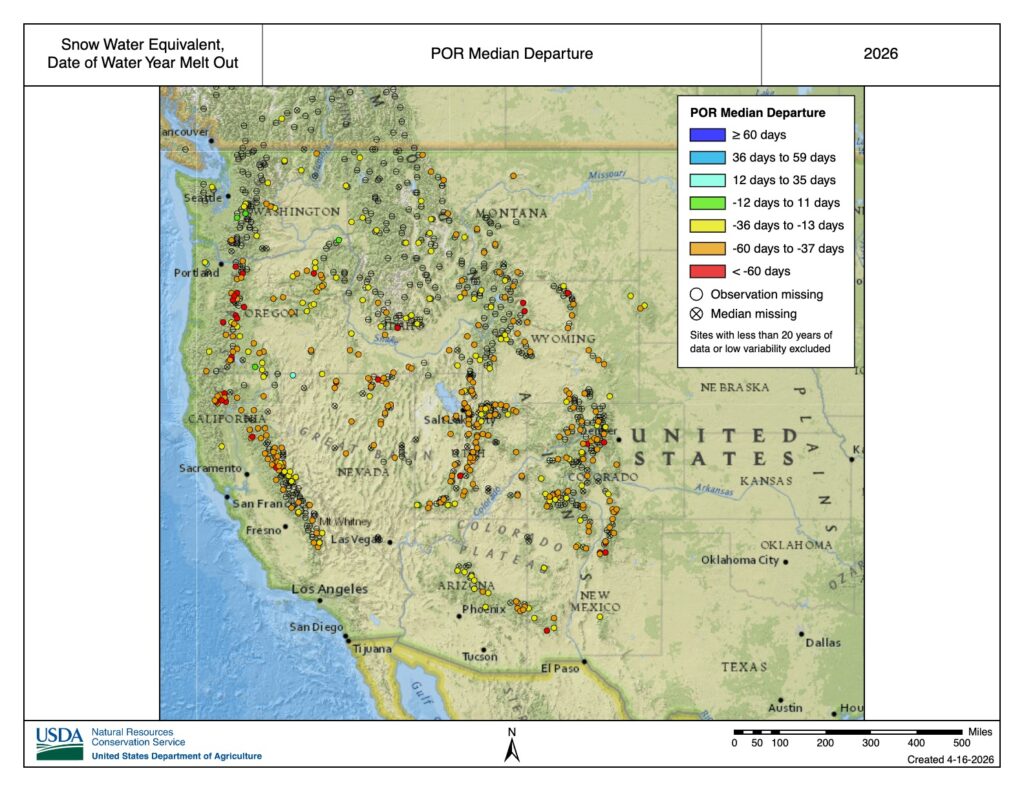
Ecologically, the early melt-out has set the stage for a dangerous wildfire season. When snow vanishes months early, the soil and alpine vegetation begin to dry out much sooner. This creates a longer "fire window." Forestry officials have expressed concern that the 1,000-hour fuel moisture levels—a measure of how dry large logs and forest debris are—are reaching mid-August levels as early as June.
Furthermore, the lack of sustained cold meltwater has led to premature warming of river systems. In the Pacific Northwest, fisheries managers are already considering "hoot owl" restrictions, which ban fishing during the hottest parts of the day to protect heat-stressed trout and salmon.
Analysis: The New Normal of ‘Boom or Bust’
The 2025-2026 season highlights a complex reality: while long-term climate trends show a dwindling snowpack, these trends are overlaid with massive year-to-year variability. This "boom or bust" cycle complicates public perception and policy-making. A record-breaking "boom" year can lead to a false sense of security, while a "lean" year like 2026 causes widespread alarm.
However, the 2025-2026 data suggests that even "average" precipitation years are becoming "bust" years for snow because of rising baseline temperatures. The "glass half full" perspective offered by some optimists—that next year could be a record-breaker—is tempered by the scientific reality that the freezing level in the atmosphere is steadily rising.
As the Western United States moves into the summer of 2026, the focus shifts from the mountains to the valleys. The "hot mess" of winter has become the water scarcity of summer. The lessons of this season are clear: the region must accelerate its investment in water conservation, groundwater recharge, and climate-resilient infrastructure. The distributed reservoir of snow can no longer be taken for granted; it is a vanishing resource in a warming world.
