

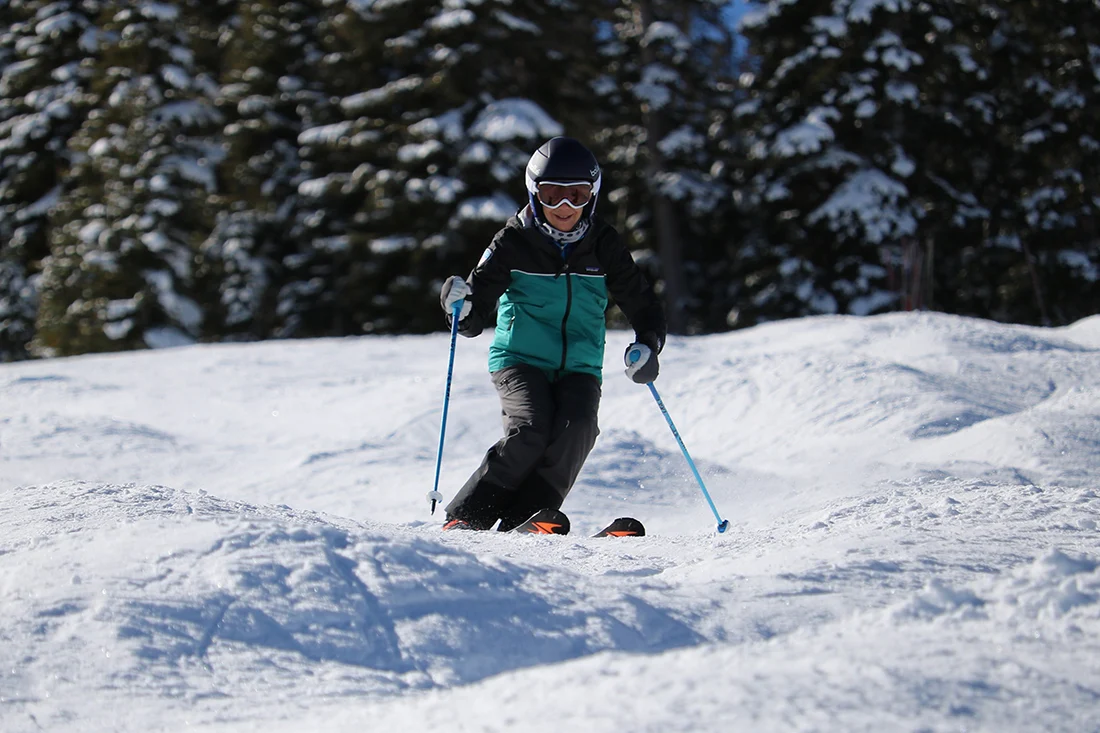
The instructional strategy of "mirroring," defined as copying someone with the intention of understanding them, has long been recognized as a best practice in teaching and learning, but its profound evolutionary roots and tangible benefits in fields like snowsports education are increasingly coming to the forefront. This approach, exemplified by a recent quote from a PSIA-AASI social media post – "I like to follow [my students] and copy their movements to understand what they are doing" – provides a concise encapsulation of a powerful pedagogical tool. Its efficacy was vividly demonstrated at Interski 2023 in Levi, Finland, where brain-based learning sessions illuminated how deeply this innate human capacity influences skill acquisition, empathy, and trust within dynamic learning environments.
The Deep Evolutionary Roots of Learning by Copying
Our fundamental capacity to learn through imitation is not merely a modern pedagogical technique; it is an ancient, evolutionary survival strategy deeply embedded in the biological fabric of many species. This foundational capability, termed motor resonance, dates back over 100 million years, enabling organisms to match observed actions. Across the animal kingdom, examples abound: dogs synchronize their pace, turns, and stops when moving in a pack, demonstrating a shared motor understanding. Young songbirds, similarly, perfect their complex vocalizations by meticulously listening to and replicating the calls of their parents, a direct form of auditory mirroring.
Among primates, this capacity evolved into more sophisticated forms of observational learning tens of millions of years ago. Chimpanzees exhibit complex behaviors like termite fishing, a skill passed down through generations by watching and imitating elders. Bonobos engage in chasing games and intricate social greetings, learned and reinforced through mutual observation and replication. This advanced form of learning allowed for the rapid dissemination of crucial survival skills and social norms within groups.
The most complex form of imitative learning, intentional teaching, is believed to have evolved within our own genus, Homo. The creation of intricate stone tools, for instance, often required more than mere observation; it demanded purposeful demonstration and guided practice – explicit teaching. This suggests a cognitive leap where individuals not only copied but also understood the underlying intent and mechanics, often facilitated by a teacher actively guiding the learner. Familiar learning theories, such as Albert Bandura’s Social Learning Theory, which posits that people learn from one another via observation, imitation, and modeling, are entirely compatible with these evolutionary theories. Bandura’s work can be viewed as a modern psychological framework built upon ancient evolutionary mechanisms, highlighting how these inherent capacities for imitation and social learning are leveraged in contemporary human development and education.
Interski 2023: A Global Showcase for Snowsports Innovation
Interski, the international congress for snowsports instruction, is a quadrennial event that serves as a vital global platform for professional ski and snowboard instructors to exchange ideas, demonstrate innovative techniques, and collaborate on the future of snowsports education. Bringing together national demonstration teams from around the world, Interski is renowned for showcasing cutting-edge methodologies and fostering cross-cultural understanding in teaching. The 2023 iteration, held in Levi, Finland, offered a particularly rich environment for exploring advanced pedagogical concepts. Levi, a prominent ski resort in Finnish Lapland, provided an ideal setting with its diverse terrain and well-regarded facilities, attracting delegates from dozens of nations eager to share and learn.
It was within this prestigious context that the Czech Republic National Team presented their work on brain-based learning, an educational approach that meticulously aligns instructional methodologies with contemporary neuroscience. Brain-based learning principles are grounded in understanding how the brain naturally receives, processes, and retains information, aiming to optimize learning outcomes by designing experiences that are biologically congruent with cognitive functions. The Czech team, recognized for their innovative approach to instructor development, specifically highlighted mirroring as a key strategy within their framework.
Experiential Learning: The Czech Republic’s Mirroring Workshop
The brain-based learning sessions at Interski 2023, led by the Czech Republic National Team, were a masterclass in experiential education. The on-snow session commenced with approximately 40 participants forming a large circle. The initial instruction was deceptively simple: find a partner through eye contact alone, without speaking. This generated a period of awkward silence, punctuated by darting, searching eyes, yet within a minute, connections were forged. Each participant had locked eyes with another, signaled acknowledgment through subtle non-verbal cues, and naturally gravitated towards their chosen partner for introductions. This initial, wordless interaction immediately underscored the power of non-verbal communication and the innate human drive to connect.
Angelo Ross, representing the Eastern Alpine and Children’s Examiner, found himself partnered with Angela Cesnik from the Australian National Team (APSI). After a brief, shared chuckle over their similar names, they received the next instruction: stand face-to-face, about two feet apart, and again, without verbal communication, decide who would lead an upcoming, unknown activity and who would follow. The silent negotiation was swift; Angela intuitively took the lead.
The leaders were then instructed to spend 60 seconds performing the motions of their morning bathroom routine, while followers were tasked with reproducing these movements exactly, like reflections in a mirror. This required not just imitation but precise coordination of opposite limbs and directions. If Angela "brushed her teeth" with her right hand, Angelo had to use his left. If she turned to her left, he had to turn to his right. The scene was undeniably comical – 40 strangers silently mimicking personal hygiene rituals, from eliminating morning breath to applying deodorant. Yet, beneath the humor, a profound connection was forming. Participants privately navigated how personal they would allow their mimed actions to become, and in doing so, they developed a rapid, intimate rapport. This seemingly lighthearted exercise served as a powerful icebreaker, demonstrating how shared, even slightly vulnerable, non-verbal mirroring can quickly build trust and connection between individuals from vastly different backgrounds. After the first round, partners switched roles, deepening the mutual understanding.
Ross reflected on the remarkable speed of connection: "Angela and I had never met and, almost literally, live in locations exactly opposite each other on Planet Earth. However, within a minute, we selected each other as partners, determined who would lead and who would follow, and gained superficial insights into some personal details about each other, all through eye contact and copying each other." This testament highlights the efficiency and impact of mirroring in fostering immediate rapport.
The exercise then transitioned to the slopes, introducing tandem mirroring. Partners skied in the same direction, with the original leader making predictable medium-radius turns, and the follower closely behind, positioning every part of their body – limbs, poles, helmet, skis – to exactly replicate the leader’s movements. At a predetermined stopping point, the follower described how mirroring the leader altered their technical performance and perception. The roles then reversed for the remainder of the run. During subsequent lift rides, partners like Ross and Cesnik engaged in deeper discussions, comparing techniques, exploring the impacts on performance, sharing insights into APSI and PSIA-AASI values, and even touching upon global politics. This rapid, high-impact exchange of technical and personal understanding within a short timeframe underscored the profound effectiveness of the mirroring exercise.
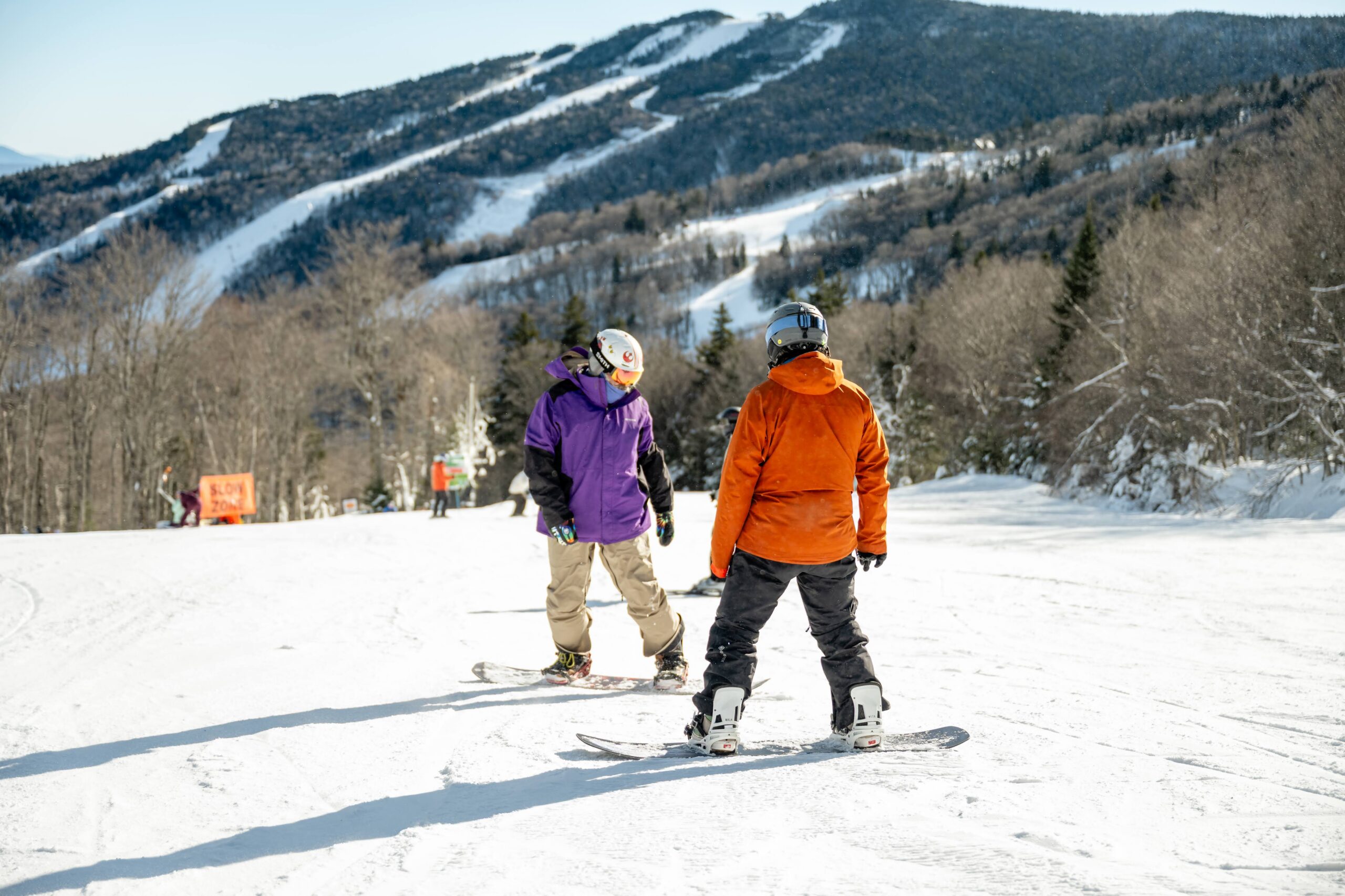
The corresponding indoor session provided the scientific underpinning for the on-snow experience. Czech researchers presented evidence from neuroscience, explaining precisely why the mirroring activities were so impactful. They detailed how mirroring facilitates the activation of mirror neurons in the brain, which are crucial for empathy, social cognition, and learning by observation. This neurobiological basis clarifies how mirroring demonstrably enhances trust, empathy, and understanding, providing a scientific explanation for the profound connections participants felt.
Insights from a Legend: Ellen Post Foster’s Enduring Approach
The value of mirroring is not a recent discovery; it is a principle long understood and championed by luminaries in snowsports education. Ellen Post Foster, a U.S. Ski & Snowboard Hall of Famer (Class of 2016) and 2021 Colorado Snowsports Museum Hall of Famer, exemplifies this enduring wisdom. Her illustrious career spans decades, marked by achievements as the 1973 Junior National Champion of Exhibition Skiing, multiple freestyle championships in 1975, and her significant contributions as an alumna of the 1980 and 1984 PSIA National Demonstration Teams. As a prolific snowsports author and co-author of the PSIA-AASI Teaching Snowsports Manual, Foster’s insights are foundational to American skiing pedagogy.
Ross recounted a telling experience skiing with Foster: "Often, while skiing with Ellen, she will disappear. She’s small, rigged for silent running, and has exceedingly nimble touch." During one such instance, after Ross believed they had separated, Foster reappeared at the lift, calmly informing him she had been following him to understand his skiing. She then respectfully sought his permission to offer feedback based on her observations, which Ross immediately accepted. This anecdote powerfully illustrates how experienced instructors like Foster intuitively leverage mirroring not just as a technique, but as a deep philosophy of understanding the student’s perspective and mechanics. By meticulously following a student, an instructor gains unparalleled insight into their movement patterns, challenges, and strengths, enabling tailored and empathetic feedback. The Teaching Snowsports Manual itself, co-authored by Foster, explicitly mentions following students as a critical teaching skill, underscoring its established importance within professional snowsports instruction.
Implementing Mirroring: From Theory to Practice
Inspired by the Interski 2023 experience, Angelo Ross actively incorporated mirroring into his instructional strategies. His subsequent workshops demonstrated the practical applicability and measurable benefits of this approach. In November, at the Rocky Mountain Telemark Education Staff Training, Ross replicated a format similar to the Czech team’s, starting with an indoor session designed to facilitate connection between paired partners, followed by an outdoor session that demanded careful observation and honest feedback. This structured approach allowed participants to build rapport and then apply that connection to a technical learning environment.
In December, a modified on-snow version of the mirroring exercise was implemented with a group of National Ski Patrol leaders at the Outdoor Emergency Transportation Conference at Killington, Vermont. This session focused on partner observation and subsequent discussion about the applicability of various movement patterns in different circumstances, such as navigating challenging terrain or responding to emergencies. The feedback from both sessions was overwhelmingly positive, consistently highlighting themes of "connecting quickly," "developing trust," and "deep learning." These results corroborate the findings from Interski, reinforcing that mirroring is an effective strategy for rapid rapport-building and enhanced learning across diverse snowsports contexts.
Broader Implications for Snowsports Education and Beyond
The systematic integration of mirroring into snowsports instruction offers multi-faceted benefits that extend beyond mere technical skill development.
-
Enhanced Student Understanding and Performance: When instructors mirror students, they gain invaluable insights into the student’s perception and execution of movements. This empathetic understanding allows for more precise diagnosis of issues and highly customized feedback, moving away from generic instructions. Conversely, when students mirror their instructor, it encourages active observation, detailed communication about sensory experiences, and a deeper kinesthetic understanding, accelerating skill development.
-
Fostering Trust and Empathy: The non-verbal, often intimate, nature of mirroring rapidly builds trust and empathy between instructor and student, or among peers. This psychological safety creates a more open and effective learning environment, where students feel understood and supported, reducing inhibitions and increasing receptiveness to feedback. The initial icebreaker at Interski vividly demonstrated this immediate connection.
-
Challenging the "One-Right-Way" Mentality: Synchronized skiing and riding activities, particularly when involving peer mirroring, provide insights into the value of varied movement patterns. By experiencing different styles and approaches through imitation, students and instructors alike can challenge the often-prevalent notion of a single "correct" technique. This broadens technical understanding, sharpens observational skills, and promotes adaptability, aligning with modern pedagogical philosophies that emphasize individual learning styles and diverse solutions to movement challenges.
-
Alignment with PSIA-AASI Fundamentals: Mirroring naturally integrates with the core principles of PSIA-AASI, such as facilitating effective learning environments, understanding individual needs, and promoting student-centered approaches. By adding this nuance to common "Follow Me" activities, instructors can significantly increase student engagement, foster a sense of camaraderie, and transform routine drills into dynamic games, movement explorations, and empirical experiments – all best practices in teaching and learning.
-
Global Impact on Instructor Training: The lessons from Interski 2023 and subsequent applications by educators like Angelo Ross demonstrate a clear pathway for professional snowsports organizations worldwide to refine their instructor training and certification programs. By emphasizing mirroring techniques, these organizations can cultivate a new generation of instructors who are not only technically proficient but also highly adept at building rapport, fostering empathy, and delivering deeply personalized instruction.
In conclusion, mirroring is far more than a simple teaching trick; it is a time-tested, research-backed strategy woven into the very fabric of our species’ learning and social interaction. From its evolutionary origins in motor resonance to its sophisticated application in brain-based learning, mirroring offers a powerful pathway for instructors and students alike to evolve their understanding, performance, and teaching of snowsports. By embracing this fundamental human capacity, the snowsports community can continue to foster deeper connections, accelerate skill acquisition, and create more impactful and empathetic learning environments for all.
