

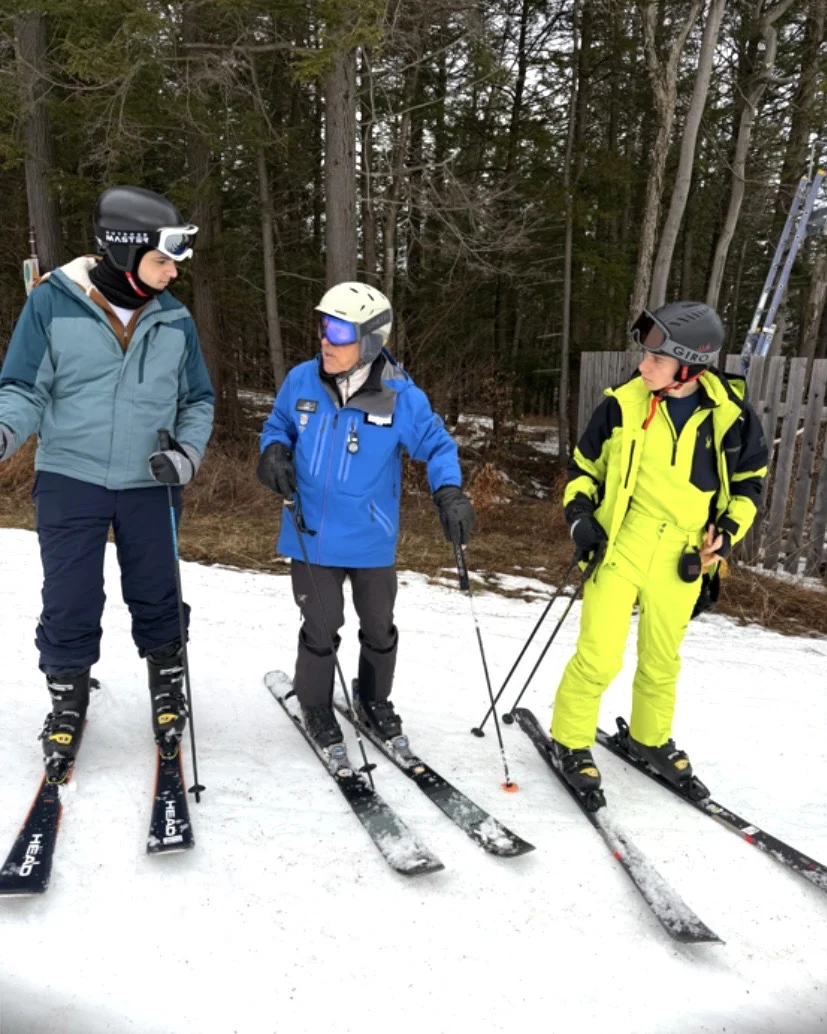
On a frigid winter morning at New York’s Hunter Mountain, the Otis Quad chairlift crested its unloading ramp, delivering a piercing shot of wind that swirled powdery snow across the landscape. The jacket thermometer of Leslie Surprenant, an Alpine Level II instructor and Children’s Specialist 1, registered a biting -5°F, with the wind chill making it feel like an extreme -30°F. Most guests sought refuge in the warmth of the lodge, vying for coveted spots near the roaring fireplace. Yet, amidst the harsh conditions, one individual stood ready to embrace the mountain, his skis squeaking on the cold, dry snow: Ralph Perlberger, celebrating his 95th birthday. His unwavering commitment to skiing in every conceivable snow condition and weather was a testament to a life philosophy forged in resilience and an enduring passion for the slopes.
Surprenant, who was coaching a weekly women’s clinic, introduced Ralph to her group, beaming with pride at his grit. He was joined by his wife, Carol, and two fellow ski instructors, David Raindorf and Steve Cohen, both of whom consider Ralph a profound inspiration. "When I grow up, I want to be Ralph," David once remarked, while Steve added, "Ralph is my idol." As the group gathered, muffled voices, distorted by frozen face masks, united to sing "Happy Birthday." Ralph, his grin visible even through the cold, graciously thanked them before leading the way down West Side Glide, an intermediate trail that winds gracefully among the snow-laden pines and hemlocks. His vitality on the mountain, even at 95, consistently amazes onlookers and colleagues alike. Victoria Mercado, the senior manager of Hunter Mountain’s Ski and Ride School, encapsulates this sentiment: "Ralph is an inspiration. He’s not only skiing, but teaching! Skiing and riding keep you young. When I watch Ralph ski, I can’t believe he’s 95. His energy, skill, and passion on the mountain defy his age. It’s an absolute pleasure to work alongside him."
A Life Forged in Resilience: From Holocaust Survivor to Ski Instructor
Ralph Perlberger’s remarkable longevity and zest for life are even more profound when viewed through the lens of his early experiences. His story is one of unimaginable hardship and extraordinary survival, beginning in Amsterdam, Netherlands. In 1940, as the ominous clouds of World War II gathered over Europe, Ralph’s father left for New York City to arrange for his family’s immigration to the United States. His arrival in New York on May 10, 1940, coincided precisely with the day Nazi forces launched their devastating invasion of the Netherlands, trapping his family in a rapidly darkening continent.
The following year, the Perlberger family’s life was irrevocably altered. Nine-year-old Ralph, his mother, and two older brothers were forcibly removed from their Amsterdam home. They were first imprisoned in Westerbork transit camp, a facility in the northeastern Netherlands that served as a cruel waystation for Jews destined for extermination camps further east. Westerbork, initially built as a refugee camp, was transformed by the Nazis into a transit point where tens of thousands of Dutch Jews were processed before being deported, primarily to Auschwitz and Sobibor.
In February 1944, the Perlberger family’s harrowing journey continued as they were transferred by railroad cattle car to Bergen-Belsen concentration camp in Germany. Bergen-Belsen, while not initially an extermination camp, became infamous for its horrific conditions, rampant disease, and starvation. It was here that thousands, including Anne Frank, perished from typhus, typhoid fever, dysentery, and malnutrition. Ralph himself endured both typhus and typhoid fever, illnesses that claimed countless lives. Despite the unimaginable suffering and the constant threat of death that permeated Bergen-Belsen, Ralph harbored an unwavering certainty that he and his family would survive. He attributes this remarkable confidence, security, and hope to his parents, who instilled in him a resilient spirit. Early on, he even believed he would have an incredible story to share with friends once the war concluded – a testament to a child’s innocent optimism against a backdrop of unparalleled evil.
His father, agonizingly, spent years in New York City unaware of his family’s fate. At war’s end, a glimmer of hope emerged: he learned they had survived and were located in the Russian-occupied village of Tröbitz, Germany. Their journey to Tröbitz was itself a miracle, part of what became known as the "Lost Transport." This was one of three trains carrying approximately 7,500 Jewish prisoners, intended by the Nazis to be exchanged for German prisoners. The "Lost Transport" endured a nightmarish two-week odyssey, constantly stopping and rerouting dues to battle-damaged tracks and the collapse of the Nazi regime. Plagued by hunger, thirst, and disease, hundreds of prisoners died en route. The train finally ground to a halt on a destroyed bridge over the Elster River, just outside Tröbitz. On April 23, 1945, Russian troops liberated the surviving prisoners, a moment of profound deliverance for Ralph and his family.
Following their liberation, there was still a period of waiting. For five months, while the family’s visa applications for the United States were pending, Ralph’s father diligently sent Red Cross packages containing vital food and hygiene products – a lifeline that sustained them until their immigration. In February 1946, Ralph, his two brothers, and his mother finally arrived in the United States, making their new home in New York City. Ralph quickly adapted, learning English and excelling in school, while his father, after years of agonizing separation, began the process of reconnecting with his resilient family. This chapter of Ralph’s life underscores an extraordinary capacity for survival and an indomitable human spirit that would later define his approach to life and the sport he loves.
Embracing a New World: Education and the Call of the Slopes
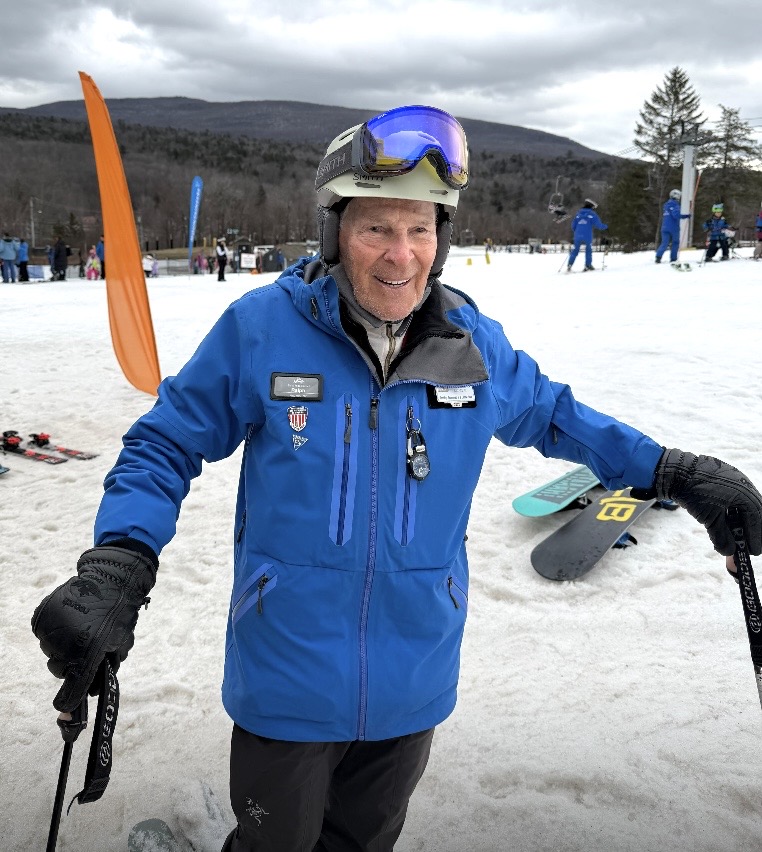
After the profound experiences of his childhood and the challenging transition to a new country, Ralph Perlberger immersed himself in his education and discovered a lifelong passion. He pursued higher learning, studying economics at the prestigious Stanford University. It was during a winter break while at Stanford that his father, keen to provide new experiences for his sons in their adopted country, sent Ralph and his two older brothers to Sun Valley, Idaho. Sun Valley, one of America’s premier ski resorts, offered a stark contrast to the hardships of his youth and quickly captivated him. Ralph was "hooked" from that moment, embracing the thrill and challenge of skiing at every available opportunity. This newfound love affair with the slopes continued even as he pursued a demanding law degree at Harvard, balancing rigorous academic studies with his burgeoning passion for alpine sport.
For decades, skiing remained a central part of Ralph’s life. He honed his skills on diverse terrain, from the challenging steeps of Taos, New Mexico, to the renowned resorts of Europe, and eventually, the familiar slopes of Hunter Mountain. This extensive personal experience provided him with a deep understanding of varied snow conditions, terrain, and skiing techniques. However, it wasn’t until 2002 that an advertisement would pivot his recreational passion into a new vocation.
The Path to Instruction: Sharing the Joy of Skiing
The advertisement that caught Ralph’s eye offered an intriguing opportunity: for $85, he could participate in a weekend of instructor training and candidate selection at Hunter Mountain. If selected as an instructor candidate, an additional weekend of training and final selection would be free. Despite his decades of personal skiing experience, Ralph, with his characteristic humility, realized he had much to learn about the art of teaching. He was among those chosen to become an instructor, embarking on a journey that would see him become a cherished member of the Professional Ski Instructors of America (PSIA) community.
Today, Ralph stands as a PSIA Level II Alpine instructor, a significant achievement that signifies not only a high level of personal skiing proficiency but also demonstrated expertise in teaching methodology and technical understanding. To reach Level II, instructors must pass rigorous exams that assess their ability to ski all terrain and conditions with competence and versatility, their understanding of ski technique, and their skill in effectively communicating and demonstrating concepts to students of varying abilities. It’s a testament to his dedication to continuous learning and mastery, even after having skied for so long.
He often credits fellow ski instructor and PSIA alpine examiner Charlie Knopp for providing some of the best advice he ever received: "Lift your inside hip!" This seemingly simple instruction is, in fact, a fundamental principle in advanced skiing, crucial for improving angulation, effectively directing pressure to the outside ski, and achieving optimal edge control throughout a turn. It’s a detail that can unlock significant improvements in a skier’s technique.
Ralph’s presence at Hunter Mountain’s ski and ride school is deeply valued, and he holds a special place in the hearts of his colleagues. Luca Arrigoni, a member of the Eastern Alpine Development Team, shared his admiration: "Ralph has a special place in my heart. I shadowed him as a new instructor and was inspired by his patient, gentle, and knowledgeable way with beginners. He still proudly wears the Hunter uniform, which shows his love for, and dedication to, the sport and teaching." This sentiment is echoed throughout the community, where Ralph is seen as both a mentor and an inspiration, embodying the very spirit of the sport.
Ralph particularly enjoys helping adult intermediate skiers, a group often stuck in habits that hinder progression. He begins by asking students how they make their skis turn. The common response, "I don’t know, I just turn," often indicates a lack of conscious awareness of their technique. Ralph observes that many intermediate skiers rely on leg rotation on flat skis, failing to utilize fundamental principles. He identifies common deficiencies such as not maintaining their center of mass (CM) over their base of support (stance), inadequately directing pressure to their outside skis, and struggling with controlling edge angles.
His coaching approach is practical and experiential. He guides skiers to actively feel their shins against the tongue of their boots throughout all phases of a turn, reinforcing the critical forward athletic stance. When he observes skiers leaning back, a common issue leading to fatigue and reduced control, he asks them to stop and notice the sensation in their quadriceps. Most report "tired" or "burning" muscles, providing a tangible connection between poor body position and physical discomfort. He then gently redirects them to reconnect their shins with the front of their boots, emphasizing proper alignment. Through these patient and insightful methods, Ralph consistently helps every student improve, have fun, and express their gratitude for his guidance.
The Hunter Mountain Legacy: An Inspiration to All Ages
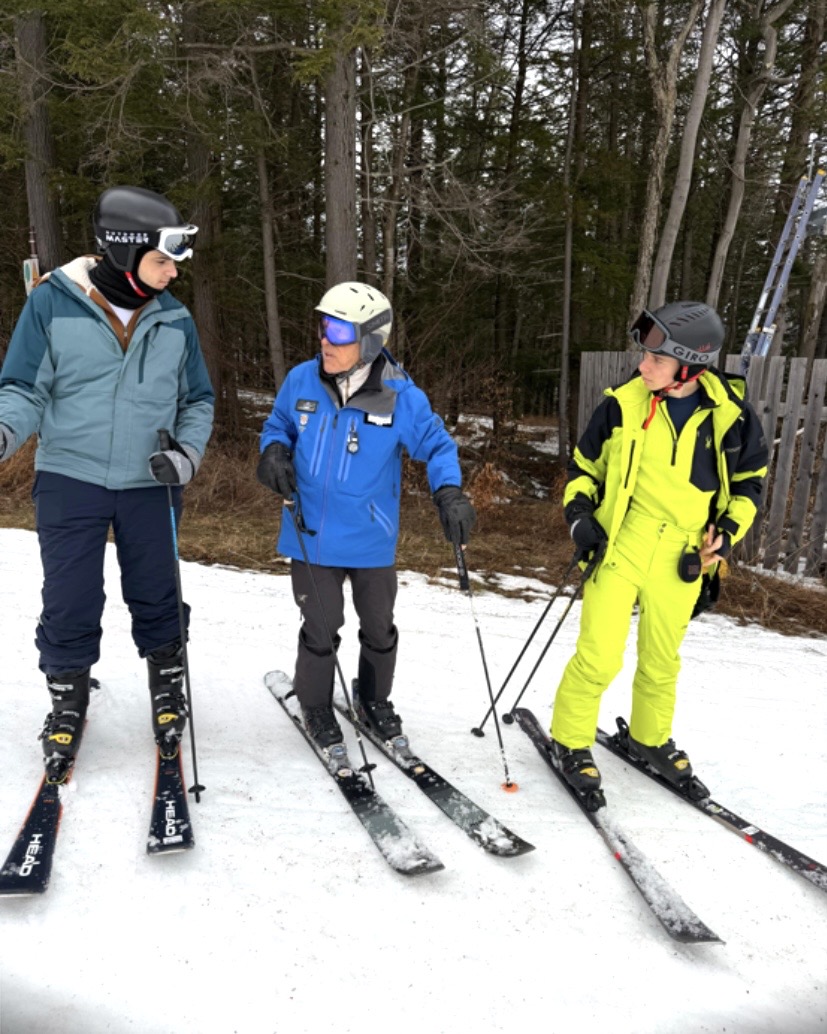
Hunter Mountain’s ski instructors span an impressive eight decades in age, a testament to the sport’s appeal across generations. Within this diverse community, Ralph Perlberger stands as a beacon, his longevity and dedication serving as a powerful example. His advice to the youngest instructors is simple yet profound: "Keep at it and don’t give up! Don’t let anything stop you. Ski in all conditions and all weather." This counsel, distilled from a lifetime of overcoming adversity and embracing challenge, resonates deeply within the close-knit ski school community.
Ralph’s philosophy extends beyond mere technique; it speaks to a broader outlook on life. His willingness to brave extreme conditions on his 95th birthday is not just an act of defiance against age but a consistent embodiment of his "ski in all conditions" mantra. This attitude fosters not only physical hardiness but also mental resilience, qualities that are highly valued and infectious among his colleagues and students. He represents the living embodiment of the notion that age is merely a number when passion and purpose drive an individual.
The community at Hunter Mountain views Ralph not just as an instructor but as a cornerstone. His journey, from a child survivor of the Holocaust to a beloved PSIA Level II instructor, imbues his teaching with an unspoken depth. He teaches not just skiing mechanics, but also, by his very presence, lessons in perseverance, optimism, and the boundless potential of the human spirit. His colleagues often reflect on how Ralph contributes to the unique culture of the ski school – a culture that celebrates dedication, mentorship, and a shared love for the mountain.
The Broader Implications: Active Aging and the Human Spirit
Ralph Perlberger’s story transcends the ski slopes; it offers a compelling narrative on active aging, human resilience, and the power of sustained passion. In an era where discussions about longevity often focus on medical advancements, Ralph serves as a living testament to the profound benefits of physical activity and mental engagement throughout life. Research consistently demonstrates that older adults who remain physically active enjoy improved cardiovascular health, stronger bones, enhanced cognitive function, and a greater sense of well-being. Skiing, in particular, demands a complex interplay of balance, coordination, strength, and continuous decision-making, providing a comprehensive workout for both body and mind.
Moreover, Ralph’s journey from the horrors of Bergen-Belsen to the joy of teaching on a mountain highlights the incredible capacity of the human spirit to overcome adversity and find purpose. His early experiences, marked by profound loss and suffering, did not diminish his optimism or his drive to live a full and meaningful life. Instead, they seem to have fueled an unyielding resolve and an appreciation for every moment. This resilience is a powerful message for all, demonstrating that even after enduring unimaginable trauma, hope and passion can prevail.
His role as a PSIA Level II instructor at 95 challenges conventional perceptions of retirement and capability. He exemplifies how older adults can continue to contribute actively to their communities, sharing their wisdom, experience, and energy. His inspiration extends beyond the technical aspects of skiing, fostering a community that values dedication, continuous learning, and the pursuit of joy regardless of age. He is a testament to the idea that embracing new challenges and maintaining an active lifestyle can lead to profound personal fulfillment and inspire countless others.
A Future on Skis
Having recently completed his 24th season of instructing at Hunter Mountain, Ralph Perlberger has no intentions of slowing down. He continues to embody the spirit of his own advice: "Keep at it and don’t give up!" With an infectious twinkle in his eye, he often quips, "Maybe someone above is watching over me," acknowledging the blend of fortune and fortitude that has carried him through life. He frequently draws inspiration from the legendary Baseball Hall of Famer Satchel Paige, who famously advised, "Don’t look back; something might be gaining on you." For Ralph, this philosophy signifies a relentless forward momentum, an embrace of the present, and an unwavering commitment to the future. For the skiers and instructors at Hunter Mountain, that "something" gaining on them might very well be Ralph Perlberger himself, a living legend continuing to inspire, teach, and redefine what’s possible on the slopes. His legacy is not just in the turns he teaches, but in the enduring spirit he shares, proving that passion, resilience, and an active life truly know no age.
