

Published March 24, 2026, 04:24 PM
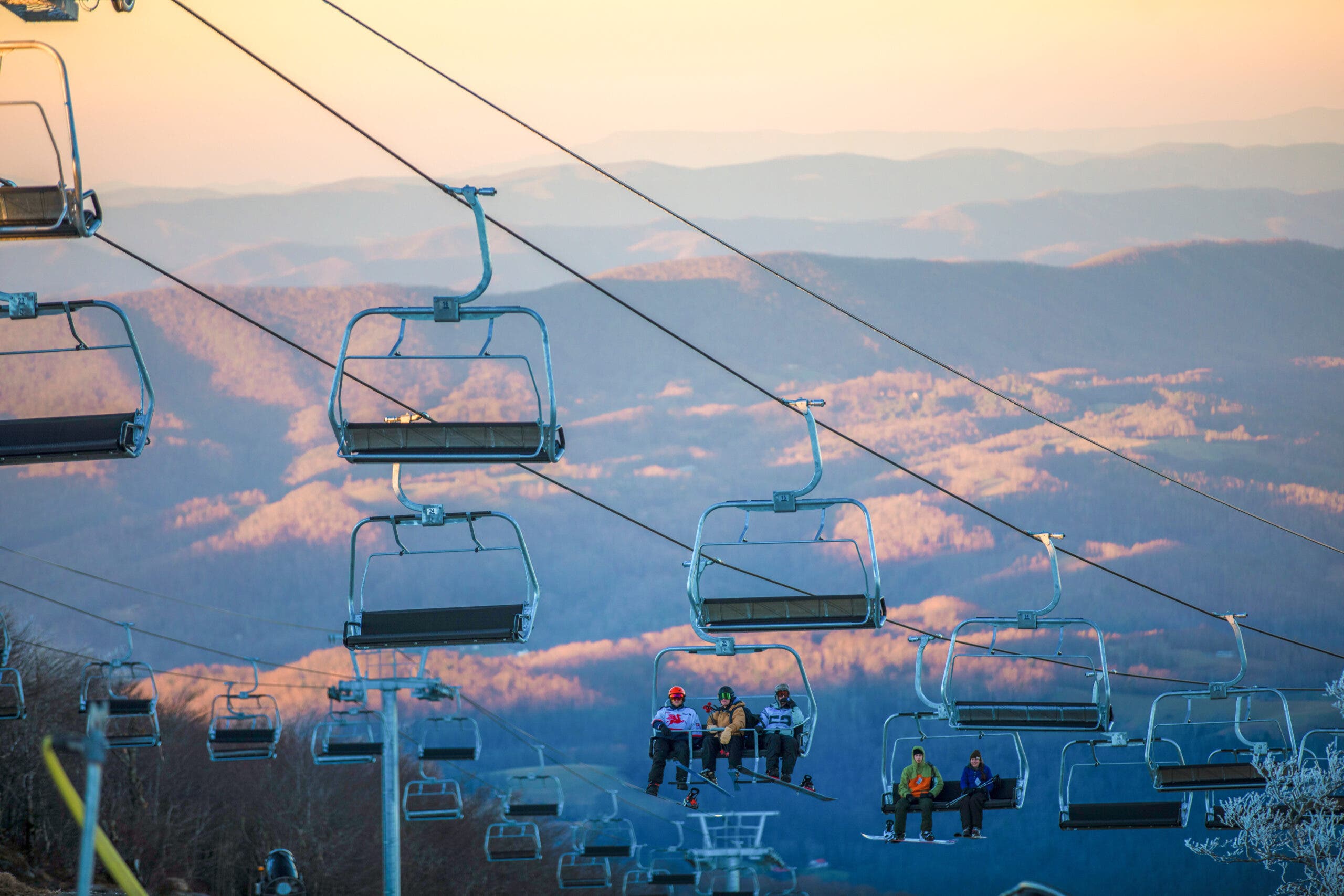
The crisp mountain air in Western North Carolina, a region often overlooked for its winter sports potential, carries a surprising undercurrent of dismissal. As I ascended an icy ridgeline on a chairlift, a young snowboarder and her skier boyfriend offered a succinct, yet potent, assessment of the local ski resorts: "It’s mid." This colloquial term, signifying mediocrity, was echoed by their friends, painting a broad stroke of perceived underperformance across the approximately two dozen ski areas dotting the Southern Appalachian Mountains. The couple, while admitting they hadn’t personally experienced all these venues, based their judgment on prevalent hearsay. Their preferred destination, Beech Mountain, was highlighted as an exception, a place they acknowledged as possessing genuine merit.
Beech Mountain, consistently ranking as the highest ski resort on the East Coast at 5,506 feet, has indeed been a personal favorite in recent seasons. It offers a compelling combination of affordability, efficient lift systems accessing diverse terrain, and a respectable 830 feet of vertical drop. Its robust snowmaking capabilities, coupled with the region’s propensity for cold temperatures, ensure a reliable skiing experience. The addition of a microbrewery at the summit further contributes to Beech Mountain’s appeal, fostering a vibrant and youthful atmosphere that seems to defy the "mid" label.
However, my conversation with the couple revealed a common pattern: limited personal experience, often marred by unfavorable conditions, leading to swift and sweeping judgments. This sentiment is a familiar refrain, particularly since my relocation to the nearby Coastal Plain for my wife’s academic career. Despite years of enjoying the region’s exceptional outdoor recreation, from world-class kayaking to challenging mountain biking, I consistently encountered a pervasive underestimation of its winter sports offerings, voiced by both locals and visitors.
Initially, the geographical distance and perceived quality led me to continue my winter pilgrimages to the Western United States, where I grew up, utilizing a Mountain Collective Pass to chase prime powder conditions. Yet, the escalating costs, time commitments, and the realities of a busy life eventually rendered these long-distance excursions impractical. Reluctantly, I began to reconsider skiing closer to home, embarking on a mission to explore the Southern Appalachians with an open mind, hoping to discover overlooked potential.
Rediscovering the Appalachian Slopes: A Journey Beyond Stereotypes
My first season back, exploring the three ski resorts in the vicinity of Boone, North Carolina, yielded promising results. The skiing, in fact, often surpassed the disparaging expectations I had encountered. The primary challenge wasn’t navigating the regional nuances of narrower slopes, variable conditions, or the presence of beginner skiers. Instead, it was confronting the deeply ingrained stigma surrounding the Appalachian ski scene, characterized by negative assumptions and inaccurate stereotypes.
"Not worth it," was a frequent response when I inquired about other mountains to explore. The criticisms were varied and often contradictory: "That place has no snow." "That one has no trails." "Slow lifts." "No trees." "Only ice." "Only trees." These generalizations painted a fragmented and often misleading picture.
At Sugar Mountain, Western North Carolina’s largest resort with 1,200 vertical feet, I encountered this phenomenon firsthand. While enjoying the steeper north side, a fellow skier on a high-speed lift advised me to "Don’t bother with the lame east side; they have slow lifts and no snowmaking over there." Intrigued, and possessing a natural inclination to investigate, I observed that from our vantage point, the east side appeared comparable in size and potential to the north side, despite the negative portrayal.
My curiosity piqued, I ventured to the mellower, yet still enjoyable, south side. There, I discovered efficient lifts and a well-maintained snow base, belying the dismissive claim that it was essentially an "ice rink" serviced by an "oxcart." This stark contrast between perception and reality became a recurring theme.
A Winter Road Trip: Unveiling the Diversity of Appalachian Skiing
To systematically challenge these prevailing narratives, I embarked on a winter road trip in January 2025, armed with an affordable Indy Pass, which grants access to approximately a dozen resorts across the Southern Appalachians. The timing coincided with an exceptionally favorable snow season, a welcome bonus that allowed me to experience multiple days of natural snowfall. This fortunate turn of events led me to extend my itinerary, incorporating non-Indy resorts into what became an extensive 17-resort exploration.
The journey commenced at Cataloochee, a charming and capable skier’s mountain nestled at the edge of the Great Smoky Mountains National Park, offering a respectable 740 feet of vertical. Further north, in the Blue Ridge Mountains of Virginia, I confirmed that Wintergreen, a resort known for its more substantial stats and amenities, operates as a distinct entity from Winterplace in the Alleghany Mountains of West Virginia. This distinction was crucial, as many had conflated the two. Wintergreen, benefiting from a warmer climate, necessitates diligent condition monitoring, while Winterplace, situated inland, offers a colder, less crowded experience despite its smaller scale.
The heart of my discoveries lay in West Virginia. Snowshoe Mountain, with its impressive 1,500 feet of vertical and corporate backing by Alterra, exuded a distinctly Western ambiance, making it a noteworthy destination. However, Snowshoe is not the sole offering in the state. Approximately two hours to the north lies the Canaan Valley region, a veritable snowy treasure trove. This area boasts three distinct venues that rival Snowshoe in their appeal: the modernized Timberline, the classic bowl experience of Canaan Valley State Park, and the unique backcountry terrain and challenging knobs at White Grass Ski Touring Center, renowned for its cross-country and backcountry skiing opportunities.
Navigating the Terrain: Topographic Quirks and Evolving Resorts
As my exploration extended northward, I encountered an intriguing topographic characteristic of the Alleghanies: rounded summits that give way to steeper slopes lower down, often resulting in "top-down" resort designs. Laurel Mountain, situated in Southwestern Pennsylvania just across the Mason-Dixon line, exemplified this with its enjoyable ledges, steep pitches, and a memorable night-skiing experience that included a lift ride through absolute darkness.
Interestingly, upon mentioning Laurel Mountain, I was met with skepticism from an older skier who claimed it had shut down. He seemed unreceptive to my explanation that Laurel had indeed reopened in 2016 and was subsequently acquired by Vail Resorts. "Who knew where I’d gone," he asserted, "but it definitely wasn’t Laurel." My confident reply, "Yes, it was Laurel," highlighted the persistent disconnect between evolving realities and outdated perceptions.
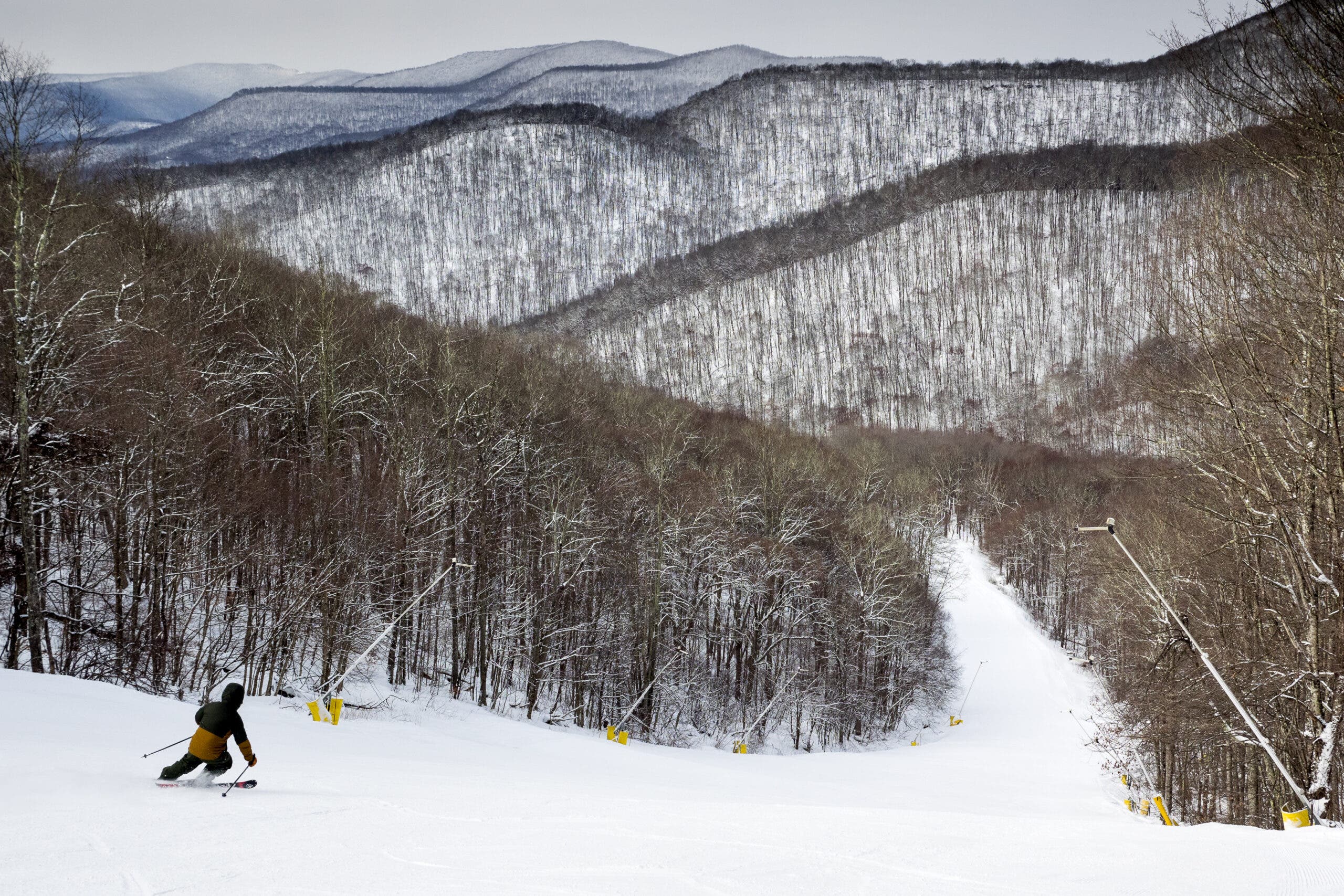
The journey continued south, and at one resort bar, I received a directive to bypass Massanutten in Virginia. "You mean Mass-a-nothing?" a smug Airbnb developer quipped, likening it to a children’s farm with a rope tow. My conjecture was that his negative association stemmed from a childhood visit, a perspective that perhaps never evolved beyond adolescent nostalgia. Nevertheless, I proceeded, and much like other regional offerings, I discovered that Massanutten has significantly invested in its infrastructure in recent years, boasting new lifts, enhanced snowmaking capabilities, and expanded, more challenging terrain.
Deconstructing the "Mid" Label: A Legacy of Misinformation and Progress
The persistent "mid" label attached to the Southern Appalachian ski scene appears to stem from a confluence of factors. The development of skiing in this region lagged behind other areas, gaining momentum primarily in the 1970s. Almost concurrently, external critics began to label it the "Banana Belt" of skiing, a moniker that, while perhaps intended to denote milder conditions, often carried a dismissive undertone. This label, however, failed to acknowledge the gradual yet consistent improvements that have characterized the region’s ski areas.
These improvements have accelerated in recent years, driven by advancements in snowmaking technology, a critical development in combating the challenges posed by warming global climates. Despite these tangible upgrades, ingrained habits of negative perception and assumption have proven resilient. The "Banana Belt" stigma, coupled with anecdotal evidence from infrequent or poorly timed visits, has perpetuated a cycle of underestimation.
Moving Beyond the Stigma: A Call to Action for Skiers
The most effective way to dismantle these lingering stereotypes is through direct experience. The Southern Appalachian ski landscape is far more dynamic and rewarding than often portrayed. As the adage suggests, "Don’t knock ’em ’til you ski ’em." The initial step involves setting aside preconceived notions and biases. The subsequent, and most crucial, step is simply to visit. The region offers a diverse array of ski experiences, from the highest East Coast peaks to hidden gems in West Virginia and beyond, all of which are actively working to enhance their offerings. The effort to explore these slopes, to ski them personally, is the ultimate refutation of the "mid" label and a gateway to discovering the genuine winter charm of the Southern Appalachians. The ongoing commitment to modernization, coupled with the region’s inherent natural beauty, ensures that these mountains are anything but mediocre.
