
The Ambitious Vision Behind unReal‘s Equine Collaboration
The genesis of the iconic mountain biking segment, featuring riders alongside galloping horses, stemmed from a desire to push the boundaries of action sports filmmaking. Teton Gravity Research (TGR), renowned for its visually stunning and adrenaline-fueled films, partnered with Anthill Films, a collective celebrated for its innovative storytelling and cinematography in the mountain biking realm. The objective was to transcend conventional filming techniques and create a narrative that blurred the lines between human athleticism and the raw power of nature. The chosen location, Turtle Ranch in Dubois, Wyoming, offered a vast and rugged landscape that perfectly complemented the ambitious vision. This remote setting provided the ideal backdrop for a concept that aimed to capture the untamed spirit of both mountain biking and equestrianism.
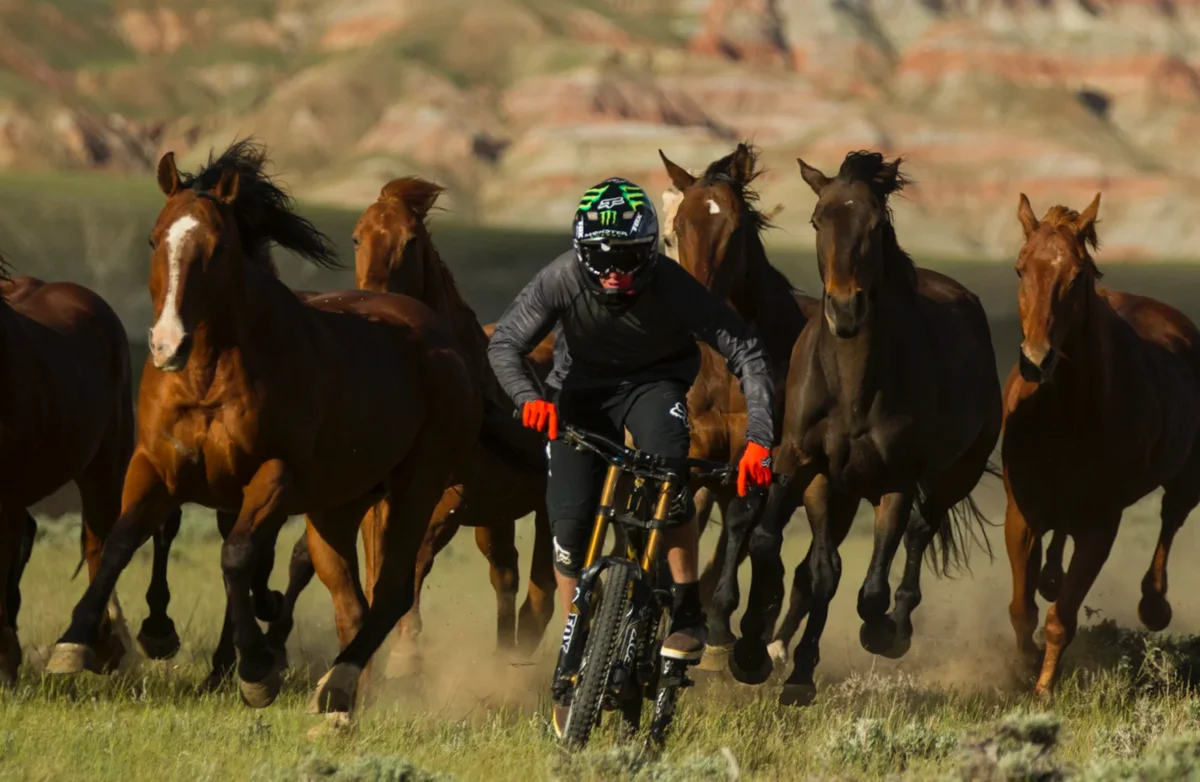
The core idea was deceptively simple: to witness elite freeride mountain bikers navigating challenging terrain at speed, mirroring the thunderous gallop of a herd of horses. This juxtaposition of two powerful forces – the precision of human skill and the primal energy of animals – promised a visually spectacular and emotionally resonant cinematic experience. The production team, comprising 15 dedicated individuals, understood the inherent challenges but was driven by the potential for groundbreaking imagery. The initial planning stages likely involved extensive scouting of the terrain, coordination with equine experts to ensure the well-being of the horses, and meticulous choreography to synchronize the movements of both riders and animals. The success of such a complex undertaking hinged on seamless collaboration, precise execution, and an unwavering commitment to safety.
High Stakes and Heavy Setbacks: The Perils of Parallel Pursuit
The pursuit of this extraordinary cinematic moment was not without its significant risks and formidable setbacks. The sheer scale of the production, involving heavy machinery like skid-steers for track maintenance, aerial support from helicopters, and the volatile element of a large group of galloping horses, quickly amplified the inherent dangers. Freeride athlete Brett Rheeder, initially slated to be the primary rider for this particular segment, found himself at the sharp end of these risks during early shooting runs. In a dramatic turn of events, Rheeder was accidentally run over by one of the horses.
This incident, a stark reminder of the unpredictable nature of working with large animals at speed, immediately halted production. Rheeder sustained injuries that necessitated his withdrawal from the remainder of the shoot. The unforeseen accident served as a critical inflection point, forcing the entire production team to re-evaluate and significantly enhance their safety protocols. In the aftermath, the focus shifted from the immediate pursuit of the shot to ensuring the absolute safety of all personnel and animals involved. Strict boundary lines were established and rigorously enforced, creating a clear separation between the horses and the riders. This measure was crucial to prevent further incidents and to allow the production to proceed with a heightened sense of caution and responsibility. The near-miss underscored the delicate balance between capturing breathtaking action and maintaining a secure environment, a challenge that defines many high-risk, high-reward filmmaking endeavors in extreme sports.
The timeline of events leading to this critical juncture can be pieced together through the typical production cycle of a film like unReal. Pre-production, which would have involved scouting, logistics, and initial concept development, likely spanned several months. The on-location filming itself, especially for a segment of this complexity, would have required a significant period, potentially weeks, to achieve the desired results under the unpredictable conditions of nature and animal behavior. The accident involving Brett Rheeder would have occurred within this filming window, leading to an immediate pause and a period of reassessment. Following the implementation of new safety measures, the production would have resumed, albeit with a more conservative approach, focusing on achieving the visual goals while prioritizing the well-being of everyone involved.

Precision, Patience, and Pure Speed: Mastering the Unpredictable
Capturing the essence of mountain bikes and horses running in tandem demanded an extraordinary level of patience from every individual on set. Unlike the controlled environment of a studio or the predictable responses of human actors, horses operate on their own instincts and rhythms. This meant that the film crew and riders had to be perpetually ready, waiting for the precise moment when the herd moved with the full, uninhibited power of a gallop. The director and cinematographers would have been keenly observing the animals, looking for the opportune confluence of their natural movement and the pre-determined course of the riders.
For athletes like Brandon Semenuk and Tom McCaul, who ultimately took on the challenge, the task was to not only navigate the demanding terrain but also to synchronize their riding with the powerful, often irregular, cadence of the horses. This involved a constant and intuitive adjustment of their speed and line. They had to seamlessly blend their own controlled aggression with the wild energy of the herd, a feat requiring exceptional bike handling skills, situational awareness, and a profound understanding of their own capabilities and limitations. The terrain itself presented additional hurdles, with loose singletrack, blind corners that obscured oncoming obstacles or changes in the path, and significant dust clouds kicked up by the animals and bikes, all contributing to an environment where split-second decisions were paramount. The successful execution of this segment is a testament to the riders’ mastery of their craft, their ability to perform under immense pressure, and their dedication to achieving a truly unique visual narrative. The result was a breathtaking display that transcended mere athletic performance, presenting a harmonious fusion of human endeavor and natural force, a moment where the boundary between man and beast seemed to dissolve.
The technical demands of filming such a segment would have been immense. Cinematographers would have employed a variety of camera setups, including high-speed cameras to capture the intricate details of the motion, drones for sweeping aerial shots, and possibly even helmet-mounted cameras to provide an immersive rider’s perspective. The sound design team would have been tasked with capturing the visceral sounds of hooves pounding the earth, the roar of the bikes, and the natural environment, all to amplify the sensory experience for the viewer. The editing process would have been equally critical, meticulously piecing together the footage to create a seamless narrative flow and to emphasize the synchronized power of the riders and horses.
A Timeless Moment in Action Sports History: The Enduring Legacy of unReal‘s Equine Sequence
Years after its initial release as part of Teton Gravity Research’s 2015 film unReal, this particular sequence continues to be hailed as one of the most captivating and celebrated moments in the history of mountain bike cinema. Its enduring appeal lies in its audacious concept, its flawless execution, and its ability to evoke a primal sense of awe and exhilaration. The visual of two distinct forms of "horsepower" – one mechanical, the other biological – charging in unison across a dramatic landscape possesses an inherent cinematic power that resonates deeply with audiences.
Whether viewers are revisiting the segment for the umpteenth time on TGR TV or discovering it for the first time, the impact remains potent. The blend of raw speed, precise control, and untamed energy creates a spectacle that is both thrilling and inspiring. This segment transcended the typical narrative arc of a mountain biking film, offering a unique narrative that speaks to the symbiotic relationship between humans and the natural world, albeit in an extreme and visually arresting manner. Its continued relevance in the action sports landscape speaks to the power of innovative filmmaking and the pursuit of capturing moments that push the boundaries of what is considered possible. The production’s ability to overcome significant challenges, including a serious accident, to deliver such a visually stunning and memorable piece of cinema further cements its status as a landmark achievement.
The broader implications of this segment extend beyond mere entertainment. It serves as a testament to the dedication and artistry of the individuals involved in its creation. It highlights the evolving capabilities of filmmaking technology and techniques within the action sports genre. Furthermore, it underscores the enduring fascination with the intersection of human athleticism and the raw power of nature, a theme that continues to captivate audiences across various disciplines. The success of this sequence likely influenced future productions, encouraging filmmakers to explore even more ambitious and unconventional collaborations to capture unique visual stories. The legacy of this moment is not just in the footage itself, but in the inspiration it provides to athletes and filmmakers alike to dream bigger and to push the creative envelope, all while maintaining a paramount focus on safety and respect for the elements and the creatures we share them with. The segment’s lasting impact is a clear indicator of its success in achieving the initial goal: to bring the wildest mountain bike fever dreams to life in a way that captivated and inspired a global audience.
