

A 333-acre expanse of Texan earth, situated strategically east of Austin-Bergstrom International Airport, has become an unlikely graveyard for grand ambitions in the nascent world of artificial surf. This same parcel of land has now witnessed the faltering of two high-profile ventures designed to bring ocean-quality waves hundreds of miles inland, underscoring a persistent challenge: transforming a compelling vision into operational reality when faced with the unglamorous but vital demands of infrastructure and regulation. The latest casualty, the ultra-private Austin Surf Club, developed by Discovery Land Company and featuring the renowned Kelly Slater Wave Company technology, currently sits stalled, mired in a deepening mire of contractor liens exceeding $16 million and a critical dependency on a proposed $171 million special tax district to fund essential utilities. This echoes the fate of its predecessor, NLand Surf Park, North America’s inaugural public Wavegarden facility, which opened with much fanfare in 2016 only to shutter two years later amidst regulatory battles. The recurring theme is stark: despite immense capital, celebrity endorsement, and advanced technology, Austin’s surf dreams remain unfulfilled, a testament to the complex interplay of real estate development, municipal governance, and the often-overlooked exigencies of foundational infrastructure.
A Chronology of Ambition and Stalled Progress in Central Texas
Austin’s journey into the artificial surf landscape began with genuine pioneering spirit.
NLand Surf Park: The Inaugural Wave (2016-2018)
In October 2016, NLand Surf Park made international headlines, opening its gates as the first public Wavegarden facility on the North American continent. Conceived by former energy trader Doug Coors, the vision was audacious: to cultivate a legitimate surf culture in landlocked Central Texas, approximately 200 miles from the Gulf of Mexico. The park featured a lagoon capable of producing waves suitable for surfers of all skill levels, from beginners to experienced riders, utilizing cutting-edge wave-generating technology. It quickly became a proof-of-concept, demonstrating the technical feasibility and commercial appeal of inland surfing.
However, NLand’s operational lifespan proved tragically short. After just two years, the park closed its doors permanently. Its demise was not due to a failure of its wave technology or lack of public interest, but rather a protracted and ultimately insurmountable dispute with Travis County authorities. The core of the conflict revolved around the classification and regulation of the lagoon. County officials insisted on treating NLand’s 14-acre lagoon as a public swimming pool, subject to stringent health code regulations, including requirements for chlorine treatment and specific operating permits. NLand, conversely, argued that its facility was more akin to a natural lake or a recreational body of water, making the swimming pool regulations impractical and prohibitively expensive. The regulatory impasse meant NLand could not secure the necessary permits to operate consistently and sustainably, ultimately forcing its closure. This early failure highlighted a critical lesson: innovative recreational concepts require equally innovative, or at least adaptable, regulatory frameworks.
Austin Surf Club: The High-Stakes Successor (2021-Present)
Rising from the very soil where NLand once operated, the Austin Surf Club emerged as an even grander, more exclusive proposition. Announced in 2021, this development represents a significant escalation in scale and ambition, spearheaded by Discovery Land Company, a developer renowned for its ultra-luxury private residential communities and golf clubs globally. The project’s credibility was bolstered by its partnership with Kelly Slater Wave Company, lending the imprimatur of surfing’s greatest icon.

The Austin Surf Club was designed as an opulent residential community centered around an expansive surf lagoon, envisioned to dwarf even the original Surf Ranch with its proposed 2,200-foot length. Early reports indicated a staggering $66 million had been raised from investors, attracting a buyer list rumored to include high-profile personalities such as Matthew McConaughey, Tony Hawk, and Drew Brees. Membership fees were reportedly tracking near $1.25 million, with homes averaging around $2.25 million, signaling a clear target demographic of the ultra-wealthy seeking an exclusive, curated lifestyle.
Despite this formidable backing and financial muscle, construction on the Austin Surf Club has been paused since April. The financial cracks in the project have become increasingly apparent, with contractor liens filed against the property surging from $4.6 million earlier in the spring to over $16 million. These liens, legal claims by contractors for unpaid work, are a strong indicator of financial distress and dispute within the project. Developers have publicly expressed expectations for work to resume, but the escalating liens suggest a growing skepticism among those tasked with building the luxury surf haven.
The project’s path forward is now inextricably linked to a petition for a special tax district, a common but often complex mechanism for financing public infrastructure in new developments. This proposed district seeks to raise approximately $171 million, not for the glamorous wave technology, but for the fundamental, "unsexy" necessities: roads, wastewater treatment, and other critical utilities. This requirement underscores the fundamental challenge faced by the Austin Surf Club – a deficit in the basic infrastructure required to support a development of its magnitude, a problem that cannot be solved by celebrity endorsement or private equity alone.
The Magnetic Pull of Austin: Why Landlocked Texas Keeps Paddling Back Out
The persistent allure of Austin for these ambitious surf projects is not coincidental. It stems from a confluence of demographic, economic, and environmental factors that make the city, on paper, an ideal candidate for inland surfing development:
- Booming Economy and Population Growth: Austin consistently ranks among the fastest-growing major cities in the United States. Its robust economy, driven by a burgeoning tech sector and a diversified business landscape, attracts a steady stream of high-net-worth individuals and families. This rapid expansion creates a fertile market for luxury amenities and novel recreational opportunities.
- Affluent Demographics: The influx of tech transplants and a generally affluent population base mean there is a significant segment of residents with disposable income willing to pay a premium for exclusive access and unique experiences. The multi-million dollar price tags for homes and memberships at Austin Surf Club are a direct reflection of this market reality.
- Climate and Lifestyle: Austin experiences long, hot summers, driving a strong demand for water-based recreation to escape the heat. Surfing, even artificial, offers a compelling alternative to traditional lake activities, aligning with the city’s active and outdoor-oriented lifestyle.
- Texas’s Growth Trajectory: Beyond Austin, Texas as a whole is experiencing unprecedented growth, making it an attractive target for developers looking to introduce new entertainment and residential concepts. This is evident in other proposed projects like Surf Lakes’ exclusive territory agreement for Austin and SonWest’s $1.5 billion Pura Vida community in Mustang Ridge, which also plans a surf lagoon and recently cleared key approvals. The vision of a "fantasy Texas road trip" featuring multiple artificial wave stops within close proximity highlights the perceived market potential across the state.
However, the reality in Austin has so far proven to be a stark contrast to the glossy renders and optimistic projections, failing to produce a single enduring wave pool.
Infrastructure, Regulation, and the Desert Oasis: A Tale of Two Regions

The challenges faced by Austin’s surf parks are fundamentally rooted in the "boring stuff" – the intricate web of infrastructure, zoning, and regulatory compliance that underpins any large-scale development.
- The "Unsexy but Essential" Gap: The $171 million sought by Austin Surf Club for roads, wastewater, and utilities illustrates the critical infrastructure deficit. In rapidly growing areas, existing municipal infrastructure often struggles to keep pace with new development. Relying on a special tax district, typically a Municipal Utility District (MUD), is a common financing tool where future residents effectively fund the infrastructure upfront through property taxes or fees. However, establishing such districts and securing voter approval or governmental sanction can be a lengthy, politically charged, and uncertain process.
- Zoning and Jurisdiction: Austin Surf Club’s location within Austin’s extra-territorial jurisdiction (ETJ) adds another layer of complexity. Developments in the ETJ are subject to certain city regulations even if they are outside formal city limits, leading to potential conflicts or extended negotiations over land use, environmental impact, and utility provision. NLand’s struggle with Travis County over its lagoon classification is a prime example of how regulatory misalignments can derail projects.
- Water Scarcity: While not the primary stated reason for the current Austin Surf Club pause, water availability is an overarching concern in Texas, particularly during prolonged drought periods. Large water features like surf lagoons require substantial initial fills and ongoing replenishment, raising environmental considerations and public scrutiny, even with advanced water recycling systems.
The California Desert: A Contrasting Narrative
The struggles in Austin are particularly sharp when contrasted with the burgeoning artificial surf ecosystem in the California desert. Despite facing similar challenges – a drought-prone climate and significant distance from the ocean – projects there are progressing with notable success:
- Palm Springs Surf Club: This facility is actively operating, offering waves to the public and proving the viability of inland surf in the region.
- Coral Mountain: This luxury residential community with a surf lagoon is reportedly progressing steadily through its development phases.
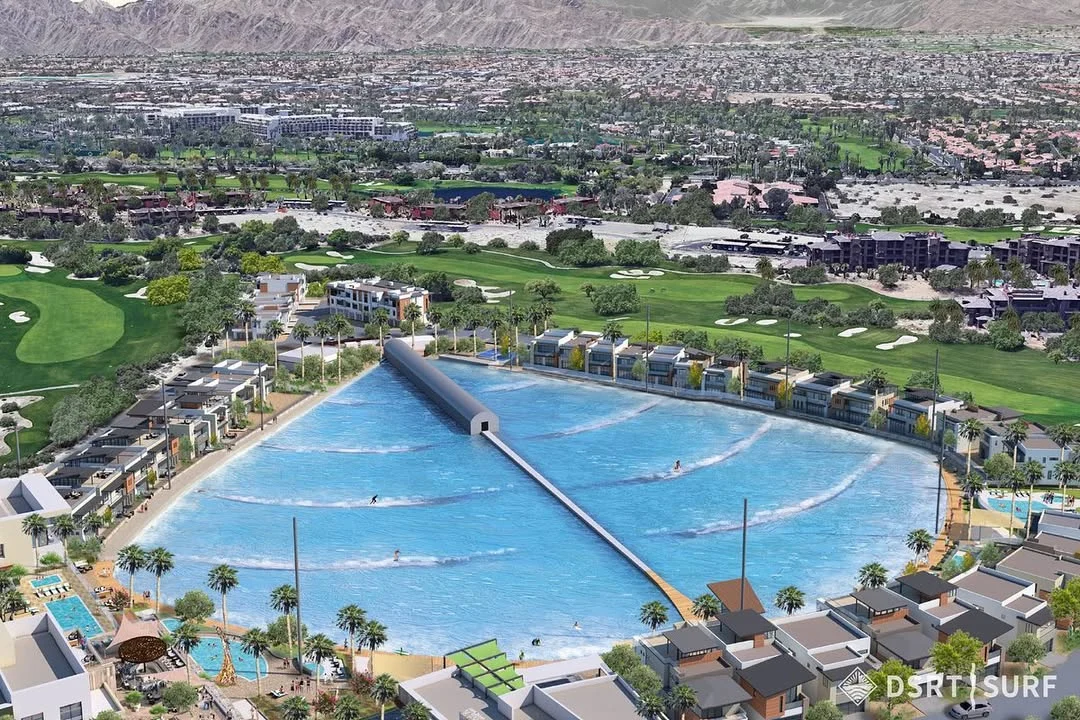
- DSRT Surf in Palm Desert: A Wavegarden Cove designed to produce up to 1,000 waves an hour, this project has already filled its lagoon and is targeting a summer opening.
The key differentiator for these Californian ventures appears to be their proactive and effective management of the foundational development elements. They seemingly addressed the "boring stuff"—securing comprehensive permits, establishing robust infrastructure plans, and navigating zoning requirements—earlier in their development cycles. This strategic prioritization highlights that while wave technology is the amenity, the success of an artificial surf park is fundamentally tied to its identity as a sophisticated real estate development project, where meticulous planning and execution of core infrastructure are paramount.
Financial and Legal Ripples: The Lien Landscape
The mounting contractor liens against Austin Surf Club are more than just an accounting detail; they represent significant legal and financial distress that directly impedes progress.
- Understanding Contractor Liens: A contractor’s lien is a legal right granted to contractors, subcontractors, and suppliers to claim an interest in property if they are not paid for their work or materials. When construction halts and liens accumulate, it signals a severe breakdown in project financing or management.
- Impact on the Project: The presence of significant liens can:
- Halt Construction: Contractors are often unwilling to resume work if previous invoices remain unpaid, fearing further financial exposure.
- Complicate Financing: Lenders are typically hesitant to release additional funds or offer new financing until liens are cleared, as they cloud the property’s title and diminish its collateral value.
- Deter Investment: The financial instability indicated by liens can scare off potential new investors or buyers.
- Developer vs. Contractor Outlook: While Discovery Land Company maintains an optimistic outlook, stating that work is expected to resume, the contractors’ actions—filing liens—speak volumes. Their legal claims suggest a profound lack of confidence in the project’s immediate financial viability or a clear timeline for payment, creating an adversarial dynamic that is difficult to overcome quickly. The escalating value of the liens underscores the deepening financial quagmire.
Broader Implications: The Future of Inland Surfing in a Changing Landscape
The narrative unfolding in Austin offers critical insights for the burgeoning inland surfing industry, demonstrating that the future of artificial waves is less about technological marvels and more about shrewd development strategy.

- Beyond the "Curse": Attributing Austin’s struggles to a "curse" on the land is simplistic. The honest assessment reveals a pattern of underestimating or mismanaging the foundational elements of large-scale development in a rapidly growing, often resource-constrained urban environment. It’s not a mystical curse, but a tangible challenge of urban planning, infrastructure financing, and regulatory navigation.
- Lessons Learned for the Industry:
- Infrastructure First: The Austin saga unequivocally proves that robust infrastructure planning and financing must precede, or at least parallel, the installation of high-tech amenities. The "boring stuff" is the make-or-break feature.
- Regulatory Foresight: Engaging with local and regional authorities early and comprehensively to establish clear, workable regulatory frameworks is crucial. NLand’s demise serves as a potent reminder of the consequences of regulatory friction.
- Real Estate as the Driver: Artificial surf parks are, at their core, sophisticated real estate ventures. The wave is an amenity designed to enhance property value and attract residents or visitors, but the underlying business model must be sound in terms of land acquisition, development costs, and market demand for the associated residential or commercial components.
- Financial Prudence: The Austin Surf Club’s current lien situation highlights the importance of robust financial management, clear payment schedules, and contingency planning to avoid construction stoppages and legal disputes.
The Outlook for Austin’s Surf Dreams
The immediate future of Austin Surf Club hinges critically on the approval and implementation of the special tax district. If successful, it could inject the necessary capital to build out the essential infrastructure, resolve the contractor liens, and allow construction to resume. However, such processes are inherently uncertain and time-consuming.
Meanwhile, other Texas projects, like SonWest’s Pura Vida, could potentially break ground and achieve operational status first, shifting the narrative for inland surfing in the state. The long-term vision of a "Texas new North Shore," a network of accessible artificial waves, remains a compelling aspiration for a state that continues to draw new residents and seek novel recreational offerings.
Yet, for now, the scoreboard remains stubbornly clear: Texas dirt has proven a formidable adversary, with two significant wave pool projects succumbing to its challenges. As the saying goes, the water always finds the leak, and in Austin’s ambitious pursuit of the perfect wave, the leaks have consistently appeared in the foundations of planning, financing, and regulatory compliance. The dream of consistent waves in Central Texas continues to paddle out, but until the fundamental challenges are decisively addressed, it risks being perpetually caught in the undertow.
