

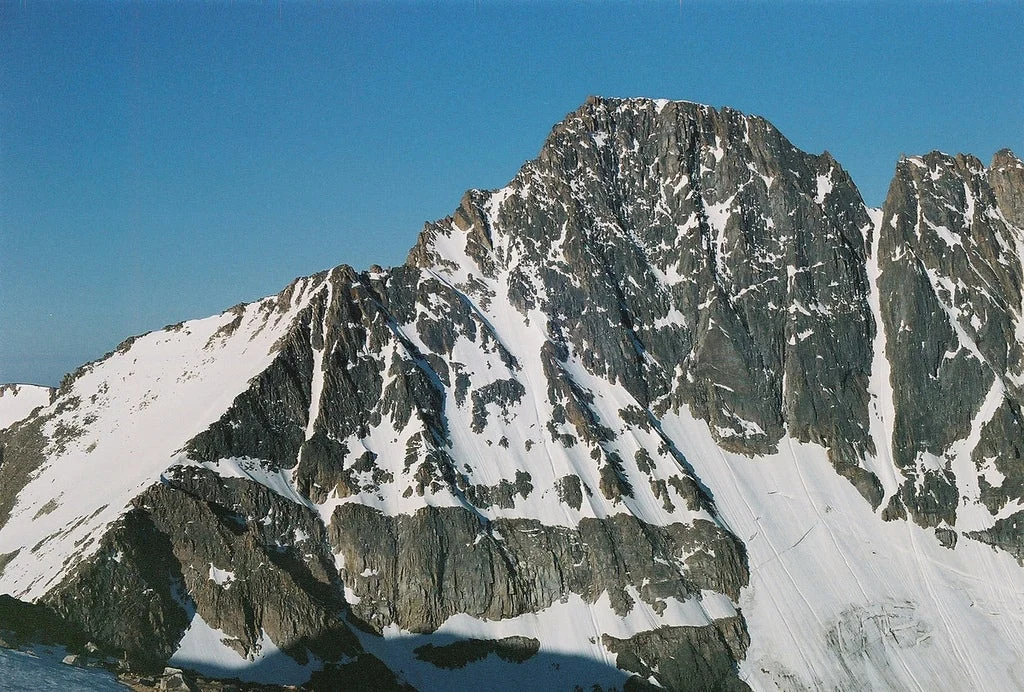
The unforgiving terrain of Montana’s backcountry frequently pushes human limits, but an incident on the state’s highest peak, the 12,799-foot Granite Peak, has captivated the outdoor community, showcasing an unparalleled display of mental fortitude and medical self-application. David Cifaldi, a highly experienced emergency room and wound-care nurse based in Billings, was embarking on the technically demanding approach to the summit with two climbing partners when a routine step turned into a life-threatening ordeal. At approximately 11,800 feet above sea level, a sudden misstep on loose rock led to a forward fall, resulting in his trekking pole piercing his body, a scene often relegated to the most harrowing of survival narratives.
The Ascent to Treachery: Granite Peak’s Formidable Challenge
Granite Peak, located in the Beartooth Wilderness Area, is not merely Montana’s highest point but also one of its most challenging ascents. Its reputation stems from its remote location, complex navigation, unpredictable weather patterns, and the significant technical skills required to conquer its summit. Climbers typically face a multi-day expedition involving long approaches, extensive boulder fields, snow traverses, and exposed Class 3 and 4 scrambling sections. The peak’s elevation also means that even in summer, conditions can shift rapidly, bringing high winds, freezing temperatures, and sudden storms. For experienced mountaineers like Cifaldi and his companions, Jesse Ross and Brad Reich, meticulous planning and preparation are paramount, encompassing everything from route assessment and gear selection to understanding potential hazards and emergency protocols. This particular climb, undertaken during what should have been a relatively stable weather window, underscored the inherent unpredictability of high-alpine environments.
A Stumble and a Spear: The Moment of Impact
The accident occurred on a section of the ascent notorious for its unstable scree and loose talus, characteristic features of Granite Peak’s upper reaches. At roughly 11,800 feet, just shy of the summit plateau, Cifaldi’s foot slipped. The forward momentum propelled him directly onto his trekking pole, which was likely extended and planted ahead of him for stability. The impact was horrific and precise: the pole, a seemingly innocuous piece of gear designed for support, became a weapon. It penetrated deeply under his left arm, spearing completely through the thick musculature of his latissimus dorsi, and emerged from his lower back, creating a through-and-through wound. The immediate shock of such an injury would be paralyzing for most, but Cifaldi’s extensive medical background would prove to be his most crucial survival tool.
The Nurse’s Reflex: Activating Under Duress
In the critical moments following the impalement, where panic would be a natural and overwhelming reaction for the vast majority, Cifaldi’s years of training and experience as an ER and wound-care nurse immediately took precedence. He understood implicitly the paramount rule of wilderness medicine when dealing with impalement: never remove the object in the field. This fundamental principle is based on the understanding that the impaled object itself acts as a plug, preventing potentially catastrophic internal or external hemorrhage. Removing it without immediate surgical intervention carries an immense risk of uncontrolled bleeding, shock, and rapid fatality, especially in a remote environment where advanced medical care is hours away.
With remarkable composure, Cifaldi systematically assessed his own condition. He performed a rapid self-triage, checking for the most critical indicators of severe internal trauma. He noted that he could take full, unlabored breaths, indicating that his lungs were likely spared. He had full sensation and movement in his extremities, suggesting no immediate spinal cord injury. Crucially, he observed that there was no heavy, arterial bleeding, which would have presented an immediate and life-threatening emergency. This critical self-assessment confirmed that while the injury was gruesome and deeply serious, the pole had narrowly missed his vital organs—a testament to either incredible luck, the precise angle of impact, or perhaps a combination of both. The pole, while traversing a significant portion of his torso, had bypassed the thoracic cavity, major blood vessels, and critical nerve bundles, traversing primarily muscle tissue.
The Strategic Decision: Self-Rescue vs. SAR
Following his initial assessment, Cifaldi and his partners faced a monumental decision. Their primary options were to activate a full-scale search and rescue (SAR) operation and await extraction, or to attempt a self-rescue. Recognizing the complexities and inherent delays of high-alpine SAR, Cifaldi used a satellite communication device – likely a Garmin inReach or similar – to notify search and rescue authorities of his predicament. This initial communication served two purposes: to inform authorities of their situation and location, and to initiate a potential SAR response should their self-rescue attempt prove infeasible or if Cifaldi’s condition deteriorated.
However, after careful consideration of his stable vitals, the absence of severe bleeding, the daunting logistics of a helicopter evacuation from such a technical and high-altitude location, and the availability of his two capable partners, Cifaldi made the audacious decision to self-rescue. This choice, while seemingly counterintuitive given the severity of his injury, was rooted in a practical understanding of wilderness medicine and SAR realities. A helicopter extraction from 11,800 feet on Granite Peak would be extremely challenging, weather-dependent, and time-consuming, potentially delaying definitive medical care. Furthermore, the presence of the pole could complicate hoist operations. His decision reflected a deep understanding of his own body, the immediate risks, and the capabilities of his team.
The 10-Mile March of Pure Will
What followed was an extraordinary feat of endurance and mental resilience. Over the course of six and a half grueling hours, Cifaldi, supported by Jesse Ross and Brad Reich, navigated approximately 10 miles of some of Montana’s most rugged backcountry. The descent from 11,800 feet to the trailhead involved traversing challenging terrain: vast, unstable boulder fields that demanded careful foot placement, lingering snowfields that could be slippery and treacherous, and a series of steep, winding switchbacks that tested every ounce of their physical and mental strength.

The team’s discipline was paramount. They moved slowly and deliberately, ensuring Cifaldi did not take another tumble, which could have dislodged the pole, exacerbated the injury, or caused a new, potentially fatal complication. His partners provided physical support, steadying him over uneven ground and helping him maintain balance while the pole protruded from his back. This long, arduous march was a testament not only to Cifaldi’s incredible pain tolerance and willpower but also to the unwavering support and teamwork of his companions. Their collective focus on a single objective—getting Cifaldi safely off the mountain—underscored the critical role of a strong climbing partnership in extreme situations.
An Act of Selflessness: Protecting Others
Even amidst his excruciating ordeal, Cifaldi demonstrated remarkable selflessness and consideration for others. As the group descended closer to Mystic Lake, a popular destination for hikers and families, he instructed one of his partners to hike ahead. The purpose was to intercept any oncoming families or groups, particularly those with children, and warn them of Cifaldi’s condition. The sight of a trekking pole impaled through a person’s torso could be deeply traumatizing, especially for young children. This proactive measure, taken while enduring immense pain and exhaustion, speaks volumes about Cifaldi’s character and his professional ethos, extending his care beyond his immediate emergency.
Upon finally reaching the trailhead, a significant milestone after hours of arduous descent, Cifaldi was driven directly to a hospital in Billings. There, a team of surgeons carefully and successfully removed the trekking pole, marking the end of the immediate crisis. His recovery process would involve wound care, monitoring for infection, and rehabilitation, but the most critical phase—survival and safe extraction—had been accomplished through an extraordinary combination of personal fortitude and collective effort.
Broader Implications: Lessons in Wilderness Preparedness
Cifaldi’s incredible survival story offers profound lessons for the outdoor community and beyond. It serves as a powerful reminder that while advanced gear and meticulous planning are essential, the ultimate tools in the high country are often intangible: solid medical knowledge, reliable partners, unwavering focus, and an indomitable will to survive.
The Primacy of Medical Training: Cifaldi’s background as an ER and wound-care nurse was unequivocally the most significant factor in his survival. His immediate, calm, and correct application of wilderness medicine principles—particularly the decision to leave the impaled object in place—prevented a likely fatal outcome. This highlights the immense value of first aid and wilderness medicine training for anyone venturing into remote areas, even for those without professional medical backgrounds. Understanding basic principles like hemorrhage control, wound management, and patient assessment can be the difference between life and death.
The Indispensability of Teamwork: Jesse Ross and Brad Reich’s steadfast support was critical. Their ability to remain calm, assist Cifaldi physically, and maintain morale throughout the grueling descent demonstrates the vital importance of choosing reliable, skilled, and level-headed partners for high-risk expeditions. A strong team dynamic, characterized by trust, clear communication, and mutual support, is as crucial as any piece of equipment.
Gear as a Double-Edged Sword: Trekking poles are standard and highly beneficial tools for stability and reducing strain on joints in uneven terrain. However, this incident serves as a stark reminder that even seemingly innocuous gear can become a source of severe injury under specific circumstances. While this does not advocate against their use, it underscores the need for constant vigilance and awareness of one’s surroundings and equipment, particularly in challenging environments.
The Reality of Search and Rescue: Cifaldi’s decision to self-rescue, while risky, was informed by a realistic understanding of SAR capabilities and limitations in complex terrain. While SAR teams are invaluable, their response times can be affected by weather, location, and the nature of the injury. Equipping oneself with satellite communication devices and knowing when and how to activate them is crucial, but so is understanding when self-reliance, if safely possible, might be the most expedient path to care.
Concluding Thoughts: A Testament to Human Resilience
David Cifaldi’s ordeal on Granite Peak is more than just a dramatic survival tale; it is a powerful narrative about human resilience, the triumph of professional training under extreme pressure, and the profound impact of well-chosen companionship. His story will undoubtedly resonate within the mountaineering community, serving as both a cautionary tale about the inherent dangers of the wilderness and an inspiring testament to the extraordinary capabilities of the human spirit when faced with unimaginable adversity. It reinforces the timeless wisdom that while mountains demand respect for their power, preparedness and an unwavering will can often navigate even the most horrific of challenges.
