

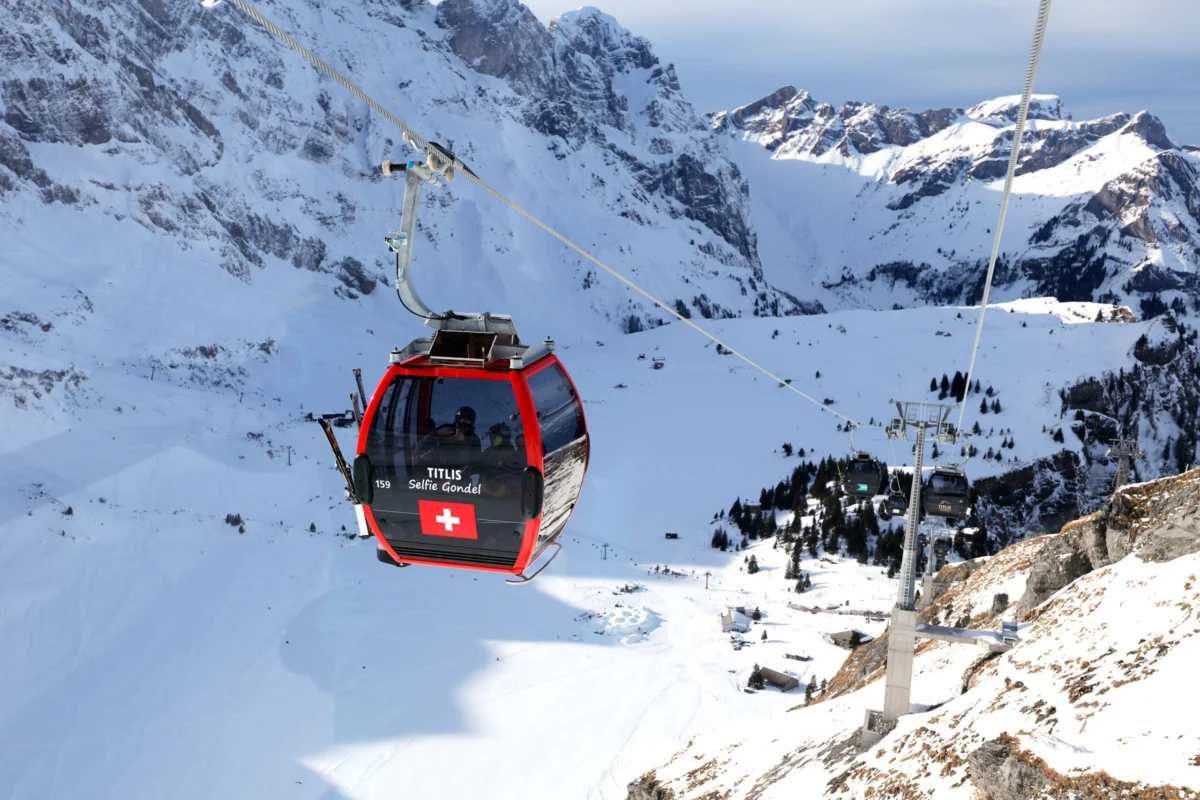
A devastating incident has cast a shadow over the renowned Engelberg ski resort in Switzerland, as a gondola cabin on the modern Titlis Xpress lift detached from its cable and plummeted down a steep mountainside on the morning of March 18, 2026. The catastrophic failure resulted in the tragic death of a sole passenger and the immediate suspension of operations on the popular two-stage aerial tramway. Swiss authorities have launched a thorough investigation into the cause of this highly unusual and deeply concerning event.
The Catastrophic Fall
The ill-fated journey began on the morning of March 18th, a day when the stark beauty of the Swiss Alps was marred by disaster. The Titlis Xpress, a vital artery connecting the charming town of Engelberg to the higher elevations of the Titlis massif, was in operation when a single gondola cabin, identified as the ninth from the top station on the lower segment, broke free from its haul cable. This occurred shortly after departing the mid-station, a point from which the cable ascends towards the summit.
Eyewitness accounts, though still being pieced together by investigators, suggest the cabin broke free with a violent lurch before embarking on a terrifying descent. It tumbled an estimated few hundred feet down the rugged, rocky terrain of the mountainside, a trajectory that offered no chance of survival for its occupant. Tragically, the lone passenger aboard the cabin was a 61-year-old woman, whose identity has not yet been publicly released pending notification of next of kin.
The immediate aftermath saw a swift and decisive response from resort management and emergency services. Operations on the Titlis Xpress were instantaneously halted, and a complex evacuation procedure was initiated to safely bring down approximately 100 skiers who were still in other gondola cars on the suspended lift. These passengers, believed to be spread across roughly 40 cabins, were carefully transferred to safety, their experience undoubtedly one of profound shock and anxiety.
Factors Under Investigation: Wind and System Integrity
While official findings are pending, initial reports strongly suggest that extreme weather conditions played a significant role in the tragedy. The Federal Office of Meteorology and Climatology (MeteoSwiss) had issued a Level 2 wind warning for the region, indicating that strong gusts were anticipated. Resort employees were reportedly in the process of shutting down gondola operations due to the deteriorating weather when the detachment occurred.
The Titlis Xpress, a sophisticated two-stage gondola system, is designed to withstand significant meteorological challenges. However, the sheer force of exceptionally strong wind gusts, particularly in the exposed alpine environment, can exert immense pressure on cable systems. Investigators will be meticulously examining the performance of the haul cable, the grip mechanisms connecting the cabins to the cable, and the tower structures to ascertain if there were any pre-existing weaknesses or if the wind forces exceeded the system’s design parameters.
The fact that the Titlis Xpress is a relatively modern installation, having opened in 2015, adds another layer of complexity to the investigation. This lift system, intended to be the primary feeder to Engelberg’s upper slopes and the iconic Titlis Rotair revolving cable car, represents a significant investment in modern infrastructure. Its construction would have adhered to stringent European safety standards, making a cabin detachment an exceptionally rare occurrence.
A Legacy of Safety and a Stark Reminder
Switzerland boasts one of the most advanced and safest lift networks in the global ski industry. This reputation is built upon a foundation of rigorous engineering, meticulous maintenance, and a deeply ingrained culture of safety, particularly in the high-stakes alpine environment. The nation’s commitment to lift safety was profoundly shaped by a horrific accident in 1972 at the resort of Valais, where a cable snapped, causing a cable car to fall and tragically claiming the lives of thirteen people.
This 1972 disaster served as a brutal catalyst for a complete overhaul of safety regulations across Switzerland. The subsequent implementation of stringent protocols, advanced monitoring systems, and continuous technological upgrades has ensured that such catastrophic failures have been exceedingly rare in the decades since. Therefore, the detachment of a cabin on the Titlis Xpress, a system less than a decade old at the time of the incident, is not only a personal tragedy but also a deeply unsettling event for the entire Swiss mountain transport industry.
The Titlis Xpress itself comprises two stages. The first stage connects the base station in Engelberg to the mid-station at Stand. From Stand, the second stage ascends to the summit station, which serves as the gateway to the Titlis Rotair, a marvel of engineering that rotates 360 degrees, offering unparalleled panoramic views of the surrounding glaciers and peaks. The accident occurred on the lower segment, between the mid-station and the base.
Resort Operations and Broader Implications
Following the incident, the Titlis Xpress remains closed indefinitely as the investigation proceeds. However, other lifts across the Engelberg-Titlis ski area are reported to be operating, allowing skiers to access different sections of the mountain. The resort, known for its challenging off-piste terrain and the impressive glacier ski area, is a major draw for international tourists.
The economic implications of a prolonged closure of a key lift system can be substantial for a resort heavily reliant on winter tourism. Furthermore, the incident raises critical questions about the resilience of modern lift technology against extreme weather events, a concern that is likely to grow as climate change contributes to more volatile and unpredictable weather patterns globally.
The Swiss Transportation Safety Investigation Board (STSB) is leading the investigation, working in conjunction with local authorities and the lift operator. Their mandate will be to meticulously reconstruct the events leading up to the detachment, identify the root cause, and provide recommendations to prevent similar tragedies in the future. This will likely involve detailed analysis of the cabin’s mechanical components, the haul cable’s integrity, the tower infrastructure, and the weather data from the time of the incident.
A Developing Story
As this is a developing story, further details are expected to emerge as the investigation progresses. The focus remains on understanding the precise sequence of events that led to this tragic accident, honoring the memory of the victim, and ensuring the continued safety of the thousands who rely on Switzerland’s vital mountain transport network. The resilience and transparency of the investigation will be crucial in restoring confidence in the safety of aerial lift systems in alpine environments worldwide. The global ski community, while deeply saddened by this loss, will be watching closely for the findings and the subsequent measures implemented to safeguard against future occurrences. The incident serves as a somber reminder that even the most advanced engineering can be challenged by the formidable power of nature, underscoring the paramount importance of continuous vigilance and rigorous safety protocols.
