

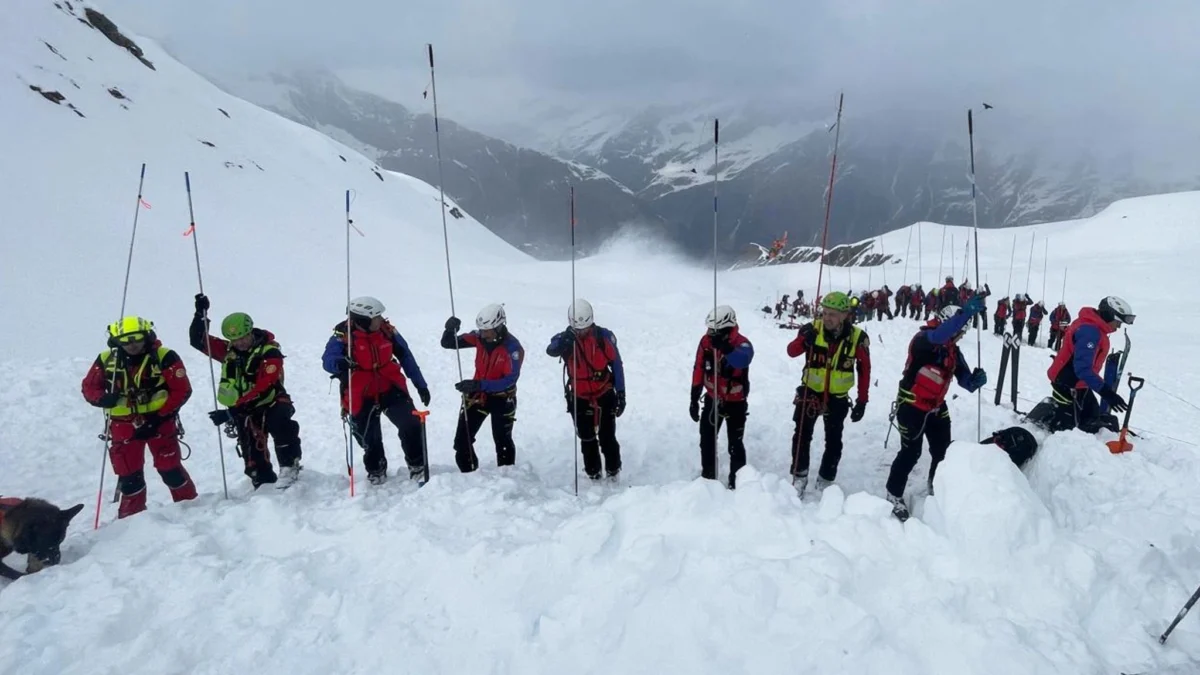
A devastating avalanche in Italy’s picturesque Val Ridanna, a high-alpine valley nestled in the northern Italian Alps near the Austrian border, tragically claimed the lives of two individuals and left five others injured on March 21. The formidable slide, which struck around midday, engulfed a group of 25 ski mountaineers venturing through terrain at approximately 7,800 feet (2,377 meters) above sea level. This incident adds a grim chapter to what has already been an exceptionally dangerous winter season across the European Alps, underscoring the severe and escalating risks associated with backcountry recreation amidst volatile snowpack conditions.
Details of the Catastrophe in Val Ridanna
The fateful events unfolded as a large group of ski mountaineers, equipped for an ascent and descent through the rugged alpine environment, traversed a slope known for its challenging yet rewarding terrain. At approximately noon, without warning, a substantial section of the snowpack fractured and released, sending a thunderous cascade of snow, ice, and debris hurtling down the mountainside. The sheer force and volume of the avalanche caught numerous members of the party, burying some completely and partially entombing others. The rapid onset of the disaster left little to no time for evasive action, transforming a serene alpine excursion into a desperate struggle for survival.
The Val Ridanna, or Ridnaun Valley, is renowned for its pristine natural beauty and is a popular destination for experienced ski mountaineers seeking challenging off-piste adventures. Its remote location and dramatic elevation offer unparalleled views and an exhilarating sense of wilderness, attracting enthusiasts from across Europe and beyond. However, these very characteristics also contribute to its inherent dangers, particularly during periods of unstable snowpack, which had been a significant concern throughout the 2025-2026 winter season. The group, reportedly experienced, had likely assessed the conditions to the best of their ability, yet the unpredictable nature of alpine environments proved to be a formidable adversary.
The Multi-Agency Rescue Operation
Following the initial reports of the avalanche, a massive and highly coordinated rescue operation was immediately launched. The scale of the response reflected the severity of the incident and the number of individuals caught in the slide. Six helicopters, including those equipped for high-altitude operations and medical transport, were swiftly deployed to the remote site. These aerial assets played a crucial role in rapidly ferrying rescue personnel and equipment to the scene, as well as evacuating the injured.
On the ground, dozens of highly trained responders converged, forming a critical lifeline in the race against time. Teams from the Corpo Nazionale Soccorso Alpino e Speleologico (CNSAS), Italy’s national alpine rescue organization, led the complex operation. They were augmented by local mountain rescue units, firefighters (Vigili del Fuoco), law enforcement officers (Carabinieri and Polizia di Stato), and specialized search and rescue dog units. The dogs, with their exceptional olfactory capabilities, are often instrumental in locating buried victims beneath meters of compacted snow, significantly increasing the chances of survival within the critical first minutes and hours post-burial.
The rescue effort was fraught with challenges, including the high altitude, the unstable and potentially re-slipping snowpack, and the sheer volume of debris. Rescuers worked tirelessly, probing vast areas of snow, utilizing avalanche transceivers to pinpoint signals from buried victims, and manually excavating through the hardened snow. The coordinated efforts, despite the tragic fatalities, managed to extract several individuals, highlighting the bravery and professionalism of the emergency services.
Victims and Broader Impact on the Group
While authorities have not yet released the full identities of the two deceased individuals, their loss casts a somber shadow over the close-knit community of alpine enthusiasts. Three other skiers sustained serious injuries, requiring immediate medical attention and subsequent hospitalization. Their conditions, though stable, necessitate extensive recovery. Two additional members of the group suffered minor injuries, receiving treatment at the scene or at local medical facilities. The fate and specific conditions of the remaining members of the 25-person party were not immediately detailed, but it is understood that they were accounted for and received support, likely experiencing significant trauma from witnessing the tragic event.
The psychological impact on survivors and rescuers alike is profound. Witnessing such an event, or participating in the grim task of searching for victims, can leave lasting emotional scars. Critical incident stress debriefing and psychological support services are typically offered to those involved in such harrowing operations.
A Deadly Season Across the European Alps
The Val Ridanna avalanche is not an isolated incident but rather a tragic reflection of a broader, more perilous trend observed throughout the 2025-2026 winter season in the European Alps. Data compiled by the European Avalanche Warning Services (EAWS) paints a stark picture: a staggering 127 avalanche fatalities have been recorded across the continent during this period, significantly surpassing the annual average of approximately 100 deaths. This makes the current season one of the deadliest in recent memory, prompting urgent calls for increased vigilance and heightened awareness among backcountry users.
Italy has, regrettably, borne the brunt of these fatalities, recording the highest number of avalanche-related deaths this season. Close behind are France and Austria, both major alpine nations with extensive backcountry terrain and large populations of skiers and snowboarders venturing off-piste. Switzerland and Germany have also reported significant incidents, contributing to the overall grim statistics.

Several factors are believed to be contributing to this exceptionally dangerous season. Foremost among them is a highly unstable and complex snowpack structure. Unpredictable weather patterns, including periods of heavy snowfall followed by sudden thaws or cold snaps, create layers within the snowpack that are prone to fracturing. Temperature fluctuations can lead to the formation of weak, sugary snow crystals (facets) deep within the snowpack, which act as a treacherous sliding layer when new snow accumulates on top. This creates a "persistent weak layer" that can be easily triggered, even by small loads like a single skier.
Furthermore, the growing popularity of backcountry skiing and snowboarding has led to an exponential increase in traffic in unpatrolled and uncontrolled terrain. Modern equipment, combined with social media showcasing thrilling off-piste adventures, encourages more individuals to venture beyond marked slopes. While many are well-trained and equipped, the sheer volume of users increases the statistical probability of incidents, and even experienced groups can be caught off guard by the inherent unpredictability of natural forces.
The Nature of Avalanches and Mountain Safety
Avalanches are complex natural phenomena primarily driven by gravity acting on an unstable snowpack. They can be triggered by a variety of factors, including new snowfall, wind loading, temperature changes, and human activity. The most common and dangerous type for recreationists is the slab avalanche, where a cohesive layer of snow breaks away from a weaker layer beneath, sliding down the slope as a large block or "slab." These can be triggered remotely, meaning a skier can trigger a slide from a distance, or from above, below, or on the side of the slab itself.
Understanding avalanche terrain and conditions is paramount for safety. Key indicators of danger include recent snowfall, strong winds (which can create dangerous wind slabs), rapid temperature changes, and visible signs of instability like "whumpfing" sounds (indicating a collapsing weak layer) or recent natural avalanches. Slope angle is a critical factor, with most human-triggered avalanches occurring on slopes between 30 and 45 degrees, which are also the preferred angles for skiing.
Expert Perspectives and Prevention Efforts
Mountain safety experts and avalanche forecasters consistently emphasize the critical importance of education, equipment, and conservative decision-making in the backcountry. Organizations like the EAWS provide daily avalanche bulletins, offering detailed assessments of snowpack stability and danger levels for specific regions. These bulletins are invaluable tools, yet their interpretation and application require significant training and experience.
Essential avalanche safety equipment includes a transceiver (a device that sends and receives a radio signal to locate buried victims), a shovel for digging, and a probe for pinpointing the exact location of a buried person. Carrying this equipment is meaningless without regular practice in its use, as time is of the essence in a burial scenario. Survival rates drop dramatically after 15-20 minutes under snow.
Beyond equipment, comprehensive avalanche safety courses are considered indispensable. These courses teach participants how to recognize avalanche terrain, understand snowpack dynamics, perform companion rescue, and make informed decisions in the field. Even with training, experts advise maintaining significant safety margins, avoiding high-risk areas during periods of elevated danger, and traveling in small groups where each member is capable of performing a rescue.
Inferred statements from avalanche experts often highlight the paradox of increased knowledge leading to increased confidence, which can sometimes result in riskier behavior. They stress that even seemingly stable conditions can harbor hidden dangers and that humility in the face of nature’s power is a key component of mountain safety. Local authorities, in the wake of such tragedies, typically reinforce these messages through public awareness campaigns, urging both residents and tourists to respect mountain conditions and adhere strictly to safety guidelines.
Implications for Backcountry Recreation and Tourism
The tragic incident in Val Ridanna, coupled with the overall high fatality count this season, has significant implications for backcountry recreation and the broader tourism industry in alpine regions. While the allure of untouched powder and serene wilderness continues to draw adventurers, such events serve as stark reminders of the inherent dangers.
Local economies in the Alps heavily rely on winter tourism, including both resort-based skiing and backcountry activities. Striking a balance between promoting these activities and ensuring public safety is a constant challenge for regional governments and tourism boards. Increased incidents can lead to more stringent regulations, heightened public scrutiny, and potentially deter some visitors, impacting local businesses.
Furthermore, the incident underscores the growing demand for, and strain on, mountain rescue services. These volunteer and professional organizations operate under immense pressure, often risking their own lives in treacherous conditions. The financial and human resources required for large-scale rescue operations are substantial, prompting discussions about funding, training, and strategic deployment.
Ultimately, the Val Ridanna avalanche is a tragic reminder that the majestic beauty of the Alps conceals formidable risks. As climate change continues to influence weather patterns and snowpack stability, and as the popularity of backcountry sports grows, the responsibility for safety falls increasingly on individual adventurers. Education, preparation, and a profound respect for the power of the mountains remain the most critical tools in mitigating the dangers of the alpine environment. The memory of those lost serves as a solemn call for vigilance and continued dedication to mountain safety protocols.
