

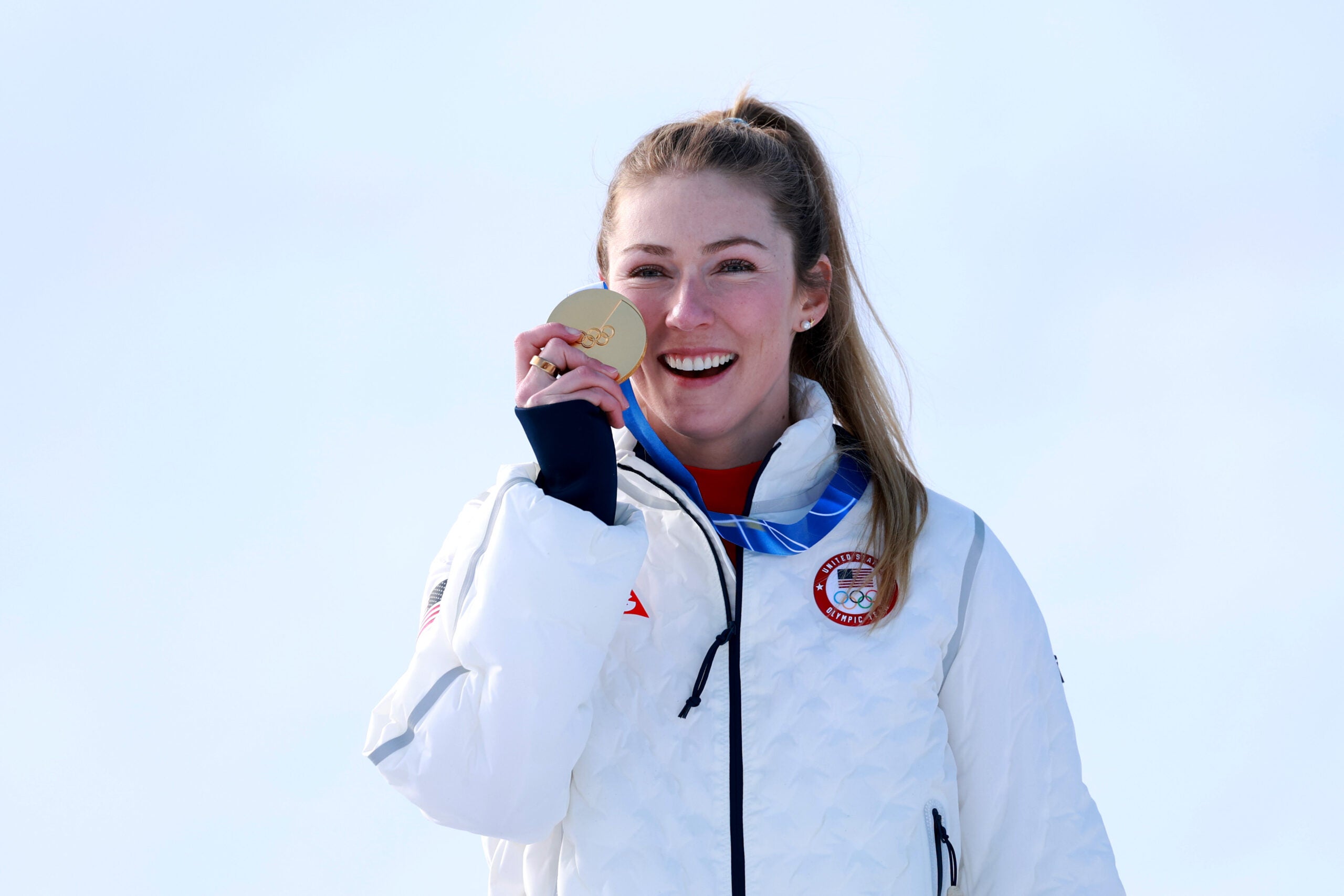
Cortina d’Ampezzo, Italy – Under the brilliant blue skies of the Italian Dolomites, on the sun-baked flanks of Cortina’s iconic Tofane, Mikaela Shiffrin, the undeniable queen of alpine skiing, etched her name deeper into the annals of sporting legend. On February 18, 2026, at the Milano Cortina Winter Olympics, the 30-year-old American superstar did what she has consistently done throughout her illustrious career: she delivered under immense pressure, securing the Olympic slalom gold medal and, in doing so, became the most decorated skier in Olympic history.
The victory was not merely another addition to her already staggering trophy cabinet; it was a profound statement, a testament to resilience, and a culmination of years of dedication, sacrifice, and an unwavering pursuit of perfection. Twelve years after bursting onto the Olympic scene with a gold medal at 18 in Sochi, and eight years since her last Olympic podium finish in Pyeongchang, Shiffrin’s triumph marked her as the first American alpine skier, male or female, to claim three Olympic gold medals in the discipline. Furthermore, her unique journey now sees her hold the distinction of being both the youngest (18 in 2014) and the oldest (30 in 2026) U.S. woman ever to win an Olympic alpine gold, underscoring her extraordinary longevity and sustained excellence at the sport’s pinnacle.
A Legacy Forged in Gold and Grit
Mikaela Shiffrin’s ascent to the summit of alpine skiing has been a meticulously crafted masterpiece, characterized by a relentless drive for technical mastery and an unyielding competitive spirit. Prior to her Cortina triumph, Shiffrin’s Olympic medal tally stood at two golds (slalom in Sochi 2014, giant slalom in Pyeongchang 2018) and one silver (combined in Pyeongchang 2018). This slalom gold now elevates her total to five Olympic medals (four golds, one silver), surpassing the previous record for an American alpine skier. While specific comparison to other nations’ records would require a broader historical context, within the American landscape, her dominance is absolute.
Beyond the Olympics, Shiffrin’s career statistics paint an even more comprehensive picture of her unparalleled dominance. She holds the record for the most World Cup victories by any alpine skier, male or female, surpassing the legendary Ingemar Stenmark’s 86 wins in the 2022-2023 season. Her specialization in slalom is particularly striking, with a staggering number of World Cup slalom wins that solidify her status as the greatest slalom skier of all time. This season alone, leading into the Cortina Olympics, Shiffrin had already clinched the World Cup slalom season title, having won an astonishing seven out of eight races. Such a consistent run of form underscored that despite any external narratives, her performance was fundamentally strong.
Overcoming the Shadow of Doubt: The Road to Cortina
The path to this historic gold was anything but straightforward, punctuated by periods of intense personal hardship and professional scrutiny. The tragic passing of her father, Jeff Shiffrin, in February 2020, cast a profound shadow over her career, leading to a temporary hiatus and a deep emotional struggle that reshaped her perspective on life and sport. While she returned to competition, the emotional toll was immense, and the subsequent 2022 Beijing Olympics presented unforeseen challenges.
In Beijing, Shiffrin, then hailed as a multi-medal favorite, experienced a series of shocking DNFs (Did Not Finish) in her primary events, including the slalom and giant slalom. This unexpected "medal drought" sparked an intense media narrative questioning her ability to perform under Olympic pressure, igniting debates about the mental burden on elite athletes. For Shiffrin, Beijing was a stark reminder of the fickle nature of sport and the brutal spotlight of global competition. She openly discussed the immense pressure and the feeling of letting down expectations, a narrative that subtly lingered even as she entered the 2026 Games.
Adding another layer of complexity, Shiffrin had been in the process of returning to full form in the giant slalom discipline following an injury sustained in Killington last season. While the exact nature and severity of the injury were kept somewhat private, its impact on her GS training and race readiness was evident. This physical recovery, coupled with the lingering echoes of Beijing, meant that her start to the Milano Cortina Games was scrutinized with a heightened level of anticipation.
Indeed, her initial performances in Cortina seemed to fuel the nascent media narrative of Olympic struggles. A fourth-place finish in the Team Combined event, alongside teammate Breezy Johnson, while a respectable result, was quickly interpreted by some as a sign that the "medal drought" might continue. Her 11th-place finish in the Giant Slalom further compounded these anxieties, with commentators speculating whether Shiffrin’s Olympic "chops" were truly back. Yet, those within her inner circle and astute observers of the sport understood that such performances were a "blip," a reflection of her ongoing recovery in GS and the unique, sometimes unpredictable, nature of multi-discipline events. The slalom, her strongest discipline, remained her clearest and best opportunity for a medal.
The Race Day: A Masterclass in Precision and Power
The setting for the women’s slalom was the Tofane Alpine Skiing Centre, a venue known for its picturesque views and, historically, a somewhat flatter, less challenging course profile compared to some of the steeper, more technical World Cup tracks where Shiffrin’s precision and disciplined slalom skills often shine brightest. However, on February 18, 2026, conditions conspired to play directly into her strengths. The snow was significantly firmer than in previous days, providing the responsive, grippy surface that is squarely within Shiffrin’s comfort zone. This crucial detail meant her finely tuned edge control and aggressive line could be executed with maximum efficiency.
Run 1: Setting the Tone
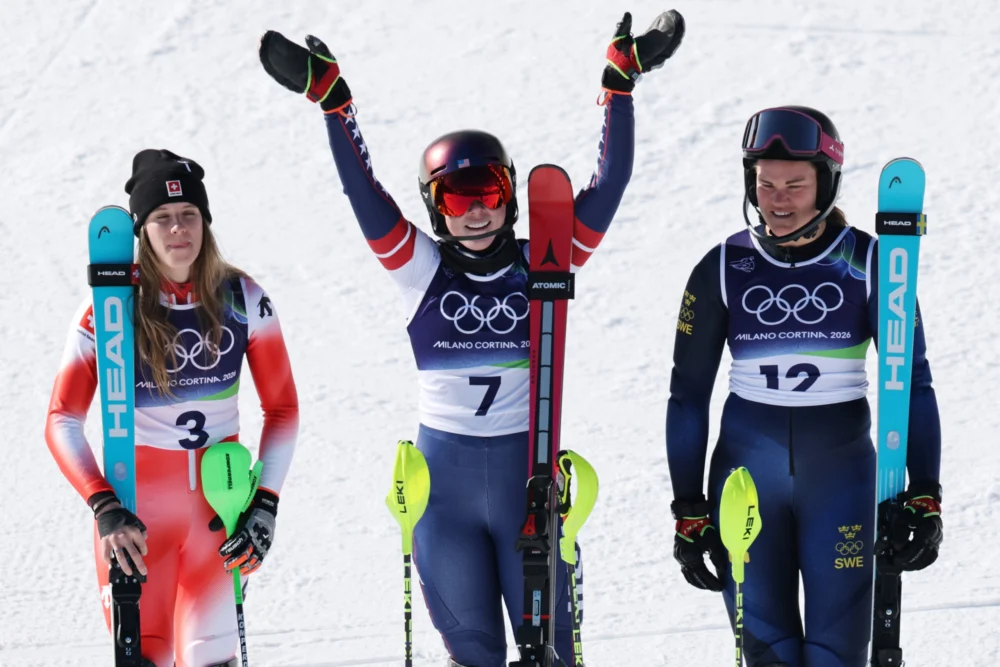
Wearing bib number 7, Shiffrin attacked the first run with characteristic intensity. The course, set by the Austrian coach, proved to be exceptionally tricky and technical, designed to push skiers to their absolute limit. This challenging set resulted in a staggering 27 DNFs, including American Nina O’Brien, underscoring the demanding nature of the gates. Yet, Shiffrin navigated the treacherous course flawlessly, skiing with a potent blend of power and precision. Her run was a masterclass in controlled aggression, her skis carving tight, efficient arcs, maintaining speed through every gate. She later described it as feeling "really clean, really active, but also a little bit on the limit." Her incredible execution saw her establish a commanding lead of 0.82 seconds over Germany’s Lena Duerr, an enormous margin in the razor-thin world of slalom racing. Sweden’s Cornelia Oehlund, a rising star at 20 years old, finished a strong third, a second off Shiffrin’s blistering pace, with Switzerland’s Camille Rast and Sweden’s Anna Swenn Larsson close behind, all vying for podium positions. Team USA’s Paula Moltzan, a medal favorite herself after multiple World Cup podiums this season, unfortunately stumbled in the final few gates, landing her in 28th place, 2.77 seconds back, a stark reminder of the unforgiving nature of the sport.
Inter-Run Interval: Focus and Reflection
During the interval between runs, the pressure on Shiffrin would have been immense, yet her focus remained unwavering. These breaks are critical for athletes to regroup, analyze their first run, and strategize for the second. For Shiffrin, this period was likely a blend of technical review with her coaching team and a quiet internal reflection, perhaps connecting with the memory of her father, Jeff, a constant source of inspiration and guidance throughout her career. She later spoke of communicating "in my heart and in my mind with the people who have been there and thank them." This deep emotional grounding often provides the extra mental fortitude needed to convert a strong first run into a victorious second.
Run 2: Sealing the Deal
The second run saw a course set that was arguably more favorable to Shiffrin’s style and to the two Swedes who were in close medal contention. The order of start for the second run is reversed based on first-run times, meaning Moltzan, starting third, had "nothing to lose." She unleashed a spectacular performance, demonstrating the form and fire that had landed her on the World Cup podium five times this season. Her time of 51.39 seconds would stand as the fastest run of the day, a remarkable display that ultimately propelled her up an incredible 20 spots to an eighth-place finish. "I didn’t really think I’d be able to climb this much," Moltzan admitted, "but I’m really happy with the second run I put down." Her redemption was a highlight of the day, showcasing the depth of talent within Team USA.
However, the day’s ultimate narrative belonged to Shiffrin. As the top qualifiers descended, the tension was palpable. Camille Rast, 26, the only skier to have beaten Shiffrin in a World Cup slalom this season, skied a fast, composed run, moving into the lead over Anna Swenn Larsson, securing at least a silver medal. Next was Cornelia Oehlund, whose Olympic debut, despite a promising first run, ended in heartbreak. A series of mistakes culminated in a broken pole and a ski out of the course, a cruel end to her medal hopes.
Then came Lena Duerr, who, after winning the first run in Beijing, had agonizingly fallen to fourth. This time, she was determined to secure a medal. But the pressure proved too great; she straddled the very first gate, ending her race prematurely and leaving the door wide open for Shiffrin.
Shiffrin, watching from the start gate, knew she had a commanding 1.05-second lead. Many racers, facing such a substantial margin, would opt for a conservative, protective run. Shiffrin, however, did the opposite. With the recent memory of the Team Combined and GS performances, and perhaps the specter of Beijing still a motivator, she "stepped harder on the gas." Instead of idling, she attacked. In another flawless, blistering run, she built speed all the way down the Tofane slope, crossing the finish line a staggering 1.5 seconds ahead of Rast, a victory margin rarely seen in Olympic slalom.
Emotional Aftermath and Broader Implications
The moment Shiffrin crossed the line, she stood still for a beat, letting the scoreboard confirm what her instincts already knew. "I did see the green, but then sometimes it’s a little hard to believe," she confessed. The raw emotion of the achievement, the weight of the records, and the culmination of years of effort washed over her. Her thoughts immediately turned to her late father, Jeff, and the countless individuals who had supported her journey. "I just wanted to take that moment and communicate in my heart and in my mind with the people who have been there and thank them," she articulated, highlighting the profound personal significance of the win.
The podium was a mix of seasoned veterans and rising stars. Camille Rast’s silver was a significant achievement for Switzerland, confirming her place among the elite. "After my first run, I knew that the gold was gone, but silver and bronze were open," Rast reflected, expressing satisfaction with her strong performance. Anna Swenn Larsson, 34, secured the bronze for Sweden, a deeply emotional moment for her. "It is my last Olympics—maybe not my last season, but for sure I’m not here in four years," she shared. "So it feels extra special to put it together today and walk away with this medal. It’s really huge for me, and I’m really thankful for a lot of people who helped me to get here." Her statement underscored the immense dedication required to reach an Olympic podium, especially in the twilight of a career.
For American skiing, Shiffrin’s gold is an immeasurable boost, cementing her status as not just a national icon, but a global ambassador for the sport. Her ability to overcome setbacks, both personal and professional, serves as a powerful inspiration for aspiring athletes and a testament to the enduring human spirit. This victory silences any lingering doubts about her ability to perform on the biggest stage and reaffirms her legacy as arguably the greatest alpine skier of all time.
When asked what advice her 2026 Olympic Champion self would offer her 18-year-old self, Shiffrin offered a thoughtful reflection on the value of uncertainty and the lessons learned along the way. Her ultimate counsel was succinct and characteristic of her forward-looking approach: "Buckle up!" This simple phrase encapsulates her journey—a roller coaster of highs and lows, but always moving forward with purpose and an eagerness for the challenges ahead.
Rounding out Team USA’s performance, AJ Hurt secured a respectable 19th place in the slalom, contributing to a strong overall showing for the American tech team. With the Olympic alpine events concluded, the American skiers, like their international counterparts, will now head home for a short, well-deserved break before the World Cup tech events resume in Åre, Sweden, on March 14, where Shiffrin will undoubtedly continue her pursuit of further records and glory. Her historic gold in Cortina, however, will forever stand as a monument to her unparalleled talent, indomitable will, and profound impact on the sport of alpine skiing.
