

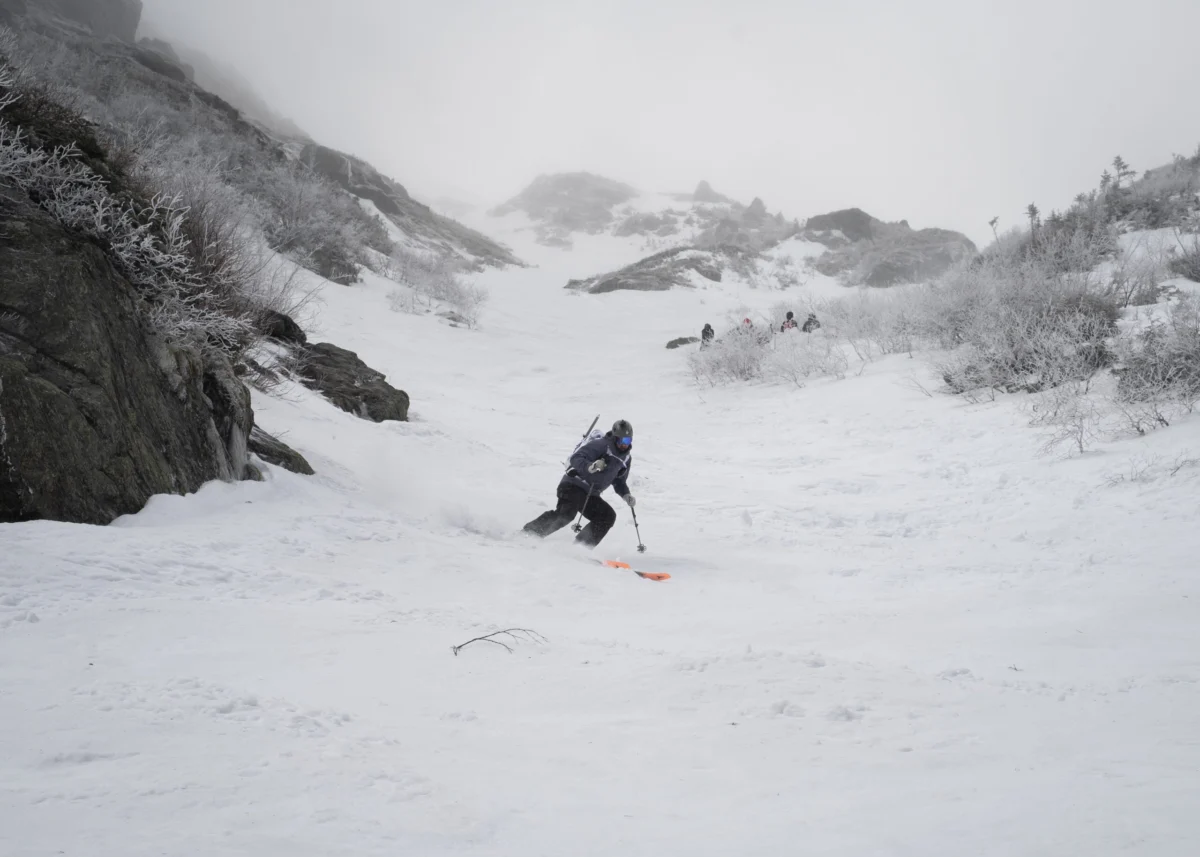
As the sun began its ascent over the White Mountains on April 29, 2026, Ken Lubin and Aaron Fudge stood near the precipice of Hillman’s Highway, their eyes locked on a formidable obstacle course of granite boulders and dense alpine shrubs. The two competitors were engaged in a tactical debate that has defined the spirit of New Hampshire backcountry skiing for nearly a century: how to navigate the unforgiving terrain of Mount Washington when the mountain refuses to cooperate with the official race plan. While Fudge prepared to shoulder his skis and traverse a pile of exposed rock, Lubin—a veteran of these slopes—scanned for a narrow ribbon of snow tucked within the brush, weighing the risks of a high-speed descent through the thicket.
The 2026 Tuckerman Inferno represents a pivotal moment in the history of American alpine racing. After decades of shifting formats, the event has finally returned to its "Classic" roots: a grueling summit-to-base descent designed to test the limits of human endurance and technical skill. However, as is often the case on the highest peak in the Northeastern United States, the transition from a theoretical race course to a physical reality was dictated entirely by the atmospheric volatility of the Presidential Range.
A Century of High-Altitude Competition
To understand the significance of the 2026 Inferno, one must look back to the early 20th century, a period when skiing was evolving from a utilitarian mode of winter transport into a daring competitive sport. The Tuckerman Inferno was first contested in 1933, inspired by the legendary Inferno race in Mürren, Switzerland. At the time, Tuckerman Ravine was becoming the epicenter of "extreme" skiing in the United States, largely due to the efforts of the Civilian Conservation Corps (CCC).
Under President Franklin D. Roosevelt’s New Deal, the CCC carved the John Sherburne Ski Trail and established the infrastructure at Pinkham Notch, providing a gateway for the collegiate outing clubs of Harvard and Dartmouth to test their mettle. The original race format was simple yet terrifying: a top-to-bottom route starting at the 6,288-foot summit of Mount Washington, plunging over the 50-degree headwall of Tuckerman Ravine, and finishing at the base of the mountain.
The race’s golden era peaked in 1939 when Toni Matt, a legendary Austrian-American skier, famously "schussed" (skied straight down) the Tuckerman headwall. His finishing time of six minutes and 29 seconds remains a part of New England folklore, as Matt unknowingly took a line that most experts considered suicidal. Following 1939, the race saw long periods of dormancy, interrupted by a 1969 attempt and a subsequent revival in the early 2000s as a multi-sport pentathlon involving kayaking and cycling. The 2026 event marks the successful culmination of a years-long campaign by athletes like Lubin to restore the pure, alpine-only format of the 1930s.
The 2026 Campaign: Preparation and Postponement
The road to the 2026 start line was fraught with logistical and meteorological hurdles. Originally scheduled for mid-March, the race was delayed by a catastrophic weather event that saw an inch of rain followed by a flash freeze. This combination transformed the mountain into a literal sheet of ice, making the ravine impassable even for elite mountaineers.
Race director Jake Risch, whose family has been synonymous with the Inferno’s modern resurgence, emphasized that safety remains the primary constraint. "We are working within a historical framework, but we are also working with a mountain that has claimed 161 lives since record-keeping began," Risch noted. The Mount Washington Avalanche Center (MWAC) and its foundation, for which the race serves as a primary fundraiser, provided critical data leading up to the April 29 start.
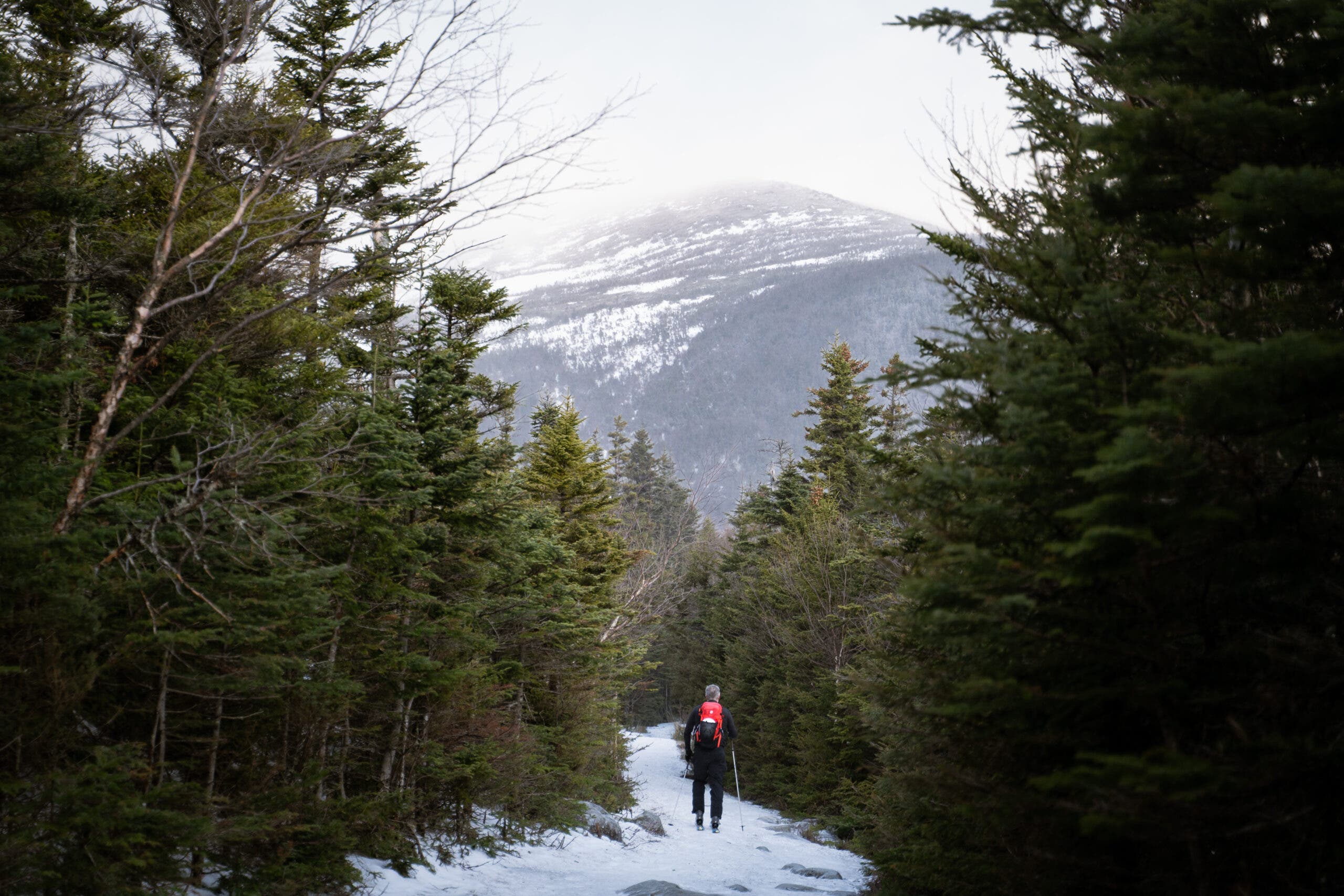
For Ken Lubin, the delay only added to the anticipation. A former ski racer and the 2011 Inferno champion, Lubin’s familiarity with Mount Washington is near-total; he spends nearly every winter weekend on the peak. His training regimen for the 2026 race involved 4,000-plus-foot vertical climbs starting as early as 6 a.m. from Joe Dodge Lodge at Pinkham Notch. On race day, Lubin reached the fork in the Tuckerman Ravine Trail in 27 minutes—five minutes behind his personal best, but a pace that signaled his intent to dominate the field.
The Mountain Dictates the Terms
By the time the lead racers reached the Hermit Lake Shelters—the primary checkpoint at the base of the ravine—it became clear that the original summit-to-base plan was in jeopardy. Despite the clear skies at lower elevations, the summit was being battered by 60 mph winds, and visibility in the upper snowfields was near zero.
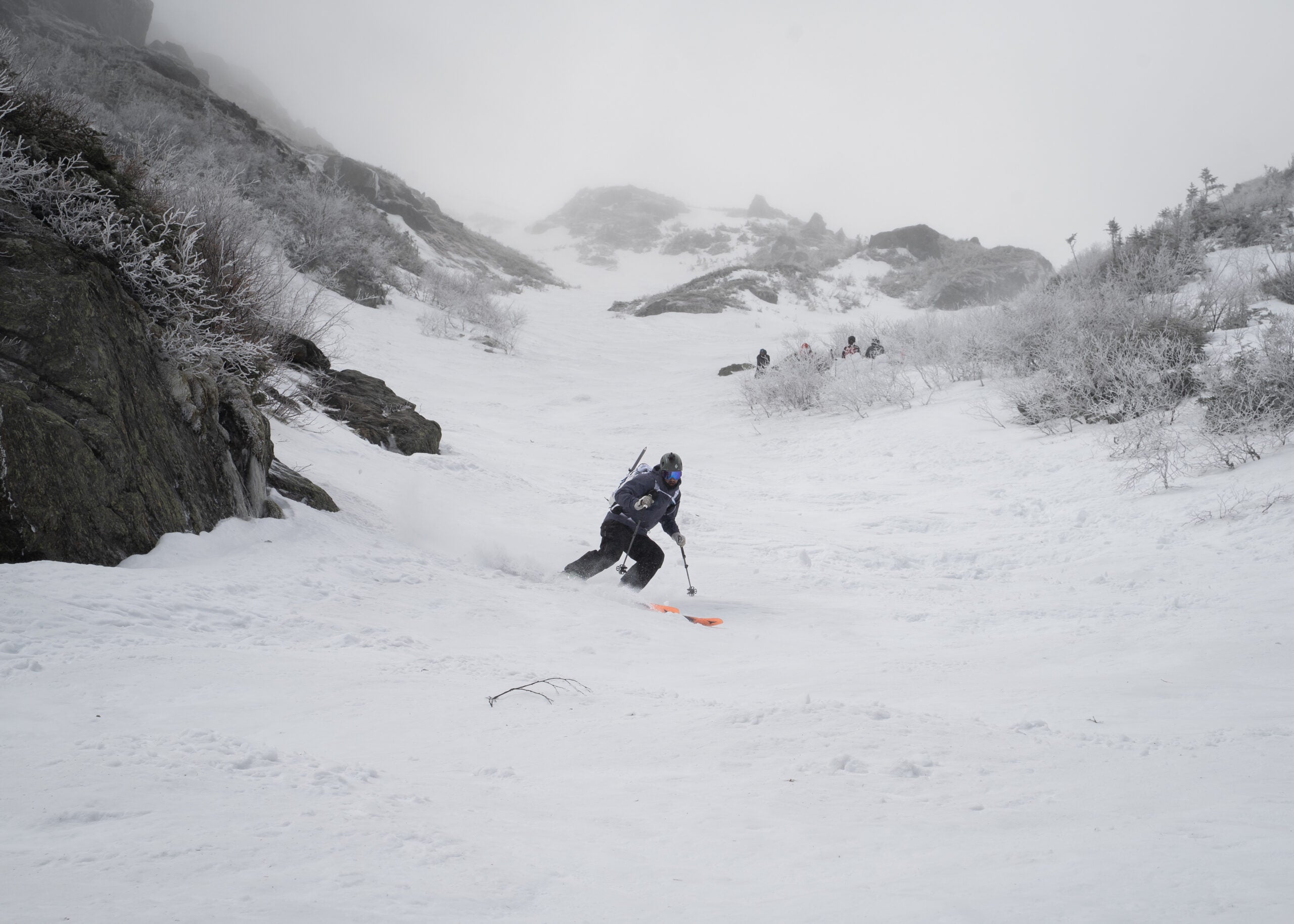
A scout sent by Risch into "Right Gully" reported back with a grim assessment: the snow was so hard-packed that even technical crampons were struggling to find purchase. "I’m kicking my crampons in as hard as I can and barely making a mark," the patroller radioed down. The decision was made swiftly: the summit descent was cancelled. Instead, the race would pivot to Hillman’s Highway, a 1,300-foot couloir that offers a steep, technical descent but sits slightly lower on the mountain, providing a modicum of protection from the summit’s gale-force winds.
This "Course Pivot" is a hallmark of the Inferno. Unlike resort-based races where courses are groomed and fenced, the Inferno requires athletes to adapt to "wild" snow. On Hillman’s Highway, the competitors faced broad, frozen moguls and "blue ice" patches. The ascent to the new start line required racers to strap on crampons and brace against gusts that threatened to blow them off the 40-degree slope.
Race Execution and Technical Challenges
When the signal was finally given, Lubin was the first to drop. His descent was a masterclass in edge control. In the backcountry, "firm" snow is often a euphemism for ice, and Lubin’s skis chattered audibly as he sought out any pocket of softer snow to initiate his turns. After clearing the main couloir, he reached the boulder field—the obstacle he and Fudge had discussed earlier.
Choosing the "path of most resistance," Lubin kept his skis on, navigating a dense thicket of shrubs that still held a dusting of snow. This maneuver saved him the time it would have taken to de-boot and traverse, allowing him to maintain momentum as he transitioned onto the John Sherburne Ski Trail.
Aaron Fudge followed shortly after, opting for a more conservative line through the troughs of the frozen moguls. Fudge, who recently returned to the East Coast after eight years in Oregon, remarked on the unique difficulty of New Hampshire’s terrain. "In the West, you have the scale, but in the East, you have the density and the conditions," Fudge said. "Relearning how crazy these ‘small’ mountains can be has been an incredible challenge."
The final leg of the race on the Sherburne Trail presented a different set of obstacles. The late April date meant that the lower sections of the trail were rapidly melting. Racers were forced to navigate a "slalom" of mud patches, exposed rocks, and running streams. In several sections, the snow had vanished entirely, requiring the athletes to run across dirt and gravel in their carbon-fiber ski boots—a grueling test of physical durability and equipment resilience.
Analysis of the Inferno’s Broader Impact
The successful execution of the 2026 Tuckerman Inferno, even in its modified form, carries significant implications for the regional outdoor economy and the backcountry skiing community.
- Fundraising and Advocacy: The race serves as the flagship event for the Mount Washington Avalanche Center Foundation. The funds raised are critical for maintaining the daily avalanche forecasts and search-and-rescue operations that support the thousands of recreational skiers who visit Tuckerman Ravine each spring.
- The "Classic" Revival: By moving away from the pentathlon format and back to the summit-to-base descent, organizers have tapped into a growing demand for "pure" endurance events. This shift aligns with a broader national trend in the outdoor industry toward "skimo" (ski mountaineering) racing and high-consequence backcountry competition.
- Climate Adaptability: The 2026 race highlights the increasing difficulty of planning winter events in the Northeast. With "flash freezes" and rain-on-snow events becoming more common, the Inferno’s success now depends as much on the flexibility of the organizers as the skill of the athletes.
Conclusion: The Spirit of the Slog
As the racers crossed the finish line at Pinkham Notch, the atmosphere was one of shared exhaustion and mutual respect. The final times, while competitive, felt secondary to the collective achievement of navigating the mountain’s whims.
The 2026 Inferno proved that the "Classic" format is not just about the route on a map; it is about the "self-torture" and "mountaineering" spirit that Ken Lubin identified during his wait at Hermit Lake. Whether skiing off the summit or down a wind-scoured couloir, the Inferno remains the ultimate litmus test for the New England skier.
"The mountain dictates this race, not us," Lubin reiterated as he unbuckled his boots at the finish. In the end, the 2026 Tuckerman Inferno was a victory for tradition. It reaffirmed that despite a century of technological advancement in ski gear, the fundamental challenge of Mount Washington remains unchanged: it is a place where history is written in the ice, and where the mountain always has the final word.
