

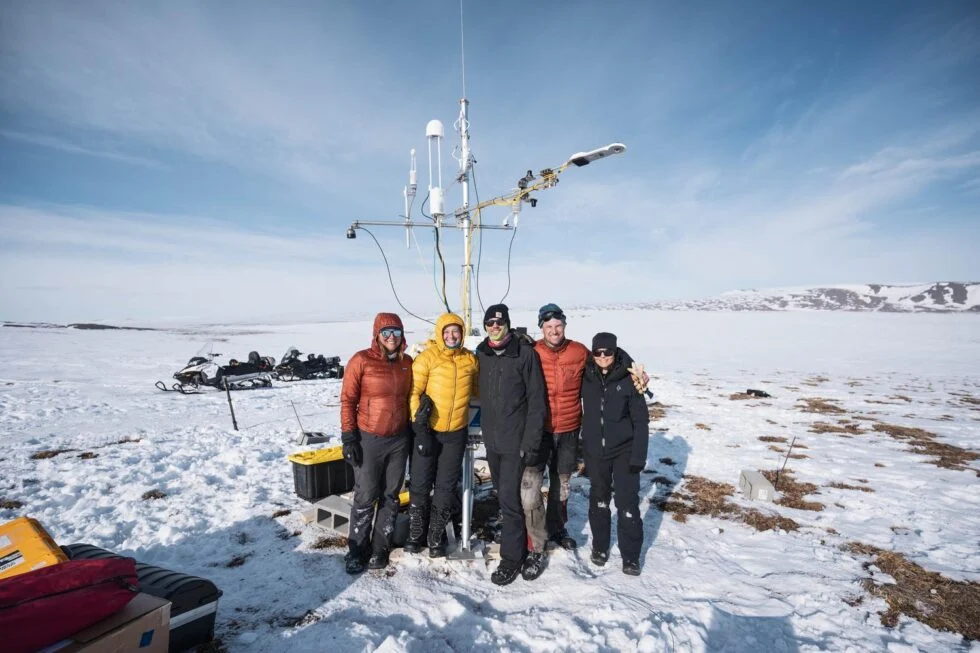
The Arctic is currently warming at a rate nearly four times faster than the global average, a phenomenon known as Arctic amplification. This rapid increase in temperature is driving fundamental changes in the region’s landscape, most notably the degradation of permafrost. At the Toolik Field Station on Alaska’s North Slope, a specialized team of researchers recently conducted a critical mission to quantify the environmental impact of these changes. Led by Dr. Jenny Watts, an ecologist and expert in carbon flux from the Woodwell Climate Research Center, and Dr. Kelly Gleason, a snow scientist from Portland State University and member of the Protect Our Winters (POW) Science Alliance, the team successfully installed the first flux tower in the Arctic specifically designed to monitor greenhouse gas emissions from a permafrost thaw slump.
This research initiative represents a pivotal step in climate science. While traditional climate models account for the gradual thawing of surface permafrost, they frequently overlook "abrupt thaw" events, such as thaw slumps. These features occur when ice-rich permafrost melts, causing the ground to collapse and move downslope. This process exposes ancient organic matter that has been frozen for millennia, allowing microbes to decompose the material and release carbon dioxide and methane into the atmosphere. The deployment of advanced monitoring technology at these sites is essential for refining global carbon budgets and understanding the full scale of the Arctic’s contribution to future warming.
The Toolik Expedition and Technical Deployment
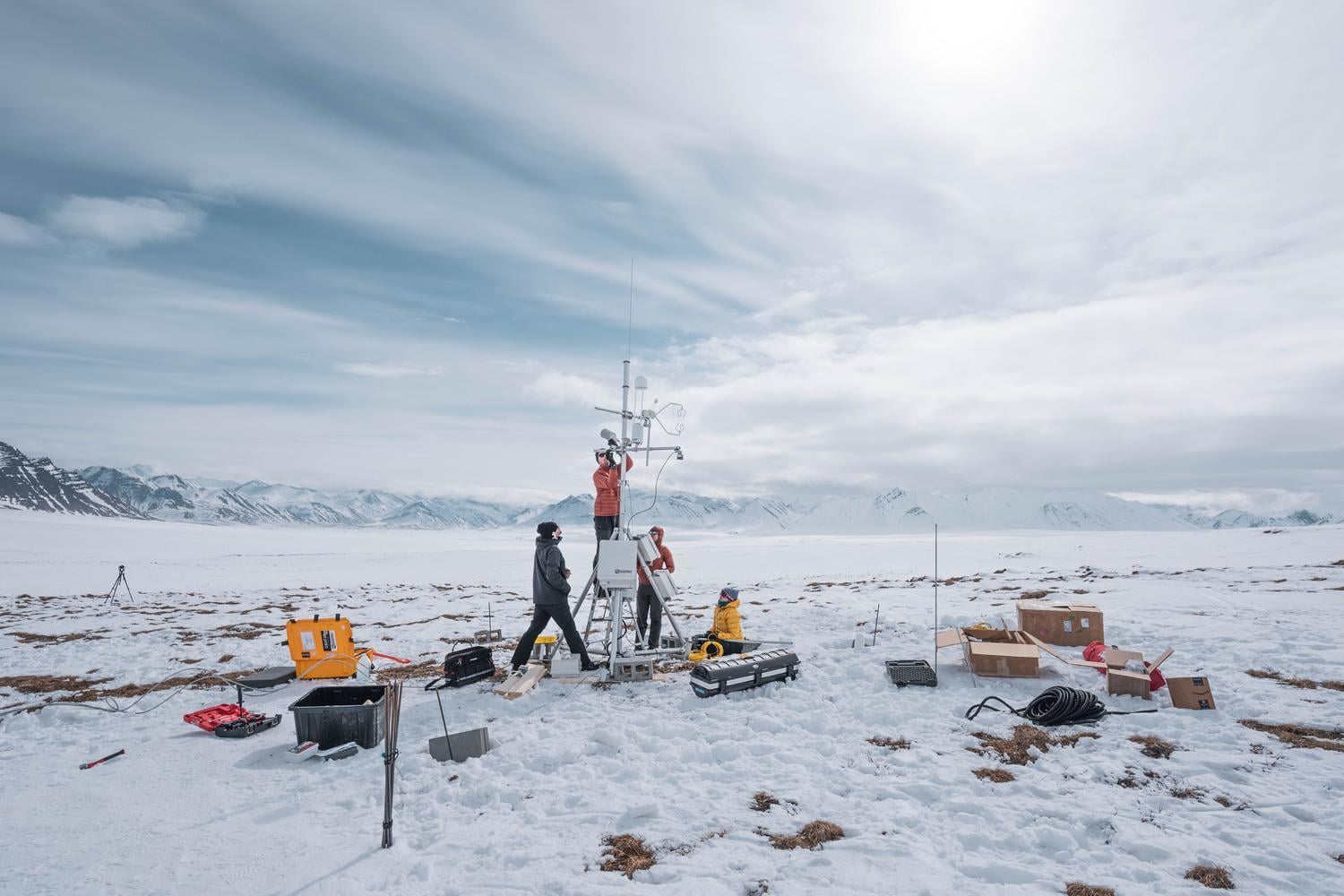
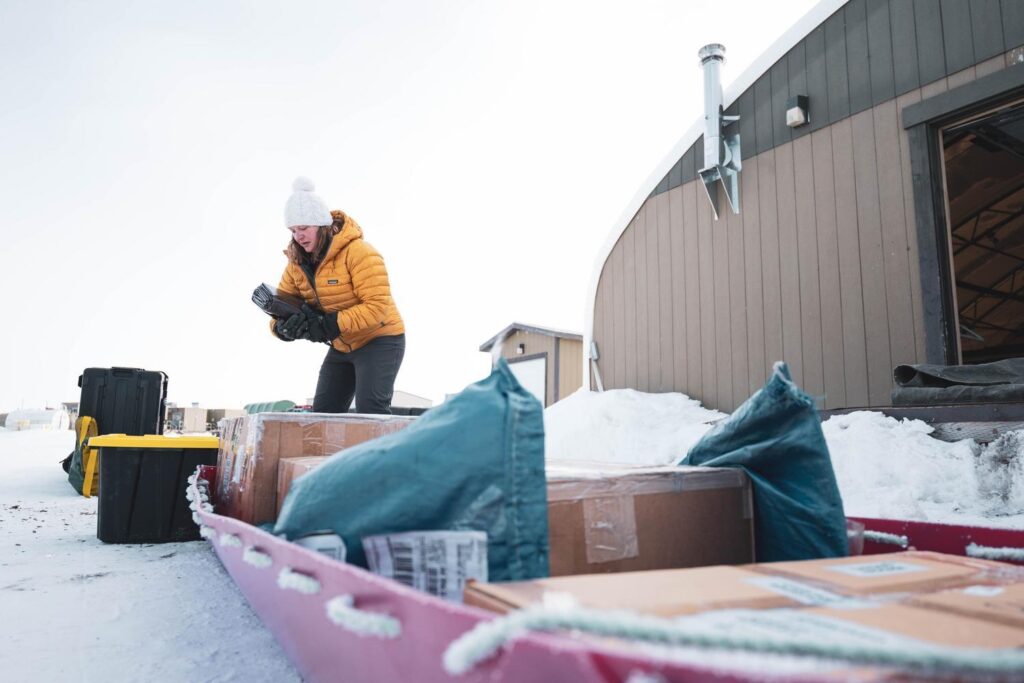
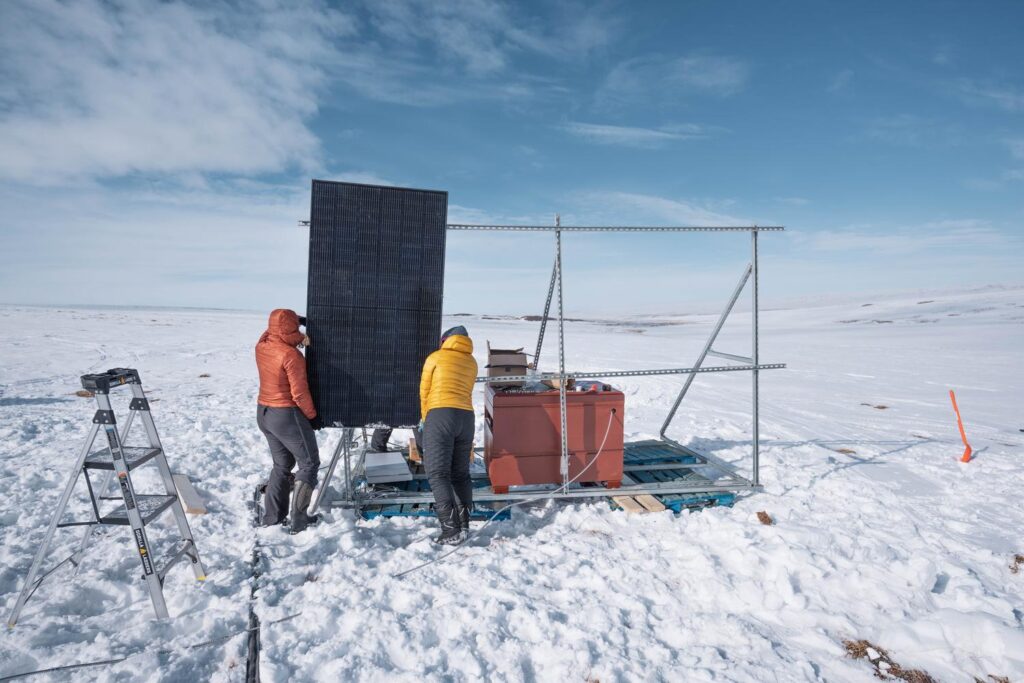
The research expedition focused on a permafrost thaw slump located near Toolik Field Station, a premier Arctic research facility managed by the University of Alaska Fairbanks. The logistical challenges of the mission were significant, requiring the transport of heavy industrial and scientific equipment across the tundra via snowmachines and sleds. The equipment list included a 15-foot-tall aluminum flux tower frame, guy-lines, cement anchors, four large-scale solar panels, and a massive electrical enclosure. Powering the sensitive sensors required eight deep-cell batteries, each weighing over 100 pounds, to ensure the station could operate autonomously in the harsh Arctic environment.
The flux tower is engineered to measure "invisible" emissions—specifically carbon dioxide (CO2) and methane (CH4). Methane is of particular concern to climatologists; while it has a shorter atmospheric lifespan than carbon dioxide, it is approximately 25 to 80 times more potent at trapping heat over a 20-year to 100-year period. By capturing real-time data on these gas fluxes, the team aims to determine how much carbon these collapsing landscapes contribute to the atmosphere compared to the surrounding, intact tundra.
The Geomorphology of Permafrost Thaw Slumps
Permafrost is defined as ground that remains at or below 0°C (32°F) for at least two consecutive years. In the Arctic, this frozen layer can extend hundreds of meters deep, acting as a massive reservoir of organic carbon. Estimates suggest that Northern Hemisphere permafrost contains between 1,400 and 1,600 billion metric tons of carbon—roughly double the amount currently present in the Earth’s atmosphere.
A thaw slump is a type of thermokarst feature characterized by a steep headwall and a debris flow of saturated soil. As the climate warms, the "active layer"—the top layer of soil that thaws in summer and freezes in winter—becomes deeper. When this thaw reaches ice-rich layers deeper in the soil, the structural integrity of the ground fails. These slumps are not merely localized geological curiosities; they are significant "hotspots" for greenhouse gas release. Because thaw slumps expose deep, nutrient-rich soils that have been sequestered for thousands of years, they can emit greenhouse gases at rates vastly higher than undisturbed areas. The lack of empirical data from these specific features has long been a gap in Arctic climate research.
The Paradox of Arctic Snow: Albedo vs. Insulation
A critical component of the expedition involved investigating the role of snow cover in regulating ground temperatures. Dr. Kelly Gleason, specializing in snow hydrology, focused on the dualistic nature of snow in the Arctic energy balance. Traditionally, snow is viewed as a cooling agent due to its high albedo—the ability to reflect up to 90% of incoming solar radiation back into space. This "refrigerator effect" is vital for maintaining cool temperatures across the polar regions.
However, the research team highlighted a more complex and troubling feedback loop: snow as a thermal insulator. In the winter, a thick layer of snow acts like a blanket, trapping the Earth’s internal heat and shielding the ground from the extreme cold of the Arctic air. As the Arctic atmosphere becomes warmer and wetter due to the loss of sea ice, some regions are experiencing increased annual snowfall. While more snow might suggest higher reflectivity, the insulating effect may actually accelerate the thawing of the permafrost beneath it.
Empirical Data from Snow Pit Analysis
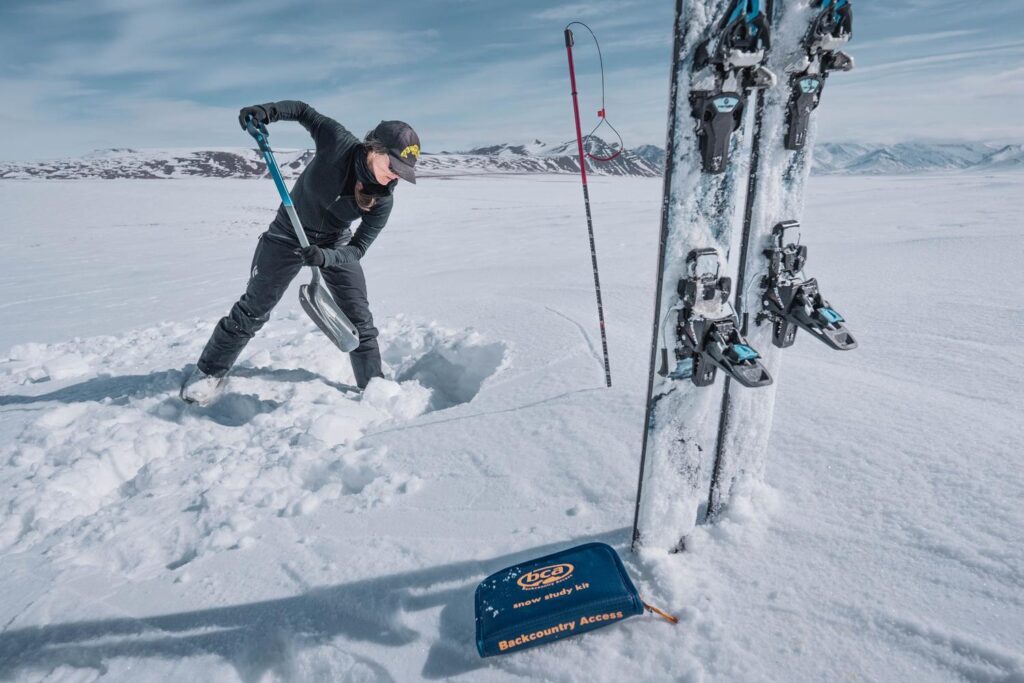
To quantify this insulating effect, Dr. Gleason and her team performed detailed temperature profile measurements by digging snow pits in areas of varying snow depths. The findings revealed a stark contrast in sub-surface temperatures:
- Deep Snowpack (Approx. 2 meters): Beneath a drift nearly two meters deep, researchers recorded a surface temperature of -3°C. However, the temperature increased with depth. At 35 cm below the surface, the temperature was -8°C, but at the base of the snowpack—immediately above the soil—the temperature rose to nearly -3°C.
- Shallow Snowpack (Approx. 57 cm): In a nearby area with significantly less accumulation, the snowpack temperature cooled steadily from the surface to the base, reaching -10°C at the soil interface.
The data suggests that the deeper snowpack maintained the soil at a temperature seven degrees warmer than the shallow snowpack. A soil temperature of -3°C is dangerously close to the threshold where microbial activity can occur. Even in sub-freezing conditions, "unfrozen water" within the soil matrix allows microbes to remain active, decomposing organic matter and releasing gases. This finding indicates that increased snowfall, driven by climate change, could be a primary driver in preventing permafrost from refreezing deeply during the winter months, thereby facilitating year-round carbon loss.
Arctic Feedback Loops and Global Climate Implications
The observations made at Toolik Field Station underscore the existence of a self-reinforcing feedback loop. Rising global temperatures lead to reduced sea ice, which increases atmospheric moisture, resulting in heavier Arctic snowfall. This deeper snow insulates the permafrost, preventing it from shedding heat during the winter. The resulting warmer permafrost thaws more easily, releasing CO2 and methane, which further traps heat in the atmosphere, continuing the cycle.
The implications of this research extend far beyond the North Slope of Alaska. Global climate targets, such as those established in the Paris Agreement, rely on accurate projections of carbon "tipping points." If the Arctic shifts from a carbon sink (absorbing CO2 through vegetation) to a carbon source (releasing CO2 and methane through thaw), the global community may need to adjust emissions reduction targets even more aggressively to compensate for these "natural" emissions.
The Role of Scientific Advocacy and Policy
The collaboration between academic researchers and the Protect Our Winters (POW) Science Alliance highlights a growing trend in the scientific community: the integration of rigorous field research with climate advocacy. Dr. Gleason and Dr. Watts emphasized that while data collection is the foundation of climate action, the communication of that data to policymakers and the public is equally vital.
Representatives from the POW Science Alliance noted that scientists are increasingly stepping into the role of "storytellers," translating complex data into actionable narratives. By demonstrating the physical reality of permafrost collapse and the intricate physics of snow insulation, the team provides a tangible link between global carbon emissions and the stability of the Arctic landscape.
Conclusion and Future Outlook
The installation of the flux tower at the Toolik thaw slump marks the beginning of a long-term data collection effort. Over the coming years, the sensors will provide a continuous record of how these collapsing landscapes breathe, offering the first high-resolution look at methane and CO2 spikes during the spring thaw and summer shoulder seasons.
As the Arctic continues to undergo a rapid transformation, the work of Dr. Gleason, Dr. Watts, and their colleagues serves as a critical early warning system. The findings from Alaska’s North Slope confirm that the Arctic is not a static environment but a dynamic system in flux. Understanding the hidden mechanics of permafrost thaw—and the surprising role of snow in that process—is essential for any global strategy aimed at mitigating the worst effects of climate change. The fate of the Arctic permafrost is inextricably linked to the global climate, and the data gathered at Toolik Field Station will be instrumental in navigating the challenges of a warming world.
