


The permanent suspension of summer skiing operations on the Horstman Glacier at Whistler Blackcomb marks a definitive turning point in the history of North American alpine sports, signaling an era where the environmental costs of climate change have moved from theoretical projections to operational reality. For Mike Douglas, a professional skier often hailed as the "Godfather of Freeskiing," the loss of this iconic training ground is not merely a logistical setback for the industry but a profound personal and cultural loss. Douglas, who rose to prominence in the 1990s while training on these very slopes, has witnessed a three-decade transformation of the landscape that once served as the proving ground for the world’s most elite winter athletes. As the glacier recedes into the history books, the focus of the outdoor industry is shifting from mere observation to aggressive advocacy and systemic manufacturing reform.
The End of an Era: A Chronology of the Horstman Glacier’s Decline
To understand the gravity of the current situation, one must look back at the historical significance of the Horstman Glacier. In the 1980s and 1990s, the glacier was a bustling hub of activity during the summer months. It hosted legendary ski camps that attracted thousands of young athletes from across the globe, providing a year-round training cycle that was essential for the development of freestyle skiing and snowboarding. During this period, the glacier was thick enough to support multiple T-bars and a complex infrastructure of terrain parks.
However, the timeline of its decline has been accelerating. By the mid-2000s, the retreat of the ice became impossible to ignore, as the bottom of the T-bar lifts required constant "farming" of snow—manually moving snow from higher elevations to keep the lift lines operational. By the 2010s, the summer season, which once stretched into August, was routinely cut short by early July. In 2020, citing the rapid melting and the increasing difficulty of maintaining a safe skiing surface, Whistler Blackcomb officially announced the indefinite suspension of summer skiing. The removal of the Horstman T-bar shortly thereafter served as a somber mechanical epitaph for a glacier that had lost too much mass to support the weight of commercial operations.
Environmental Data and the Regional Impact of Warming
The disappearance of the Horstman Glacier is supported by a wealth of glaciological data that paints a grim picture for the Pacific Northwest. According to research from the University of Northern British Columbia, glaciers in Western Canada are projected to lose 70% of their 2005 volume by the year 2100 if current greenhouse gas emission trajectories continue. The Coast Mountains, where Whistler is located, are particularly vulnerable due to their proximity to the Pacific Ocean, which brings warmer, moisture-rich air that increasingly falls as rain rather than snow at mid-to-high elevations.
Data from the North American snowpack studies indicate that since 1955, the average April 1st snowpack—a key indicator of winter health—has declined by approximately 15% to 30% across the Western United States and Canada. For a mountain like Whistler Blackcomb, which relies on a massive seasonal snowpack to insulate its glaciers, the combination of shorter winters and hotter summers creates a "thermal pincer" effect. The albedo effect also plays a critical role: as the white snow melts away, it exposes dark glacial ice and even darker rock beneath, which absorbs more solar radiation and accelerates further melting in a self-reinforcing feedback loop.
Salomon’s Strategic Pivot Toward Responsible Manufacturing
In response to these environmental shifts, Salomon, a global leader in outdoor equipment, has moved to integrate sustainability into the core of its business model. This transition is not merely a marketing strategy but a necessary evolution to ensure the long-term viability of the winter sports market. The brand has launched the "Change our Playbook" initiative, which outlines specific, measurable goals for carbon reduction and circular product design.
One of the most significant pillars of Salomon’s strategy is the commitment to a 30% reduction in its total carbon footprint by 2030, with a goal of achieving net-zero emissions by 2050. This involves a comprehensive audit of "Scope 3" emissions—the indirect emissions that occur in the supply chain, which typically account for the vast majority of a manufacturing company’s environmental impact. To address this, Salomon is prioritizing the use of recycled materials and rethinking product end-of-life. The "Index.01" project, a fully recyclable running shoe, serves as a blueprint for future ski equipment, aiming for a "circular" lifecycle where products are returned, shredded, and reborn as new gear rather than ending up in a landfill.
Mike Douglas, acting as a bridge between the corporate headquarters in Annecy, France, and the actual mountain environment, emphasizes that these small changes in production and supply chain logistics add up to significant benefits. By optimizing how athletes are moved around the world and how equipment is shipped, the brand is attempting to minimize the carbon cost of high-level performance.
The Role of Athlete Advocacy and the POW Partnership
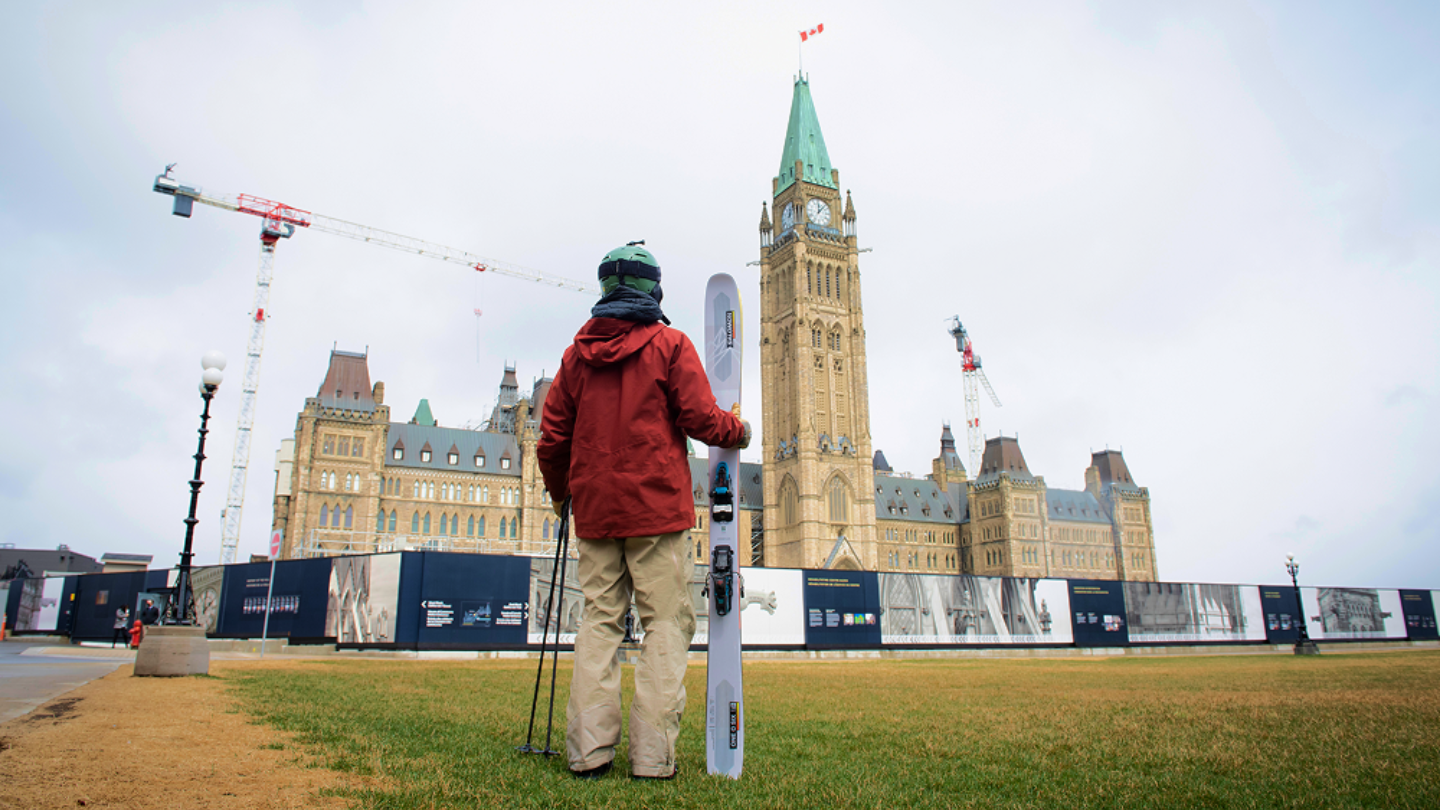
The partnership between Salomon and Protect Our Winters (POW) represents a shift in how athletes are utilized by brands. Traditionally, professional athletes were seen primarily as marketing vehicles for high-performance gear. Today, they are increasingly viewed as climate witnesses and advocates. Mike Douglas, a long-standing member of the POW Canada Alliance, has leveraged his "Godfather of Freeskiing" status to champion climate policy at the highest levels of government.
The collaboration focuses on turning awareness into tangible action. This includes the Quality Ski Time (QST) tour, which combines film screenings and athlete meet-and-greets with educational sessions on climate advocacy. Athletes are being trained to move beyond social media posts and into the halls of political power, meeting with lawmakers to discuss carbon pricing, renewable energy transitions, and land conservation.
Douglas notes that athletes carry a unique form of trust. In an era of misinformation, a skier who has physically stood on a receding glacier for 30 years offers a testimonial that is difficult to refute. This "witness" status allows athletes to communicate the urgency of the climate crisis to a demographic that might otherwise be resistant to traditional scientific or political messaging.
Industry-Wide Implications and the Economic Reality
The challenges faced by Salomon and Whistler Blackcomb are representative of a broader crisis within the $20 billion North American ski industry. The economic implications are staggering. Ski resorts are the lifeblood of mountain communities, supporting thousands of jobs in hospitality, retail, and real estate. As winters become more volatile, the "shoulder seasons" are expanding, and the reliable "100-day season" is becoming a luxury of the past.
The industry is seeing a trend of consolidation and massive investment in snowmaking technology as a desperate hedge against warming. However, snowmaking is both energy-intensive and water-dependent, creating its own set of environmental and financial hurdles. The closure of the Horstman Glacier for summer skiing serves as a warning that technology can only do so much to compensate for a changing climate. If the primary "product"—reliable snow and ice—disappears, the entire economic ecosystem of mountain towns is at risk.
Leading brands are beginning to realize that individual corporate responsibility is only one part of the solution. Collective responsibility and industry-wide standards are becoming the new norm. Organizations like the Snowsports Industries America (SIA) are increasingly focusing on the "Climate United" pact, urging member companies to align their operations with the Paris Agreement targets.

A Call for Systemic Change and Future Outlook
The disappearance of the Horstman Glacier is a physical manifestation of a closing window for action. As Mike Douglas succinctly puts it, advocacy is the most powerful tool a brand can wield. While manufacturing improvements are essential, they cannot solve the crisis in isolation without systemic policy changes that transition the global economy away from fossil fuels.
The path forward for the outdoor industry involves a multi-pronged approach:
- Decarbonization of Supply Chains: Moving manufacturing closer to markets and utilizing 100% renewable energy in factories.
- Circular Economy Integration: Designing products for durability, repairability, and eventual recycling to break the "take-make-waste" cycle.
- Political Mobilization: Using the industry’s significant economic clout to lobby for aggressive climate legislation and the protection of public lands.
- Community Engagement: Empowering the millions of people who recreate outdoors to become a voting bloc for the environment.
The story of Mike Douglas and the Horstman Glacier is not just a story about skiing; it is a microcosm of the global struggle to preserve the natural world in the face of industrial pressure. The "Godfather of Freeskiing" and brands like Salomon are proving that while the ice may be retreating, the resolve of the outdoor community is only strengthening. The loss of summer skiing at Whistler is a heavy price to pay for historical inaction, but it serves as a powerful catalyst for a new era of corporate integrity and environmental stewardship. The message from the mountains is clear: the time for observation has passed, and the time for all-hands-on-deck advocacy has arrived.
