

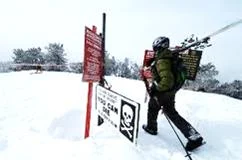
The allure of untouched powder, the thrill of fresh tracks, and the promise of an expansive, untamed mountain experience are drawing an increasing number of skiers and snowboarders beyond the roped boundaries of managed ski resorts. This phenomenon, commonly referred to as "sidecountry" or "slackcountry" skiing, presents a complex duality: an extraordinary recreational opportunity juxtaposed with significant inherent risks. Many of the United States’ premier ski areas are strategically situated on or in close proximity to vast tracts of public lands, offering accessible gateways to these undeveloped backcountry environments. However, it is crucial to understand that these areas operate entirely outside the purview of ski patrol operations. Unlike the meticulously managed slopes within resort boundaries, avalanche mitigation efforts are not undertaken in the sidecountry, and in the unfortunate event of an accident, the responsibility for rescue falls squarely on the shoulders of the individuals involved, or their companions. This growing trend raises critical questions for parents, guardians, and the broader skiing community regarding awareness and preparedness.
The Expanding Frontier: Understanding Sidecountry Terrain
Sidecountry skiing refers to terrain that is accessible from a ski resort’s boundary, typically via a lift or a short hike, but is located outside the designated, patrolled, and avalanche-controlled areas. This terrain can range from steep, ungroomed runs just beyond the last chairlift to more remote areas requiring a significant hike into adjacent wilderness. The appeal is undeniable: the promise of fresh snow, fewer crowds, and a more adventurous skiing experience.
According to data from the National Ski Areas Association (NSAA), the number of skier and snowboarder visits to U.S. resorts has consistently trended upwards, with an average of over 50 million visits annually in recent years. While this indicates a robust and growing participation in the sport, it also suggests a potential increase in the number of individuals venturing into less controlled environments. The accessibility of sidecountry terrain from established resorts is a key factor in its popularity. Resorts often have lift infrastructure that can transport skiers to points near the backcountry, and well-maintained access roads or trails can further facilitate entry.
The International Snow Science Workshop (ISSW), a leading forum for avalanche professionals, has highlighted in its proceedings a growing concern about the increasing popularity of backcountry and sidecountry recreation. Studies presented at these workshops often analyze accident data, and a recurring theme is the disconnect between the perceived safety of accessing these areas from a resort and the actual risks involved. A significant portion of backcountry fatalities are attributed to avalanches, and while precise statistics for sidecountry incidents are difficult to isolate, it is understood that the underlying avalanche hazards are the same as those in any other backcountry terrain.
The Unforeseen Journey: Parental Concerns and Youth Participation
The article’s central concern, articulated by “Doug,” touches upon a critical point: the disconnect between a parent’s perception of their child’s activities and the reality of their adventures. When a parent waves goodbye in the ski area parking lot, they entrust their children to the managed environment of the resort. However, the ease of access to sidecountry terrain means that younger, less experienced individuals, or even those with some experience but lacking comprehensive avalanche training, can inadvertently venture into "R-rated terrain" – a metaphor for areas with significantly higher risks, including avalanche danger, objective hazards like cliffs and trees, and the absence of rescue services.
This raises a pertinent question: how much awareness exists among parents and guardians about the potential for their children to access these areas? While many resorts have clear signage at their boundaries warning of the inherent dangers of the backcountry, the visual cues might not always be sufficient to deter someone eager for adventure, especially if they are with peers who are also seeking that experience. The perceived safety of being "near" the resort can create a false sense of security.
A Chronicle of Risk: Avalanche Incidents and Awareness Gaps
While specific data on sidecountry-related avalanche fatalities is not always categorized distinctly from general backcountry incidents, avalanche safety organizations like the American Avalanche Association (AAA) and regional avalanche centers provide vital statistics and educational resources. These organizations consistently report a significant number of avalanche accidents and fatalities each year, with a substantial percentage occurring in areas that could be considered sidecountry or easily accessible from resorts.
For instance, a review of past avalanche incident reports often reveals that individuals involved were either inadequately trained in avalanche safety, lacked essential rescue equipment (transceiver, probe, shovel), or misjudged the snowpack conditions. The timeline of a typical sidecountry excursion that results in an incident might look something like this:
- Morning: A group of friends, perhaps teenagers or young adults, arrive at a ski resort. They may possess season passes or day tickets.
- Mid-morning: After skiing some of the resort’s marked trails, the group decides to explore an area just beyond the resort boundary. This could be a visible chute, a promising-looking slope, or an area they’ve heard about from others.
- Access: They might hike a short distance from the edge of the resort, or even use a lift to get to a higher point before traversing out of bounds.
- The Hazard: Unbeknownst to them, the snowpack in this area may be unstable due to recent snowfall, temperature fluctuations, or wind loading. They may not have the knowledge or tools to assess this risk.
- The Incident: An avalanche is triggered, either by the group themselves or by someone further up the slope. The group is caught in the slide.
- The Aftermath: If rescue is initiated, it relies on the survival skills and equipment of the uninjured members of the group, or on external rescue services that may take considerable time to arrive and operate under difficult conditions.
The absence of a formal, structured avalanche control program, which is a hallmark of resort operations, means that the snowpack in the sidecountry is subject to natural forces without human intervention. This creates a dynamic and unpredictable hazard.
Official Responses and Industry Perspectives
The concerns raised by the rise in sidecountry use are not lost on the ski industry and avalanche safety professionals. Ski resorts, while benefiting from the popularity of their sport, are increasingly cognizant of their liability and the safety of their patrons, even beyond their boundaries. Many resorts now implement more robust signage at boundary lines, clearly delineating the transition from patrolled terrain to uncontrolled wilderness. This signage typically includes warnings about avalanche danger, lack of rescue services, and the requirement for backcountry safety knowledge and equipment.
Avalanche safety organizations, such as the National Avalanche Center (NAC) network in the U.S., play a crucial role in educating the public. They provide daily avalanche forecasts for backcountry regions, which are indispensable tools for anyone venturing into these areas. These forecasts detail the current snowpack conditions, potential avalanche problems, and recommended travel advisories. However, the effectiveness of these forecasts is directly tied to the user’s ability to understand and apply the information.
“The goal is to empower individuals with the knowledge to make informed decisions,” stated a representative from a regional avalanche center, who wished to remain anonymous to avoid speaking on behalf of their organization without formal clearance. “We see a trend where individuals are venturing into the backcountry with enthusiasm but without the foundational training. This isn’t about discouraging exploration; it’s about advocating for preparedness. A transceiver, probe, and shovel are essential, but so is the understanding of how to use them and, more importantly, how to avoid triggering an avalanche in the first place.”
The downloadable PDF document, “Sidecountry: Rated R,” referenced in the original context, serves as a critical piece of educational material. Its purpose is to highlight the serious risks associated with this type of terrain and to underscore the need for a higher level of awareness and preparedness than what might be required for in-bounds skiing. The “R-rated” designation is a stark metaphor, emphasizing that the consequences of misjudgment or unpreparedness can be severe, akin to encountering mature or restricted content in media.
Broader Impact and Implications: A Call for Education and Responsibility
The implications of the growing popularity of sidecountry skiing extend beyond individual safety. It poses challenges for search and rescue (SAR) teams, who are often volunteer-based and operate with limited resources. When accidents occur in remote sidecountry areas, the response time can be significantly longer, and the rescue operations are often more complex and dangerous for the rescuers themselves.
Furthermore, the ease of access from resorts can create a perception that these areas are an extension of the resort experience, leading to a normalization of risk-taking behavior. This is particularly concerning when it involves younger, less experienced skiers who may be influenced by social media trends or peer pressure.
The future of sidecountry recreation hinges on a concerted effort towards education and responsible practices. This includes:
- Enhanced Avalanche Education: Promoting and increasing access to certified avalanche safety courses (e.g., AIARE Level 1, 2, and 3) for anyone venturing beyond resort boundaries.
- Equipment Familiarity: Ensuring all individuals carry and are proficient in the use of essential avalanche rescue gear: transceiver, probe, and shovel.
- Information Dissemination: Leveraging resort infrastructure to better communicate avalanche hazards and forecast information at boundary points.
- Parental Awareness: Encouraging parents and guardians to have open conversations with their children about the risks of sidecountry terrain and to ensure they are adequately trained and equipped if they choose to explore these areas.
- Industry Collaboration: Fostering partnerships between ski resorts, avalanche safety organizations, and outdoor retailers to promote a culture of safety and preparedness.
Ultimately, the "sidecountry" is not a managed extension of the ski resort; it is wild, unpredictable terrain that demands respect, knowledge, and a commitment to safety. The thrill of untracked snow should never overshadow the fundamental principles of avalanche safety and responsible backcountry travel. The "R-rated" nature of this terrain is a serious warning that cannot be ignored, and a proactive approach to education and preparedness is essential to ensure that the pursuit of adventure does not lead to tragedy.
