

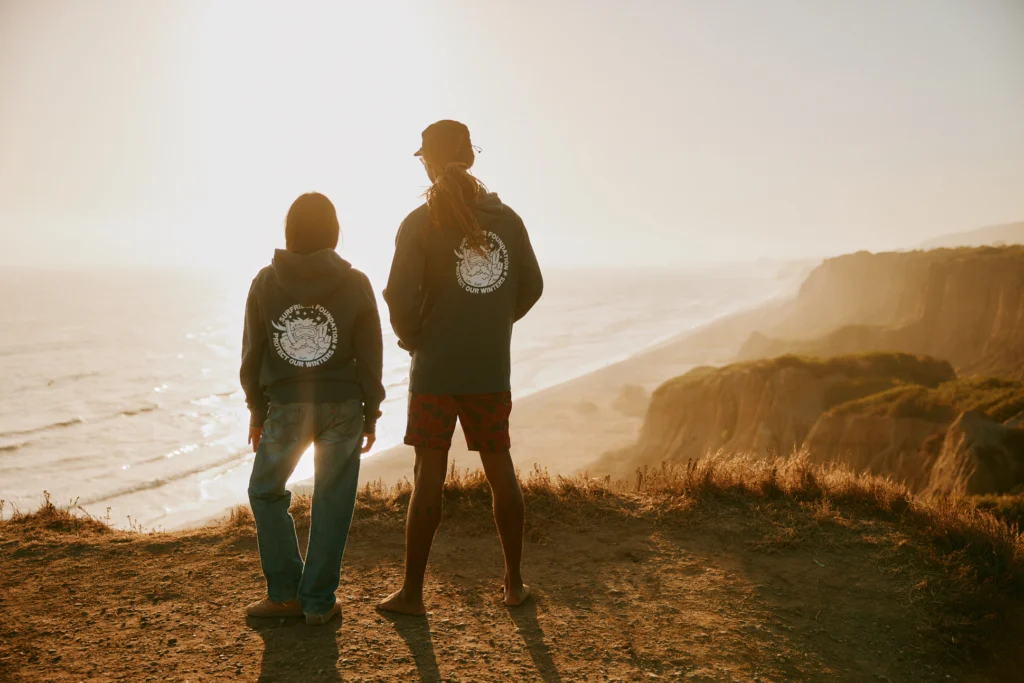
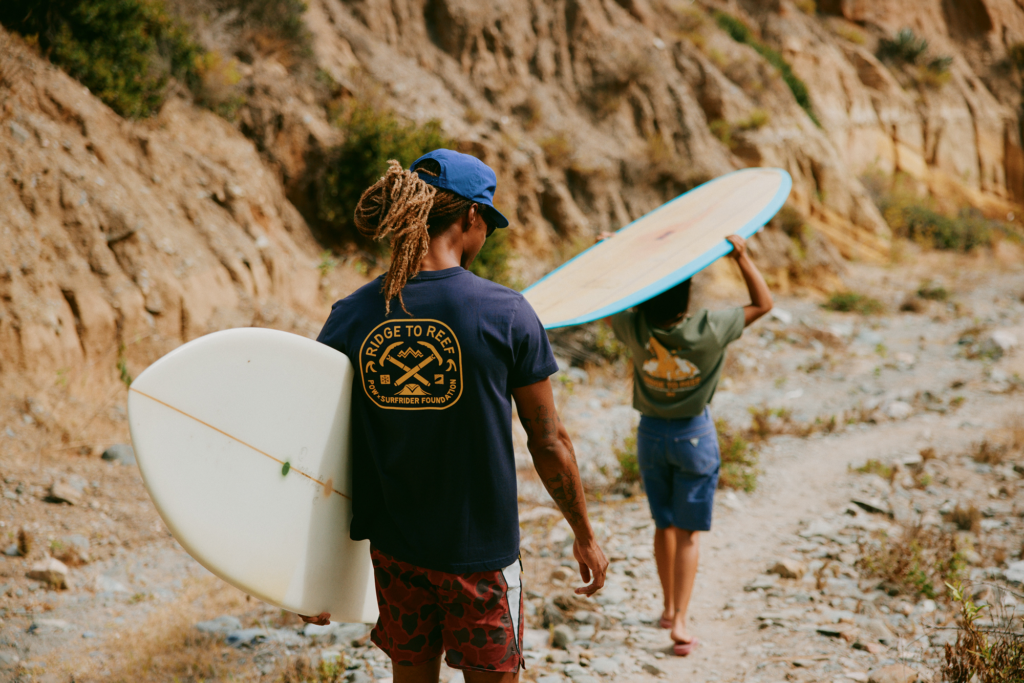
The intersection of mountain and marine environments has long been a focal point for ecological conservation, yet the cultural bridge between these two landscapes is now being fortified through a strategic partnership between two of the world’s leading outdoor advocacy organizations. Protect Our Winters (POW) and the Surfrider Foundation have announced the launch of the "Ridge to Reef" collection, a collaborative initiative featuring the work of California-based artist Dominic McLeod of Dom Fish Designs. This project aims to leverage visual storytelling to mobilize the "Outdoor State"—a demographic of millions of outdoor enthusiasts—against escalating environmental threats, specifically new offshore oil and gas drilling proposals that jeopardize coastal ecosystems and the stability of the global climate.
The Synergy of Ridge to Reef Advocacy
The concept of "Ridge to Reef" is rooted in the hydrological reality that the health of high-altitude alpine environments is inextricably linked to the vitality of the ocean. Snowpack in the mountains serves as a natural reservoir, which, upon melting, feeds river systems that eventually reach the sea. For the outdoor community, this connection is more than scientific; it is experiential. Athletes who spend their winters navigating powder on mountain peaks often transition to chasing swells in the ocean during the summer months.
However, this "rhythm of movement," as described by the organizations, is increasingly disrupted by industrial expansion and climate volatility. The Ridge to Reef collection serves as a cultural manifesto, asserting that the protection of public lands and waters must be a unified front. By combining the mountain-centric influence of POW with the coastal expertise of the Surfrider Foundation, the collaboration seeks to create a holistic advocacy model that addresses the entire lifecycle of water and the landscapes it sustains.
The Creative Force: Dominic McLeod and Dom Fish Designs
Central to this initiative is Dominic McLeod, an artist whose upbringing in Ojai, California, provided a unique vantage point on the convergence of diverse ecosystems. Ojai’s geography, situated at the base of the Topatopa Mountains yet only a short distance from the Pacific Coast, instilled in McLeod a realization that these environments are part of a singular, continuous experience.
McLeod’s artistic journey began in a traditional classroom setting, where he initially illustrated characters for peers. Today, his work has evolved into a sophisticated form of outdoor-inspired visual storytelling. His process is meticulously structured, beginning with discovery calls and mood boards before moving into digital sketching on tablets. His aesthetic—characterized by "grit, humor, and community"—captures the authentic spirit of the surf lineup and the mountain trail.
A pivotal moment in McLeod’s philosophy occurred following a severe ankle injury that sidelined him from surfing for ten months. During this period of physical limitation, he transitioned into bike-packing, a shift that birthed his concept of "cross-pollination." McLeod argues that outdoor enthusiasts should not silo themselves into rigid categories such as "climber," "surfer," or "snowboarder." Instead, he advocates for an overlapping identity that mirrors the interconnectedness of nature. This philosophy extends to climate advocacy, where he posits that perfection is not a prerequisite for participation. He suggests that individuals can still be effective advocates for the planet even if they lead lives that are currently dependent on fossil fuel infrastructure, such as driving gas-powered vehicles to trailheads.
Chronology of Environmental Activism: From Cape Cod to Global Policy
The collaboration between POW and Surfrider is the culmination of decades of grassroots activism. The history of this movement can be traced back to the formative experiences of POW founder Jeremy Jones. As a young surfer on Cape Cod, Jones was introduced to environmentalism through the Surfrider Foundation’s presence in the local community. At age 14, influenced by the older surfers who displayed Surfrider decals on their vehicles, Jones joined the organization, committing to a life of "protection over plunder."
This early exposure to coastal advocacy eventually informed Jones’s vision for Protect Our Winters, which he founded in 2007 to mobilize the winter sports community against climate change. The Surfrider Foundation, established much earlier in 1984 by a group of surfers in Malibu, California, provided the blueprint for how recreationalists could become powerful political lobbyists.
The timeline of these organizations reflects a growing sophistication in environmental strategy:
- 1984: Surfrider Foundation is established to protect Surfrider Beach in Malibu.
- 2007: Jeremy Jones founds Protect Our Winters to address the impact of climate change on snow-dependent industries.
- 2010s: Both organizations expand their reach, moving from local conservation to federal policy advocacy in Washington, D.C.
- 2024: The "Ridge to Reef" collaboration is launched to unify the "Outdoor State" against the Department of the Interior’s offshore drilling expansion plans.
Supporting Data: The Economic and Environmental Stakes
The urgency of the Ridge to Reef initiative is underscored by significant economic and environmental data. According to the Bureau of Economic Analysis (BEA), the outdoor recreation economy accounts for $1.1 trillion in annual economic output and supports nearly five million jobs in the United States. This sector represents 2.2% of the U.S. GDP, making it a more significant economic driver than many traditional industries, including mining and telecommunications.
Despite this economic clout, the landscapes that fuel this industry face unprecedented threats. The 2024-2029 National Outer Continental Shelf Oil and Gas Leasing Program has been a focal point of contention. While recent iterations of the plan have limited the number of lease sales, the threat of expanded drilling remains a primary concern for coastal communities and climate scientists alike.
Environmental data indicates that:
- Offshore Risks: Even small-scale offshore drilling operations pose the risk of catastrophic oil spills, which can devastate local economies dependent on tourism and fishing.
- Climate Impact: The burning of fossil fuels extracted from public lands and waters contributes significantly to the atmospheric carbon levels that cause the "shrinking winters" observed by POW’s community.
- Biodiversity Loss: Coastal development and industrialization threaten 50% of the world’s salt marshes and 35% of mangroves, which are critical carbon sinks and nurseries for marine life.
Official Responses and Strategic Implications
The partnership has garnered support from various stakeholders within the environmental and outdoor industry sectors. Representatives from the Surfrider Foundation emphasize that the Ridge to Reef collection is not merely about merchandise, but about funding the legal and legislative battles required to defend the coast. "100% of the proceeds from this collection go directly toward advocacy efforts," a spokesperson noted. This funding is critical for maintaining the legal teams that challenge unlawful drilling permits and for lobbying for the Permanent Protection of the Arctic and other sensitive areas.
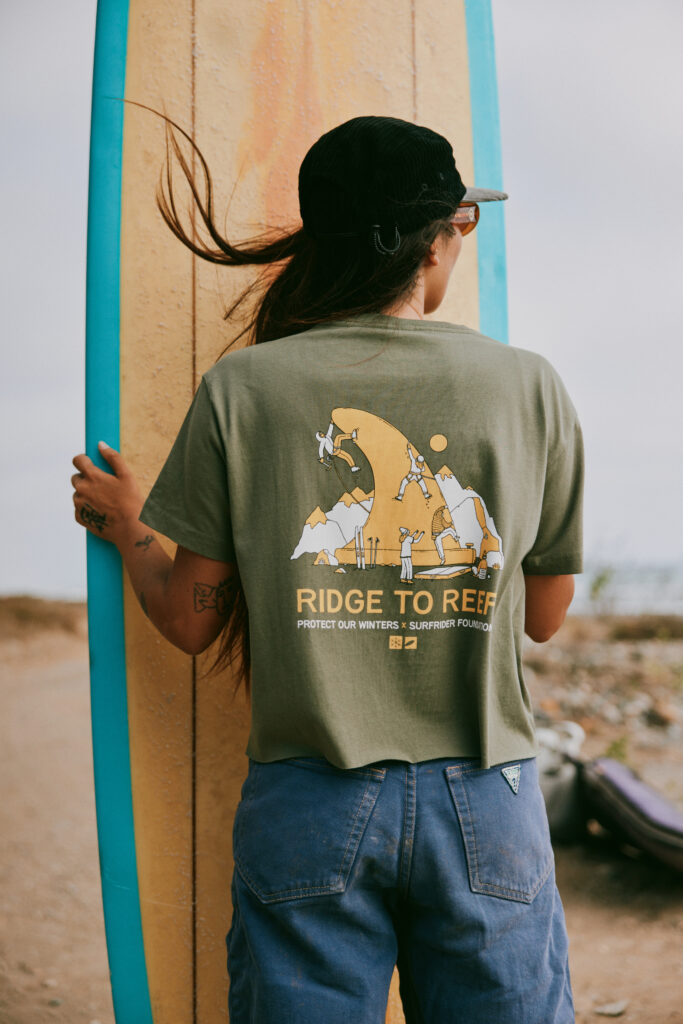
From a strategic standpoint, the inclusion of Dominic McLeod’s art is a deliberate move to bridge the gap between policy and culture. Advocacy experts argue that while data and policy papers are essential for government relations, cultural symbols and art are what mobilize the general public. By visualizing the "Outdoor State" as a collective force—where a surfboard fin can seamlessly blend into a mountain climbing scene—the campaign aims to increase the "stickiness" of the environmental message among younger, more diverse demographics.
Broader Impact: Visualizing a Sustainable Future
The broader implication of the Ridge to Reef project lies in its ability to redefine the identity of the modern environmentalist. In the past, environmentalism was often viewed as a niche interest or a purely scientific endeavor. The work of McLeod and the collaboration between POW and Surfrider suggest a shift toward an "identity-based" advocacy.
This model acknowledges that the desire to protect the planet often stems from a deep, personal connection to recreational activities. When a surfer fights for clean water or a snowboarder fights for cold winters, they are fighting for the preservation of their own way of life. This makes the advocacy more resilient and less susceptible to the "apathy" that McLeod warns against.
As the 2024 legislative session progresses, the Ridge to Reef collection will serve as a visual reminder of the stakes involved. The campaign sends a clear message to policymakers: the outdoor community is no longer a fragmented group of hobbyists, but a multi-billion-dollar constituency with a unified voice. The transition from "plunderer to protector," as envisioned by Jeremy Jones decades ago, is now being realized through a fusion of art, sport, and rigorous political action.
The collection is currently available through the Protect Our Winters online store, with all revenue earmarked for the defense of public lands and waters. As these organizations continue to fight against the expansion of fossil fuel infrastructure, the Ridge to Reef initiative stands as a testament to the power of cross-industry collaboration in the face of a global climate crisis.
