

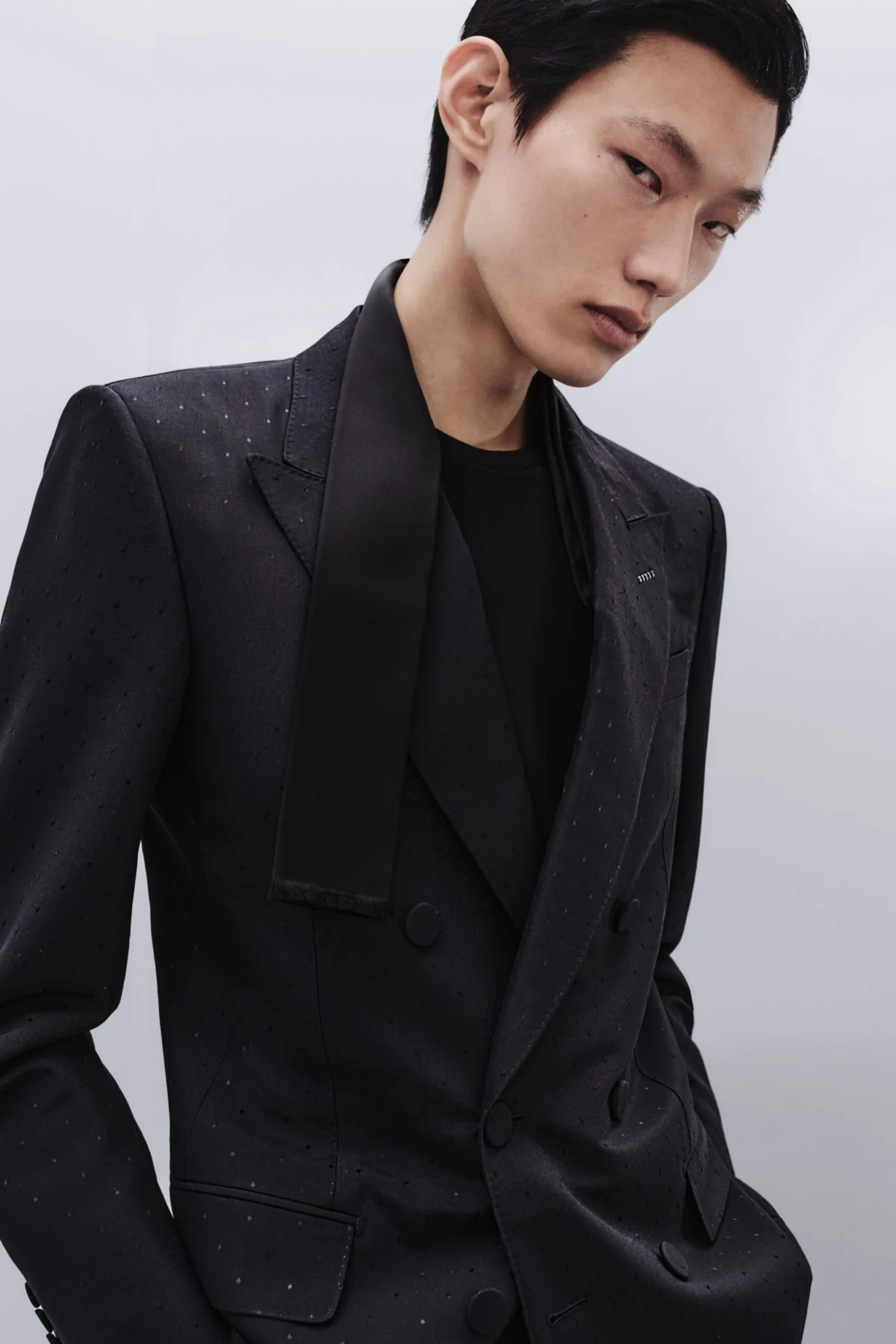
Haider Ackermann, the current creative director of Tom Ford, has ignited a conversation reminiscent of his predecessor’s bold approach to gender and sexuality in fashion. In a daring move that mirrors Tom Ford’s own past provocations, Ackermann’s latest pre-spring collection, presented through dual lookbooks for menswear and womenswear, directly confronts the cultural double standards surrounding the objectification of men and women. The designer’s explicit embrace of what he terms "ass out" menswear looks, and the parallel visual language employed across both collections, underscores a deliberate effort to challenge societal norms and advocate for what appears to be an "equal-opportunity objectification." This strategic approach, as noted by Nicole Phelps in her Vogue Runway review, suggests Ackermann is "just about out-Forded Tom Ford with this one," a testament to the collection’s potent messaging.
The Tom Ford Precedent: A Decade of Challenging Norms
The genesis of this sartorial dialogue can be traced back over a decade to Tom Ford’s own candid reflections on his design philosophy. In 2015, speaking to The Guardian, Ford acknowledged the criticism he had faced for "objectifying women," but countered with a provocative assertion: "But I’m an equal opportunity objectifier—I’m just as happy to objectify men." He elaborated on the cultural dissonance, observing, "The thing is, you can’t show male nudity in our culture in the way you can show female nudity. We’re very comfortable as a culture exploiting women, but not men. But I don’t think of it as exploitation [either way]."
Ford revisited this theme two years later in New York Magazine, further detailing the practical challenges of his artistic vision within societal constraints. "I’ve objectified men just as much in my career, but you just cannot run those images," he stated. "I put that perfume bottle between a woman’s breasts, but I also put it between a guy’s butt cheeks, but [few] would accept that." Ford’s consistent articulation of this perspective highlighted a deeply ingrained cultural bias, one that afforded greater latitude in the sexualization of women than men. His work consistently pushed against these boundaries, aiming for a symmetrical gaze that was often curtailed by prevailing social sensitivities.
Ackermann’s Echo: Symmetry and Subversion in Pre-Spring
Haider Ackermann’s latest offering directly engages with this long-standing cultural tension. The pre-spring collection, delivered via two meticulously curated lookbooks – one for menswear and one for womenswear – operates on a principle of profound symmetry. Through both the styling of the garments and the posing of the models, Ackermann creates a visual dialogue that broadly reflects striking similarities between the genders, while simultaneously playing with the subtle nuances of their differences. His accompanying statement for the collections articulates this intent: "The deeper I delve into the signs, the more I find freedom in interpreting them." This suggests a conscious exploration of established visual cues and a desire to reinterpret them through a lens of liberation and equality.
The collection’s foundation lies in Fordian tailoring, characterized by an almost severe precision. Double-breasted jackets are rendered with pronounced shoulders, cinched waists, and slim-fitting trousers that sometimes feature a subtle kick. The accessory landscape includes slender scarves that drape elegantly around necklines, alongside opulent tuxedos and jacquard cocktail jackets that exude an eveningwear sparkle. A particularly striking example of this luxurious aesthetic is a tufted scarlet rococo jacquard jacket, artfully layered over a monochrome silk snakeprint shirt. Another ensemble pairs a dogtooth jacket with puppytooth trousers, showcasing a playful yet sophisticated use of pattern. In the womenswear, tailoring maintains a commanding presence, though it is imbued with a more overtly fluid sensibility, suggesting Ackermann’s delicate negotiation of tailoring’s traditionally masculine conventions to redistribute its inherent power.
Beyond the realm of formal tailoring, Ackermann pivots to American sportswear, embracing a style of "louche, casually-precise dressing." This manifests in cropped leather jackets fashioned from vibrant green and turquoise suede, classic checked Western shirts, and immaculately straight-cut denim. These pieces possess an inherent ruggedness, meticulously refined through superior fabrication and precise fit. The collection also features head-to-toe leather ensembles and all-corduroy looks, evoking a sense of elevated prep. The accompanying women’s collection utilizes similar sartorial ingredients, rearranged to achieve a related effect. The two closely adjacent wardrobes are presented as variations on two closely adjacent personalities, with gender serving as the primary point of divergence. This approach emphasizes the underlying similarities in style and attitude, suggesting that the perceived differences are largely constructed.
The "Crotch Shot" as a Statement of Intent
The most overtly provocative element of Ackermann’s collection lies in its presentation. Across both lookbooks, tailored jackets are deliberately paired with boxer shorts, and the models are photographed in strikingly parallel poses. The deliberate framing, focusing on the perspective between the knee and the thigh, highlights "crotch shots" of similar looks within the menswear and womenswear lookbooks. This visual strategy is a direct and unambiguous nod to Tom Ford’s philosophy of "equal-opportunity objectification." It forces the viewer to confront the parallel sexualization of both male and female bodies, challenging the inherent discomfort and societal acceptance discrepancies that Ford identified.
In his menswear statement, Ackermann articulated the driving philosophy behind this daring choice: "I like the idea that a man does not need to choose between different expressions of himself. I keep following this intuition, wherever it may lead." This statement suggests a broader artistic and philosophical intent that extends beyond mere provocation. It speaks to a desire to liberate individuals, particularly men, from restrictive societal expectations about masculinity and self-expression. By presenting these looks, Ackermann is not simply offering clothing; he is advocating for a more fluid and authentic understanding of identity, where the expression of sensuality and style is not dictated by gender norms.
Supporting Data and Cultural Context
The cultural landscape in which Ackermann is operating is one where conversations around gender fluidity and sexual expression are becoming increasingly prominent. Data from various sources indicate a growing societal acceptance of diverse gender identities and a more nuanced understanding of sexuality. For instance, a 2023 Pew Research Center study revealed that a majority of Americans now believe that gender identity is distinct from sex assigned at birth. This shifting societal perspective provides fertile ground for fashion designers to explore and challenge traditional norms.
Furthermore, the fashion industry itself has been undergoing a transformation, with brands increasingly focusing on inclusivity and representation. The rise of gender-neutral clothing lines and the dismantling of traditional runway show structures (such as separating menswear and womenswear shows) reflect this broader trend. Ackermann’s dual-lookbook approach, while provocative, aligns with this industry-wide movement towards breaking down binary distinctions.
Reactions and Implications
While direct official statements from other designers or cultural commentators regarding Ackermann’s specific collection are not yet widely available, the collection’s bold approach is likely to elicit a range of reactions. Fashion critics and industry insiders, familiar with Tom Ford’s legacy and Ackermann’s own design sensibilities, are expected to engage in vigorous debate. The visual parallels drawn between the male and female lookbooks, particularly the emphasis on the lower body and the deliberate use of "crotch shots," will undoubtedly be a focal point of discussion.
The implications of Ackermann’s collection are multifaceted. Firstly, it serves as a powerful reminder of the persistent cultural biases surrounding male and female objectification. By mirroring Ford’s approach, Ackermann forces a contemporary re-examination of these issues. Secondly, it offers a progressive vision of masculinity that embraces a broader spectrum of self-expression, moving beyond rigid traditional definitions. This can empower individuals to explore their identities more freely. Thirdly, the collection challenges the established boundaries of luxury fashion, pushing the envelope in terms of what is considered acceptable or marketable.
The success of this collection, in terms of both critical reception and commercial impact, will be a significant indicator of how far society and the fashion industry are willing to move towards a more equitable and liberated approach to gender, sexuality, and the power of visual representation. Ackermann, by standing on the shoulders of Tom Ford’s groundbreaking work, has not only created a visually arresting collection but has also reignited a vital cultural conversation.
