

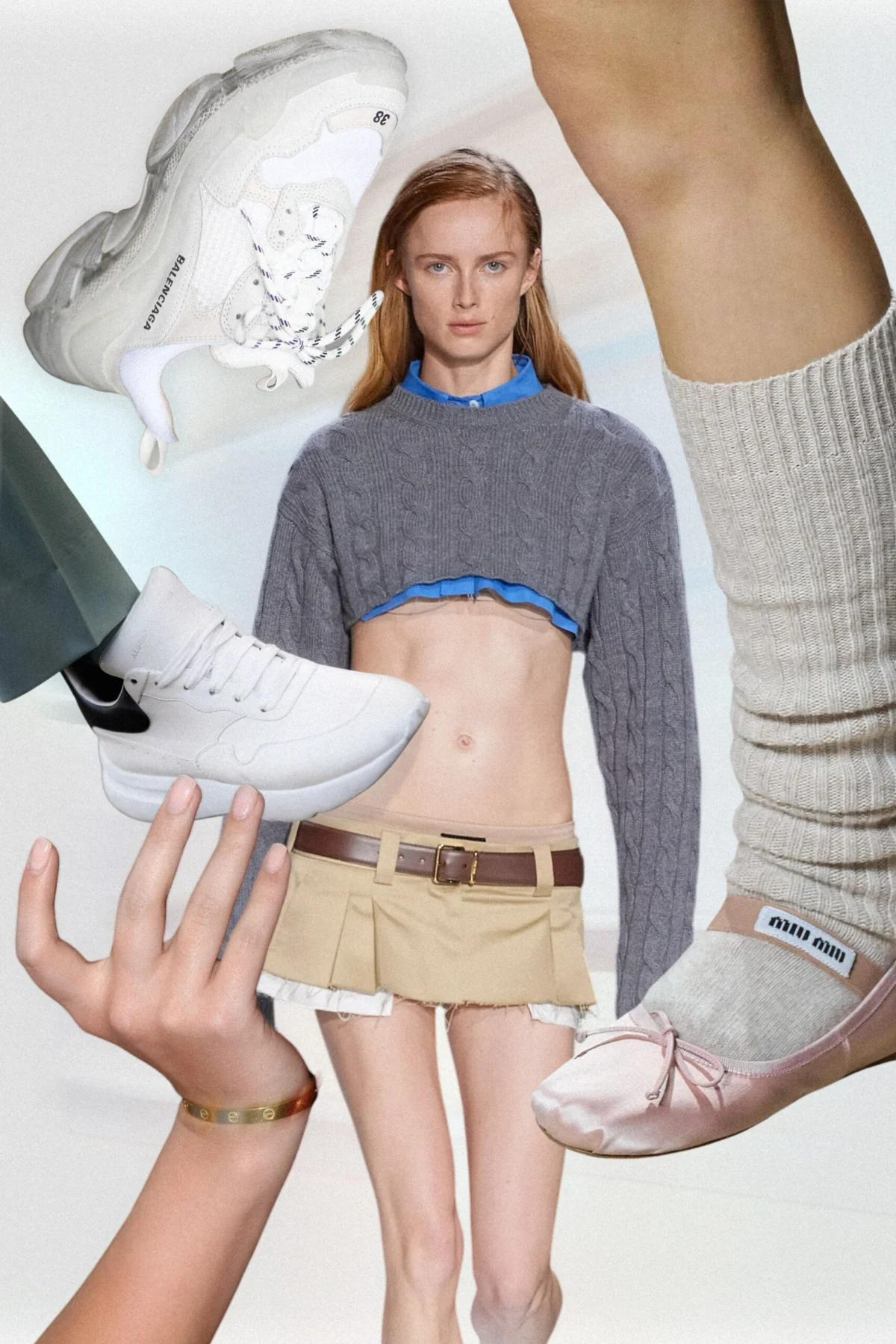
Miu Miu, the playfully provocative diffusion line of Prada, experienced an unprecedented surge in popularity between 2022 and 2025, becoming a darling of the fashion world and a significant revenue driver for its parent company. This period of explosive growth was fueled by a succession of highly sought-after, viral product releases. The ultra-low-rise micro-mini skirt, a coveted collaboration with New Balance on the 530 sneaker, and the brand’s signature logo ballet flats, all captured the zeitgeist and propelled Miu Miu into a new stratosphere of desirability and commercial success. During this "on fire" period, the label witnessed remarkable expansion. In 2024 alone, Miu Miu’s revenue skyrocketed by an astonishing 93% compared to the previous year. By the close of 2025, its contribution to Prada Group’s total retail sales had swelled to 31%, a significant leap from its 25% share just a year prior, underscoring its newfound dominance within the group’s portfolio.
However, the relentless upward trajectory of Miu Miu’s sales has now entered a phase of normalization. According to the most recent earnings report from the Prada Group, the brand recorded a more modest 2.4% increase in revenue for the first quarter of 2026. This figure stands in stark contrast to the colossal 60% surge observed in the corresponding quarter of the previous year, signaling a deceleration in its growth rate. This slowdown was anticipated by industry observers and acknowledged by Prada Group CEO Andrea Guerra during the first-quarter earnings call. Guerra attributed the moderated performance to Miu Miu navigating a "disrupted environment, against the most challenging comparison base of the year." Essentially, the brand’s extraordinary success during its viral product peak created an exceptionally high benchmark, making even solid current performance appear as a slowdown in comparison. Miu Miu did not respond to requests for comment regarding these financial results.

This phenomenon of decelerating growth following a period of intense viral success is not unique to Miu Miu. Hermès, a bastion of enduring luxury that had previously remained a resilient bright spot in the post-pandemic luxury market, also reported slower-than-expected growth for the nine months ending September 30, 2026. While Hermès has historically demonstrated an ability to weather market fluctuations, its recent performance saw a 2.4% decline in ready-to-wear and accessories sales compared to the previous year, impacting its overall financial results. Éric du Halgouët, the Chief Financial Officer of Hermès, informed investors during the earnings call that this contraction was partly attributable to a decrease in sales within "high-volume" categories, specifically mentioning footwear and non-handbag accessories such as belts. These categories often include entry-level luxury items like the iconic Hermès Oran sandal, which, at approximately $900, serves as an accessible gateway for aspirational consumers to engage with the brand. Hermès also declined to provide specific comment for this report.
The Double-Edged Sword of Viral Products
The allure of viral hit products is undeniable for brands. They offer a potent combination of immediate revenue boosts and amplified cultural relevance, capturing widespread attention and driving consumer desire. However, this success carries an inherent risk: the challenge of "difficult comps," or comparisons against exceptionally high sales figures from previous periods. In today’s complex macroeconomic landscape, where brands are constantly seeking to attract new clientele and sustain growth, striking a delicate balance between sales spikes driven by fleeting virality and the cultivation of long-term brand desirability becomes paramount.
Jeanel Alvarado, founder and editor-in-chief of RetailBoss, observes that "a single hit can keep sales strong while hiding [softer] demand elsewhere and failing to attract the next generation." She further elaborates, "When demand slows, the brand must replace lost revenue and build new demand, with less money available to do either." This underscores the precarious position brands can find themselves in when their success becomes overly reliant on a limited number of highly publicized items.

Sneakers have historically been a significant category for viral product success. Alvarado points to Balenciaga’s Demna-era Triple S sneaker as a prime example. Following its release in 2017, this distinctive footwear item significantly inflated brand sales. However, as it eventually faded from peak fashion relevance, it created challenging comparative sales figures for the label. Alvarado notes that the sneaker’s "exaggerated silhouette connected luxury with the way people were dressing in everyday life." The inherent difficulty arises "when demand for those few recognizable products becomes stronger than customers’ interest in the wider collection." This strategic challenge was evident; a year after the Triple S hit the market, Kering’s 2018 report lauded the "continuing exceptional momentum of Balenciaga," a testament to the sneaker’s initial impact.
Similarly, Alexander McQueen’s entry-level Oversized Sneaker represented a substantial 80% of the brand’s revenue at its zenith in the late 2010s, according to Luca de Meo, CEO of Kering, during the group’s full-year 2025 earnings call in February of this year. Analysts at Bernstein reported that the house’s turnover experienced a significant contraction, falling from €850 million to €200 million between 2022 and 2025, suggesting a potential overreliance on this single product category.
Alvarado further explains the mechanics of this dependency: "When sales are under pressure, brands [can] double down on products customers already understand and can more easily justify buying." This often leads to popular products receiving increased display space and marketing attention, yielding short-term, easily attainable gains. "The short-term need to protect revenue then leaves fewer resources to build demand for alternatives. That is how a sensible buying decision becomes a longer-term dependence." This cyclical pattern highlights how pragmatic commercial decisions, driven by immediate sales pressures, can inadvertently foster a reliance that becomes detrimental in the long run.

From Breakout Success to Potential Burnout
For any brand, capitalizing on a hit product offers immediate and tangible commercial benefits. When executed effectively, it serves as an effective strategy to introduce new consumers to the brand, generating a short-term surge in sales and creating an opportunity to cultivate these new customers into loyal, long-term advocates. However, complications can arise when the initial entry-level product is heavily promoted without a subsequent strategy to introduce fresh, equally compelling items as demand for the original begins to wane.
Katy Lubin, VP of Brand and Communications at Lyst, points out that "a breakout, viral product can lift a brand quickly, but once it’s everywhere, it loses the exclusivity that made people want it." Ubiquity is a particular concern for luxury brands. "It’s hard to spend a lot of money on something and then see it everywhere," adds Marissa Lepor, managing director of The Sage Group. She elaborates, "The more prevalent that a luxury item becomes, the core customer of the luxury brand is less interested in it. They feel like it’s everywhere, or they already have enough of them." In the current digital age, this rapid saturation is amplified by the pervasive influence of short-form video content, which accelerates trend cycles and shortens the lifespan of viral phenomena.
The increased visibility of a highly popular item also heightens the risk of it being replicated by more accessible contemporary or high-street brands. This can further hasten its trend cycle and diminish its appeal among discerning luxury consumers. While many core luxury customers may not be swayed by imitations, other potential buyers might opt for more affordable alternatives. Lepor notes, "It can really amplify the conversation around those hero products, but maybe doesn’t scale as much with sales." She explains, "The person who’s coveting that luxury item might not end up buying it, they might end up buying something similar." This dynamic can lead to a disconnect between social media buzz and actual sales conversion for the luxury brand itself.

Does Scarcity Offer a Shield Against Ubiquity?
One strategic approach for brands to mitigate over-reliance on a limited number of products or categories is through controlled supply – a tactic that luxury houses have historically employed with success. Luca Solca, managing director of luxury goods at Bernstein, observes that "Hermès and Rolex still sell less of their iconic products than their market would take." For Hermès, this scarcity is intrinsically linked to the meticulous craftsmanship involved in producing its iconic leather goods. Artistic Director Pierre-Alexis Dumas explained to CBS’s 60 Minutes in 2024 that "whatever we have, we put on the shelf, and it goes," implying that production capacity, rather than intentional withholding, dictates availability. This organic scarcity ensures that even highly desirable items do not become overly saturated in the market.
When supply consistently remains below the level of demand, hero products are prevented from becoming ubiquitous, thus maintaining market saturation and desirability. Lepor emphasizes the need for a careful equilibrium: "There has to be a balance between what a brand is known for, what products get mass scale and how to keep the scarcity, so that when you invest in these luxury items, you feel unique." This approach ensures that ownership of a luxury item continues to signify exclusivity and personal style, rather than conforming to a mass trend.
Brands can strategically avoid potential overdependence by leveraging the exposure generated by a popular item as a platform to introduce consumers to a broader brand universe. Solca suggests, "It is good to have an iconic product that everybody wants, [but] it is better to follow-up with more products to build on this." The objective is to transition consumers from being attracted by a single product to appreciating and desiring the entirety of the brand’s offerings.

Lepor further elaborates on this strategy: "If you have a few designs that become really popular, they become popular for a reason. It’s less figuring out why something went wrong, and more figuring out how to iterate upon it to do something like that again. Something I think is really important with the luxury world right now, is not just selling people one item, but getting them to covet the world of the brand." She cites Cartier’s Love bracelet, and the subsequent development of the broader Love Unlimited collection, as a successful model for achieving this. The challenge lies in "How can you stay true to a design that has been very successful, without just launching it in new colors?" This involves innovation and creative expansion that honors the brand’s heritage while offering new avenues for consumer engagement.
Emerging designers also face the intricate task of balancing viral popularity with the imperative of sustained, long-term growth. Lubin points to Conner Ives as an example, noting a 49% increase in demand for his brand from the second to the third quarter of 2026, according to the Lyst Index. While his Vintage Robe was a significant driver of this demand, Lyst data indicated that interest was also spread across scarves, dresses, and shirts, suggesting a more diversified appeal. Other brands that have demonstrated success across multiple categories, according to Lyst, include Bottega Veneta and Chanel. Lubin explains, "Strength across categories spreads commercial risk and protects brand value. It also widens a brand’s reach, because each hero product brings in a different shopper, from a bag collector to sneaker enthusiasts." This multi-category strength not only fortifies the brand against market fluctuations but also broadens its consumer base by appealing to diverse tastes and interests.
The strategy of heavily investing in an already popular product, whether it be an oversized sneaker or a viral skirt, is a common approach. However, the brands that manage to sustain momentum and achieve lasting success are those that adopt a forward-looking perspective. Alvarado emphasizes this point: "Brands need to invest in the next reason to buy while the current hero funds the business. The strategic advantage is building the next generation’s reason to purchase before the business loses the revenue supporting its current one." This proactive approach ensures a continuous cycle of desirability and commercial viability, rather than a reliance on past successes to fund future endeavors.
