

The winter of 1994/95 marked a distinct era in North American backcountry recreation. For those venturing into the snow-laden wilderness, the landscape of avalanche safety and accessibility was vastly different from today. At the forefront of avalanche forecasting were key figures like Knox Williams, who led the Denver avalanche center, Bruce Tremper in Utah, and Mark Moore overseeing operations in Seattle. In Jackson Hole, Jim Kanzler was at the helm of the local center, while Brad Ray managed the avalanche center at Mount Washington. A nascent avalanche center, established by the author of this analysis, was just entering its fifth year of operation in Bozeman. Notably, significant backcountry regions such as the Chugach Mountains in Alaska, the Tahoe basin, and Mount Shasta lacked dedicated avalanche centers. The gear of choice for most backcountry skiers was telemark equipment, often coupled with leather boots, a stark contrast to the lightweight, high-performance alpine touring (AT) setups prevalent now. Snowmobiles, while a growing presence, were considerably less powerful, mobile, and lighter than their modern counterparts. Ski resorts largely maintained strict in-bounds policies, and the term "sidecountry" had yet to enter mainstream vernacular. Furthermore, the internet was in its infancy, with the first avalanche advisories beginning to appear online only at the close of that particular winter season.
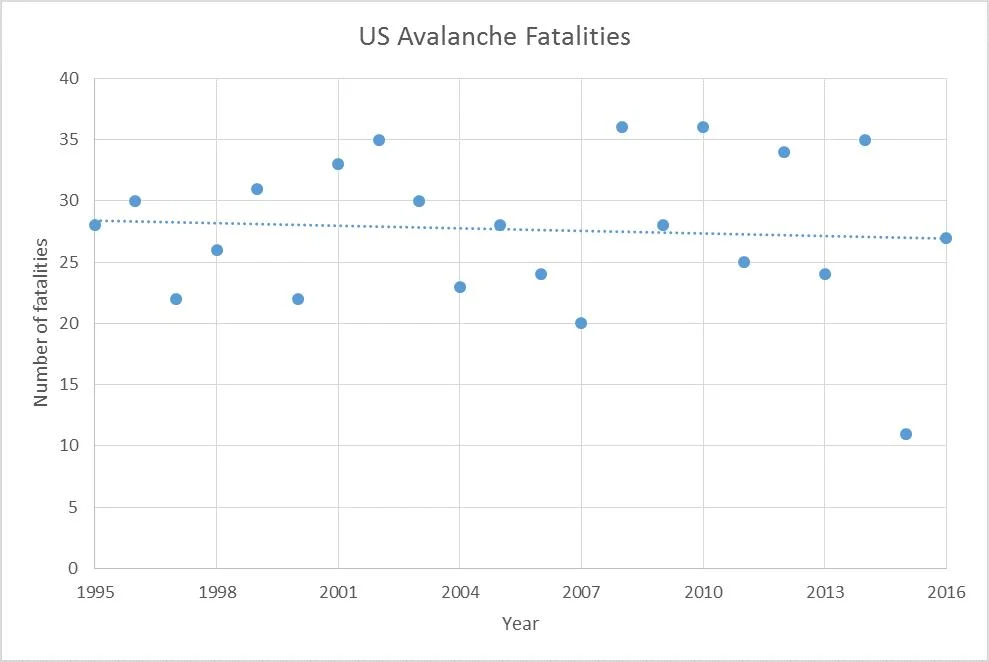
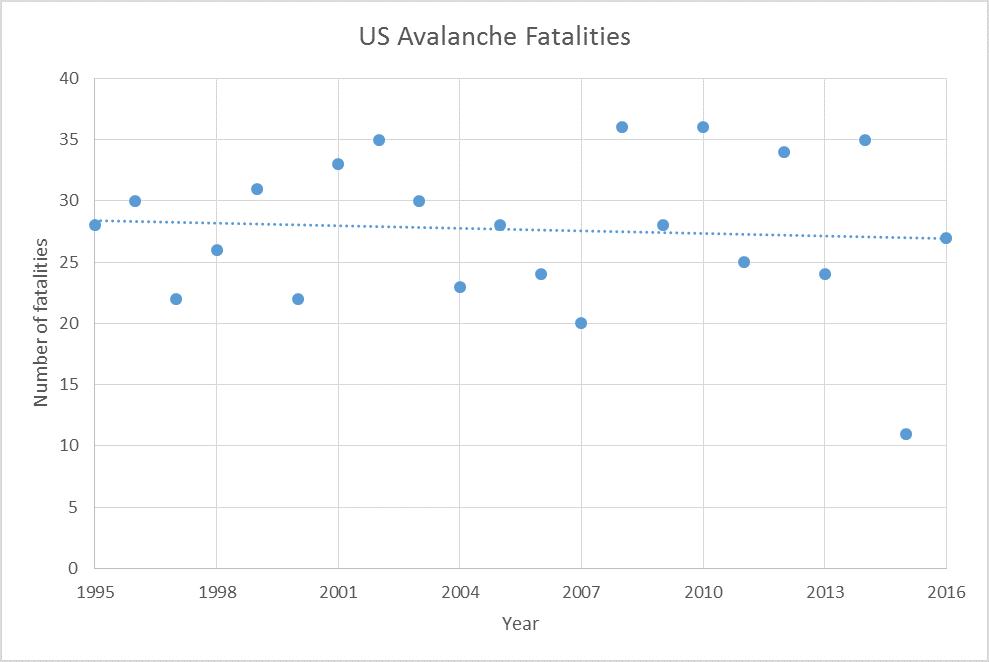
In light of this historical context, a striking statistic emerges: the annual number of avalanche fatalities in the United States has not increased since that 1994/95 winter. This stability has persisted for the past 22 seasons, a period characterized by transformative technological advancements and an unprecedented surge in backcountry activity. The proliferation of smartphones, social media, lightweight AT gear, increasingly powerful snowmobiles, and a literal explosion in the number of people venturing into the backcountry have all occurred without a commensurate rise in overall U.S. avalanche fatalities. This trend, illustrated in Figure 1, presents a significant, albeit often overlooked, success story in the field of avalanche safety and education.
Data Analysis: A Stable Fatality Count
Figure 1: U.S. Avalanche Fatalities (1994/95 – 2015/16)
The data presented in Figure 1, compiled from sources including the Colorado Avalanche Information Center (CAIC), reveals a remarkably flat trend line for U.S. avalanche fatalities over the 22-season period from 1994/95 to 2015/16. A statistical analysis of this data, indicated by a non-statistically significant p-value of 0.7 for a slightly decreasing least squares trend line, demonstrates no statistically significant change in the annual number of avalanche fatalities. This suggests that despite substantial shifts in technology, equipment, and user demographics, the overall death toll from avalanches has remained consistent.
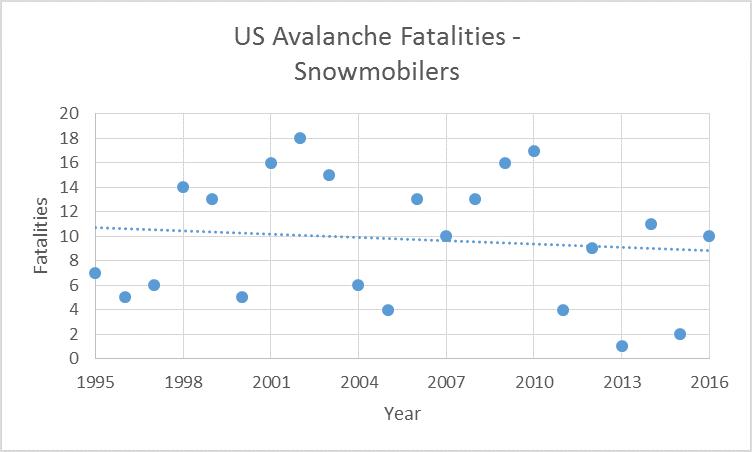
Figure 2: Snowmobile Avalanche Fatalities (1994/95 – 2015/16)
Further examination of specific user groups, as shown in Figure 2, highlights a similar pattern among snowmobilers. The number of snowmobile avalanche fatalities has also remained steady over the same 22-season timeframe. The data shows a slightly decreasing trend line, which, like the overall fatality trend, is not statistically significant (p = 0.6). This indicates that even with the advent of more powerful and accessible snowmobiles, the risk of fatal avalanches for this user group has not escalated.
Figure 3: Backcountry Skier and Snowboarder Avalanche Fatalities (1994/95 – 2015/16)
However, a nuanced observation arises when focusing on backcountry skiers and snowboarders, as depicted in Figure 3. While the numbers remain relatively flat, there is some statistical evidence, with a p-value of 0.07, suggesting a slight upward trend in fatalities for this demographic over the observed period. This subtle increase, though not definitively conclusive, warrants further attention and analysis within the broader context of backcountry safety initiatives.
The Paradox of Exponential Growth
The stability in overall avalanche fatalities would be less remarkable if backcountry use had also remained static. However, anecdotal evidence and concrete usage statistics paint a drastically different picture. Anyone with experience in the backcountry over the past two decades can attest to a dramatic increase in user numbers. While precise, comprehensive data on dispersed winter recreation is inherently challenging to obtain, avalanche advisory usage serves as a valuable, albeit imperfect, proxy for this growth.
The Utah Avalanche Center, for instance, reports a twelve-fold increase in avalanche advisory usage over the past 22 seasons. The Colorado Avalanche Information Center has witnessed a seventeen-fold increase in advisory access. The Gallatin National Forest Avalanche Center has experienced an astonishing thirty-six-fold surge, and the Northwest Avalanche Center has seen a sixty-fold increase in usage. While a portion of these increases can be attributed to the enhanced accessibility of information through digital platforms, the magnitude of these figures undeniably indicates a significantly larger number of individuals venturing into avalanche terrain.
A Dramatically Decreasing Fatality Rate
When this substantial increase in backcountry usage is considered alongside the stable trend in avalanche fatalities, the implications for the fatality rate per user day are profound. Assuming a conservative estimate of an eight-fold increase in backcountry use over the past 22 years, and combining this with the flat fatality trend, it suggests that the fatality rate has dropped dramatically. In fact, this analysis indicates that the fatality rate has decreased by at least a factor of eight, and potentially more, over the past two decades.
To put this into perspective, if the fatality rate had remained constant while usage increased eight-fold, the United States could have potentially seen over 200 avalanche fatalities per winter. This hypothetical scenario underscores the significant impact of ongoing safety efforts and the increasing awareness among backcountry users.
The Collective Effort Behind the Success
The consistent, low number of avalanche fatalities in the face of surging backcountry participation is not a matter of chance; it is the result of a multifaceted and sustained commitment from a broad spectrum of stakeholders. The avalanche community, broadly defined, has made significant strides in mitigating risks and fostering a culture of safety.
Avalanche Educators at All Levels: From professional avalanche course providers to those delivering "Know Before You Go" awareness presentations at local ski shops and community centers, educators have played a pivotal role. Their dedication to disseminating critical information about avalanche formation, terrain assessment, and rescue techniques has empowered countless individuals to make safer decisions in the backcountry. The "Know Before You Go" program, in particular, has become a cornerstone of avalanche awareness, reaching a wide audience and instilling fundamental safety principles from an early age.
Backcountry Guiding and Ski Area Operations: Professional guiding services and ski resorts that extend their operations into or adjacent to avalanche terrain have also contributed significantly. By implementing rigorous safety protocols, providing expert guidance, and educating their clients about the inherent risks, these entities create safer environments for recreationalists. Many ski areas now offer educational programs or have expanded their boundaries with avalanche mitigation efforts, further blurring the lines between resort skiing and backcountry access in a controlled manner.
Equipment Manufacturers: The innovation and development of specialized backcountry equipment have been instrumental. Modern avalanche beacons are lighter, more intuitive, and possess greater range and accuracy. The integration of features like the "Avalung" system, which allows a buried victim to breathe trapped air, and the widespread adoption of lightweight helmets have enhanced user survivability. Perhaps most impactful has been the proliferation of avalanche airbag packs, which can significantly increase a buried skier’s buoyancy and reduce burial depth, demonstrably improving rescue outcomes.
Regional Avalanche Center Network: The network of regional avalanche centers across the United States has been the bedrock of public avalanche information and education. These centers provide daily avalanche forecasts, analyze snowpack conditions, and offer educational resources tailored to their specific geographic areas. The dramatic increase in advisory usage highlights the public’s reliance on these centers for critical decision-making information. Their work in compiling data, conducting field observations, and communicating risks has been indispensable.
Looking Ahead: Striving for Zero
While the current trend represents a significant achievement, the ultimate goal of the avalanche community remains the reduction of fatalities to zero. The author acknowledges that continuous effort is paramount. This includes ongoing research into snowpack dynamics, advancements in forecasting methodologies, and the development of more effective risk management strategies.
The stable fatality rate, especially when juxtaposed with the surge in backcountry use, serves as a powerful validation of the existing safety infrastructure and educational initiatives. It demonstrates that current efforts are working and that the investment in avalanche safety is yielding tangible results. This collective success is a testament to the dedication of individuals and organizations working tirelessly to promote safety in the mountains.
Acknowledgements and Future Directions
The data supporting this analysis, particularly concerning U.S. avalanche fatalities, was largely provided by the Colorado Avalanche Information Center (CAIC). The entire backcountry community owes a profound debt of gratitude to the CAIC, its dedicated personnel who meticulously compile accident data, and the numerous individuals who report and document avalanche incidents. Their contributions are invaluable, allowing for collective learning and continuous improvement in avalanche safety practices. Constructive reviews and feedback from esteemed professionals such as Simon Trautman, Doug Chabot, and Spencer Logan have also been instrumental in refining this analysis.
Moving forward, continued investment in avalanche research, public education, and the robust support of regional avalanche centers will be crucial. The slight uptick in skier and snowboarder fatalities, while requiring further investigation, highlights the need for ongoing vigilance and adaptive safety strategies. The story of stable U.S. avalanche fatalities amidst unprecedented backcountry growth is not an endpoint, but rather a compelling indicator that targeted, collaborative efforts can yield significant positive outcomes in mitigating inherent risks in our wild places. The ongoing commitment to these principles will be essential in ensuring that more individuals can safely enjoy the unparalleled beauty and exhilaration of the winter backcountry.
