

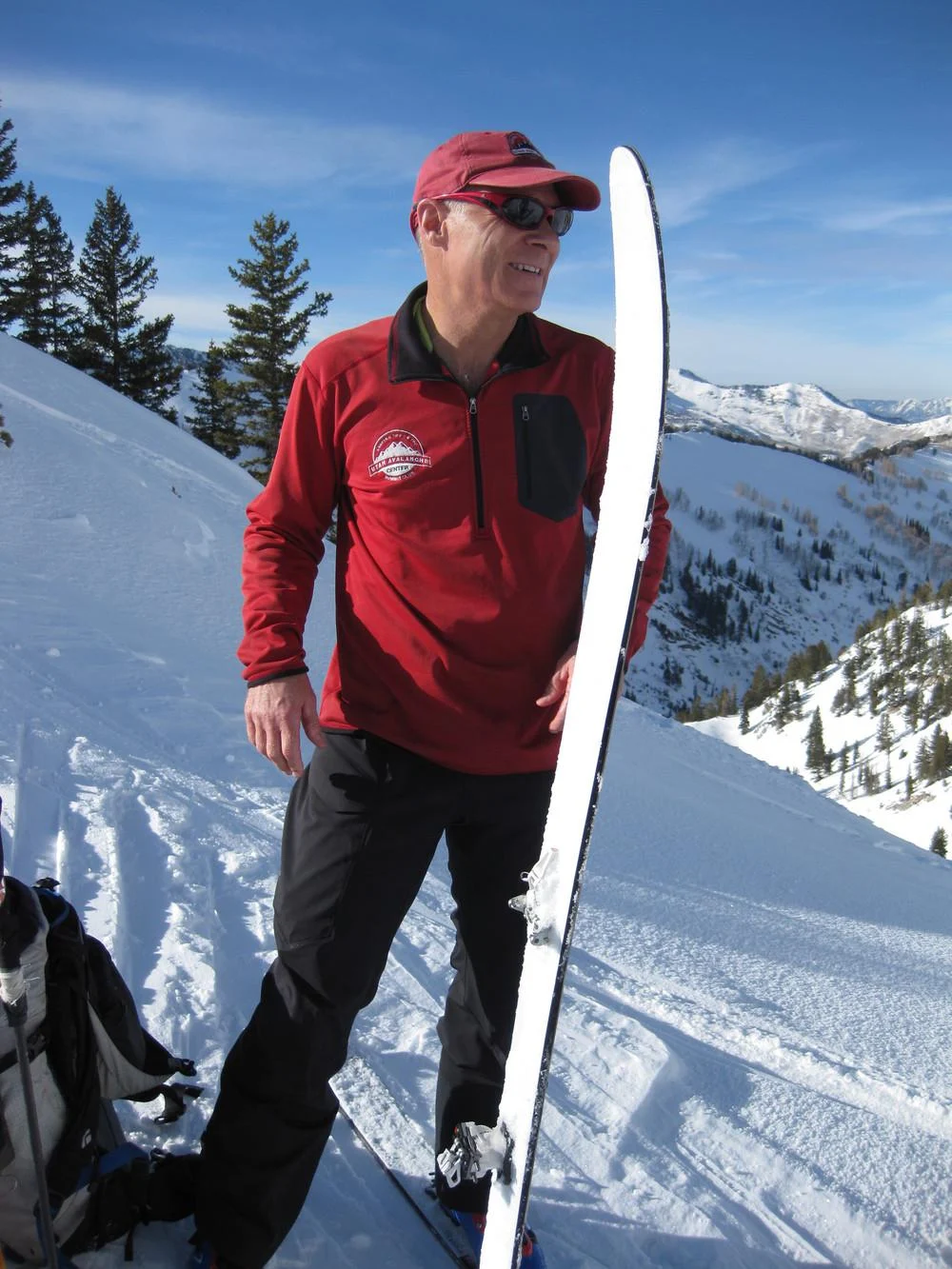
The Utah Avalanche Center has officially announced the retirement of its long-standing Director, Bruce Tremper, who will step down from his position with the U.S. Forest Service at the conclusion of August 2015. After nearly three decades at the helm of one of the world’s most influential avalanche forecasting agencies, Tremper leaves behind a legacy that has fundamentally reshaped how snow safety information is communicated to the public. His departure marks the end of an era for the Wasatch backcountry community, where he has been a fixture of safety and education since the mid-1980s. To ensure a seamless transition in leadership, the Utah Avalanche Center (UAC) has confirmed that Mark Staples, a veteran forecaster from the Gallatin National Forest Avalanche Center, has been selected to succeed Tremper as the new Director.
A Career Forged in the Mountains of the West
Bruce Tremper’s journey into the specialized field of snow science began in the rugged terrain of Montana. He pursued his Master of Science degree at Montana State University, a premier institution for snow and avalanche research, where he studied under the guidance of the renowned Dr. John Montagne. This academic foundation provided Tremper with the technical expertise necessary to bridge the gap between complex meteorological data and practical field applications.
His early professional years were spent in the trenches of mountain operations. Tremper gained critical experience performing avalanche control work at Bridger Bowl and Big Sky Resort in Montana, where he learned the nuances of explosive mitigation and slope stabilization. Seeking further challenges, he moved north to the Alaska Avalanche Center, working alongside legendary figures in the field such as Doug Fesler, Jill Fredston, and Jim Woodmency. These formative years in Alaska, characterized by massive maritime snowpacks and extreme terrain, solidified his reputation as a formidable forecaster and educator.
In 1986, Tremper was appointed Director of the Utah Avalanche Center. At the time, the organization was in its relative infancy, and the methods for delivering safety information to the public were limited. Under his leadership, the UAC evolved from a small regional office into a global gold standard for avalanche forecasting and public outreach.
Revolutionizing Public Safety Communication
One of Tremper’s most significant contributions to the industry was his relentless drive to modernize how avalanche danger is communicated. When he first took the reins at the UAC, backcountry enthusiasts relied on recorded telephone messages to receive daily advisories. Tremper recognized early on that as the number of backcountry users increased, the delivery of information needed to become more visual, intuitive, and accessible.
Tremper and his team were instrumental in the transition to internet-based products, pioneering the use of graphic icons to represent different types of avalanche threats. This innovation led to the formalization of "Avalanche Problems"—a system that categorizes threats into specific types, such as wind slabs, persistent weak layers, or wet snow. This methodology allowed recreators to move beyond a simple "Low, Moderate, or High" rating and understand the specific nature of the danger they would encounter on the mountain.
His influence extended to the national level in 2010 when he served as a key member of the working group that developed the Conceptual Model of Avalanche Danger. This project standardized the avalanche danger scale across the United States, ensuring that a "Considerable" rating in Utah meant the same thing as a "Considerable" rating in Colorado or Washington. This standardization has been credited with saving lives by reducing confusion for traveling skiers and snowmobilers.
The 2002 Winter Olympics and Global Recognition
The 2002 Salt Lake City Winter Olympics presented a monumental challenge for the Utah Avalanche Center. With the eyes of the world on the Wasatch Range, the responsibility for backcountry avalanche safety fell squarely on Tremper’s shoulders. He coordinated a massive safety operation to ensure that the influx of international visitors and the infrastructure surrounding the Olympic venues remained secure from the threat of snow slides.
Beyond his operational duties, Tremper became the public face of avalanche safety. His ability to distill complex science into understandable advice made him a sought-after expert for hundreds of media interviews. Whether speaking to local news outlets or national broadcasters, he maintained a professional and calming presence, advocating for education and preparation rather than fear.
His literary contributions further cemented his status as a premier educator. Tremper authored two seminal works: Staying Alive in Avalanche Terrain and Avalanche Essentials. These books are widely considered the definitive texts for both novice and experienced backcountry travelers, translated into multiple languages and used as core curricula for avalanche courses worldwide. He also served as the editor for The Avalanche Review for six years, providing a platform for the exchange of ideas among professionals in the field.

Transitioning Leadership: The Mark Staples Era
As Tremper prepares to spend more time skiing the Wasatch backcountry with his wife, Susi, the UAC looks forward to a new chapter under Mark Staples. Staples brings a wealth of experience that mirrors the high standards set by his predecessor. His background includes extensive work in ski patrolling and snow safety at Big Sky Ski Area, followed by a Master of Science in Engineering from Montana State University, where he focused specifically on snow avalanche research.
Staples spent eight seasons as a backcountry avalanche forecaster at the Gallatin National Forest Avalanche Center in Bozeman, Montana. During his tenure there, he became known for his clear communication style and his work on several special projects for the National Avalanche Center. His familiarity with the intermountain snowpack and his commitment to public education make him a natural fit for the Utah Avalanche Center’s mission.
"Mark is looking forward to joining the top-notch UAC team," the center noted in its official announcement. The transition comes at a time when backcountry usage is at an all-time high, placing increased pressure on forecasting agencies to provide accurate, real-time data.
The Growing Importance of the Utah Avalanche Center
The retirement of Bruce Tremper serves as a moment of reflection on the vital role the UAC plays in Utah’s economy and public health. The Wasatch Range is home to some of the most heavily utilized backcountry terrain in the world. The proximity of high-alpine peaks to a major metropolitan area like Salt Lake City creates a unique set of challenges for public safety officials.
Data from the past decade indicates a significant surge in backcountry participation. As equipment becomes lighter and more accessible, more individuals are venturing beyond ski resort boundaries. The UAC’s daily advisories are now a critical component of the morning routine for thousands of residents. The economic impact of the "Greatest Snow on Earth" is tied directly to the safety of those who recreate in it; a single high-profile tragedy can have lasting effects on the local outdoor industry.
Tremper’s tenure saw the UAC expand its partnerships with the U.S. Forest Service, the Utah Division of Parks and Recreation, and various non-profit organizations. This collaborative model has ensured that the center remains funded and capable of meeting the demands of a growing population.
Analysis of Implications and Future Outlook
The departure of a figure as influential as Bruce Tremper inevitably raises questions about the future direction of avalanche forecasting. However, the foundation Tremper built is designed for durability. The "Conceptual Model of Avalanche Danger" and the focus on user-friendly digital interfaces have become institutionalized within the UAC.
Mark Staples inherits an organization that is widely respected but faces modern challenges, including the effects of climate change on snowpack stability and the rapid spread of information—and misinformation—on social media. The next phase of the UAC will likely involve leveraging new technologies, such as remote sensing and advanced snowpack modeling, to supplement traditional field observations.
While Tremper is retiring from his official role with the Forest Service, he has indicated that he will not be stepping away from the community entirely. He plans to continue teaching, writing, and contributing to avalanche safety projects. His ongoing involvement ensures that his decades of wisdom will continue to benefit the next generation of snow professionals.
As the 2015-2016 winter season approaches, the transition from Tremper to Staples marks a passing of the torch in the world of snow science. The legacy of Bruce Tremper is measured not just in the papers he published or the books he wrote, but in the countless lives saved through the education and awareness programs he championed for nearly thirty years. The Utah Avalanche Center remains a testament to his vision of a safer, more informed backcountry community.
