

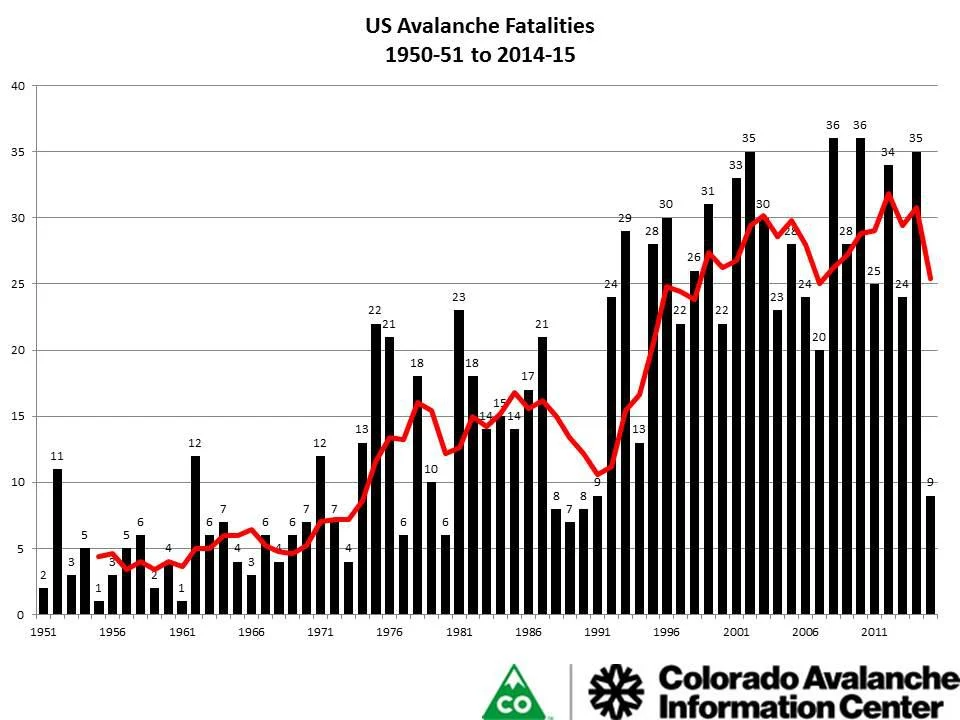
As the 2014-2015 winter season draws to a close this April 30, preliminary data from national monitoring agencies indicates a significant and encouraging decline in avalanche-related deaths across the United States. With only nine recorded fatalities as of the end of April, this season marks the lowest death toll since 1991, a statistic that stands in stark contrast to the increasing popularity of backcountry winter sports. While safety experts and meteorologists caution that the season is not entirely over—as spring snowpacks can remain volatile—the current figures represent a major milestone in mountain safety and incident prevention.
The drop in fatalities is being attributed to a complex interplay of unusual meteorological patterns and a sophisticated, multi-agency push for public education. Data provided by Spencer Logan of the Colorado Avalanche Information Center (CAIC) and the U.S. Forest Service highlights a season defined by anomalous weather, which, while detrimental to the ski industry’s bottom line in some regions, inadvertently created a safer environment for those venturing into the wilderness.
Meteorological Factors and the "Snow Drought" Influence
A primary driver behind the record-low fatality rate was the atypical weather experienced across the Western United States. The 2014-2015 season was characterized by what meteorologists termed a "snow drought," particularly along the West Coast. In the Sierra Nevada and the Cascade Range, record-high temperatures and a persistent high-pressure ridge—often referred to as the "Ridiculously Resilient Ridge"—deflected storms northward into Canada or resulted in rain rather than snow at mid-to-high elevations.
In California, the snowpack reached historic lows, with some monitoring stations reporting zero percent of normal levels by early April. From a safety perspective, a lack of snow equates to a lack of avalanche material. Without the accumulation of significant "slabs"—the cohesive layers of snow that break away during a slide—the primary mechanism for large-scale avalanches was absent for much of the winter in traditionally high-risk zones.
Further inland, the Rocky Mountains and the Intermountain West saw a different but equally impactful trend. While these regions received more precipitation than the coastal ranges, the winter remained unseasonably warm. These higher temperatures facilitated a more rapid stabilization of the snowpack. Typically, deep-seated instabilities form during cold, dry spells when "facets" or weak grains develop near the ground. The warmth of the 2014-2015 season prevented many of these deep persistent weak layers from becoming as reactive as they have been in previous, deadlier years.
The Role of Public Education and Regional Forecasting
Beyond the weather, the 2014-2015 season serves as a testament to the efficacy of the United States’ avalanche forecasting infrastructure. The Forest Service Avalanche Centers and the Colorado Avalanche Information Center (CAIC) have significantly expanded their reach over the last decade. These organizations provide daily, localized forecasts that categorize risk levels and offer specific advice on which aspects and elevations to avoid.
The CAIC, which maintains the national database for avalanche accidents, has been instrumental in shifting the culture of the backcountry community. By utilizing social media, mobile applications, and real-time field reports, forecasters have been able to reach a younger, more mobile demographic of skiers, snowboarders, and snowmobilers.
"The efforts to provide timely education and transparent information are clearly paying off," noted a spokesperson associated with the national safety efforts. "We are seeing a more informed public that is better equipped to recognize ‘red flag’ warnings, such as recent loading or collapsing snow, and who are choosing to recreate on lower-angle terrain when the danger is elevated."
The "Know Before You Go" program, a collaborative effort between various avalanche centers and industry partners, has also been credited with reducing incidents. By targeting middle and high school students, as well as casual weekend warriors, the program has standardized the basic safety checklist: get the gear, get the training, get the forecast, get the picture, and get out of harm’s way.
Historical Context and Long-Term Trends
To understand the significance of the nine fatalities recorded this season, one must look at the historical data. Since the early 1990s, the number of people participating in backcountry skiing, split-boarding, and high-performance snowmobiling has grown exponentially. In the early 2000s, it was feared that this surge in participation would lead to a linear increase in deaths.
However, the 5-year moving average for avalanche fatalities has remained remarkably stable, fluctuating between 25 and 30 deaths per year. This stability, in the face of skyrocketing usage, suggests that the "rate" of fatal accidents per user is actually decreasing. The 2014-2015 season’s dip to nine fatalities is an outlier that experts hope will become a more frequent occurrence through continued vigilance.
For comparison, the 2007-2008 season saw 36 fatalities, and the 2013-2014 season recorded 35. The last time the U.S. saw a single-digit fatality count was in 1991, a period when backcountry equipment was primitive and the number of users was a fraction of today’s totals.
Regional Breakdowns and Incident Chronology
While the national total was low, the incidents that did occur highlight the persistent risks inherent in mountain environments. The fatalities were distributed across several states, including Colorado, Utah, and Montana.
- Early Season Instability: The first fatalities of the season occurred in late 2014, as early-season snow underwent faceting, creating a dangerous foundation for subsequent storms.
- Mid-Season Anomalies: During January and February, typically the deadliest months, the lack of major storm cycles in the West kept the incident rate unusually low.
- Spring Transition: As the calendar turned to April, the focus shifted to "wet slides." As the snowpack warms and melts, water lubricates the layers, leading to heavy, destructive avalanches. Even in a low-snow year, these spring slides can be lethal due to their high density and the force they exert on the human body.
Colorado, which historically accounts for the highest number of avalanche deaths due to its continental climate and weak snowpack structure, saw a lower-than-average count this year. This is particularly notable given that Colorado’s backcountry is among the most heavily trafficked in the world.
Technological Advancements in Rescue and Prevention
The 2014-2015 season also highlighted the continued evolution of safety technology. The increased prevalence of avalanche air bags—ballistic balloons deployed by the user to stay on the surface of a slide—has contributed to higher survival rates in non-fatal burials. Additionally, the widespread use of digital multi-antenna transceivers has made companion rescue faster and more efficient.
However, safety officials are quick to point out that technology is not a substitute for judgment. Analysis of "near-miss" reports from this season indicates that many individuals were saved not by their gear, but by their decision to retreat when they observed signs of instability. The "human factor"—the psychological biases that lead people to take risks, such as "expert halo" or "commitment" to a goal—remains the primary focus of modern avalanche training (AIARE).
Economic and Policy Implications
The low fatality rate occurs against a backdrop of economic shifts in the winter sports industry. The poor snow year in the West led to decreased revenue for many traditional ski resorts, but it also prompted a surge in "human-powered" recreation. As more people seek to avoid expensive lift tickets and crowded slopes, the pressure on public lands increases.
This trend has implications for the U.S. Forest Service and state governments. There is a growing need for sustained funding for avalanche centers, which operate on relatively small budgets compared to the economic value of the recreation they support. The success of the 2014-2015 season provides a strong argument for the "return on investment" of public safety information. By preventing accidents, these centers reduce the need for costly and dangerous Search and Rescue (SAR) operations, which are often funded by local taxpayers and staffed by volunteers.
Conclusion and Outlook for the Future
As the sun sets on the 2014-2015 avalanche season, the record-low fatality count stands as a significant, albeit somber, victory for the outdoor community. While the "snow drought" played a major role in keeping the numbers down, the role of the Colorado Avalanche Information Center, the Forest Service, and the countless educators across the country cannot be overlooked.
The challenge moving forward will be to maintain this downward trend when "normal" or heavy snow years return. The stability of the 5-year moving average suggests that the community is getting better at managing risk, but the volatility of nature ensures that the danger is never zero.
"Nine lives lost is still nine too many," a CAIC researcher concluded. "But if we compare where we are now to where we were in the early 90s, the progress is undeniable. Our goal is to ensure that every person who heads into the mountains has the tools and the knowledge to come home safely, regardless of what the weather brings."
For now, the backcountry community looks toward the summer, but the lessons of the 2014-2015 season—a year of warmth, high-pressure ridges, and highly effective public messaging—will likely inform safety protocols for years to come.
