

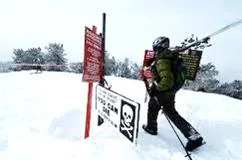
The accessibility of public lands adjacent to major United States ski resorts has created a complex safety crisis as winter recreationists increasingly venture beyond maintained boundaries into uncontrolled terrain. While these areas, often colloquially referred to as the "sidecountry," offer an enticing extension of the resort experience, they lack the mitigation efforts and professional oversight found within managed ski areas. This proximity creates a dangerous psychological "halo effect," where skiers and snowboarders mistakenly believe that the safety standards of the resort extend past the boundary ropes. In reality, once a rider passes through a backcountry access gate, they enter a wilderness environment where avalanche control is non-existent, and the responsibility for survival rests entirely on the individual.
The Definition and Danger of the Sidecountry Illusion
The term "sidecountry" has become a point of significant contention among avalanche safety professionals and search and rescue (SAR) organizations. Traditionally, the term described backcountry terrain that is easily accessed from a ski lift but requires exiting the resort boundary. However, experts like Doug Chabot of the Gallatin National Forest Avalanche Center argue that the term itself is inherently misleading. By using a word that includes "country" similar to "backcountry" but prefixed with "side," it implies a secondary or lesser version of the wilderness. This linguistic nuance can lull recreationists into a false sense of security, leading them to believe the terrain is "patrol-adjacent" or somehow mitigated by the resort’s proximity.
In a professional context, there is no technical difference between the sidecountry and the deep backcountry. Both environments feature unmanaged snowpacks, natural hazards such as cliffs and tree wells, and a complete lack of avalanche blasting or grooming. The primary difference is simply the ease of access. Where a traditional backcountry tourer might spend four hours climbing a peak to earn a single descent, a resort guest can reach similar terrain in minutes via a high-speed quad chairlift. This ease of entry often results in a "gear and knowledge gap," where individuals enter high-consequence terrain without the necessary rescue equipment—transceivers, probes, and shovels—or the training required to use them.
Statistical Trends in Avalanche Fatalities and Incidents
Data from the Colorado Avalanche Information Center (CAIC) and the National Avalanche Center (NAC) highlight a concerning trend regarding boundary-adjacent incidents. Over the last decade, avalanche fatalities in the United States have averaged approximately 27 per year. A significant portion of these incidents occurs in areas easily accessed from ski resorts. For example, the 2020-2021 winter season saw a record-tying 37 avalanche fatalities in the U.S., several of which occurred in out-of-bounds areas near major resorts in Utah, Colorado, and Montana.
The demographics of these incidents often involve experienced skiers and snowboarders who possess high technical riding ability but low "avalanche literacy." Because these riders are capable of navigating steep, R-rated terrain, they often underestimate the stability of the snowpack. Furthermore, the presence of existing tracks—often referred to as "skier compaction"—is frequently misinterpreted as a sign of safety. In reality, tracks do not stabilize a slope; they merely prove that the person before did not trigger a slide at that specific moment.
The Evolution of Resort Boundary Management
The relationship between ski resorts and public lands has undergone a significant transformation over the last thirty years. In the 1980s and early 1990s, many resorts maintained "closed boundary" policies, where crossing a rope line could result in the permanent revocation of a season pass or even criminal trespassing charges. However, as public demand for off-piste skiing grew and legal pressures regarding the use of public Forest Service land increased, many resorts transitioned to an "open boundary" policy.
Under this current model, resorts use "backcountry gates" to funnel recreationists into the wilderness at specific points. These gates are typically adorned with intense signage, often featuring skulls and crossbones or bold red lettering, explicitly stating that "You can die" and that "Rescue is not guaranteed." Despite these warnings, the physical act of riding a chairlift and seeing the resort lodge from the top of a run creates a cognitive dissonance. The proximity to civilization masks the objective hazards of the terrain.
Chronology of Safety Messaging and Educational Shifts
The shift in safety messaging has moved from "Don’t Go" to "Know Before You Go." This evolution reflects the realization among land managers that they cannot realistically prevent the public from accessing public lands.
- 1990s: Focus on strict boundary enforcement and "Keep Out" messaging.
- 2000s: The rise of fat skis and splitboards makes the backcountry more accessible to the average skier. "Sidecountry" enters the popular lexicon.
- 2010s: Avalanche centers begin to see an uptick in "gate-accessed" fatalities. The "Know Before You Go" program is launched to provide free basic education to the public.
- 2015-Present: Organizations like Avalanche.org and various regional centers begin a concerted effort to retire the word "sidecountry" in favor of "backcountry," emphasizing that the hazard does not care how you reached the top of the slope.
Doug Chabot’s "Rated R" analogy serves as a pivotal piece of this educational timeline. By comparing sidecountry terrain to an R-rated movie, Chabot highlights that while the terrain is open to the public, it contains "adult" consequences that require a specific level of maturity, preparation, and equipment. The analogy specifically targets parents, asking if they are aware that their children may be leaving the "PG-rated" environment of the groomed runs for the high-stakes reality of the uncontrolled wilderness.
The Logistics and Legalities of Search and Rescue
A common misconception among resort guests is that the ski patrol is responsible for rescues outside the boundary. Legally and operationally, this is rarely the case. Once a person crosses the boundary line onto Forest Service or Bureau of Land Management (BLM) land, the responsibility for Search and Rescue typically falls to the local County Sheriff’s office.
While ski patrols often assist in these rescues due to their proximity and expertise, they are not obligated to do so, especially if the rescue puts their staff at undue risk. Furthermore, resort-based rescues are "free" in the sense that they are covered by the price of a lift ticket; however, a backcountry rescue involving helicopters, specialized SAR teams, and dozens of volunteers can result in massive costs, some of which may be billed to the victim depending on state laws.
In many high-traffic areas, such as the "Sidecountry" of Jackson Hole or the Wasatch Range, SAR teams have reported an exhaustion of resources. The frequency of "lost skier" calls—where individuals duck a rope and get stuck in a drainage without a headlamp or map—diverts critical resources away from life-threatening emergencies.
Expert Analysis of Implications and Future Outlook
The "sidecountry" dilemma represents a broader challenge in modern recreation: the democratization of high-risk sports. As equipment becomes more capable and social media glamorizes "out-of-bounds" riding, more people are entering environments they are not prepared to manage.
Industry analysts suggest that the future of mountain safety will rely heavily on technological integration and "nudge theory." Some resorts have begun installing "transceiver checkers" at backcountry gates—electronic signs that light up "green" if a skier is wearing a functioning avalanche beacon and "red" if they are not. While this does not prevent entry, it provides a physical and visual reminder of the stakes involved.
However, technology is not a substitute for education. The consensus among avalanche professionals is that the "sidecountry" must be treated with the same respect as a remote peak in the middle of the wilderness. The "Rated R" nature of these areas means that the "parking lot wave" from a parent to a child carries more weight than many realize. Without a beacon, a partner, and the knowledge to read a forecast, a quick trip through a resort gate can turn into a permanent departure.
The responsibility ultimately lies with the individual. As public lands remain open and accessible, the burden of safety cannot be offloaded to the Forest Service or ski resort management. The data remains clear: the mountain does not know where the resort boundary ends, and the snowpack does not offer a margin of error for those who are merely "visiting" the backcountry. Professional-grade preparation is the only adequate response to the professional-grade risks found beyond the gate.
