

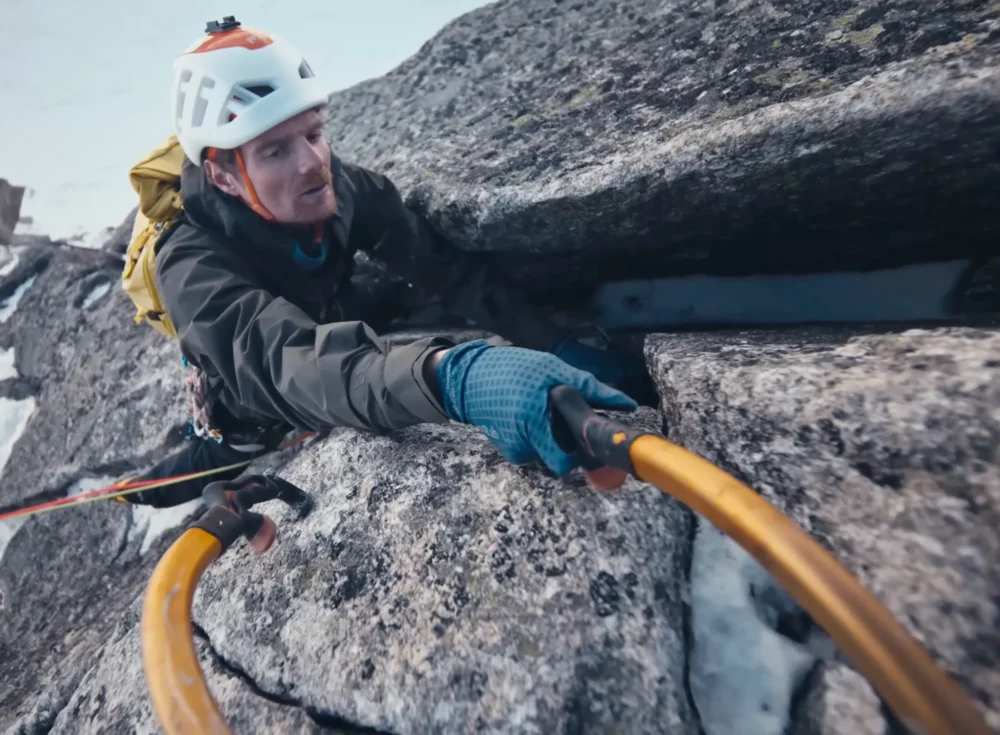
Adventure films frequently captivate audiences with their exhilarating focus on the descent—the sheer speed, the precise line, the fleeting moment of triumph. However, Laurent Bilodeau’s recent cinematic endeavor, A Guide’s Book, produced in collaboration with Rab Equipment, deliberately pivots the camera towards a more profound, yet often overlooked, aspect of mountain exploration: the meticulous preparation, the nuanced judgment, and the profound responsibility that precedes every step onto perilous terrain. This groundbreaking film, which recently garnered the esteemed Deep Award for Best Documentary at the Teton Gravity Research (TGR) Dream Factory Digital Film Festival, heralds a significant shift in mountain storytelling, moving the spotlight from raw action to the intricate mindset that underpins it. Centered around the venerable Chamonix guide Pierre-Idris Mehdi, affectionately known as PIM, the documentary meticulously explores the extensive, often invisible, labor involved in safely leading others through some of the world’s most challenging alpine environments. The film’s success and its unique narrative approach offer a compelling opportunity to delve deeper into Bilodeau’s vision, the evolution of mountain filmmaking, and the indispensable role of expert guidance in the high alpine.
The Genesis of a Groundbreaking Project

Laurent Bilodeau, a French Canadian filmmaker with a deep-seated passion for sports and the mountains, has consistently sought to blend his creative pursuits with his love for the outdoors. With over 15 years in the commercial and action sports filmmaking industries, Bilodeau has found his "peace and inspiration" amidst towering peaks and rugged landscapes. His journey into adventure filmmaking is not merely a career choice but a lifestyle, a means to "make yourself believe that you are never really working." The initial spark for A Guide’s Book was ignited several years ago during a personal experience that profoundly altered Bilodeau’s perspective on mountain safety and expertise. Seeking to navigate a glacier in the formidable Chamonix region, Bilodeau and his friends recognized the critical need for experienced guidance. This led them to hire Pierre-Idris Mehdi, a local Chamonix guide whose profound knowledge of the alpine environment left Bilodeau "amazed." He quickly realized the immense dangers they would have faced attempting such an endeavor unguided, acknowledging that "taking the risk to go by myself would’ve been far too dangerous."
This initial professional encounter blossomed into a genuine friendship. Bilodeau began spending considerable time with PIM during subsequent winters, accompanying him on ski tours and observing his methodical approach to the mountains. PIM’s unwavering caution and meticulous attention to detail, driven by a desire to sustain his career safely for the long term, deeply inspired Bilodeau. It was this sustained observation of PIM’s philosophy—a philosophy deeply rooted in respect for the mountain and an understanding of its inherent risks—that ultimately compelled Bilodeau to document his vision and the unseen realities of professional guiding. The partnership with Rab Equipment, a renowned outdoor gear manufacturer with a long-standing commitment to alpine exploration and safety, further solidified the project, providing crucial support for a film that champions the core values of responsible mountaineering.
Shifting the Narrative: Beyond the Thrill of the Descent

In a genre often saturated with adrenaline-fueled sequences of daring descents and extreme athletic feats, A Guide’s Book deliberately carves out a different path. Bilodeau’s artistic choice to de-emphasize the spectacular action and instead focus on the preparation, judgment, and responsibility behind guiding represents a conscious effort to challenge established norms in adventure filmmaking. He articulates this desire clearly: "I think that we see so many fast-paced action-driven ski and climbing films, that I wanted to try something else." This approach isn’t a rejection of the excitement inherent in mountain sports but rather an invitation to appreciate the complex layers that enable such feats.
The film serves as a crucial counter-narrative, illustrating that true adventure isn’t solely defined by the peak experience of a descent, but by the cumulative wisdom, foresight, and ethical considerations that precede it. Bilodeau aimed to create an "adventure film that was not goal driven, but rather documenting someone’s approach to their outdoor haven." This shift in focus is particularly pertinent in an era where social media often prioritizes highlight reels and instant gratification, potentially obscuring the exhaustive planning and rigorous training required for safe mountain travel. By spotlighting the "unseen work," the film provides viewers with a more holistic and responsible understanding of high-stakes mountain activities, emphasizing that the most critical moments often unfold long before the camera traditionally starts rolling on the action.
Chamonix: A Crucible of Mountaineering Heritage

Chamonix-Mont-Blanc, nestled at the foot of Europe’s highest peak, Mont Blanc, has been revered as a global epicenter of mountaineering and alpine culture for centuries. Its rich history dates back to the first ascent of Mont Blanc in 1786, an event often considered the birth of modern mountaineering. This picturesque French town has since become synonymous with alpine challenges, attracting climbers, skiers, and adventurers from across the globe. For Bilodeau, immersing himself in Chamonix’s unique environment was both a long-held ambition and a profoundly humbling experience. He admits, "I kind of dove in the deep end right away with this one… To be immersed in this town, and through some of the current key players, was extremely humbling and eye-opening."
The Chamonix Valley, with its demanding terrain and unpredictable weather, serves as a natural classroom and proving ground for guides. The region boasts a highly respected community of professional mountain guides, whose expertise is honed by daily interaction with the formidable Mont Blanc massif. According to data from the Compagnie des Guides de Chamonix, one of the oldest and most prestigious guiding companies in the world, guides in the region undertake thousands of ascents and descents annually, leading clients through complex glaciers, steep couloirs, and exposed rock faces. This constant engagement with the mountain fosters an unparalleled depth of knowledge, making Chamonix an ideal setting to explore the intricacies of guiding. Bilodeau’s objective was not just to capture the beauty of the landscape, but to articulate the profound connection between the guides and their environment, hoping to tell "the story in a way in which the local community of Chamonix can relate." The town itself, with its blend of historical tradition and modern alpine sport, serves as a silent, powerful character in A Guide’s Book, underscoring the deep roots of professional mountain guidance.
The Guide’s Mindset: A Symphony of Knowledge and Vigilance

At the core of A Guide’s Book lies an in-depth exploration of the professional mountain guide’s mindset, particularly the "quiet decisions" that define their work. Bilodeau’s observations revealed a comprehensive approach to safety and client welfare that extends far beyond mere technical proficiency. Guides are not simply experts in navigation and rope work; they are astute observers, risk managers, and empathetic leaders.
- Risk Assessment: This involves a multi-faceted analysis of countless variables. Guides meticulously study weather forecasts, not just for the day, but for trends over several days, understanding how precipitation, temperature, and wind affect snowpack stability and rock conditions. They interpret avalanche bulletins, analyze snow layers, and assess crevasse danger, often probing for hidden hazards. The dynamic nature of the alpine environment demands constant re-evaluation. A guide’s "book" is not just a physical log; it’s an internalized compendium of routes, conditions, historical data, and intuitive judgment honed over years.
- Preparation: Beyond packing the right gear for themselves and their clients, preparation involves detailed route planning, considering alternative options, and establishing clear emergency protocols. This includes ensuring clients are adequately equipped, understand safety instructions, and are physically and mentally prepared for the day’s challenges.
- Leadership: Perhaps the most nuanced aspect, leadership involves a deep understanding of human psychology. Guides must assess their clients’ skills, fitness levels, and mental limits, often discerning unspoken anxieties or overconfidence. They manage group dynamics, motivate when necessary, and, crucially, know when to turn back—a decision often requiring significant courage and the ability to manage client expectations.
Bilodeau learned that PIM and his peers view their daily mountain excursions as continuous training. As Bilodeau states, "They need to live in the mountains everyday and do new stuff, to be better prepared for when they need to take someone there." This philosophy underscores a commitment to lifelong learning and adaptation in an environment that never truly stays the same. One particular moment during filming, when PIM was dry-tooling with a client, stood out to Bilodeau. Dry-tooling, a climbing technique that uses ice axes and crampons on rock, demands extreme precision and attention. Bilodeau, assisted by another guide from La Compagnie indienne des alpes, was able to observe PIM from a purely observational standpoint. This allowed him to fully appreciate "how PIM would take care of his clients," demonstrating a vigilance that encompassed not just the physical safety of the client but also their learning, comfort, and overall experience. It reinforced the idea that guiding is an all-encompassing responsibility, a constant state of readiness.
The Evolution of Mountain Storytelling: A Filmmaker’s Journey

With over a decade and a half in the filmmaking industry, Laurent Bilodeau’s perspective on mountain storytelling has undergone a significant evolution. He acknowledges that his vision has "evolved quite a lot in the past decade, and I would say it evolves more and more the more I play in this kind of terrain." This continuous growth is partly a response to the proliferation of "classic adventure films," which, while often "amazing," prompted him to "challenge myself with a different approach." Bilodeau’s work with A Guide’s Book is a testament to this desire for innovation, pushing the boundaries of what constitutes compelling mountain narrative. He hopes that his unique style will "inspire people to find their own style of storytelling," fostering a more diverse and reflective landscape of outdoor cinema.
Bilodeau draws inspiration from a pantheon of influential figures in both filmmaking and mountaineering. He credits the legendary Warren Miller for sparking his initial interest in ski movies, recalling the excitement of watching Miller’s pioneering films at a young age. More contemporary influences include Jerome Tanon, whose distinct style and narrative depth have resonated with Bilodeau, and Sherpas Cinema, known for their visually stunning and emotionally resonant productions. Specifically, Bilodeau cites "Free Rider" by Jerome Tanon, "Off the Grid" by Warren Miller, and "To the Hills and Back" by Sherpas Cinema as films that have significantly shaped his approach to storytelling, showcasing different facets of the human-mountain connection. Beyond filmmakers, individuals like Pablo Durana, with whom Bilodeau once collaborated, have served as profound inspirations, bridging the gap between filmmaking and the mountaineering world. He also acknowledges the significant impact of his friends, including William Binamé, Maxime Trudel, and Finlay Wood, highlighting the collaborative and community-driven spirit often found in the outdoor industry. This blend of historical legacy and contemporary influence has allowed Bilodeau to forge a unique path, one that respects the genre’s traditions while actively seeking to expand its thematic horizons.
Acclaim and Broader Implications: The Deep Award Recognition

The recent recognition of A Guide’s Book with the Deep Award for Best Documentary at the TGR Dream Factory Digital Film Festival marks a significant milestone for Bilodeau and his innovative storytelling. Teton Gravity Research (TGR) stands as an iconic and highly influential institution in the world of skiing and mountain sports, renowned for its high-quality productions and deep engagement with outdoor culture. For Bilodeau, this award carries particular weight: "This, to me, means a bit more than other mountain festivals that have a lesser influence in the world of skiing and mountain sports." The endorsement from TGR not only validates the film’s artistic and narrative merit but also underscores its cultural relevance within the broader mountain community.
The Deep Award, specifically, acknowledges films that delve beneath the surface, exploring profound themes and shifting perspectives. A Guide’s Book perfectly embodies this spirit by challenging the conventional portrayal of mountain adventures. This recognition by a major industry player like TGR could have significant implications. It may encourage other filmmakers to explore more nuanced, character-driven narratives, moving beyond purely action-oriented content. It also elevates the discourse around mountain safety and the professional role of guides, potentially increasing public awareness and appreciation for the expertise required to navigate dangerous terrain. In an era where access to extreme sports is increasingly democratized, highlighting the critical importance of knowledge and responsibility, as A Guide’s Book does, becomes paramount.
The Enduring Message: The Indispensable Value of Knowledge

Reflecting on the finished piece, Bilodeau expresses a clear hope for what viewers will take away from A Guide’s Book: "I would hope they understand the necessity of a guide when it comes to introducing yourself to unknown terrain, or even to try something new in the mountains. Not only for safety, but also to put the chances on your side to have a good experience." This message transcends mere cautionary advice; it’s an affirmation of the immense value that professional guidance brings to the outdoor experience. A guide is not just a safety net but a gateway to deeper understanding, richer experiences, and a more profound connection with the alpine environment.
They offer not only the technical skills to mitigate risk but also a wealth of local knowledge—insights into geology, weather patterns, flora, and fauna—that enrich the journey. By entrusting oneself to a guide, adventurers not only enhance their safety but also optimize their chances of a truly fulfilling and educational experience, gaining access to areas and perspectives they might never discover independently. When asked to describe A Guide’s Book in a single word, Bilodeau’s immediate and decisive answer is "KNOWLEDGE." This succinct yet powerful word encapsulates the film’s core essence, celebrating the wisdom, experience, and continuous learning that define the world of professional mountain guiding.
In a media landscape often dominated by highlight reels and the pursuit of extreme action, A Guide’s Book stands as a poignant and timely reminder that the true spirit of mountain adventure is often found not in the spectacular descent, but in the quiet, diligent preparation and the profound respect for the environment that precedes it. Through Laurent Bilodeau’s discerning lens and the exemplary professionalism of Pierre-Idris Mehdi, the film offers a different, perhaps more essential, perspective on mountain culture—one grounded not in fleeting thrills, but in the enduring wisdom of understanding, observation, and responsibility. It is a vital contribution to the evolving narrative of outdoor exploration, urging viewers to appreciate the unseen heroes and the invaluable knowledge they bring to the world’s most magnificent, yet unforgiving, landscapes.
