

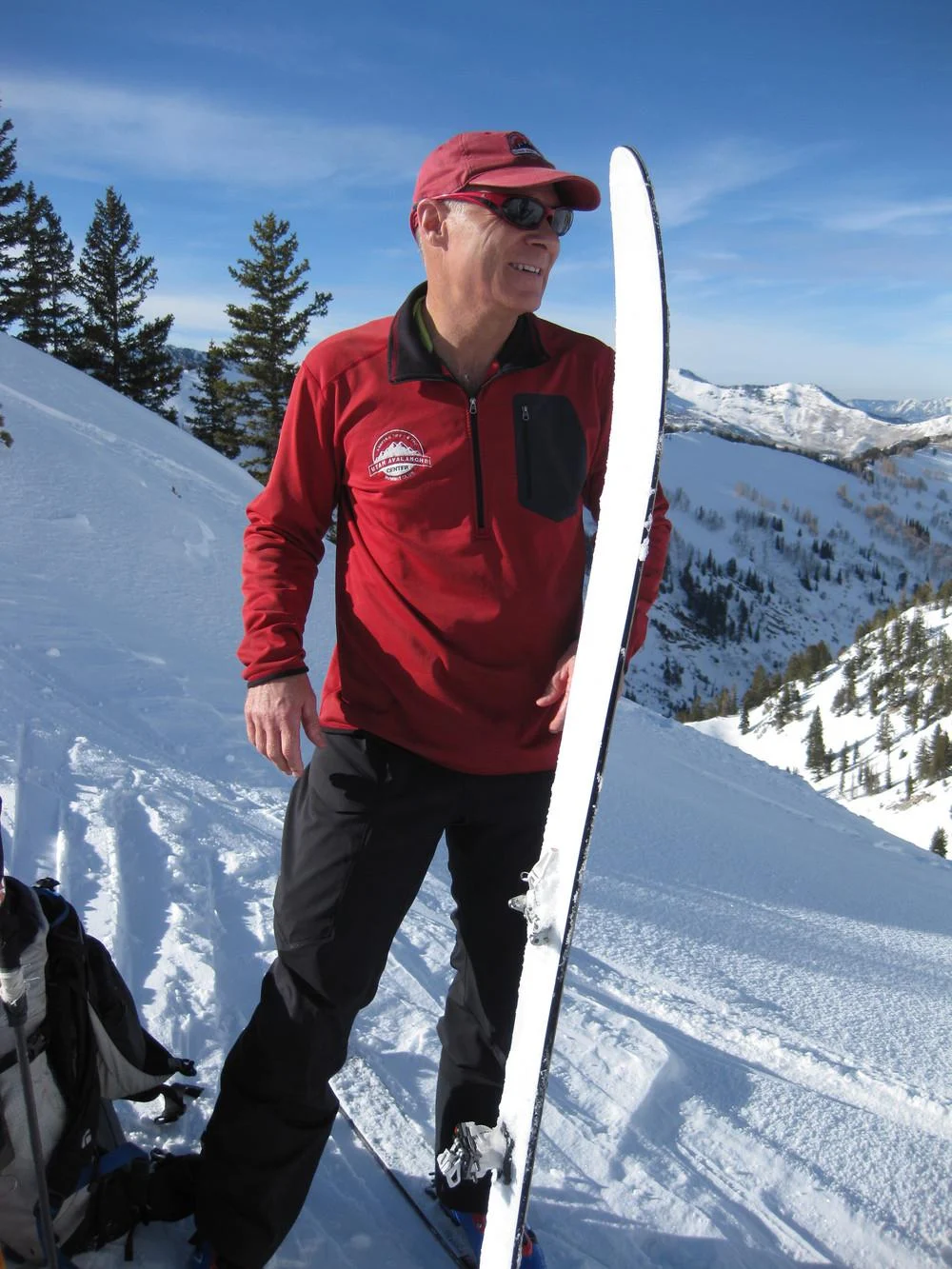
The Utah Avalanche Center (UAC) has announced the retirement of its long-serving Director, Bruce Tremper, effective at the end of August. Tremper, a towering figure in avalanche safety and forecasting for nearly 30 years, leaves behind a legacy of innovation and dedication that has significantly shaped avalanche awareness and education across the United States and internationally. His departure marks the end of an era for the UAC, a critical resource for winter recreationists in one of the nation’s most avalanche-prone regions.
A Storied Career in Avalanche Science and Safety
Bruce Tremper’s career in avalanche safety is marked by a deep commitment to understanding and mitigating the inherent risks of mountainous winter environments. His journey began in Montana, where he pursued his Master of Science degree at Montana State University under the guidance of Dr. John Montagne. This academic foundation was quickly complemented by practical experience. Tremper engaged in avalanche control work at prominent ski resorts, including Bridger Bowl and Big Sky, gaining firsthand knowledge of snowpack dynamics and hazard assessment in operational settings.
His expertise further expanded during his tenure as an avalanche forecaster at the Alaska Avalanche Center. Working alongside renowned figures such as Doug Fesler, Jill Fredston, and Jim Woodmency, Tremper honed his forecasting skills in the challenging Alaskan backcountry. These formative years provided him with a comprehensive understanding of diverse snow climates and avalanche phenomena.
In 1986, Tremper assumed the directorship of the Utah Avalanche Center. Under his leadership, the UAC evolved from providing basic phone-recorded advisories to a sophisticated, multi-platform information service. This transition mirrored the broader advancements in communication technology and avalanche science. Tremper was instrumental in pioneering innovative approaches to avalanche forecasting, including the introduction of standardized icons and the clear identification of specific avalanche problems in advisories. This move towards more accessible and detailed information significantly enhanced the UAC’s ability to communicate risk to the public, contributing to a measurable increase in avalanche awareness and safer backcountry practices.
Pioneering Innovations and Extensive Contributions
Beyond his role as UAC Director, Bruce Tremper has been a prolific contributor to the avalanche community. His commitment to knowledge dissemination is evident in his extensive work as editor for "The Avalanche Review" for six years. During this period, he oversaw the publication of crucial research, case studies, and best practices, fostering a culture of continuous learning within the industry.
Tremper’s scholarly output includes numerous published papers that have advanced the understanding of snow science and avalanche dynamics. He has also been a driving force in avalanche safety education, producing a number of influential avalanche safety videos that have reached a wide audience. His two seminal books on avalanches are considered essential reading for anyone involved in snow science, forecasting, or backcountry travel.
His expertise was recognized on a national and international stage. Tremper played a key role in managing backcountry avalanche safety for Salt Lake City’s 2002 Olympic Winter Games, a testament to his preparedness and strategic planning capabilities. He has consistently served as a valuable spokesperson for the UAC, engaging in hundreds of media interviews to educate the public and media about avalanche conditions and safety. For decades, Tremper has been a dedicated instructor at the National Avalanche School, shaping the next generation of avalanche professionals. His involvement in the working group that developed the conceptual model of avalanche danger and the associated avalanche danger scale in 2010 underscores his significant influence on the theoretical frameworks of avalanche hazard assessment.
Transition and Future Outlook
Tremper’s retirement from the Forest Service marks the end of his directorship, but his engagement with avalanche safety is far from over. He plans to continue teaching, writing, and contributing to avalanche safety projects. This ongoing involvement ensures that his wealth of knowledge and experience will remain accessible to the community.

While Tremper may joke about spending too much time indoors, his passion for the Wasatch backcountry is undeniable, as illustrated by a photograph capturing him enjoying the legendary Utah snow in January 2015. It is anticipated that he and his wife, Susi, will now have more opportunities to pursue their shared passion for backcountry skiing, likely with the same vigor that characterized his professional career. Those who have had the pleasure of skiing with Tremper attest to his impressive fitness and enduring enthusiasm for the mountains.
Mark Staples Takes the Helm
With Bruce Tremper’s departure, the Utah Avalanche Center has appointed Mark Staples as its new Director. Staples brings a robust and relevant background to this critical leadership role. His experience includes ski patrolling and snow safety work at Big Sky Ski Area, where he gained valuable operational knowledge.
Academically, Staples holds a Master of Science degree in Engineering from Montana State University, where his research focused on snow avalanches. This scientific grounding is complemented by his involvement in several special projects for the National Avalanche Center, demonstrating his understanding of national avalanche safety initiatives. Furthermore, he possesses eight seasons of backcountry avalanche forecasting experience from his time at the Gallatin National Forest Avalanche Center, a highly respected institution in avalanche research and forecasting.
Staples has expressed enthusiasm for joining the UAC team, recognizing its reputation for excellence. His appointment signifies a commitment to maintaining the high standards of forecasting, education, and public service that the UAC has established under Tremper’s guidance.
Broader Implications and the Future of Avalanche Safety in Utah
Bruce Tremper’s retirement is a significant event for the avalanche community. His nearly three decades at the helm of the UAC have seen the center become a national model for avalanche forecasting and public outreach. The advancements in forecasting products, the development of clear communication methods, and the consistent emphasis on education have undoubtedly contributed to a reduction in avalanche fatalities and injuries in Utah.
The UAC operates in a region with some of the most challenging and beautiful backcountry terrain in North America. The Wasatch Range, in particular, is renowned for its steep slopes, deep snowpack, and propensity for avalanches. The center’s work is vital for the safety of skiers, snowboarders, snowmobilers, and anyone venturing into the winter backcountry.
The transition to Mark Staples as Director suggests a continuity of vision. Staples’s background aligns well with the UAC’s mission. His experience in both operational avalanche control and forecasting, coupled with his academic research, positions him to lead the center through future challenges and opportunities. The evolving landscape of climate change, increased backcountry use, and technological advancements in forecasting and communication will require continued innovation and adaptation.
The UAC’s ability to effectively communicate avalanche risk is paramount. The center’s success has been built on its commitment to providing timely, accurate, and understandable information. Under Tremper, this commitment was unwavering, and it is expected that Staples will uphold and further this principle. The ongoing collaboration between avalanche centers, land management agencies, and the public will be crucial in ensuring the continued safety of winter recreationists.
The legacy Bruce Tremper leaves behind is one of dedication, expertise, and a profound commitment to saving lives. His retirement is a moment to acknowledge his immense contributions and to look forward to the continued evolution of avalanche safety efforts in Utah and beyond, now under the leadership of Mark Staples. The Utah Avalanche Center remains a cornerstone of winter safety, poised to continue its vital work for seasons to come.
