

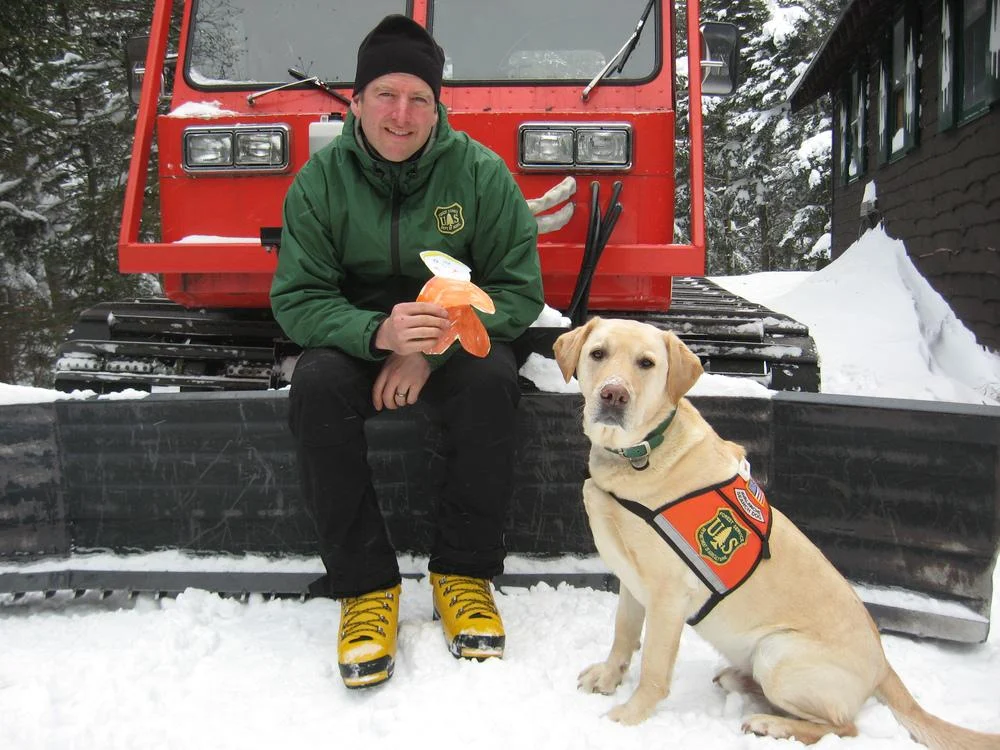
The White Mountain National Forest community is mourning the loss of Cutler, a dedicated avalanche dog who served with the Mount Washington Avalanche Center (MWAC) for 11 years. Cutler’s passing marks the end of an era for the center, where he was not only an invaluable asset in rescue operations but also a cherished ambassador for avalanche safety education. His commitment, spanning nearly 80% of his life, significantly contributed to making the treacherous terrain of Mount Washington a safer place for hikers, skiers, and snowboarders who frequent the White Mountain National Forest.
A Loyal Companion and a Lifesaving Partner
Cutler, a highly trained avalanche search and rescue dog, was more than just a tool; he was a vital member of the MWAC team. For over a decade, he partnered with Mount Washington Avalanche Center Director Chris Joosen, embarking on countless patrols and responding to potential avalanche incidents. His keen sense of smell and unwavering dedication allowed him to locate buried victims with remarkable speed and accuracy, a critical factor in the often unforgiving environment of Mount Washington. The mountainous region, notorious for its extreme weather and challenging avalanche conditions, relies heavily on the expertise of the MWAC and the specialized skills of canines like Cutler.
The partnership between a handler and an avalanche dog is built on trust, intensive training, and a deep understanding of each other’s capabilities. Cutler and Joosen exemplified this bond, their seamless collaboration saving precious time and, in critical situations, lives. Avalanche dogs undergo rigorous training from a young age, learning to identify human scent even when buried under several feet of snow and debris. This training involves simulations of real-life scenarios, ensuring they can perform under immense pressure and in adverse weather conditions. Cutler’s consistent performance over 11 years is a testament to his exceptional training and the dedication of his handler.
A Legacy of Public Relations and Education
Beyond his direct role in search and rescue, Cutler played a pivotal role in public relations and avalanche safety outreach for the MWAC. His presence at public events, demonstrations, and educational programs made avalanche safety more accessible and engaging for a wider audience. For many, Cutler was the face of the MWAC, a friendly and approachable ambassador who demystified the complexities of avalanche science and the importance of preparedness. Children and adults alike were captivated by his intelligence and enthusiasm, creating memorable experiences that fostered a greater appreciation for mountain safety.
Through his interactions, Cutler helped the Mount Washington Snow Rangers, the operational arm of the MWAC, connect with the public on a more personal level. This enhanced engagement allowed for the dissemination of crucial safety information, including avalanche forecasts, safe travel practices, and the importance of carrying essential avalanche safety gear. In an environment where weather can change rapidly and avalanche risks are ever-present, this educational outreach is paramount in preventing incidents and ensuring that visitors are well-informed and equipped to make safe decisions. The effectiveness of such outreach is often measured by the increased awareness and adoption of safety protocols by the public, a success Cutler undoubtedly contributed to significantly.
A Tribute to an Exceptional Canine
Mount Washington Avalanche Center Director Chris Joosen, Cutler’s long-time partner, has publicly honored the canine’s remarkable career. In a heartfelt blog post and accompanying photo album, Joosen shared reflections on Cutler’s life and his profound impact on the MWAC and the mountain community. The blog, titled "Cutler: The Life of an Avalanche Dog – Thanks Buddy for 14 Great Years," offers an intimate glimpse into the daily life of an avalanche dog and the special bond he shared with his handler. While the original article states 11 years of service, Joosen’s tribute, as referenced, suggests a total lifespan of 14 years, with a significant portion dedicated to his service. This detail underscores the longevity and dedication of Cutler’s career.
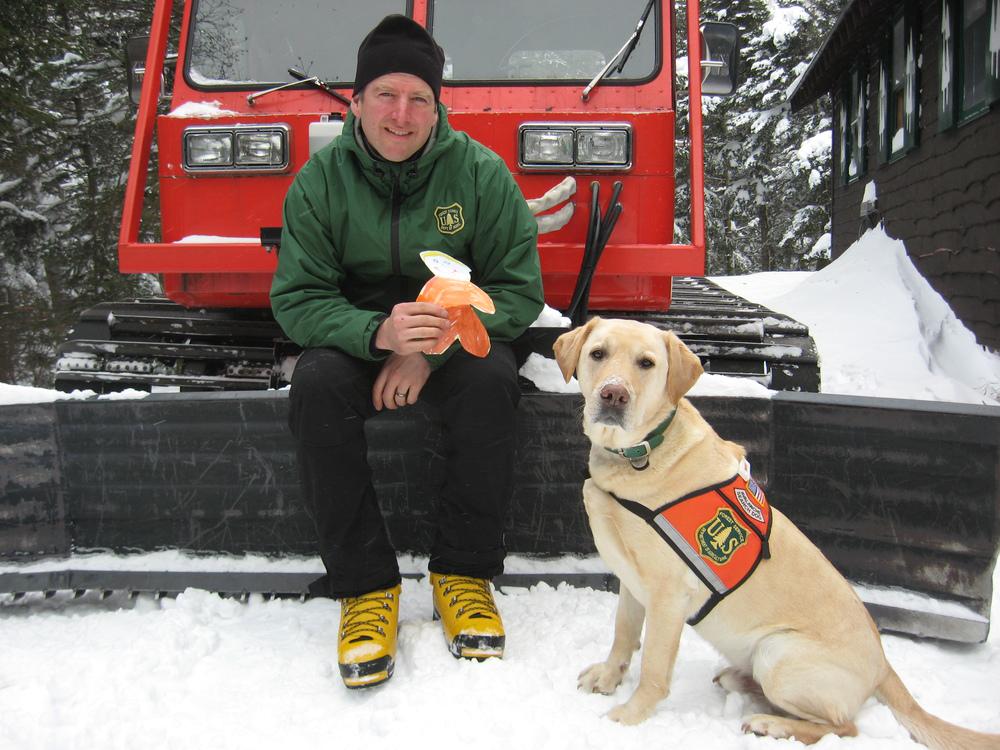
Joosen’s account likely details the rigorous training regimen, the challenges of working in harsh alpine conditions, and the profound emotional connection forged between dog and handler. Avalanche dog teams are an integral part of any effective avalanche safety program, and their successful deployment requires constant training and conditioning. The blog serves as a testament to Cutler’s unwavering commitment and his success in fulfilling his critical role. The "great years" mentioned by Joosen refer not only to the duration of Cutler’s service but also to the quality of his work and the positive impact he had.
The Significance of Avalanche Dogs
Avalanche dogs are highly specialized working animals trained to detect human scent beneath the snow. Their remarkable olfactory capabilities, estimated to be tens of thousands of times more sensitive than humans, allow them to pinpoint the location of buried individuals even when visibility is zero and the snowpack is unstable. In avalanche rescue scenarios, time is of the essence. A buried victim’s chances of survival decrease dramatically with each passing minute. Avalanche dogs can cover large areas of debris much faster than human rescuers probing the snow, significantly increasing the likelihood of a successful rescue.
The training for avalanche dogs is a continuous process, involving both the dog and its handler. They must learn to work in conjunction, with the dog signaling the location of a scent and the handler interpreting the signal and directing the excavation. This symbiotic relationship is crucial for efficient and effective rescue operations. The breeds commonly used for avalanche work, such as German Shepherds, Labrador Retrievers, and Border Collies, possess the intelligence, agility, and temperament required for such demanding tasks. Cutler, through his years of service, exemplified the pinnacle of this training and dedication.
Mount Washington’s Unique Challenges
Mount Washington, with its summit at 6,288 feet, is renowned for its extreme weather, including the highest wind speed ever recorded on Earth’s surface: 231 mph. These conditions create a formidable environment for outdoor recreation and pose significant avalanche risks, particularly during the winter months. The Presidential Range, where Mount Washington is located, is prone to heavy snowfall and can experience rapid temperature fluctuations, leading to the formation of unstable snow layers and dangerous avalanche conditions.
The Mount Washington Avalanche Center plays a vital role in monitoring these conditions and providing crucial information to the public. Their daily avalanche forecasts, detailed snowpack observations, and public advisement are essential for anyone venturing into the backcountry during the winter season. The presence of trained avalanche dogs like Cutler adds another layer of safety and capability to the center’s operations, ensuring that all possible resources are available in the event of an emergency. The terrain in areas like Tuckerman Ravine, a popular destination for skiers and snowboarders, is particularly susceptible to avalanches, making the expertise of the MWAC and their canine partners indispensable.
Broader Implications for Mountain Safety
The passing of Cutler serves as a poignant reminder of the dedication and sacrifice involved in mountain safety operations. It also highlights the importance of supporting organizations like the Mount Washington Avalanche Center, which rely on dedicated professionals, volunteers, and highly trained animals to protect the public. The continued funding and development of avalanche safety programs, including the training and maintenance of avalanche dogs, are critical for preserving the accessibility and enjoyment of our natural mountain environments.
Furthermore, Cutler’s role in public education underscores the effectiveness of engaging and relatable ambassadors in promoting safety messages. His legacy extends beyond his direct rescue efforts; he inspired a generation to be more aware of the risks associated with winter backcountry travel and to prioritize safety. As the MWAC moves forward, the memory of Cutler will undoubtedly serve as an inspiration, reinforcing the commitment to excellence in avalanche safety and public education. The impact of his years of service will continue to resonate within the mountain community for years to come. His absence leaves a void, but his contributions have undoubtedly made a lasting difference in safeguarding lives on Mount Washington.
