

A relentless mid-summer heatwave has plunged Colorado’s high country into a perilous wildfire season, culminating in a sudden outbreak of blazes near Steamboat Springs. Under scorching temperatures that consistently topped 90 degrees Fahrenheit, multiple wildfires ignited south and southeast of the popular resort town, forcing local, state, and federal emergency crews into an immediate, high-stakes response. The confluence of extreme heat, prolonged drought conditions, and abundant dry fuels has created an environment ripe for rapid fire spread, placing communities and critical infrastructure on high alert. This escalating crisis highlights the growing challenges posed by a warming climate to mountainous regions across the American West, where once-seasonal threats are now extending their reach and intensity.
The immediate threat to the Steamboat Springs community crystallized around two primary conflagrations: the Green Ridge Fire and the Fishhook Fire. The Green Ridge Fire, which ignited near the popular Stagecoach Reservoir, rapidly necessitated mandatory evacuation orders for several zones within its proximity, displacing residents and sending a clear signal of the fire’s aggressive nature. Simultaneously, the Fishhook Fire sparked on U.S. Forest Service land nestled near the iconic Rabbit Ears Pass, sending a towering column of acrid smoke directly over the valley and towards the town, visibly marking the danger’s encroaching presence. These fires, originating in diverse yet equally vulnerable landscapes, underscored the widespread nature of the threat and the critical need for a coordinated, multi-pronged suppression effort. The speed of their development and the immediate impact on local populations set a grave tone for the unfolding emergency, prompting an urgent activation of resources from various agencies.
Chronology of the Crisis: A Rapid Escalation
The onset of the wildfire crisis in the Steamboat Springs area was swift and alarming. Following an extended period of abnormally high temperatures and minimal precipitation through late June and early July, the region’s vegetation had become exceptionally dry. Forest and range fuels, already primed by weeks of arid conditions, became highly susceptible to ignition. The specific ignitions for both the Green Ridge and Fishhook Fires were reported within a narrow window, indicating a landscape under severe stress. The Green Ridge Fire, initially reported in the vicinity of Stagecoach Reservoir, quickly grew in size, prompting the Routt County Sheriff’s Office to issue mandatory evacuation notices for Zones 1, 2, and 3, which encompass areas directly south of the reservoir and along Routt County Road 14. These evacuations were enacted with urgency, as fire behavior analysts observed rapid rates of spread driven by gusty winds and low humidity. Simultaneously, the Fishhook Fire, located approximately 10 miles southeast of Steamboat Springs and notably closer to the Steamboat Ski Resort, began its progression, with initial reports indicating it had consumed several hundred acres within hours of detection. The visible smoke plume from the Fishhook Fire served as a constant, stark reminder to residents and visitors of the imminent danger. Federal firefighting teams, including specialized Type I helicopters capable of precise water drops, were immediately deployed, alongside local fire crews, to establish initial attack strategies and containment lines. The rapidity of these events from ignition to evacuation and full-scale response underscored the volatile conditions prevailing across the region.
Steamboat Ski Resort’s Unconventional Defense: Activating the Snowmaking Network
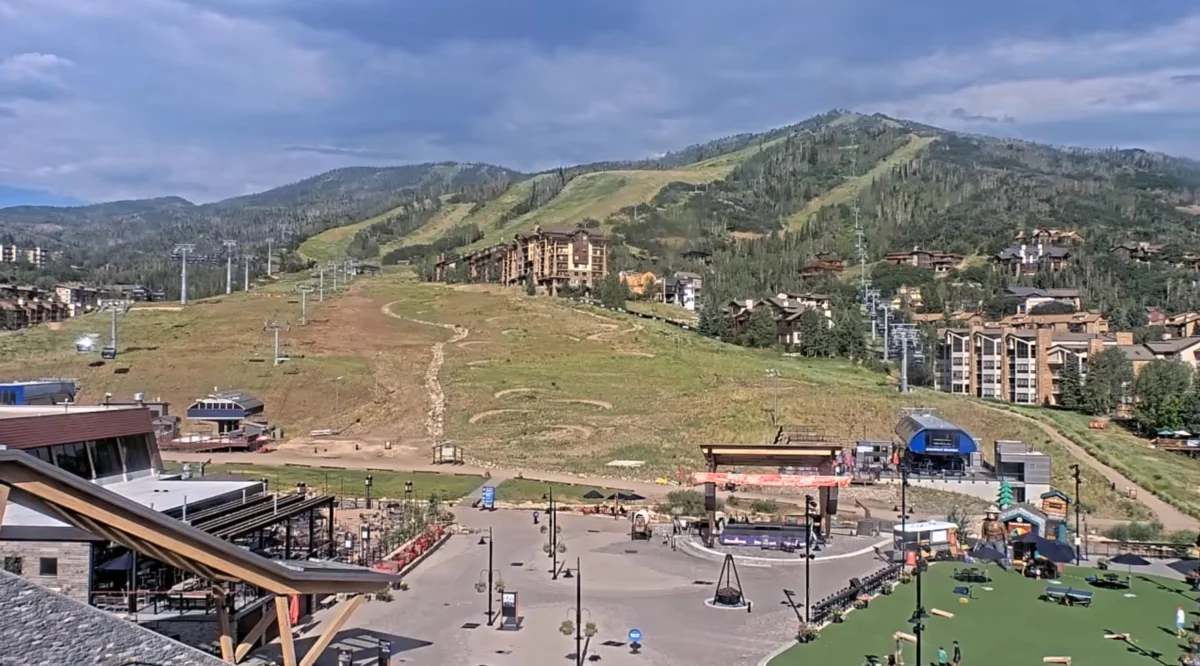
As the Fishhook Fire advanced to within approximately one mile southeast of Steamboat Ski Resort’s perimeter, mountain operations crews refused to adopt a passive stance. In a remarkably proactive and strategically innovative move, resort officials made the critical decision to activate the mountain’s extensive snowmaking system. This activation was not for its traditional winter purpose but as an emergency fire suppression network. Crews meticulously targeted the upper portions of the mountain, focusing specifically around the Sunshine Express area and the critical timberline boundaries, with the explicit goal of mitigating the fire’s potential impact on the resort’s summit and infrastructure.
The mechanics of this defense were ingenious. Instead of blowing snow, the resort’s array of powerful fan guns were repurposed to pump massive volumes of high-pressure water. This water was directed to saturate the parched timberline, dense mountain vegetation, and vital lift infrastructure. By doing so, the resort was effectively creating a "hyper-hydrated defensive zone" – a meticulously engineered wall of moisture designed to act as a formidable barrier against the encroaching flames. This strategic saturation serves multiple critical functions: it helps to suppress wind-driven embers, prevents spot fires from igniting new blazes ahead of the main fire front, and significantly lowers the temperature of the forest floor and undergrowth. This reduction in fuel temperature and moisture content dramatically slows the fire’s progression, buying invaluable time for ground crews and offering them a much safer and more effective environment in which to operate. Resort management emphasized that this unprecedented action was a direct response to the fire’s proximity and the severe fire danger ratings, prioritizing the protection of resort assets, the surrounding environment, and ultimately, the community that relies on the mountain.
The Evolution of Resort Fire Mitigation: A Growing Strategy
The innovative use of snowmaking equipment as an emergency fire suppression network is a burgeoning and increasingly critical strategy across North American mountain resorts. This is not an isolated incident but rather a testament to an evolving understanding of wildfire threats and the adaptive capacity of resort infrastructure. Prior to Steamboat’s current deployment, similar tactics were notably employed out West during other catastrophic fire events. California’s Sierra-at-Tahoe Resort, for instance, famously activated its snowmaking system to defend its base area and lodge during the devastating Caldor Fire in August 2021. The Caldor Fire, which burned over 220,000 acres and forced widespread evacuations in the Lake Tahoe basin, underscored the vulnerability of mountain communities and resorts. Sierra-at-Tahoe’s proactive measures were widely credited with helping to save key facilities from destruction, demonstrating the viability of this unconventional defense. Similarly, during Idaho’s Rock Fire at Tamarack Resort, snowmaking infrastructure was leveraged to create defensible space and protect critical assets, highlighting a growing trend of resorts adapting their existing systems for dual-purpose utility.
Steamboat’s recent multi-million dollar master plan infrastructure upgrades, particularly the overhaul of its snowmaking network, are proving to be an unanticipated but immensely valuable asset during this crisis. The resort’s newer generation of automated fan guns each features sophisticated onboard weather stations, providing real-time data on wind speed, direction, temperature, and humidity. This technological integration empowers operations crews to activate, adjust, and precisely monitor the output of these systems with the push of a button from centralized control hubs. This level of granular control allows for maximizing water placement exactly where the fire threat looms closest and where saturation is most critical, ensuring efficient resource deployment and enhanced effectiveness. The foresight in investing in such advanced, versatile systems now stands as a crucial line of defense against an escalating natural threat, underscoring the broader implications for resort development and disaster preparedness in fire-prone regions.

Broader Context: Colorado’s Wildfire Battleground
Colorado has, in recent years, become an increasingly prominent battleground in the escalating war against wildfires. The state has experienced a significant increase in the frequency, intensity, and destructiveness of wildfires, a trend directly linked to climate change. Prolonged droughts, higher average temperatures, and earlier snowmelt contribute to longer fire seasons and more volatile conditions. The year 2020, for instance, saw the three largest wildfires in Colorado history: the Cameron Peak Fire (over 208,000 acres), the East Troublesome Fire (over 193,000 acres), and the Pine Gulch Fire (over 139,000 acres). These megafires collectively burned over half a million acres, destroyed hundreds of homes, and cost billions in damages and suppression efforts. More recently, the Marshall Fire in December 2021 became the most destructive wildfire in state history by structures lost, burning over 1,000 homes in suburban areas near Boulder, a stark reminder that urban interfaces are no longer immune to these events.
The current situation near Steamboat Springs fits within this alarming pattern. The average number of acres burned annually in Colorado has dramatically increased over the last two decades. Scientists and fire experts point to several key factors:
- Drought Conditions: Persistent and severe drought has left forests and grasslands parched, turning them into highly combustible fuel sources.
- Increased Temperatures: Higher ambient temperatures lead to more rapid drying of vegetation and create more extreme fire behavior.
- Fuel Accumulation: Decades of fire suppression policies have led to an unhealthy accumulation of forest fuels, creating conditions for more intense crown fires.
- Wildland-Urban Interface (WUI) Expansion: More homes are being built in or near forested areas, increasing the risk to human lives and property.
The economic implications of these fires are profound, impacting tourism, real estate, and local economies that rely heavily on outdoor recreation. The environmental consequences are equally severe, including long-term ecosystem damage, erosion, impacts on water quality, and significant air quality issues from widespread smoke plumes. The smoke from the current Steamboat fires, for example, is not only a local health concern but can travel hundreds of miles, affecting air quality across multiple states.
Emergency Response and Multi-Agency Coordination
The response to the Green Ridge and Fishhook Fires has involved a complex, multi-agency effort, typical of major wildfire incidents in the West. Initial attacks were launched by local Routt County resources, including the Steamboat Springs Fire Rescue and various volunteer fire departments. As the fires grew in complexity and size, federal assets were rapidly brought in under the command of the U.S. Forest Service and Bureau of Land Management, operating within the framework of an Incident Command System (ICS).
Resources deployed include:
- Aerial Attack: Multiple Type I helicopters, capable of dropping large volumes of water or fire retardant, have been crucial for initial containment efforts, particularly in rugged, inaccessible terrain. Air tankers, when available, also play a vital role in laying retardant lines ahead of fire progression.
- Ground Crews: Highly trained hotshot crews and hand crews are working tirelessly to construct fire lines using hand tools and chainsaws, often in extremely challenging conditions.
- Engines and Dozers: Fire engines are strategically positioned to protect structures, while bulldozers are utilized to create wider fire breaks where terrain allows.
- Incident Management Teams (IMT): These specialized teams provide critical logistical, strategic, and tactical oversight for large, complex incidents, ensuring efficient allocation of resources and effective communication.
Challenges faced by these brave men and women include the steep and rugged topography of the Routt National Forest, which hinders access and makes fire suppression inherently dangerous. The persistent hot and dry conditions, coupled with unpredictable wind shifts, further complicate efforts, making fire behavior erratic and difficult to predict. The coordination between local, state, and federal entities is paramount, with daily briefings and unified command structures ensuring that all efforts are aligned towards containment and protection of life and property. Community support, including donations to first responders and adherence to evacuation orders, also plays a crucial role in the overall success of the response.
Watching the Horizon: A Dynamic and Evolving Situation
As federal firefighting teams continue to deploy initial air attacks and establish perimeters, and as Steamboat Ski Resort’s innovative defense network diligently lays down its moisture barriers, the situation remains profoundly dynamic. The forecast for the region indicates a continuation of hot and dry conditions, with potential for isolated thunderstorms that could bring dangerous lightning strikes without significant, fire-quenching rainfall, potentially igniting new blazes or exacerbating existing ones. Fire behavior can shift rapidly with changes in wind patterns, humidity levels, and topography.
The immediate implications extend beyond direct fire suppression. Air quality advisories remain in effect due to the dense smoke plumes, impacting public health, particularly for vulnerable populations. The long-term environmental consequences, including potential for post-fire flooding and erosion in burned areas, will require extensive rehabilitation efforts once the fires are contained. For the community of Steamboat Springs, a town deeply reliant on its natural beauty and outdoor recreation industry, the fires present not only an immediate danger but also a profound challenge to its economic and social fabric. Lessons learned from this incident will undoubtedly inform future land management practices, community preparedness strategies, and further investments in fire-resilient infrastructure. The vigilance of firefighters, resort crews, and the entire community remains paramount as they collectively watch the horizon, hoping for a shift in weather patterns and ultimate containment of these destructive blazes. The fight is far from over, but the combination of traditional firefighting and innovative mitigation strategies offers a glimmer of hope in a challenging summer.
