

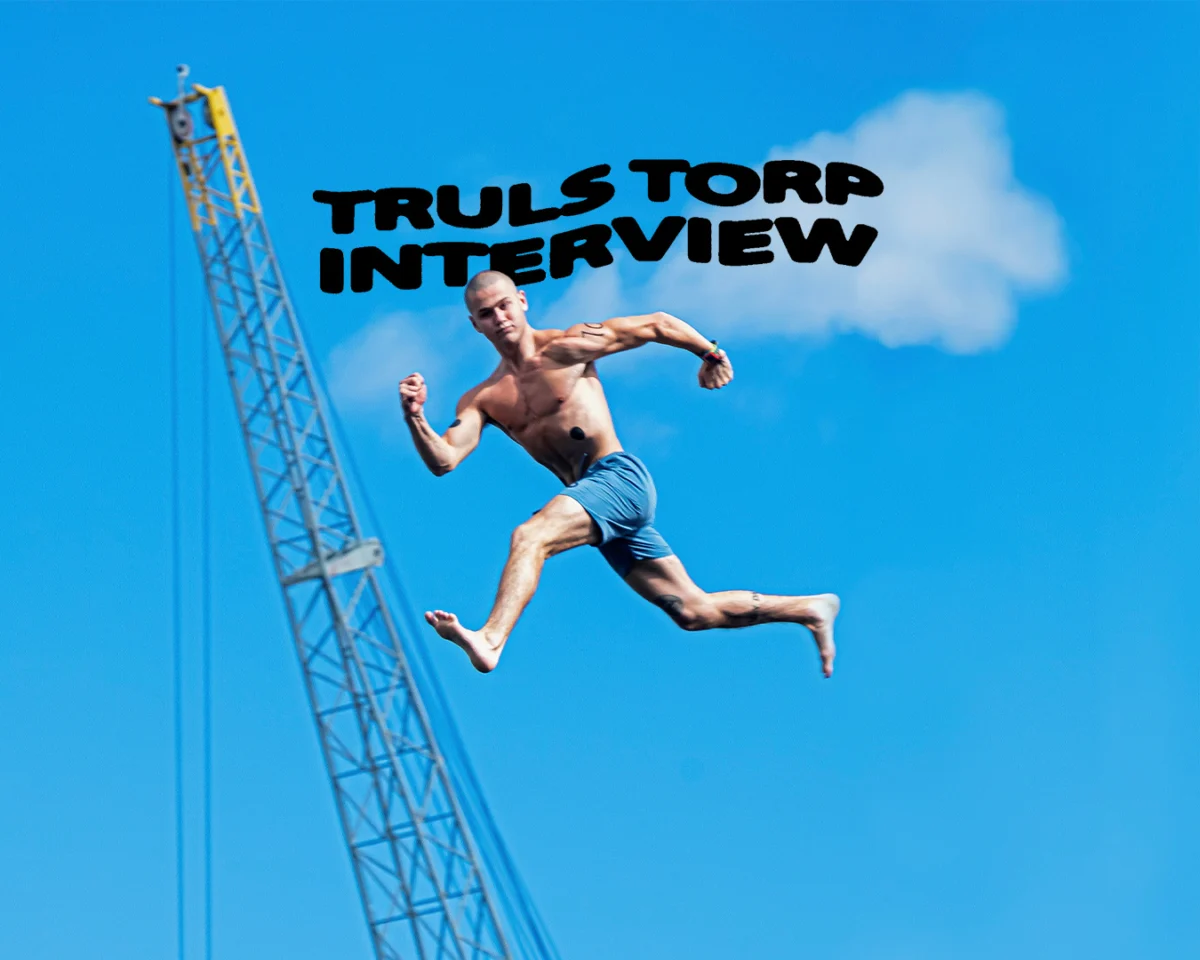
Three-time Døds world champion Truls Torp recently offered a cryptic glimpse into one of the sport’s most ambitious undertakings, speaking from a hotel room in Greenland. Outside, a monumental project was materializing amidst the Arctic expanse, one that would redefine the boundaries of extreme diving and human resilience. Torp, a pivotal figure in the Dødsing community, revealed his imminent meeting with Côme Girardot for the latter’s “CômeBack” project, hinting at a world-first attempt and promising more details to follow. This foreshadowing has now culminated in the release of a powerful documentary film, revealing a narrative far richer and more profound than a mere athletic feat.
The highly anticipated "CômeBack" film, produced by the acclaimed 00Nation crew, chronicles Côme Girardot’s extraordinary journey back to the precipice of Dødsing after a catastrophic back injury threatened to end not only his career but potentially his life. The film’s climactic sequence, a breathtaking and unprecedented glacier Døds from a towering wall of Arctic ice into Greenland’s unforgiving, frigid waters, stands as a testament to unparalleled courage and determination. While the jump itself is undeniably impactful, the story preceding it—a chronicle of pain, doubt, and an unwavering will to overcome—is even more compelling.
The Perilous Path: Côme Girardot’s Devastating Injury
The genesis of the "CômeBack" project is rooted in a harrowing incident that sent shockwaves through the Dødsing community. Last summer, during an attempt at a 34-meter tandem Døds in Mallorca, Spain, both Torp and Girardot experienced an impact of extreme force. Torp himself described it as the hardest impact he had ever endured in his career. For Girardot, however, the consequences were far more severe. He sustained a broken back, an injury that immediately cast a shadow over his future in the high-stakes sport and forced a stark confrontation with the inherent dangers of pushing human limits.

Dødsing, or "death diving," originated in Norway in the 1960s and has evolved into a global phenomenon, captivating audiences with its blend of daring athleticism and aesthetic precision. Participants launch themselves from significant heights, maintaining a horizontal "X" position with arms and legs outstretched for as long as possible before tucking into a compact pike position just before impact with the water. The goal is to create the largest possible splash while maintaining form, a spectacle that belies the intense physical and mental demands. Competitions, such as the Døds World Championship, draw thousands of spectators and showcase the sport’s rapid progression. However, with progression comes increased risk, a reality underscored by Girardot’s injury.
The Mallorca accident served as a grim reminder of the fine line between triumph and tragedy in extreme sports. It wasn’t just another injury; it became a defining moment for Dødsing, compelling athletes, organizers, and fans alike to re-evaluate the true cost of pushing boundaries. The incident sparked crucial conversations about safety protocols, training methodologies, and the ethical considerations of pursuing ever-greater heights and more complex maneuvers. Torp openly admitted that Girardot’s injury "definitely changed my approach to high dødsing a bit," reflecting a collective introspection within the sport about balancing ambition with athlete well-being.
The Genesis of "CômeBack": A Shift from Records to Resilience
In the wake of such a life-altering injury, many athletes might choose a path of retirement or a more conservative return. Côme Girardot, however, chose to transform his adversity into a catalyst for a new kind of challenge. Instead of attempting to erase the memory of Mallorca with another record-breaking jump, he envisioned a project that would build something meaningful from his experience. This marked a significant philosophical shift, moving beyond mere physical recovery to a deeper exploration of mental fortitude, personal growth, and the power of narrative.
The "CômeBack" project emerged not just as a return to Dødsing, but as a testament to the human spirit’s capacity for resilience. It was a journey of rehabilitation, both physical and psychological, meticulously documented by the 00Nation crew. This shift underscored a growing trend in extreme sports: the increasing importance of storytelling alongside athletic achievement. Audiences are no longer solely drawn to the spectacle of a jump; they seek the human narrative behind it – the struggles, the sacrifices, and the triumphs that define an athlete’s journey.

Truls Torp, a veteran with extensive experience at the pinnacle of Dødsing, played a crucial supporting role in Girardot’s comeback. His presence not only offered a vital layer of expertise and camaraderie but also highlighted the strong bonds within the Dødsing community. Torp’s own evolving perspective, as he increasingly views himself as a "cinematic storyteller more than just an athlete," perfectly aligned with the ambitious scope of Girardot’s project. This collaboration represented a convergence of athletic excellence and narrative ambition, setting the stage for a film that would resonate far beyond the confines of the sport.
The Greenland Expedition: A Frozen Frontier for a World First
The "CômeBack" project culminated in a daring expedition to the remote and pristine wilderness of Greenland. This unforgiving Arctic environment provided a dramatic backdrop for the ultimate test of Girardot’s recovery: the world’s first glacier Døds. The logistical challenges of such an undertaking are immense, demanding meticulous planning, specialized equipment, and an expert team capable of navigating the treacherous conditions of an active glacier. Greenland’s landscape, characterized by colossal ice sheets, towering icebergs, and freezing fjords, offered both unparalleled beauty and extreme danger.
The chosen location—a colossal wall of ancient ice—was a natural marvel, yet inherently unstable. Executing a Døds from such a platform required an intimate understanding of glaciology, constant monitoring of ice stability, and stringent safety protocols to mitigate risks. The water temperature, hovering just above freezing, presented an additional layer of peril, increasing the risk of hypothermia upon impact and demanding immediate extraction and medical readiness. The 00Nation crew meticulously documented every aspect of the expedition, capturing not only the grandeur of the environment but also the raw emotions and intense focus of the athletes.
For Girardot, each step toward the glacier’s edge was more than just a physical ascent; it was a metaphorical climb away from the hospital bed and the trauma of his injury. The frigid air, the vast silence, and the immense scale of the ice served as a stark contrast to the sterile environment of his recovery. This setting amplified the narrative of rebirth and conquest, making the glacier Døds not just a world-first stunt, but a deeply symbolic act of reclaiming his passion and his life. The successful execution of the jump represented a monumental victory over physical limitations and psychological scars, pushing the boundaries of what was previously thought possible in the sport.

"CômeBack": A Narrative Beyond the Extreme Stunt
The film "CômeBack" transcends the typical extreme sports documentary by delving deep into the human psyche. It is not merely a highlight reel of a dangerous stunt; it is a profound exploration of recovery, the power of friendship, and the intricate relationship between fear and progression. Throughout his conversation with TGR, Truls Torp repeatedly emphasized a crucial insight: fear is not an adversary to be eliminated, but an intrinsic component of extreme sports. "Without fear, everybody would be dødsing," he stated, highlighting that true mastery lies not in the absence of fear, but in the ability to navigate through it.
For Girardot, this navigation was particularly fraught with the lingering memory of his broken back. The film powerfully illustrates how preparation, unwavering commitment, and profound trust in one’s team and oneself are the essential tools that allow athletes to move beyond their apprehension. Every decision, every calculated risk, and every moment leading up to the glacier jump was imbued with the weight of the previous year’s accident. The film masterfully portrays the mental battle, showcasing the courage it takes to confront one’s deepest fears and the sheer grit required to rebuild both body and mind.
"CômeBack" serves as an inspirational narrative for a broader audience, demonstrating that overcoming adversity is a universal human experience. It highlights the often-unseen dedication, rigorous training, and mental fortitude that underpin seemingly effortless athletic feats. The film is a testament to the fact that sometimes, the greatest victories are not found in breaking records, but in defying personal limitations and transforming past trauma into a source of strength and inspiration.
The Next Chapter for Dødsing: Storytelling, Safety, and Legacy
The "CômeBack" project signals a significant evolution for the sport of Dødsing, suggesting a future where storytelling and meaningful narratives are as valued as competitive triumphs. Truls Torp, a decorated champion, articulated this shift eloquently. Having "won pretty much everything there is to win," he now expresses a profound desire to "inspire people in general and create things that are timeless." His growing identity as a "cinematic storyteller" rather than solely an athlete reflects a broader trend in extreme sports, where athletes are leveraging media to share deeper, more resonant messages.

This philosophical pivot has profound implications for Dødsing’s future. By focusing on projects like "CômeBack," the sport can attract a wider audience, moving beyond niche viewership to appeal to those interested in human drama, resilience, and adventure. This approach also fosters a culture that prioritizes safety and responsible progression. The stark lesson of Girardot’s injury, transformed into a narrative of triumph, emphasizes the importance of understanding risks, implementing robust safety measures, and valuing the well-being of athletes above all else. It encourages a more sustainable model of progression, where athletes push boundaries thoughtfully rather than recklessly.
The 00Nation crew’s film is not merely an addition to Dødsing’s history books because it involved a glacier. Its enduring significance lies in its ability to transform one of the sport’s darkest moments—a severe injury that could have ended a career—into one of its most meaningful and inspiring stories. It documents not just an extreme stunt, but the unbreakable bonds of friendship, the arduous path of recovery, and the collective efforts of individuals dedicated to shaping Dødsing into a sport that is both thrilling and profoundly human.
When asked about his priorities after nearly a decade at the zenith of the sport, Torp’s answer was refreshingly straightforward: "Help the sport stay dope. Inspire people to go outside. Create timeless shit." "CômeBack" embodies this ethos, showcasing how Dødsing can be a vehicle for inspiring self-discovery, demonstrating courage in the face of adversity, and crafting narratives that resonate long after the splash has settled. It’s a powerful declaration that the true essence of extreme sports lies not just in the heights reached, but in the depths of human experience explored and shared.
