

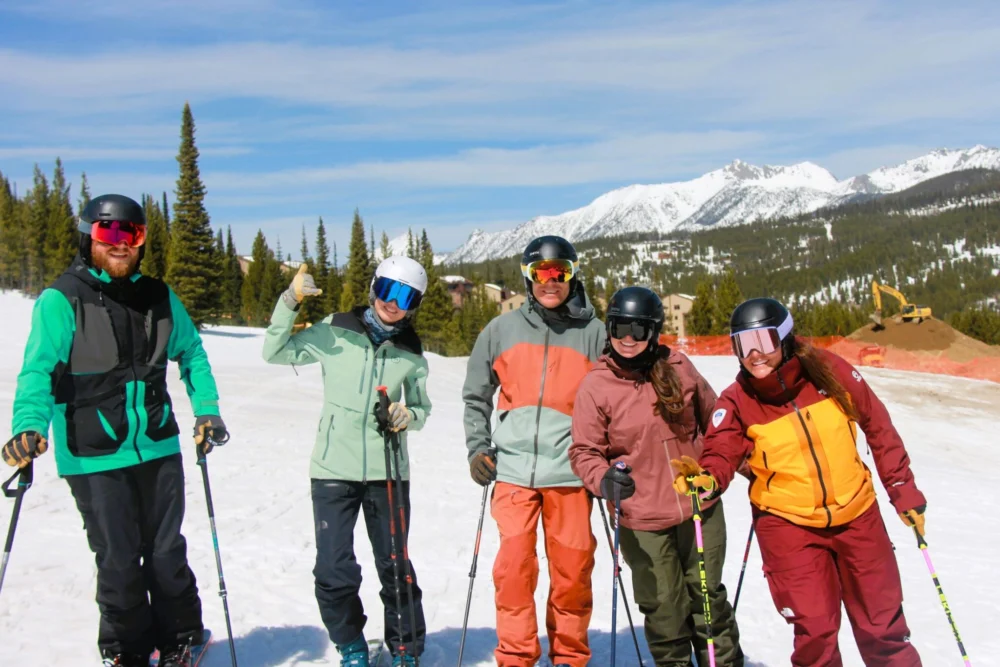
The Professional Ski Instructors of America and American Association of Snowboard Instructors (PSIA-AASI), a prominent authority in snowsports education, continues to refine its American Teaching System (ATS), a comprehensive curriculum that underscores the dynamic nature of effective instruction. This evolving body of work is subjected to continuous assessment, rigorous field-testing, and meticulous refinement to ensure its relevance and efficacy in a rapidly changing snowsports landscape. The organization’s national certification standards are meticulously aligned with the global community of expertise, yet they retain a distinctive American emphasis: a pioneering student-centered approach first championed in the 1980s. This methodology is designed to accommodate an expansive spectrum of student aspirations, encompassing proficiency in challenging terrain like bumps and big mountain environments, competitive disciplines such as racing, freestyle and park maneuvers, and general competence across both on-piste and off-piste conditions, serving both recreational enthusiasts and aspiring professionals.
The Historical Trajectory of Snowsports Instruction
The journey of snowsports instruction in the United States has been one of continuous evolution, with PSIA-AASI at its forefront. Founded in 1961 as PSIA, the organization recognized the need for standardized teaching methodologies and professional development for ski instructors. The subsequent merger with the American Association of Snowboard Instructors (AASI) in 1997 solidified its position as the leading educational body for all snowsports. This unification was a strategic move to address the burgeoning popularity of snowboarding and to integrate diverse disciplines under a unified, yet flexible, teaching philosophy.
Prior to the 1980s, much of snowsports instruction, both domestically and internationally, adhered to more traditional, instructor-centric models. These often involved a prescriptive, "tell-and-show" approach where students were expected to emulate the instructor’s movements with less emphasis on individual learning styles or personal goals. The pivotal shift in the 1980s towards a student-centered system represented a paradigm change. This innovation, championed by PSIA, recognized that learning is optimized when the student’s unique motivations, learning styles, and objectives are placed at the core of the instructional process. This move not only democratized snowsports learning but also significantly enhanced student engagement and retention, directly contributing to the growth and accessibility of the sports. This progressive stance ensured that PSIA-AASI remained at the cutting edge, influencing instructional practices globally and setting a benchmark for adaptability and learner focus.
Foundational Pillars: People and Teaching Skills
The ATS is not merely a collection of techniques; it is deeply rooted in best practices derived from psychology, sociology, and educational theory. PSIA-AASI’s People and Teaching Skills Fundamentals are paramount, emphasizing critical elements such as effective two-way communication, the cultivation of trust, collaborative learning environments, adaptable teaching strategies, and systematic reflection. These fundamentals are designed to create supportive learning environments that empower students to achieve their snowsports goals, irrespective of their initial skill level or specific ambitions. The integration of psychological principles, for instance, helps instructors understand cognitive processes and emotional responses to learning, while sociological insights inform strategies for group dynamics and effective social interaction within a lesson setting.
Society, with increasing clarity, demands educators who possess not only profound subject-matter expertise but also the ethical grounding to foster student learning, safety, and personal growth. This expectation extends to snowsports instructors, who, as a specialized subset of the teaching profession, are charged with a noble and challenging responsibility. Certified snowsports teachers are expected to uphold the highest professional standards, demonstrating sound judgment, profound empathy, and robust adaptability in dynamic mountain environments. This framework underscores that teaching is a complex craft, requiring a refined mindset to effectively serve all stakeholders—from the individual student to the broader snowsports community.
The Core of Excellence: Unpacking the Teacher Mindset
Bookended by a global community of expertise and a student-centered curriculum on one side, and the diverse motivations, expectations, and goals of students on the other, the question arises: what mindset best equips a teacher—including a snowsports educator—to excel? Angelo Ross, PSIA-AASI Education Development Manager, articulates several key attributes that define this essential "teacher mindset."
Curiosity: The Spark of Lifelong Learning
Curiosity serves as the fundamental orientation toward learning, providing the intrinsic spark that compels individuals to delve deeper. For snowsports educators, this can manifest in various ways. An instructor might choose to explore a single discipline vertically, aiming for a comprehensive understanding of cross-country skiing—its history, specialized vocabulary, equipment nuances, technical and tactical approaches, training methodologies, movement patterns, terrain utilization, waxing techniques, clothing options, and cultural traditions. This deep dive ensures mastery and allows for highly specialized instruction.
Alternatively, an instructor might pursue a horizontal study, examining the similarities and differences in efficient technique across multiple snowsports disciplines, such as alpine skiing, snowboarding, telemark, and adaptive snowsports. This comparative approach fosters a holistic understanding of human movement on snow. A combination of both approaches, such as mastering cross-country skiing while gaining sufficient knowledge of other disciplines and pedagogical principles, allows an instructor to confidently engage with any student encountered at a snowsports school. This relentless pursuit of knowledge, often expressed through inquisitive questioning, is a powerful indicator of intrinsic motivation, a trait that both educators and their students should actively cultivate. Industry data consistently shows that instructors who engage in continuous learning not only enhance their own skills but also improve student retention rates by offering fresh perspectives and updated techniques.
Empathy: Fostering Connection and Trust
Empathy, as an orientation toward students, is a critical facilitator of connection, cooperation, and collaborative learning. It necessitates attentive listening, acute emotional awareness and self-regulation, and the profound ability to transcend one’s own perspective to understand another’s experience. Empathy is inherently diminished by ego, self-absorption, the defensive protection of one’s identity, making unsubstantiated assumptions about others, and attribution errors—such as blaming students for a perceived lack of learning ("They’re not athletic," "They don’t care," "They’re not trying"). These pitfalls lead to instructional stagnation and student disengagement.
The cultivation of empathy is further challenged by time constraints and cognitive load; when instructors are rushed, distracted, or overwhelmed, their capacity for empathy can wane. Conversely, mindfulness significantly augments empathy. As outlined in PSIA-AASI’s People Skills Fundamentals, instructors must be adept at identifying, understanding, and managing their own emotions and actions. This self-awareness enables meaningful, two-way communication, which in turn allows instructors to recognize and positively influence the behaviors, motivations, and emotions of their students, thereby developing relationships founded on mutual trust. Research in educational psychology consistently links instructor empathy to improved student outcomes, including higher motivation, better skill acquisition, and increased satisfaction.
Presence: The Power of Being In The Moment
Presence, understood as both a mindset and a habit, is the capacity to be fully engaged in the present moment, emotionally regulated, and acutely attuned to the immediate environment and the individuals within it. This state of focused awareness allows for composure under pressure, clear perception of unfolding events, and sound decision-making, particularly vital in the dynamic and sometimes unpredictable environment of a ski resort. When truly present, instructors are more receptive to subtle signals and cues from their students, operating in real-time to adjust their instruction effectively.

The ability to cultivate presence can be developed through mindful practice and deliberate strategies. These include purposeful pausing—slowing down one’s pace and thought process—and anchoring attention to a specific focal point, such as one’s own breathing, the precise words a student is articulating, or the path and orientation of a student’s skis or snowboard during performance assessment. Cognitive clutter, the mental noise of distractions and overthinking, actively precludes presence. Instructors are encouraged to adopt a "less is more" philosophy, simplifying goals and instructional language to create mental space for enhanced observation and responsive action. This focused attention is directly correlated with improved safety, as instructors are better able to anticipate and react to potential hazards.
Responsiveness: The Art of Collaborative Teaching
The distinction between "presenting" and "teaching" is crucial for a snowsports educator. While a tour guide effectively "presents" information with limited regard for the specific interests or goals of individual tourists, teaching, as defined by the PSIA-AASI Teaching Snowsports Manual and supported by its National Standards, Teaching Skills Fundamentals, and Performance Guides, is an entirely different interaction. Teaching is fundamentally a "cooperative art," where outcomes are created through collaboration with others. This contrasts sharply with "operative arts" like playing an instrument or woodworking, where skill is predominantly dependent on individual competence.
Even if some students are technically "tourists" seeking a recreational experience, the teacher’s mindset is to treat them as active learners. This involves attentive listening to their articulated and unarticulated needs, observing their movements, and responding appropriately with tailored feedback and instruction. This responsive approach fosters student ownership over their learning journey, moving beyond rote instruction to facilitate genuine skill development and enjoyment. The shift from a purely didactic model to a collaborative one has been a significant driver in increasing student engagement and long-term participation in snowsports.
Reflection: The Path to Continuous Improvement
Objective and honest reflection on one’s own performance and behaviors is arguably one of the most challenging aspects of professional development. It often entails confronting mistakes or shortcomings, which can be emotionally unsettling and challenge one’s sense of competence or self-worth. Individuals are prone to confirmation bias, focusing on aspects of their performance that reinforce existing self-perceptions. The Dunning-Kruger effect, for instance, illustrates how those with lower skill levels may overestimate their competence, while highly skilled individuals might underestimate theirs.
To counteract these biases, feedback from diverse sources—friends, loved ones, students, and qualified trainers or mentors—is invaluable for increasing the accuracy of performance assessment. It is at this juncture that genuine professional growth begins. While it may be comfortable to retreat behind an indignant "Well, that’s how I do it," the teacher mindset demands a proactive engagement with challenges, a commitment to improvement, and a willingness to be a perpetual student of the craft. This continuous cycle of reflection and feedback is a cornerstone of PSIA-AASI’s instructor development programs, ensuring that certification is not an endpoint but a milestone in an ongoing journey of learning.
Humility: The Foundation for Growth
As a mindset, humility involves maintaining a modest view of oneself, which paradoxically liberates an instructor to focus entirely on students’ goals, experiences, and learning outcomes. Expertise, particularly in a dynamic field like snowsports, is provisional and fleeting if not diligently maintained through continuous effort and honest self-assessment. In the teacher mindset, one never "arrives" at a fixed state of perfect knowledge; there is always more to learn, always someone who might perform a technique more elegantly or explain a concept more clearly.
Humility demands introspection: for every student successfully "hooked" on snowsports, what happened to those who "got away"? Reflecting on how one’s decisions and behaviors might have negatively impacted a student’s experience and taking concrete steps to prevent recurrence is vital. A humble instructor does not brag, attack, or engage in online trolling; instead, they are open-minded, willing to admit "I don’t know," committed to finding answers, and receptive to feedback from peers, mentors, and students alike. This open posture fosters a culture of mutual respect and continuous learning within the snowsports community.
Stewardship: Guardians of a Living Curriculum
The American Teaching System, much like any foundational canon, does not belong to any single individual. It is a living curriculum that has been evolving for over 65 years, building upon the foundations of systems predating it by decades. Countless individuals, including the hundreds of volunteers who presently dedicate thousands of hours to national alignment initiatives, have contributed to its betterment. As practitioners, snowsports instructors preserve and transmit this extensive body of knowledge.
However, as association members, instructors also bear the right—and the responsibility—to question, refine, and actively participate in the evolution of this knowledge base. Teachers are fundamentally stewards—caretakers—of their content, entrusted with its integrity and its future development. This collaborative model ensures that the ATS remains current, effective, and responsive to emerging trends and best practices in both snowsports and education. The volunteer structure is critical to PSIA-AASI’s ability to maintain its high standards and adapt its curriculum.
Professionalism: Upholding Standards and Integrity
Professionalism encompasses a broad set of expectations for all teachers, including the consistent exercise of sound judgment, unwavering integrity, and the prioritization of student safety, learning, and growth above personal convenience, ego, or preference. It manifests in meticulous preparation, unwavering reliability, and robust accountability. Professional decisions are consistently aligned with established best practices, which for snowsports instructors includes a deep understanding of body mechanics, human development across age groups, pedagogical theories, and equipment design framed within the context of their specific sports.
Furthermore, professionalism extends to how instructors represent their profession, their association, and their employers. This applies equally to interactions on snow, off snow, and in online environments. Instructors must recognize that their words, actions, and public persona profoundly influence how students, colleagues, and the broader skiing and riding public perceive and value snowsports instruction. Maintaining this high standard is crucial for the credibility and continued growth of the industry. The industry’s commitment to professionalism directly impacts skier and rider safety, contributing to a lower accident rate and enhancing the overall enjoyment of mountain sports.
Broader Implications: Safety, Industry Growth, and Instructor Development
The comprehensive teacher mindset cultivated by PSIA-AASI has far-reaching implications. Foremost among these is enhanced student safety. An instructor who is curious, empathetic, present, responsive, reflective, humble, and professional is inherently better equipped to assess risks, anticipate hazards, and guide students safely through challenging environments. This holistic approach to instruction not only minimizes accidents but also instills a sense of confidence and responsible behavior in students.
Moreover, the quality of instruction directly impacts the growth and retention within the snowsports industry. Positive, effective learning experiences encourage new participants to embrace the sports and seasoned enthusiasts to further develop their skills. PSIA-AASI’s emphasis on student-centered learning and a professional mindset directly contributes to a positive public perception of snowsports as accessible, enjoyable, and safe activities, vital for an industry that relies heavily on repeat business and new entrants. Finally, this framework fosters a culture of continuous development among instructors themselves, ensuring that the profession remains vibrant, relevant, and consistently raises the bar for excellence in education.
In conclusion, the outlined attributes are not merely a prescriptive list for "good teaching" or an exhaustive account of instructional techniques. Rather, they represent aspirational goals and guiding principles that serve as lofty targets, empowering snowsports educators to prepare meticulously, perform effectively, and reflect critically on their vital role in the dynamic world of snowsports. Through this continuous pursuit of excellence, PSIA-AASI and its dedicated members continue to shape the future of snowsports education.
