

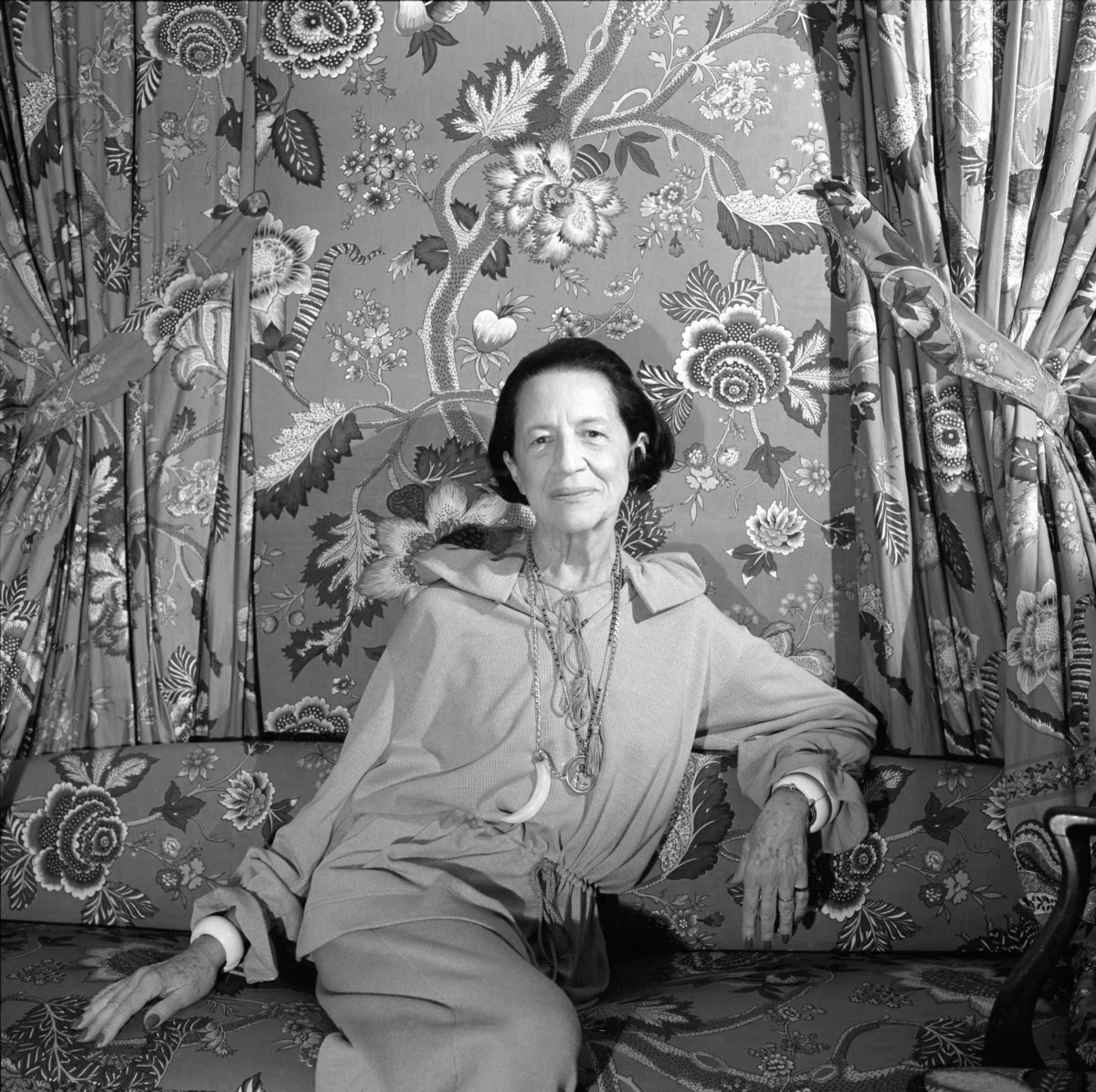
Diana Vreeland, a towering figure in the history of fashion journalism, was a visionary editor who fundamentally reshaped the landscape of Vogue magazine. Originally published in the December 1989 issue of Vogue, this retrospective piece, drawing on the recollections of her esteemed colleagues, illuminates the revolutionary spirit and indelible impact of a woman who was far more than an editor; she was a cultural architect. Her tenure at Vogue, particularly her directorship from 1963 to 1971, is widely regarded as a golden era, characterized by an audacious embrace of the avant-garde, a keen understanding of emerging cultural currents, and an unparalleled ability to translate dreams into visual realities.
A Revolution in Tradition
From the moment Diana Vreeland ascended to the editorial helm at Vogue, she initiated a seismic shift, challenging deeply entrenched traditions that had long governed the magazine’s aesthetic and thematic direction. Alexander Liberman, Editorial Director of Condé Nast, aptly described her approach as one of “iconoclastic daring,” encouraging the transgression of established rules and the dismantling of taboos. This was not a haphazard rebellion, however. Liberman emphasized her “brilliant discipline,” characterizing her as a “disciplined savage.”
Vreeland’s vision extended beyond the conventional understanding of fashion editing. She perceived Vogue as a theatrical stage, and herself as its brilliant producer. Her understanding of the power of imagery and narrative was profound. She embraced a certain excess, believing it was essential to “pass the stage lights and reach out beyond to your audience.” This theatricality, combined with her meticulous attention to detail – from the precise combing of hair to the technical nuances of retouching and engraving – allowed her to “stamp an era in the reader’s mind.” Her ability to capture the zeitgeist, particularly the burgeoning excitement of American youth, propelled Vogue into a more dynamic, contemporary, and “with-it” publication. She possessed an uncanny ability to “sense the change in the street,” a prescience that cemented her status as a leading arbiter of style.
The Regal Demeanor and the Creative Sanctuary
Vreeland’s approach to her role was imbued with a unique regality. Liberman noted her aversion to having her authority questioned, fiercely protecting her creative process from interference. Her arrival at work transformed the environment into a “manner,” akin to a courtly setting. She cultivated a coterie of “charming young secretaries and assistants” who served as a protective “minor court to guard the queen.” Communication often occurred through discreet channels, with messages “slid under the door, then returned mysteriously.” This structured formality, while seemingly rigid, was part of her method for ensuring focused creative output.
Despite this air of courtly rigor, Vreeland’s personal style was marked by a pragmatic elegance: a black sweater, a beige skirt, and always, comfortable shoes. She redefined the office environment, infusing it with “seduction” and “intense encouragement.” Every photo shoot was orchestrated as a “moment of seduction,” where “manners and behavior were paramount,” creating an attractive and engaging work atmosphere. Her friend’s observation that “Proust would have liked Diana” speaks volumes about her refinement and appreciation for the nuances of human interaction and aesthetic experience.
A Wellspring of Inspiration
Vreeland’s creative wellspring was vast and eclectic, drawing inspiration from art, literature, ballet, and music. She possessed “extraordinary antennae,” constantly attuned to new stimuli. Her secret to unlocking creative potential in others lay in her “creative generosity through encouragement.” She operated on a grand scale, thinking “big.” If a story captured her enthusiasm, it could command “sixteen pages, thirty pages!” This expansiveness was facilitated by Vogue’s publication schedule of two issues per month during her tenure, allowing for ambitious editorial adventures. Prior to her arrival, Vogue had adhered to a more conservative, social register approach; Vreeland’s daring vision “shocked a puritanical America” and consistently aimed for greater impact.
Echoes of Potentates: Vreeland and Chanel
The comparisons drawn between Diana Vreeland and Coco Chanel are telling, despite their purported mutual dislike. Both were described as “marvelous potentates,” recognizing in each other a significant rival. While Chanel operated as the inventive couturiere within her salon, Vreeland commanded the global stage of fashion. Her dramatic flair, flamboyance, and theatricality projected an image that surpassed Chanel’s.
Vreeland’s personal aesthetic was a fascinating fusion of influences. Her deep affection for Russia and its “extravagance” resonated with the opulence and vibrant colors of the Ballets Russes, embodying a “Bakst, Diaghilev quality.” Yet, she was also decidedly modern, with a strong connection to English culture. She appreciated its titles, precise tailoring, the concept of uniform, and the “regimental rigor of English life,” valuing correctness and meticulousness. Her admiration extended to the “thoroughbred,” whether in human beauty or in a magnificent racehorse.
While Vreeland could be a “dictator” and “severe,” her eccentricities were ultimately overshadowed by her unwavering pursuit of excellence for Vogue. André Leon Talley, Vogue Creative Director, reflected on her relentless drive, stating, “I knew she was aiming for the beyond, the extraordinary, the best of everything for Vogue.” This dedication earned her immense respect and admiration, culminating in a “wonderful decade at Vogue” and a profound personal connection.
The Modern Woman and the Pursuit of Perfection
André Leon Talley further elaborated on Vreeland’s enduring spirit. She embraced the “get up and go, get cracking” individual, often proudly stating, “What I am most proud of is that I’ve always gone to work.” Her life was a testament to a “thoroughly modern woman”—happily married for forty-two years, a mother, and a grandmother. Her career at Vogue and her subsequent fifteen years as a consultant to the Metropolitan Museum of Art’s Costume Institute served as her “exhilarating life tonic.”
Vreeland understood that style was not confined to elite circles; it permeated all strata of society. She found equal passion and authority in Tina Turner’s stage presence and the literary works of Isak Dinesen, seeing romance and spirit in figures from Voltaire to Jack Nicholson. Her capacity for deep engagement with seemingly minor details, such as a three-hour conversation about espadrilles, exemplified her “sense of perfection.” This meticulousness extended to her personal life, as illustrated by her detached relationship with her own kitchen, relying on detailed notes and communication with her staff. Her legendary cravings, such as for English clotted cream, necessitated extraordinary efforts, like Manolo Blahnik’s special trip from England, underscoring her ability to inspire and command extraordinary actions. The framed notes of gratitude she sent in return are a testament to her appreciation.
A Mentor and a Friend
For many, Vreeland was not just an editor but a profound mentor and confidante. Talley recounted his early admiration from afar and the eventual development of a deep friendship. Dinners with her were as significant as state dinners, and he dedicated weekends to reading to her, finding her receptive to his “big booming voice.” Her appreciation for her own narrative was evident when he read from her memoir, D.V., a moment she found “fabulous.”
Talley emphasized Vreeland’s generosity with her time and her genuine care for those around her. Her spontaneous calls to check in, asking about their well-being and daily activities, highlighted her humanistic approach. The Reverend John Andrew’s eulogy captured her essence: “Diana appreciated the human contribution to excellence.” Her life embodied the spirit of Isak Dinesen’s characters, promising to “enchant the angels.”
The Art of the Ensemble and the Power of Tailoring
Polly Allen Mellen, Vogue Fashion Director, provided vivid anecdotes that showcased Vreeland’s influence on personal style and the creation of trends. Her encounter with Millicent Rogers, adorned with voluminous skirts and an abundance of rings, led to Vreeland’s directive to reject a particular ring as resembling a “misplaced tooth filling.” This led to the popularization of a specific silhouette: a voluminous black sateen skirt worn with ten petticoats and a pink Brooks Brothers oxford button-down shirt, a trend Vreeland initiated. She also revived black ballet slippers, making them a ubiquitous fashion item.
While often associated with fantasy, Vreeland also championed a strong foundation in tailoring. Mellen described her as the “gray flannel suit lady, the gray flannel pants lady.” Vreeland’s meticulousness during fittings, using a handheld mirror to scrutinize the back of garments, underscored her commitment to perfect execution. Her enduring relationship with designer Mainbocher resulted in iconic pieces, including a remarkable gray flannel coachman’s coat and an embrace of denim when Mainbocher ventured into the fabric.
Vreeland’s entrances were legendary. She never arrived alone, often accompanied by men, or with her husband, with whom she formed a strikingly attractive couple. Her jewelry and accessories were always extravagant, extreme, and flamboyant, defining her presence at any event. To not be in her orbit was to feel excluded, as if one were “out in Siberia.”
The Transformation of Style and the American Market
The early 1960s marked a significant personal and professional transformation for Vreeland. Her decision to have her hair cut into a short, clipped pageboy by Alexandre in Paris, a departure from her previous impeccably styled snood, signaled a new era. This coincided with her embrace of vibrant colors, exemplified by an emerald green tweed suit, a stark contrast to her previous Mainbocher-clad days. This shift in her personal style was mirrored in Vogue, where audacious imagery, such as Marisa Berenson in a pink wig, began to appear.
Crucially, Vreeland remained a staunch advocate for the American market. She championed designers like Claire McCardell, Tina Leser, Charles James, Norman Norell, James Galanos, and B. H. Wragge. She was particularly enthusiastic about Stephen Burrows and Giorgio di Sant’ Angelo, recognizing their brilliance. Her hands-on approach extended to the fabric department, where she would “inspire people” by working closely with tailors, possessing an innate understanding of cut, drape, and shoulder lines.
Her editorial approach often involved immersive preparation for assignments. Before sending Mellen to Japan, Vreeland insisted she read The Tale of Genji, urging her to “enmesh yourself, feel it, so that you get it all.” Vreeland’s pragmatic, yet insightful, response to Mellen’s bewilderment at the book’s erotic content – “I couldn’t read it, but I knew it would be good for you” – highlights her unique ability to understand what would enrich her team’s perspective. Similarly, when discussing a Scheherazade-inspired sitting, her demand for “one hundred fifty more beads!” for a seraglio scene underscored her commitment to opulent storytelling.
Vreeland’s philosophy was rooted in relentless positivity. Her motto was to “turn everything into a plus.” She famously stated, “There’s no such thing as a failure, Polly, if you learn from it the first time.” This unwavering optimism fueled her groundbreaking work.
Launching Icons and Capturing the Unseen
Photographer Horst P. Horst recalled Vreeland’s uncanny ability to spot groundbreaking trends and her drive to find the perfect muse. Her presentation of a “two-piece bikini” as “the most exciting thing since the atom bomb” and her urgent need to find the “right girl to wear it” exemplifies her visionary foresight. Her rejection of conventional models in favor of someone with an innate spark led to the discovery of Veruschka, a German countess whose career was launched through Vogue under Vreeland’s direction.
Horst also recounted his initial trepidation photographing the Duchess of Marlborough’s house. Despite his lack of experience, Vreeland’s encouragement and the simple directive, “We need more,” propelled him into a new area of photography. His sentiment that both Chanel and Vreeland made “incredible contributions to the world of style and elegance” resonates deeply. Vreeland, like Chanel, was a “very strong girl, very definite” and a loyal friend, even in her final days.
The Quest for the Extraordinary
Photographer Snowdon’s recollections paint a picture of Vreeland’s boundless imagination and her ability to inspire audacious photographic endeavors. Her request to photograph “aristocratic” white whales, despite their unknown whereabouts, led Snowdon to Coney Island. The perilous dive into a tank with seventeen-foot-long whales, under the watchful eye of a warning yelled from above, exemplifies the lengths to which Vreeland would go to achieve a singular vision. Her subsequent request for white horses, initially met with rejected photographs, ultimately resulted in a stunning series created with smoke bombs to capture the horses emerging from a fog.
Snowdon’s analysis of Vreeland’s priorities is insightful: “I don’t think she thought frocks were that important. I think she felt elegance, style, and great individuality were important.” He further characterized her as “the most unsnobby person I’ve ever known,” possessing a “mentally humble” nature akin to Leonardo da Vinci. Her enduring youthfulness, her loved status, and her ability to “enthuse people” all stemmed from her profound inquisitiveness, which Snowdon identified as her greatest quality.
The Paris Office and the Human Touch
Susan Train, Paris Bureau Chief, described the unique operational setup when Vreeland was in Paris, with the Vogue office temporarily established in a suite at the Hôtel Crillon. This immersive environment, with its extra telephone lines and dedicated workspaces, facilitated Vreeland’s early-morning routine. She was a prodigious worker, conducting business from her bed and maintaining constant communication with photographers and her team.
Vreeland’s extended time in her bathroom was a subject of much speculation, involving a regimen of yoga, meditation, exercises, and creams. Yet, upon emerging, she would meticulously apply her makeup. Her habit of jotting down thoughts on notepads scattered throughout her living and working spaces ensured that inspiration was never lost. Train noted that “everything she did and everything she saw, everyone she talked to, every color, every vibration she felt was eventually translated into fashion and into Vogue.”
Vreeland’s sartorial preferences in Paris included Balenciaga, Givenchy, Yves Saint Laurent, and Madame Grès, whom she inspired to create “wonderful clothes” that would ultimately grace the pages of Vogue. She was unfailingly punctual and expressed gratitude for even the smallest gestures. Her attendance at collections was characterized by a trance-like state, as she “dreamed” and imagined each garment in context.
Despite her theatrical persona, Train emphasized Vreeland’s profound humanity. The “artificial creature” that some perceived was, in reality, one of the “most tolerant people” she had ever known. Vreeland’s approach was one of acceptance; she “never criticized” and focused solely on the positive aspects of individuals, ignoring their flaws. Her humor, courage, understanding, kindness, and depth made her a cherished friend, characterized by unwavering loyalty, a quality she also highly valued in others.
Diana Vreeland’s legacy is not merely one of groundbreaking fashion editorials; it is the legacy of a transformative force who understood the power of vision, the importance of human connection, and the enduring allure of imagination. Her influence continues to resonate, a testament to a life lived with an unparalleled dedication to beauty, style, and the relentless pursuit of the extraordinary.
