

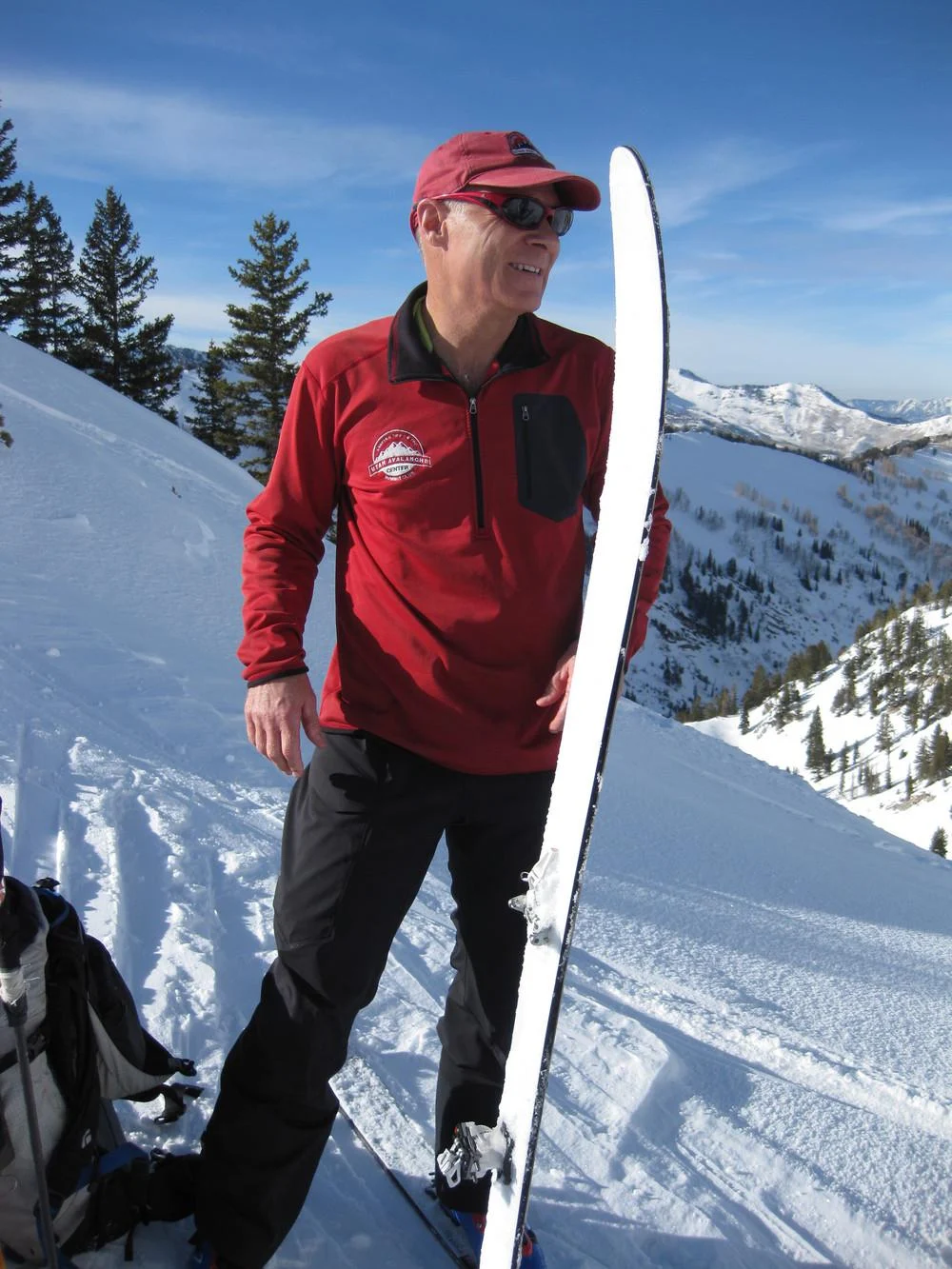
The Utah Avalanche Center has officially announced the retirement of Bruce Tremper, the long-standing Director who has guided the organization through nearly three decades of growth, technological transformation, and evolving mountain safety protocols. After 29 years at the helm of one of the world’s most respected avalanche forecasting agencies, Tremper will step down from his position with the U.S. Forest Service at the end of August, marking a significant transition for the winter sports community in the Wasatch Range and beyond. Throughout his tenure, Tremper has become a synonymous figure with backcountry safety, not only in the state of Utah but across the international snow science community. His departure signals the end of a formative chapter in American avalanche forecasting, even as the center prepares for a new era of leadership under incoming Director Mark Staples.
A Legacy Rooted in Science and Fieldwork
Bruce Tremper’s career in snow science began far from the steep couloirs of the Wasatch. His foundational expertise was forged in the rugged mountains of Montana, where he pursued a Master of Science degree at Montana State University. Working under the tutelage of the esteemed Dr. John Montagne, Tremper immersed himself in the mechanics of snow stability and the complex thermodynamics of mountain snowpacks. This academic rigor provided the framework for a career that would always balance theoretical research with boots-on-the-ground practical application.
Before arriving in Utah, Tremper honed his skills in some of the most challenging environments in North America. He served in avalanche control roles at Bridger Bowl and Big Sky Resort in Montana, gaining firsthand experience in the high-stakes world of explosive mitigation and hazard assessment for ski area operations. His journey then took him to the Alaska Avalanche Center, where he collaborated with legendary figures in the field, including Doug Fesler, Jill Fredston, and Jim Woodmency. This period in Alaska was instrumental in shaping Tremper’s understanding of large-scale maritime snowpacks and the logistical challenges of providing public safety information in vast, remote wilderness areas.
In 1986, Tremper was appointed Director of the Utah Avalanche Center (UAC). At the time, the organization was a relatively small operation focused on providing basic weather and snow stability updates via recorded telephone messages. Over the next 29 years, Tremper oversaw a radical transformation of the agency, ensuring that the UAC kept pace with the explosive growth of backcountry skiing, snowboarding, and snowmobiling.
Innovation in Public Safety Communication
One of Tremper’s most significant contributions to the industry was his recognition that scientific data is only effective if it can be communicated clearly to the public. Under his leadership, the UAC became a global leader in the development of intuitive forecasting tools. When Tremper began his tenure, the primary medium for reaching the public was the "avalanche hotline." As the digital age dawned, he pushed the UAC to become early adopters of internet-based platforms, transitioning from audio recordings to comprehensive website interfaces featuring interactive maps and multimedia content.
Tremper and his team were innovators in the use of graphic icons to represent avalanche danger. They were among the first to move away from purely text-based descriptions, introducing visual aids that allowed users to quickly identify the "avalanche problem" of the day—whether it was wind-drifted snow, persistent weak layers, or wet snow hazards. This conceptual shift helped recreationists understand not just if the mountains were dangerous, but why they were dangerous and where those dangers were specifically located.
In 2010, Tremper’s expertise was utilized on a national level when he served as a key member of the working group that developed the Conceptual Model of Avalanche Danger. This project standardized the avalanche danger scale used across the United States, providing a unified language for forecasters and the public. This standardization has been credited with reducing confusion for travelers moving between different mountain ranges and forecast zones.
Education and Global Influence
Beyond his administrative and forecasting duties, Tremper has been a prolific educator and author. His book, Staying Alive in Avalanche Terrain, is widely considered the definitive text for backcountry travelers. Translated into multiple languages and used as a primary resource for American Avalanche Association (A3) courses, the book distilled complex mechanical concepts into accessible, life-saving advice. By focusing on human factors and decision-making—the "psychology" of the backcountry—Tremper shifted the focus of avalanche education from simple snow-pit analysis to a more holistic approach to risk management.
His influence extended to the highest levels of international sport when he was placed in charge of backcountry avalanche safety for the 2002 Salt Lake City Winter Olympics. Tasked with ensuring the safety of athletes, spectators, and infrastructure during a period of intense global scrutiny, Tremper’s successful management of the games further cemented the UAC’s reputation as a premier safety organization.

Throughout his three decades of service, Tremper also served as the editor for The Avalanche Review for six years and produced numerous educational videos that have been viewed by millions. His ability to interact with the media—conducting hundreds of interviews over the years—allowed the U.S. Forest Service to maintain a positive and authoritative presence in the public eye, particularly during tragic winters marked by high fatality rates.
Passing the Torch: Mark Staples and the Future of UAC
As Tremper prepares to transition into a role that includes continued writing, teaching, and personal time on the slopes with his wife, Susi, the Forest Service has announced that Mark Staples will take over as the new Director of the Utah Avalanche Center. The selection of Staples suggests a commitment to maintaining the high scientific standards established during the Tremper era.
Staples brings a robust resume to the position, characterized by a similar blend of academic achievement and field experience. Like Tremper, Staples holds a Master of Science degree in Engineering from Montana State University, where his research focused on the mechanical properties of snow. His professional background includes extensive work as a ski patroller and snow safety officer at Big Sky Resort, as well as eight seasons as a backcountry forecaster at the Gallatin National Forest Avalanche Center in Bozeman, Montana.
Staples has also contributed to several special projects for the National Avalanche Center, demonstrating a high-level understanding of the federal oversight and inter-agency cooperation required to run a major forecasting hub. His move to the UAC is seen as a natural progression, bringing a fresh perspective while respecting the institutional knowledge that has made the Utah center a model for others worldwide.
The Changing Landscape of Backcountry Risk
The leadership transition comes at a time when avalanche forecasting is more critical than ever. Data from the Colorado Avalanche Information Center (CAIC), which tracks national statistics, shows a steady increase in backcountry participation over the last decade. While the number of people entering avalanche terrain has skyrocketed, the number of annual fatalities has remained relatively stable—a trend many experts attribute to the improved accuracy of forecasts and the widespread availability of education pioneered by leaders like Tremper.
In Utah specifically, the Wasatch Range sees some of the highest backcountry traffic in the world due to its proximity to a major metropolitan area and its reputation for high-quality powder snow. The UAC plays a vital role in the regional economy, as winter tourism and outdoor recreation are multi-billion-dollar industries for the state. A single high-profile avalanche tragedy can have significant social and economic repercussions, making the accuracy of the UAC’s daily advisories a matter of public policy as much as personal safety.
Implications for the Industry
Tremper’s retirement marks a generational shift in the avalanche community. He belongs to a cohort of forecasters who witnessed the transition from "seat-of-the-pants" mountain wisdom to a data-driven, systematic science. His departure will likely be felt in the ongoing discussions regarding climate change and its impact on mountain snowpacks. As winters become more volatile, with more frequent rain-on-snow events and extreme temperature fluctuations, the methodologies developed by Tremper and his contemporaries will need to be adapted for a new climatic reality.
Mark Staples will inherit an organization that is currently at its peak in terms of public trust and technological capability. The challenge for the new director will be to navigate the increasing pressure of social media, where "crowdsourced" snow reports sometimes compete with official forecasts, and to continue reaching a diversifying demographic of mountain users.
Conclusion
The U.S. Forest Service and the Utah Avalanche Center have expressed their profound gratitude for Bruce Tremper’s 29 years of dedicated service. While he is retiring from his official capacity, his contributions to snow science and public safety are expected to endure for decades. The "Wasatch style" of forecasting—proactive, communicative, and deeply rooted in field observation—remains his greatest legacy.
As the community prepares for the 2015-2016 winter season, the focus remains on the mission Tremper championed: ensuring that every backcountry traveler has the tools and knowledge to return home safely. With Mark Staples at the helm, the Utah Avalanche Center is poised to continue its role as a sentinel for the mountain community, building upon the foundation laid by one of the industry’s most influential pioneers.
