

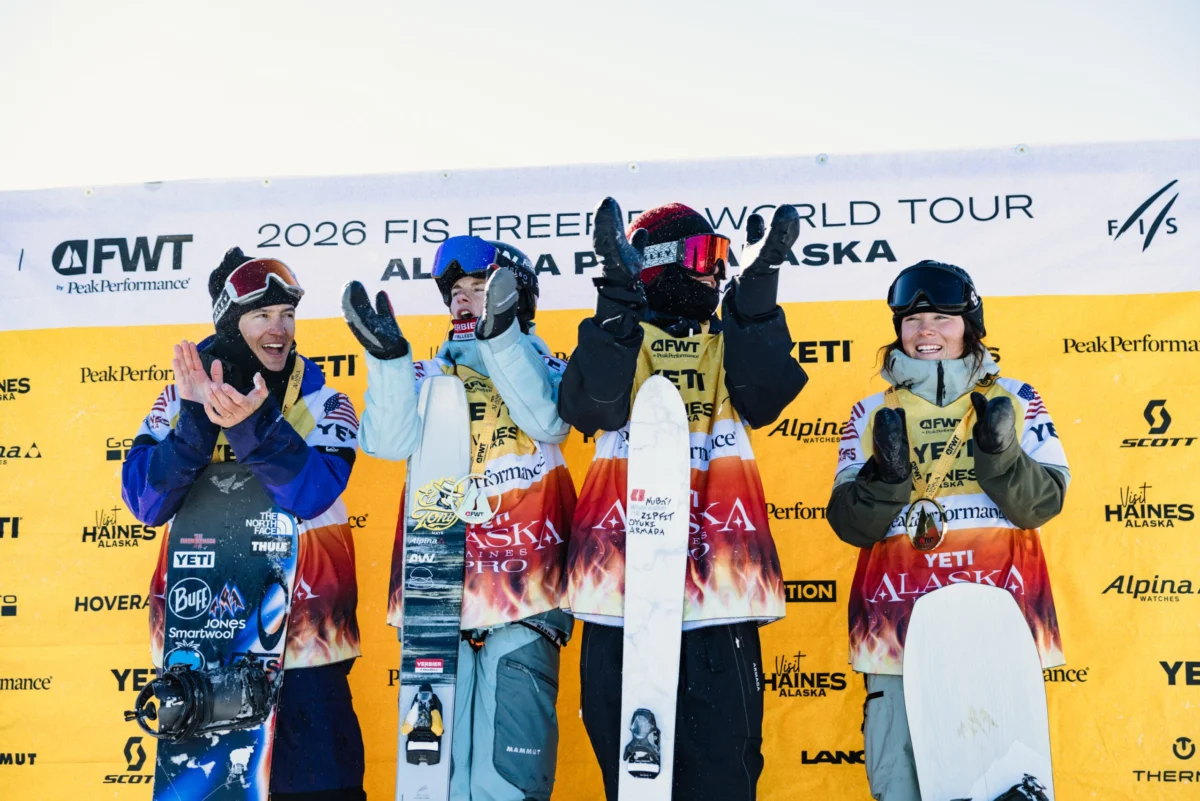
The Freeride World Tour (FWT) Finals officially commenced in a spectacular return to one of the planet’s most formidable and revered big mountain arenas: the remote and awe-inspiring faces of Haines, Alaska. After an eight-year absence, the Tour made its highly anticipated comeback to this iconic venue, presenting athletes with a monumental challenge: a staggering 740-meter vertical drop blanketed in a pristine 20 centimeters of fresh, light powder. For the elite riders who had successfully navigated the grueling qualification stages of the season, this was no mere competition; it was an intense examination of skill, fortitude, and adaptability, demanding a fusion of survival instincts and refined style in what is widely considered the world’s most technical and unforgiving big mountain terrain. The event not only delivered breathtaking performances but also significantly reshaped the battle for the coveted FWT titles, injecting unprecedented drama into the final leg of the 2026 season.
A Legendary Venue Reclaims its Throne: The Haines Legacy
Haines, nestled within the vast and rugged Chilkat Mountains of Southeast Alaska, holds a mythical status within the global freeride community. Renowned for its unparalleled scale, intricate topography, and consistent snowfall, it represents the epitome of big mountain riding. Unlike the more accessible resorts often featured on the FWT circuit, Haines demands a unique blend of logistical prowess and unparalleled backcountry expertise to even host an event. Access to the competition faces, often referred to as "spines" due to their razor-sharp, snow-fluted ridges, typically requires helicopter drops, underscoring the extreme nature of the environment. The "YETI Alaska Haines Pro" event, as it was officially named, unequivocally demonstrated why this location is universally hailed as the "dream stop" for freeride athletes, offering an unparalleled canvas for showcasing raw talent and courage.
The decision to return to Haines after an eight-year hiatus was met with widespread excitement and anticipation. The previous FWT stops in Alaska, while legendary, often presented significant logistical hurdles and highly variable weather patterns, making consistent event planning a complex endeavor. The 2026 return signifies not only favorable conditions but also a renewed commitment from the FWT organizers to embrace the untamed spirit of freeriding at its purest. This year, the chosen face was a complex tapestry of steep, vertical flutes, interspersed with massive, unforgiving cliff bands that demanded absolute precision and unwavering focus from every competitor. With a sustained pitch consistently hovering around 45 degrees – a gradient that pushes the limits of human control and equipment performance – the margin for error was virtually non-existent. The legendary Alaskan terrain lived up to its formidable reputation, as the technical descent exacted a heavy toll: only half of the ski women and half of the ski men successfully navigated the course to the finish corral without incurring a significant crash or fall, highlighting the extreme difficulty and the high-stakes nature of the competition.
The Evolution of the Freeride World Tour: A Brief History
The Freeride World Tour, established in 2008, emerged from the burgeoning desire to formalize and showcase the exhilarating discipline of big mountain skiing and snowboarding. Prior to its inception, such competitions were often localized, informal events. The FWT provided a global platform, attracting the world’s most daring and talented freeriders to a series of iconic, challenging venues across continents. The tour operates on a points-based system, with athletes accumulating scores from multiple stops, culminating in the finals where the overall world champions are crowned. The unique aspect of freeride competition lies in its subjective judging criteria, which evaluates line choice, control, fluidity, air and style, and technique. Unlike groomed resort runs, athletes navigate unpatrolled, natural terrain, making real-time decisions about their descent path, feature utilization, and overall approach to the mountain. The journey to the FWT Finals is itself a testament to enduring performance, as only a select number of top-ranked athletes from each discipline—ski men, ski women, snowboard men, and snowboard women—make the cut to compete in the ultimate showdown.
Event Day Dynamics: Navigating the Alaskan Gauntlet
On the day of the competition, the atmosphere in Haines was thick with anticipation. The fresh 20 cm of powder, while visually stunning and promising for soft landings, added another layer of complexity. Deep snow can obscure features, increase avalanche risk in certain conditions (though extensive safety protocols are always in place), and demand exceptional strength and balance to maintain speed and control on such steep gradients. The FWT’s stringent safety protocols, involving highly trained mountain guides, avalanche experts, and medical personnel, were paramount in managing the inherent risks of this environment. Before a single rider dropped, the face was meticulously assessed, ensuring the safest possible conditions for competition.

Athletes, having spent days meticulously scouting the face from helicopters and through binoculars, had pre-visualized their lines, identifying potential drops, couloirs, and safe zones. However, the dynamic nature of big mountain terrain means that plans often need to be adapted on the fly, requiring an unparalleled level of improvisation and confidence. The 740-meter vertical drop is a monumental descent, pushing riders physically and mentally over a sustained period. Exhaustion, loss of concentration, or a momentary lapse in judgment could lead to severe consequences, making the "finish corral without a crash" a significant achievement in itself.
Ski Men: Toby Rafford’s Historic Breakthrough
The Ski Men’s field delivered one of the most nail-biting finishes in FWT history, a testament to the incredibly high standard of competition and the challenging conditions. The judges’ scores reflected the minuscule differences in performance, with a mere 1.67 points separating the entire podium. In a stunning display of skill, nerve, and aggressive yet controlled riding, American Toby Rafford captivated the judges and left the global audience speechless, securing his first-ever FWT victory. Rafford’s run was characterized by an audacious line choice that navigated a series of technical features with remarkable fluidity. He reportedly linked multiple airs with impeccable landings, maintaining speed through steep, powdery sections where others faltered. His ability to blend big mountain prowess with precise execution on such a demanding face cemented his place at the top.
"Winning in Haines is surreal," Rafford remarked in a post-event statement, his voice tinged with emotion. "This is the place every freerider dreams of conquering. The conditions were gnarly, but that’s what we train for. I just tried to stick to my plan, ride confidently, and embrace the challenge. To get my first FWT win here, against this field, means everything." His victory not only marks a significant career milestone but also catapults him into a prime position for the overall championship heading into the final event.
Ski Women: Sybille Blanjean’s Masterclass in Control
The Ski Women faced an equally daunting, all-or-nothing day on the Haines face. The technical demands and high consequences meant that absolute control and strategic line choice were paramount. It was Switzerland’s Sybille Blanjean who emerged victorious, proving emphatically that precision and masterful control are indeed king in such an environment. Blanjean’s run was a clinic in controlled aggression. She meticulously picked her way through the treacherous terrain, executing flawless turns on the steep pitches and demonstrating impeccable balance over variable snow. Her ability to maintain her chosen line with minimal deviation, even through sections that tripped up other competitors, impressed the judges and secured her the top spot. Her performance underscored the importance of technical proficiency and mental fortitude over sheer speed or excessive airtime on a face where survival was often the first priority.
"It was an incredibly challenging face, one of the toughest I’ve ever skied in competition," Blanjean commented after her win. "My focus was entirely on clean skiing and maintaining control from top to bottom. There was no room for error, and I’m incredibly proud to have put down a run I’m happy with. This win gives me huge confidence for Verbier." Blanjean’s victory strengthens her claim for the overall title, sending a clear message to her competitors about her consistent high-level performance under pressure.
Snowboard Men: Victor de Le Rue’s Enduring Masterclass
In the Snowboard Men’s category, the legend of France’s Victor de Le Rue continued to grow with another commanding performance. A four-time world champion, de Le Rue is widely regarded as one of the most influential and skilled big mountain snowboarders of his generation. His victory in Haines was a testament to his unparalleled experience, deep understanding of mountain terrain, and an expansive "bag of tricks" that allows him to adapt to any condition. De Le Rue’s winning run was a masterclass in aggressive, fluid snowboarding. He utilized the natural features of the Alaskan face with creative precision, linking powerful turns with calculated airs and navigating tight couloirs with seemingly effortless grace. His ability to maintain a high speed and commitment through the steep, spine-chilling pitches, while making it look almost effortless, underscored why he remains at the pinnacle of the sport.

"Haines is always a test, a true challenge to your limits," de Le Rue reflected, acknowledging the venue’s difficulty. "The snow was great, but the steepness demands respect. I tried to ride my style, find the flow, and really connect with the mountain. To win here again, it’s a special feeling, and it keeps the pressure on for the final." His consistent excellence and ability to perform under the most extreme conditions continue to inspire a new generation of riders.
Snowboard Women: Mia Jones Dominates the Deep
The Women’s Snowboard category saw a remarkable performance from rookie sensation Mia Jones, a rising star closely associated with the Teton Gravity Research family. Jones, despite her newcomer status on the FWT, dominated the steep lines of Haines with a fearless and powerful approach that belied her experience level. Her winning run was characterized by an aggressive line choice, taking on features with confidence and executing clean, powerful turns through the deep powder. She demonstrated exceptional board control and a natural feel for the mountain, navigating the technical sections with maturity and style that earned her the top spot. Jones’s performance highlights the exciting influx of new talent into the FWT and signals a bright future for the sport.
"I still can’t believe it," Jones exclaimed, radiating excitement. "Haines has always been a place I’ve dreamed of riding, let alone competing and winning. It was intimidating, but I just tried to focus on my riding and enjoy the moment. This is an incredible start, and I’m so stoked for the rest of the season." Her unexpected victory adds an intriguing element to the overall championship race and demonstrates the potential for rookies to shake up the established order.
The Road to Verbier: Who Will Claim the Crown?
As the deep Alaskan snow settles and the athletes depart from Haines, the collective focus of the freeride world unequivocally shifts to the final, climactic showdown: the legendary Bec des Rosses in Verbier, Switzerland. The results from Haines, with its double-points weighting and extreme technical demands, have significantly shaken up the leaderboard across all categories, ensuring that the title races are now wider open and more fiercely contested than ever before.
Toby Rafford and Sybille Blanjean, fresh off their momentous victories in Alaska, will carry the coveted Golden Bibs—symbolizing their leadership in the overall standings—into the Swiss Alps. However, the Bec des Rosses, with its notoriously steep, exposed, and technically intricate face, presents a challenge arguably even more formidable than Haines. Known for its mixed conditions, icy patches, and huge, consequential features, the Bec is the ultimate test of a freerider’s complete skill set, demanding not only courage but also precision, adaptability, and unwavering mental strength.
The implications of the Haines event are profound. For those who performed well, it provides crucial momentum and a significant points boost. For those who struggled, it means a desperate need for a flawless run in Verbier to salvage their championship hopes. The high attrition rate in Haines serves as a stark reminder of the fine line between glory and defeat in big mountain freeriding. The FWT overall titles are now genuinely up for grabs, promising an electrifying conclusion to the season. Haines reminded everyone why Alaska remains the ultimate proving ground for the world’s best freeriders, pushing the boundaries of what is possible on skis and snowboards. But it is Verbier, with its iconic Bec des Rosses, that will ultimately decide who etches their name into the history books as the 2026 Freeride World Tour champions. The world will be watching as these elite athletes prepare for the final, defining drop of the season.
