

This past weekend, Bald Mountain in Sun Valley, Idaho, transcended its traditional role as a mere ski resort to become the crucible for a groundbreaking new competition. The inaugural Sun Valley Stampede, held from [Inferred Date Range, e.g., Friday to Sunday] at the iconic destination, sought to identify and crown the "Best Skier in the West" through a unique, multi-discipline challenge. Drawing 150 athletes from across the region, the event transformed the slopes of Mid-Challenger station down to the Warm Springs base into a dynamic proving ground, pushing competitors to their absolute limits and heralding a potential shift in the landscape of ski racing.
Sun Valley’s Legacy and the Genesis of the Stampede
Sun Valley, a resort synonymous with American skiing history, boasts a rich heritage of both recreational enjoyment and competitive excellence. Since its establishment in 1936 as America’s first destination ski resort, Bald Mountain has been celebrated for its consistent pitch, extensive grooming, and challenging terrain, making it a natural host for high-level events. The idea behind the Sun Valley Stampede was to build upon this legacy, moving beyond conventional giant slalom or downhill races to create a format that demanded holistic skiing prowess. Organizers aimed to develop a competition that would truly test every facet of a skier’s ability, from raw speed and technical carving to freestyle agility and mogul mastery, thereby identifying a truly versatile champion. The concept emerged from a desire to bridge the gap between traditional alpine racing and the burgeoning freeride and freestyle disciplines, reflecting the evolving nature of modern skiing. A mid-week reset of the mountain, including meticulous grooming and course preparation, ensured optimal conditions for the demanding event, setting a high standard for the inaugural year.
The Gauntlet: A Course Designed for Comprehensive Skill Assessment
The core of the Sun Valley Stampede’s innovation lay in its meticulously designed course, an approximate 1,000-foot vertical drop from Mid-Challenger station to Warm Springs. This wasn’t a standard giant slalom race but a multi-discipline "gauntlet" engineered to expose any potential weakness in an athlete’s repertoire. The course was segmented into distinct zones, each demanding a specific skill set:

- High-Speed Carving Section: The initial phase required impeccable edge control and aerodynamic tucking. Athletes launched from the start gate into a section designed for maximum velocity, where precision on firm corduroy was paramount. This segment immediately favored those with strong fundamental racing backgrounds and aggressive carving techniques.
- The Race Arena Jump: Following the carving section, competitors encountered a "double-lipped" feature, the "Race Arena Jump." This jump tested aerial awareness and control, forcing athletes to manage speed and trajectory before landing smoothly into the next demanding section. The dual lip added an element of unpredictability, requiring quick adjustments.
- The Race Arena Trail (Moguls and Natural Terrain): This was arguably the most brutal segment. Athletes plunged into a challenging mix of moguls, natural undulations, and variable snow conditions. Due to lower snowpack in certain areas, this section was reportedly "peppered with rocks and brush," demanding exceptional adaptability, quick decision-making, and robust shock absorption. This is where "life-long skiers separated themselves from the pack," as pure racing speed gave way to raw, instinctual mountain skiing.
- Banked Slalom and Park Features: The penultimate zone introduced elements typically found in snowboarding or freestyle skiing competitions. A banked slalom tested cornering technique and gravitational flow, while integrated park features (such as rollers and smaller jumps) required freestyle agility and creative line choices. This blend further emphasized the multi-discipline nature of the event.
- Final Hip Jump: The course concluded with a dramatic hip jump positioned directly in front of the roaring crowd at the Warm Springs base. This final flourish allowed athletes to showcase their style and amplitude, providing an exhilarating finish for both competitors and spectators.
The combined effect of these varied segments ensured that only the most well-rounded skiers could truly excel, moving beyond specialization to embrace a comprehensive mastery of the mountain.
From the Screen to the Slopes: TGR Athletes Bring Cinematic Intensity
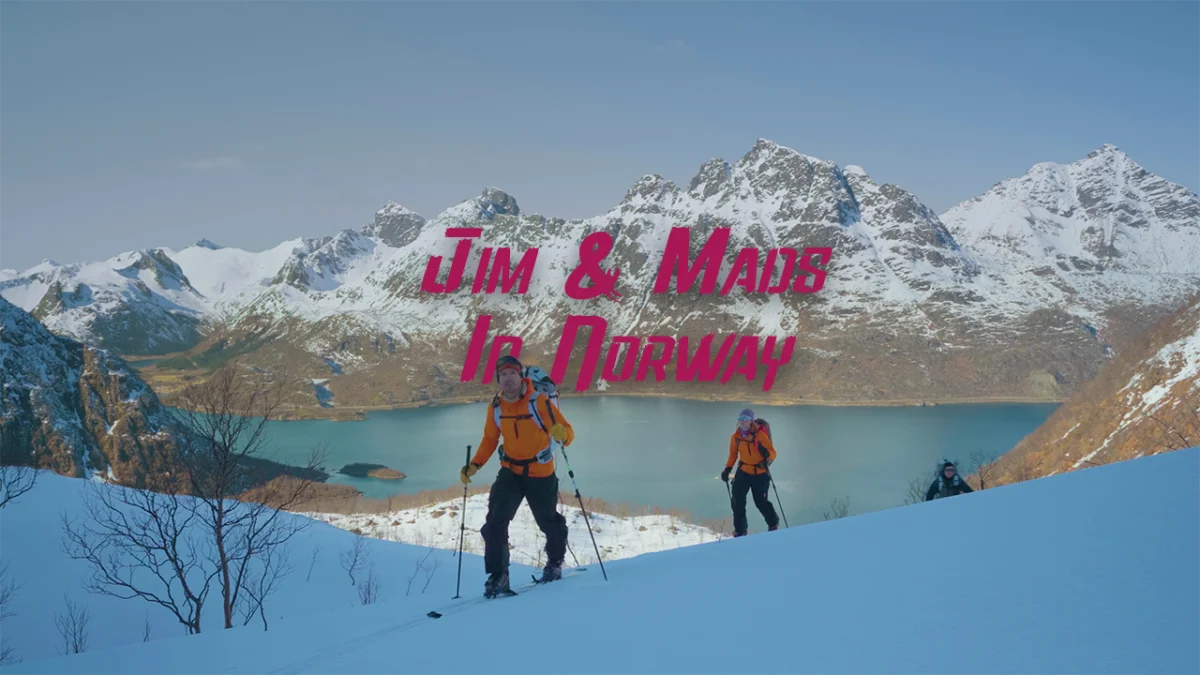
The Sun Valley Stampede was not just a stage for local talent but also a homecoming for renowned athletes, particularly those familiar to fans of Teton Gravity Research (TGR) films. Jackson Hole locals Jim Ryan and Madison Rose Ostergren, fresh from their compelling segments in TGR’s 30th annual film, Pressure Drop (which featured them navigating the challenging terrains of Norway), brought a palpable cinematic intensity to Bald Mountain. Their participation underscored the event’s ambition to attract top-tier talent capable of adapting their skills across diverse environments.
In Pressure Drop, Ryan and Ostergren showcased their prowess in big-mountain mountaineering, navigating complex lines and extreme conditions. At the Stampede, they translated this "dialed focus" and adaptability into a head-to-head bracket format. Spectators and fellow competitors witnessed a masterclass in versatility as these athletes, accustomed to vast, untamed landscapes, meticulously applied their skills to a tightly controlled, high-stakes racecourse. Their presence not only elevated the competition but also provided a fascinating contrast, demonstrating how the techniques honed in remote backcountry environments are applicable, and indeed crucial, in a structured race setting.
Jim Ryan’s Masterclass in Power and Precision
Jim Ryan approached the Stampede course with the explosive power and unflappable determination that have made his TGR segments legendary. His performance was a testament to his ability to maintain intensity and precision regardless of the conditions. While many racers struggled with the transition from the "firm morning corduroy" to the "forgiving spring corn" that emerged in the afternoon as temperatures rose, Ryan remained impeccably "locked in." This adaptability highlighted his deep understanding of snow dynamics and equipment.

A crucial aspect of Ryan’s success was his equipment choice: the Volkl Mantra 84. This ski, known for its versatility, provided him with the necessary precision to "blitz the carving section" with aggressive, clean lines. Simultaneously, its dampness allowed him to "smash through the variable ‘Race Arena’ bumps without hesitation," absorbing the impact of the challenging terrain where others might have faltered. Ryan’s technique was characterized by a powerful, direct approach, minimizing unnecessary movements and maximizing forward momentum. His performance served as a stark reminder that whether he’s navigating a "no-fall pinner" in the rugged Tetons or conquering a technical, multi-discipline course in Idaho, Jim Ryan operates with an unwavering commitment to excellence, refusing to take shortcuts. His consistent execution across varied obstacles underscored his reputation as one of skiing’s most formidable talents.
Madison Rose Ostergren: Flow Amidst the Chaos
Madison Rose Ostergren further cemented her reputation as one of the most exciting faces in the "next generation" of freeride skiing. Known for her fearless approach to massive objectives and her ability to charge with "zero hesitation," Mads found "pure flow" even amidst the demanding, head-to-head bracket format of the Stampede. Her performance was a captivating display of grace under pressure, demonstrating how her big-mountain skills translate into competitive success.
Ostergren’s navigation of the "Race Arena" section was particularly remarkable. Despite the low snowpack that left the area "peppered with rocks and brush," she moved through the chaotic terrain with a fluidity that "left the judges stunned." Her ability to maintain speed and control through such challenging and variable conditions underscored her exceptional balance and innate feel for the snow. Furthermore, her seamless transition from the mogul field to the banked slalom, where she maintained critical speed while strategically setting up for the final freestyle features, showcased her comprehensive skill set. This holistic approach reflected the same "obsession with life on the edge" that defined her compelling performance in Pressure Drop, proving that her talent extends far beyond the confines of backcountry expeditions into the realm of structured, high-pressure competition. Her adaptability and natural athleticism position her as a significant figure in the evolving landscape of ski sports.
Crowning the Champions: Local Talent Shines
The culmination of the Sun Valley Stampede was a "full throttle" finals event held on Sunday, generating an electric atmosphere at the base of Bald Mountain. The head-to-head format intensified the competition, with each bracket pitting two highly skilled athletes against each other in a direct battle for supremacy. The crowd at the Warm Springs Plaza was treated to a spectacular display of speed, precision, and aerial acrobatics.
In the men’s field, the competition saw a thrilling conclusion with local legend Harlan Collins emerging victorious. Collins’ intimate knowledge of Sun Valley’s terrain, having grown up skiing its challenging slopes, undoubtedly provided a significant "home-court advantage." His mastery of the varied course features, combined with consistent, aggressive lines, allowed him to outperform a strong field of contenders. His win was not just a personal triumph but a moment of pride for the Sun Valley community, showcasing the depth of talent fostered within the region.
On the women’s side, the title went to 17-year-old Ruby Smith, another local talent who demonstrated exceptional skill and composure beyond her years. Smith’s victory was a powerful statement about the rising generation of skiers in Sun Valley. Her ability to navigate the complex course with both speed and style, particularly through the technical and freestyle sections, highlighted her versatility and potential. Her win underscores the effectiveness of local ski programs and the dedication of young athletes in the area. Both Collins and Smith were awarded $2,500 in prize money, alongside the prestigious title of "Best Skier in the West," a recognition that solidifies their standing in the regional ski community. Their victories were celebrated as a testament to both seasoned expertise and burgeoning youth talent, reinforcing the vibrant ski culture of Sun Valley.
Closing Thoughts from the Finish Line: A New Era for Ski Competition
As the Kris Lager Band brought the weekend’s festivities to a rousing close at the Warm Springs Plaza, an undeniable sense of "stoke" permeated the air. The inaugural Sun Valley Stampede was more than just a ski race; it was a cultural event that successfully "bridged the gap" between Sun Valley’s deep racing heritage and its emerging freestyle talent. The organizers’ vision of creating a comprehensive test of skiing ability was realized, offering a refreshing departure from single-discipline competitions.
The event’s success carries significant implications for the future of ski competitions. By combining elements of alpine racing, freeride, and freestyle, the Stampede has potentially charted a new course for how all-around skiing excellence is recognized and celebrated. It demonstrated that a multi-discipline format can be incredibly engaging for both athletes and spectators, fostering a broader appreciation for the diverse skills inherent in the sport. For Sun Valley, the Stampede has reinforced its reputation as a premier destination not just for traditional skiing but also for innovation in winter sports. The high level of participation (150 athletes) and the enthusiastic reception suggest strong potential for growth in future years, attracting even more elite talent and expanding its influence across the western ski community.
The weekend was a vibrant celebration of "everything we love about winter": the exhilarating speed, the individual style, and the shared memories forged on the slopes. As the event crew prepares for future endeavors, one conclusion is unequivocally clear: the Sun Valley Stampede has made a resounding debut. It has arrived with a powerful statement, establishing itself as a significant and enduring fixture on the competitive ski calendar, poised to continue redefining what it means to be the "Best Skier in the West."
