

The evolving landscape of professional development and education is increasingly highlighting the critical importance of human-centered skills, a trend profoundly underscored by recent discussions at the 6th SPE Balkan Ski Conference in Kranjska Gora, Slovenia. At the heart of this discourse was a presentation by Dave Schuiling, PSIA-AASI Director of Education & Credentialing, titled "Making People Skills Visible," which explored how intentional cultivation of interpersonal competencies in snowsports instruction is not only enhancing learning experiences on the slopes but also preparing individuals for the complexities of a rapidly changing global workforce. This focus represents a significant paradigm shift, moving beyond traditional technical and teaching proficiencies to explicitly integrate and assess relational abilities like empathy, communication, and adaptability, recognizing their foundational role in both instructional excellence and broader professional success.
The SPE Balkan Ski Conference: A Hub for Educational Innovation
The 6th SPE Balkan Ski Conference, held in the picturesque alpine resort of Kranjska Gora, Slovenia, served as a vital forum for international snowsports educators and researchers. Sponsored in part by the International Association of Education in Science and Snowsports (IAESS), the conference convenes annually to foster dialogue, share best practices, and advance the scientific understanding of snowsports pedagogy. Kranjska Gora, renowned for its rich skiing heritage and modern facilities, provides an ideal backdrop for such gatherings, attracting experts from across Europe and beyond. The IAESS, a prominent body dedicated to promoting research and education in snowsports, plays a crucial role in shaping the agenda of these conferences, ensuring that cutting-edge topics and innovative approaches are brought to the fore. This year’s event, held amidst growing global discussions about the future of work, provided a timely platform for Schuiling to articulate PSIA-AASI’s progressive stance on human skills. His presentation resonated deeply with an audience comprising instructors, coaches, researchers, and administrators, all keenly aware of the multifaceted demands placed upon contemporary educators.
Schuiling’s session began with a deceptively simple yet profoundly insightful question posed to the attendees: "What skills or behaviors did your favorite teacher or coach have?" The responses, collected in real-time from a diverse group of international professionals, exhibited remarkable consistency. Words such as "empathy," "patience," "humor," "belief in the student," "trust," "communication," and "passion" dominated the feedback. What was striking, as Schuiling emphasized, was the near absence of technical descriptors. Participants rarely mentioned their favorite instructor’s flawless carving technique or advanced tactical knowledge. Instead, their recollections centered entirely on how that instructor made them feel and how they interacted with them as individuals. This initial exercise powerfully illustrated a fundamental truth: while technical mastery is undoubtedly a prerequisite, the truly transformative educational experiences are forged in the crucible of human connection and effective interpersonal dynamics.
The Evolution of Snowsports Education: From Tacit to Explicit
For many decades, professional snowsports education, as epitomized by organizations like the Professional Ski Instructors of America and American Association of Snowboard Instructors (PSIA-AASI), primarily anchored its credentialing and development frameworks around three core domains: technical performance, teaching skills, and a comprehensive professional knowledge of the sport. These areas remain undeniably crucial, forming the bedrock upon which effective instruction is built. However, a significant dimension of what made an instructor truly exceptional—the subtle yet powerful qualities that enabled them to connect with students, build rapport, foster trust, and adapt their approach to individual learning styles—often remained in the background. These "people skills" were recognized implicitly, valued intuitively, but rarely explicitly defined, measured, or systematically trained. They were the "tacit knowledge" of great instructors, passed down through observation rather than formalized curriculum.
The introduction of the Learning Connection™ framework by PSIA-AASI marked a pivotal moment in the professionalization of snowsports instruction. This framework, which began to take shape in the early 2010s and has since become a cornerstone of the association’s educational philosophy, explicitly identified "People Skills" as a distinct and equally vital domain, alongside "Teaching Skills" and "Technical Skills." This strategic elevation of relational competencies was not merely a semantic shift; it was a deliberate and comprehensive effort to bring these previously implicit behaviors into clear focus. By articulating specific behaviors associated with strong human interaction in a learning environment, the Learning Connection provided a common language and a structured approach for instructors to understand, practice, and refine these essential capabilities.
Among the specific behaviors now highlighted within the People Skills domain are:
- Active Listening: The ability to fully concentrate on, understand, respond to, and remember what is being said, both verbally and non-verbally.
- Empathy and Understanding: The capacity to perceive, be sensitive to, and share the feelings of another, adapting communication and instruction to the student’s emotional state and perspective.
- Building Rapport and Trust: Establishing a connection based on mutual understanding, respect, and confidence, creating a safe and encouraging learning environment.
- Effective Communication: Clear, concise, and appropriate verbal and non-verbal exchange of information, ideas, and feedback, tailored to the student’s level and learning style.
- Adaptability and Flexibility: The willingness and ability to adjust instructional methods, communication style, and expectations based on individual student needs, progress, and environmental conditions.
- Positive Reinforcement and Motivation: Providing constructive feedback and encouragement that inspires confidence, fosters a growth mindset, and sustains engagement.
- Conflict Resolution and De-escalation: Skillfully managing disagreements or challenging behaviors, maintaining a positive learning atmosphere.
- Cultural Sensitivity: Recognizing and respecting diverse backgrounds, beliefs, and learning preferences, ensuring an inclusive experience for all students.
The act of defining and articulating these behaviors had a profound impact. Once visible, these skills could be intentionally practiced, openly discussed among peers and mentors, and more consistently assessed during certification processes. This visibility has also been instrumental in aligning PSIA-AASI’s credentialing system across various disciplines—skiing, snowboarding, telemark, and adaptive snowsports—ensuring a unified standard for instructor development and evaluation that transcends specific technical movements. This framework underscores a crucial understanding: while the mechanics of a perfect turn might vary across disciplines, the fundamental human connection required to teach it effectively remains universal.
Global Workforce Trends and Parallel Insights
The increasing emphasis on people skills within snowsports education mirrors a profound and widely acknowledged shift in the global labor market. In an era characterized by rapid technological advancement, automation, and the pervasive influence of artificial intelligence, the skills that uniquely define human capability are gaining unprecedented value. This creates a fascinating paradox: while technology accelerates, the development of these essential human skills demands time, reflection, feedback, and often, a degree of struggle and persistence—qualities that cannot be acquired instantaneously.
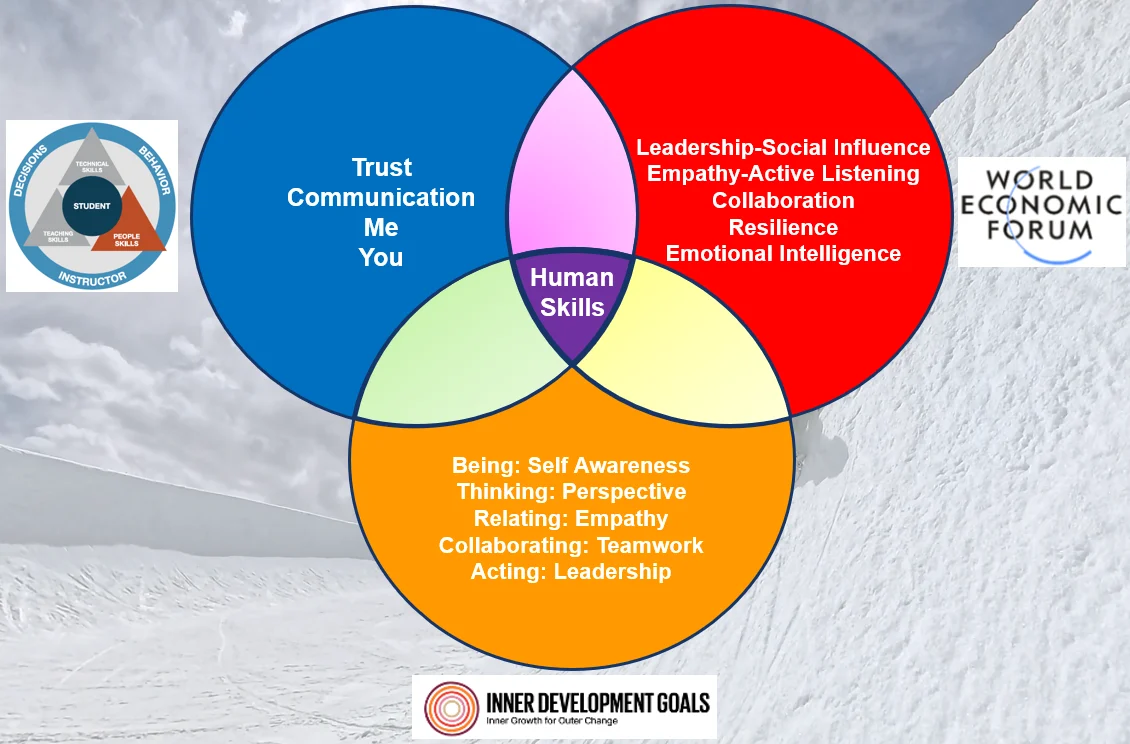
Leading organizations and research bodies worldwide consistently highlight these human-centered capabilities as critical for future professional success. The World Economic Forum (WEF), a preeminent international organization for public-private cooperation, regularly publishes reports identifying the most in-demand skills for the coming decades. Their projections for 2030 and beyond consistently feature adaptability, empathy, emotional intelligence, collaboration, leadership, resilience, and curiosity (often framed as lifelong learning) at the top of the list. For instance, a 2023 WEF report on the future of jobs emphasized that analytical thinking and creative thinking remain paramount, but human skills like emotional intelligence, self-awareness, and collaboration are increasingly seen as core competencies that cannot be easily replicated by AI.
Similarly, the Inner Development Goals (IDG) initiative, a non-profit organization focused on inner capacities and qualities for sustainable development, outlines a framework describing similar competencies across five dimensions: Being (e.g., inner compass, integrity), Thinking (e.g., critical thinking, complexity awareness), Relating (e.g., empathy, compassion), Collaborating (e.g., communication, co-creation), and Acting (e.g., courage, optimism). When these global frameworks are juxtaposed with PSIA-AASI’s Learning Connection, the overlap is not merely coincidental; it is striking and profound. The very qualities that define an exceptional snowsports instructor—their ability to connect, inspire, and adapt—are precisely the human skills that are becoming indispensable across virtually all professions and industries.
Supporting data further underscores this trend. A 2020 LinkedIn report, based on an analysis of billions of data points from its platform, found that soft skills like communication, collaboration, and adaptability were among the most sought-after competencies by employers globally. Deloitte’s "Soft Skills for Business Success" research indicated that soft skill-intensive occupations are projected to account for two-thirds of all jobs by 2030, a significant increase from 2000, and that these roles contribute an average of $93,000 more to the Australian economy per annum than occupations with low soft skill intensity. The implication is clear: the ability to navigate complex social dynamics, build meaningful relationships, and communicate effectively is not merely a desirable trait but a tangible asset with demonstrable economic value.
Challenges and Opportunities in Skill Development
The development of these deeply ingrained human capabilities presents both challenges and opportunities. Unlike technical skills that can often be mastered through repetitive physical drills, people skills require a more nuanced and holistic approach. They necessitate self-awareness, continuous feedback, experiential learning, and an openness to vulnerability and growth. This development pathway inherently takes time and demands persistence, often involving moments of struggle and reflection. For example, cultivating empathy requires actively listening to diverse perspectives and intentionally placing oneself in another’s shoes, a process that is iterative and highly personal.
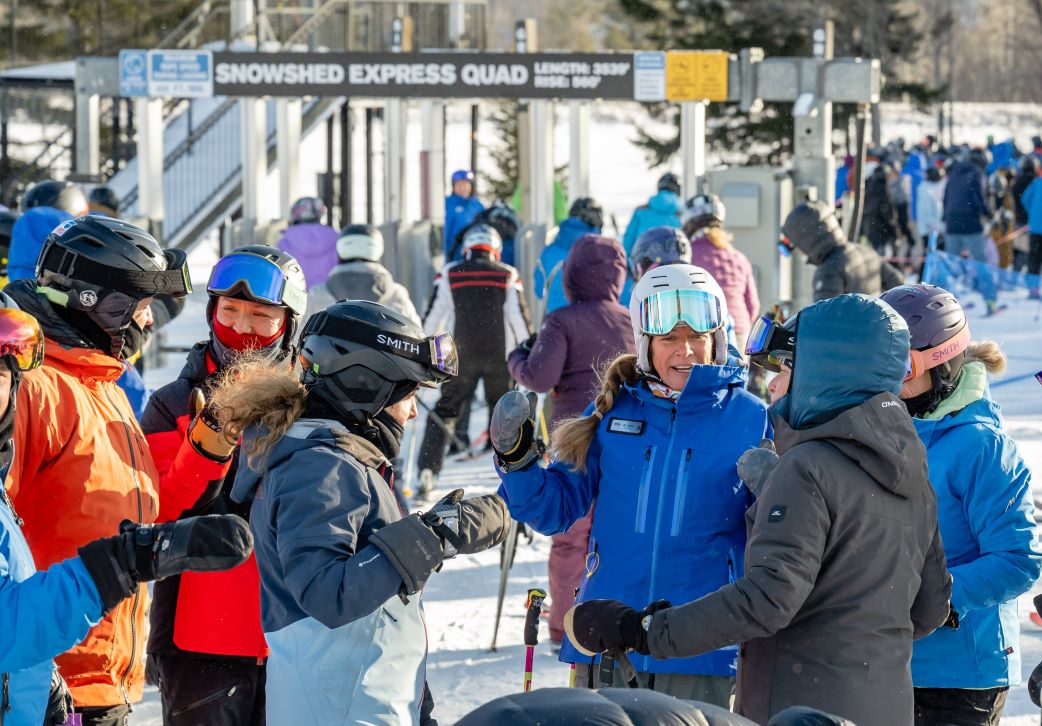
The snowsports instruction environment offers a uniquely fertile ground for cultivating these skills. Instructors are constantly engaging with individuals of varying ages, backgrounds, learning styles, and emotional states. They must quickly build trust with strangers, communicate complex movements simply, adapt their lessons on the fly to changing conditions or student progress, and provide constructive feedback in a supportive manner. These daily interactions are, in essence, a dynamic laboratory for human development. The emphasis on experiential learning in snowsports naturally fosters the development of adaptability and resilience, as instructors and students alike must respond to unpredictable elements like weather, snow conditions, and personal challenges.
Implications for Snowsports and Beyond
The convergence of snowsports education’s focus on people skills with broader global workforce trends has significant implications. It highlights that the work of snowsports instructors extends far beyond teaching people how to ski or snowboard. When PSIA-AASI and similar organizations prioritize the development of strong people skills, they are actively cultivating human capabilities that are profoundly transferable and valuable across a vast spectrum of life and career paths.
This perspective doesn’t suggest that snowsports instruction is solely about preparing individuals for corporate careers. Rather, it underscores the inherent value of snowsports education as a powerful platform for holistic human development. The relational competencies honed on the mountain—the ability to lead, to collaborate, to empathize, to communicate under pressure, to adapt to change—are foundational to personal well-being, civic engagement, and success in any endeavor.
As artificial intelligence continues to advance and reshape the professional landscape, augmenting human capabilities and automating routine tasks, the uniquely human skills become increasingly indispensable. AI can analyze data, generate content, and optimize processes, but it cannot authentically replicate genuine human empathy, nuanced emotional intelligence, or the complex dynamics of trust-building that are crucial for effective leadership and collaboration. Therefore, by investing in the explicit development of people skills, snowsports education is not only enhancing the quality of lessons and the experience of students but is also contributing significantly to the cultivation of a more capable, resilient, and human-centric workforce and society. The slopes, it turns out, are not just training grounds for technique, but vital arenas for forging the very human connections that will define our future.
