

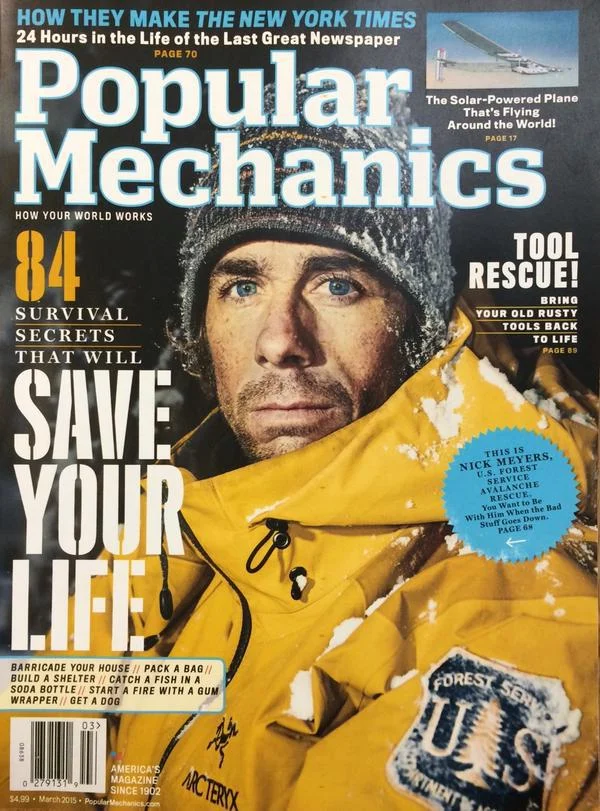
Mount Shasta, CA – Nick Meyers, a distinguished figure in mountain safety and a seasoned expert in avalanche rescue, has achieved a significant milestone, appearing on the cover of the prestigious Popular Mechanics magazine. Meyers, who serves as the Director of the Mount Shasta Avalanche Center and the Lead Climbing Ranger on Mount Shasta, was recognized for his profound knowledge and practical experience in high-risk mountain environments. The feature highlights his expertise in survival and rescue, offering readers invaluable insights from a leading authority in the field.
A Testament to Expertise: Meyers’ Recognition in Popular Mechanics
The cover story in Popular Mechanics, a publication renowned for its in-depth exploration of technology, science, and practical applications, underscores the critical importance of preparedness and specialized knowledge in extreme conditions. Meyers’ inclusion is not merely a personal accolade but a broader acknowledgment of the vital work undertaken by avalanche centers and mountain rescue professionals. The magazine’s decision to feature Meyers on its cover signifies the growing public interest in wilderness survival and the technical skills required to navigate and mitigate the inherent dangers of mountain environments.
The article delves into the essential gear and survival strategies that Meyers, as an avalanche rescue expert, always carries. This practical focus aligns perfectly with Popular Mechanics‘ readership, which often comprises individuals with a keen interest in gear, technology, and self-sufficiency. The feature is expected to shed light on the meticulous planning and specialized equipment necessary for operating safely in avalanche-prone areas, drawing from Meyers’ extensive experience on Mount Shasta, a prominent stratovolcano in Northern California known for its challenging terrain and significant snowfall.
Background and Chronology: The Rise of a Mountain Safety Authority
Nick Meyers’ journey to the cover of Popular Mechanics is a culmination of years dedicated to understanding and mitigating mountain hazards. His roles as Director of the Mount Shasta Avalanche Center and Lead Climbing Ranger on Mount Shasta place him at the forefront of avalanche forecasting, public education, and rescue operations.
The Mount Shasta Avalanche Center, a key component of the region’s safety infrastructure, is responsible for monitoring snowpack conditions, assessing avalanche risk, and disseminating crucial information to the public, including skiers, snowboarders, climbers, and other outdoor enthusiasts. The center’s work is essential for preventing tragedies and ensuring that individuals can make informed decisions when venturing into the backcountry.
Meyers’ tenure as Lead Climbing Ranger on Mount Shasta further solidifies his expertise. Mount Shasta, with its significant elevation and dynamic weather patterns, presents a formidable challenge to climbers and requires a deep understanding of alpine conditions, including snow, ice, and rock. His responsibilities likely encompass route assessment, rescue coordination, and ensuring adherence to safety protocols for those attempting ascents.
While the exact timeline leading to the Popular Mechanics feature is not detailed in the provided text, it is reasonable to infer that the magazine’s editorial team likely identified Meyers through his impactful work and reputation within the mountain safety community. Such features are often the result of extensive research, interviews, and an assessment of an individual’s contributions to their field. The publication of the article itself marks a significant point in this chronology, bringing his expertise to a wider audience.
Supporting Data and Analysis: The Science and Statistics of Avalanche Safety
The significance of Meyers’ expertise can be further understood by examining the data surrounding avalanche incidents. According to the Colorado Avalanche Information Center (CAIC), an average of 25 avalanche fatalities occur each year in the United States. These statistics, while grim, highlight the persistent danger and the critical need for accurate forecasting and public education.
Mount Shasta, in particular, is a region where avalanche risk is a constant consideration. The volcano’s height, exposure to weather systems, and varied terrain create conditions conducive to avalanches. The Mount Shasta Avalanche Center, under Meyers’ leadership, plays a pivotal role in providing real-time information that directly impacts these statistics. Their forecasts are based on rigorous snowpack analysis, weather monitoring, and an understanding of terrain traps.
The article in Popular Mechanics likely delves into the technical aspects of avalanche rescue, such as the use of transceivers, probes, and shovels, as well as the importance of companion rescue techniques. These are not merely tools but represent a system of protocols developed through decades of experience and research in avalanche safety. The effectiveness of these techniques, when employed by trained professionals like Meyers, can dramatically improve survival rates in buried avalanche victims. Studies have shown that survival rates decrease significantly with each minute a person remains buried.
Meyers’ inclusion also brings attention to the broader implications of survival in extreme environments. The skills and knowledge he possesses are transferable to various wilderness scenarios, emphasizing preparedness, resourcefulness, and a deep respect for the power of nature. The article’s focus on "10 Survival Essentials" suggests a practical guide that empowers readers with actionable advice, reinforcing the idea that preparedness is the first line of defense against the unexpected.
Official Responses and Broader Impact: Acknowledgment and Public Awareness
The recognition of Nick Meyers by Popular Mechanics is likely to elicit positive responses from various stakeholders in the mountain safety and outdoor recreation communities. Organizations such as the U.S. Forest Service, with which the Mount Shasta Avalanche Center collaborates, would see this as a validation of their commitment to public safety and the expertise of their personnel.
The U.S. Forest Service’s blog post about Nick Meyers, linked within the original announcement, serves as an official endorsement and a platform to further disseminate information about his achievements. Such acknowledgments from within his professional sphere reinforce the credibility of his expertise and the importance of his role.
The broader impact of Meyers’ feature extends beyond the immediate audience of Popular Mechanics. It serves to:
- Elevate Public Awareness: By reaching a wide readership, the article brings critical issues of avalanche safety and wilderness preparedness to a larger public consciousness. This can encourage more individuals to seek out information, participate in avalanche awareness courses, and adopt safer practices in the mountains.
- Promote Professional Development: The recognition of a leading professional like Meyers can inspire others in the field, fostering a culture of excellence and dedication to mountain safety.
- Highlight the Importance of Avalanche Centers: The feature shines a spotlight on the essential services provided by avalanche centers like the Mount Shasta Avalanche Center, potentially leading to increased support and resources for these vital institutions.
- Encourage Responsible Recreation: By showcasing the expertise required for safe mountain travel, the article implicitly encourages a more responsible and informed approach to outdoor recreation, emphasizing the need for preparation and respect for the environment.
The image accompanying the announcement, a photograph of Meyers, likely depicts him in a professional capacity, perhaps on Mount Shasta, embodying the spirit of the mountains and the seriousness of his work. While the specific content of the photo isn’t described, its presence adds a visual element that connects the reader to the individual and the environment he operates within.
Conclusion: A Beacon of Expertise in Mountain Safety
Nick Meyers’ appearance on the cover of Popular Mechanics is a significant achievement that underscores his dedication and expertise in the challenging field of avalanche safety and mountain rescue. His roles at the Mount Shasta Avalanche Center and as Lead Climbing Ranger on Mount Shasta highlight his commitment to protecting lives and promoting responsible outdoor recreation. The feature serves as a powerful testament to the critical importance of specialized knowledge, meticulous preparation, and the vital work of professionals who operate in some of the most demanding environments on Earth. By bringing his insights to a broad audience, Meyers’ story inspires and educates, reinforcing the enduring message that preparedness is paramount when facing the formidable beauty and inherent risks of the mountains.
