

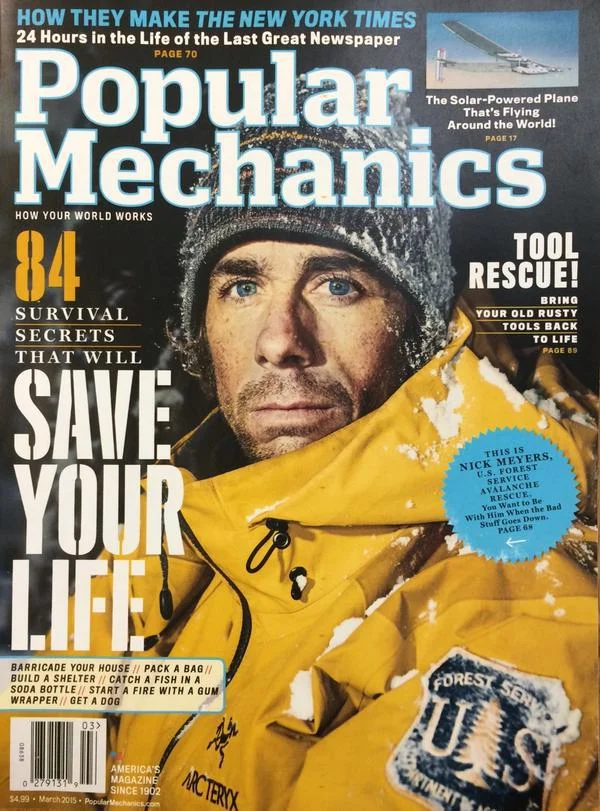
The recognition of high-altitude safety professionals reached a new milestone as Nick Meyers, the Director of the Mount Shasta Avalanche Center and the Lead Climbing Ranger for the Mount Shasta Ranger District, was featured on the cover of Popular Mechanics magazine. This placement highlights the critical intersection of technical engineering, survival science, and the rigorous physical demands of mountain rescue operations. Meyers, a veteran of the United States Forest Service (USFS), has become a leading voice in avalanche education and alpine safety, managing one of the most active and geologically complex volcanic peaks in the Cascade Range. The feature, titled "10 Survival Essentials an Avalanche Rescue Expert Always Carries," serves as both a profile of Meyers’ career and a practical guide for the increasing number of backcountry enthusiasts entering high-risk environments.
Professional Background and the Mount Shasta Context
Nick Meyers has spent over a decade navigating the volatile slopes of Mount Shasta, a 14,179-foot stratovolcano located in Northern California. As the Lead Climbing Ranger, his responsibilities encompass a broad spectrum of duties, ranging from public education and trail maintenance to high-stakes search and rescue (SAR) missions. Simultaneously, as the Director of the Mount Shasta Avalanche Center (MSAC), Meyers oversees the collection of snowpack data and the issuance of daily avalanche bulletins during the winter and spring months.
Mount Shasta represents a unique challenge for safety officials. Unlike many other peaks in the lower 48 states, Shasta stands as an isolated mass, creating its own weather patterns. It attracts approximately 15,000 to 20,000 climbers and skiers annually, many of whom attempt the ascent via Avalanche Gulch, a route prone to significant rockfall and snow slides. The dual role held by Meyers is essential for maintaining a cohesive safety net for these visitors, ensuring that the same team forecasting the risks is also the team responding when those risks result in emergencies.
The Popular Mechanics Feature: A Focus on Survival Technology
The cover story in Popular Mechanics transitioned from a biographical look at Meyers’ life on the mountain to a technical analysis of the gear required to survive in sub-zero, high-altitude conditions. The "10 Survival Essentials" identified by Meyers are not merely tools of convenience but are engineered solutions to the specific physiological and environmental threats posed by the alpine zone.
Among the items highlighted were the "Holy Trinity" of avalanche safety: the beacon, probe, and shovel. Meyers emphasized that while the technology behind digital multi-antenna transceivers has advanced significantly, the human element—training and muscle memory—remains the most critical factor in a successful rescue. The article also delved into the specifics of emergency communication, highlighting the shift from traditional radio frequency to satellite-based messengers like the Garmin inReach, which allow for two-way communication in "dead zones" where cellular service is non-existent.
Beyond electronic aids, the feature examined the importance of low-tech reliability. This includes high-calorie density nutrition, specialized layering systems designed for moisture management, and the use of robust, field-repairable stoves. By featuring these items in a publication focused on mechanics and technology, the article underscored the fact that survival in the wilderness is a discipline rooted in the understanding of physical systems and mechanical failure points.
Chronology of an Expert Career
The path to the cover of a national magazine was built on years of incremental contributions to the field of snow science. Meyers’ career at Mount Shasta began in the early 2000s, during a period when backcountry skiing and splitboarding were beginning to see a surge in popularity.
- Early 2000s: Meyers joins the Mount Shasta Ranger District, beginning his tenure as a seasonal ranger and developing an intimate knowledge of the mountain’s varied aspects and micro-climates.
- 2010-2015: As the popularity of the mountain grew, Meyers moved into leadership roles. He became instrumental in professionalizing the Mount Shasta Avalanche Center, expanding its fundraising efforts through the Friends of the Mount Shasta Avalanche Center (FMSAC) non-profit arm.
- 2015: The publication of the Popular Mechanics feature. This year marked a significant increase in national media attention for the USFS climbing ranger program, positioning Meyers as a spokesperson for the "modern woodsman" archetype—one who combines traditional grit with modern data analysis.
- Present Day: Meyers continues to lead the MSAC, integrating newer technologies such as remote weather stations and automated snow sensors to provide more accurate, real-time data to the public.
Supporting Data: The Rising Stakes of Avalanche Safety
The feature on Nick Meyers comes at a time when avalanche safety data suggests a growing need for expert intervention. According to the Colorado Avalanche Information Center (CAIC), which compiles national statistics, the United States averages approximately 27 avalanche fatalities per year. However, the number of "close calls"—incidents where individuals are caught or buried but survive—has risen in tandem with the sale of backcountry gear.
Data from the Snowsports Industries America (SIA) indicates that sales of alpine touring (AT) equipment and splitboards have seen double-digit growth over the last decade. This influx of new users into the backcountry often outpaces the availability of formal avalanche education. The work of directors like Meyers is vital because the MSAC provides the primary educational infrastructure for Northern California. In a typical season, the MSAC website receives hundreds of thousands of hits, demonstrating the public’s reliance on professional forecasting to mitigate risk.
Furthermore, search and rescue statistics for Mount Shasta indicate that the majority of incidents occur during the "shoulder seasons" (late spring and early summer), when snow bridges weaken and rockfall increases. Meyers’ expertise is particularly focused on these transitional periods, where the "mechanics" of the mountain are at their most unpredictable.
Official Responses and Community Impact
The response to Meyers’ appearance on the cover of Popular Mechanics has been overwhelmingly positive within the professional mountaineering community and the U.S. Forest Service. Officials from the Shasta-Trinity National Forest released statements commending Meyers for his dedication and for bringing national attention to the rigorous work performed by climbing rangers.
"Nick Meyers embodies the professionalism and expertise that our rangers strive for," noted a representative for the Forest Service. "His ability to communicate complex safety information to a broad audience, as seen in Popular Mechanics, is a major asset to public land management."
The local community in the town of Mt. Shasta has also celebrated the recognition. For a region that relies heavily on outdoor tourism, having a nationally recognized expert at the helm of its safety operations provides a level of confidence to visiting climbers. The Friends of the Mount Shasta Avalanche Center noted that such high-profile coverage helps in their mission to raise funds for the center, which operates largely on a combination of federal budget allocations and community donations.
Analysis of Implications for Backcountry Safety
The inclusion of an avalanche expert in a mainstream technology and mechanics magazine signals a shift in how the general public perceives outdoor safety. It moves the conversation away from "adventure" and toward "risk management" and "systems engineering." This is a crucial distinction for the future of mountain safety.
By focusing on the gear and the expertise of Nick Meyers, the article reinforces the concept that the wilderness is an environment where equipment must be understood as part of a life-support system. For the USFS, this type of exposure is invaluable. It humanizes the regulatory and safety aspects of land management, presenting the ranger not just as an enforcement officer, but as a highly skilled technician and rescuer.
Furthermore, Meyers’ feature highlights the evolving role of the "Lead Ranger" in the 21st century. Today’s rangers are expected to be meteorologists, first responders, educators, and public relations liaisons. The complexity of Meyers’ gear—as detailed in the article—mirrors the complexity of his professional responsibilities.
As climate change continues to alter snowpack patterns and increase the frequency of extreme weather events, the expertise provided by professionals like Nick Meyers will become even more critical. The Popular Mechanics cover serves as a reminder that while technology can provide the tools for survival, it is the experience and decision-making of the individual that remains the ultimate survival essential. The recognition of Nick Meyers is, by extension, a recognition of the entire community of avalanche professionals who work behind the scenes to keep the public safe in the world’s most vertical and volatile landscapes.
