

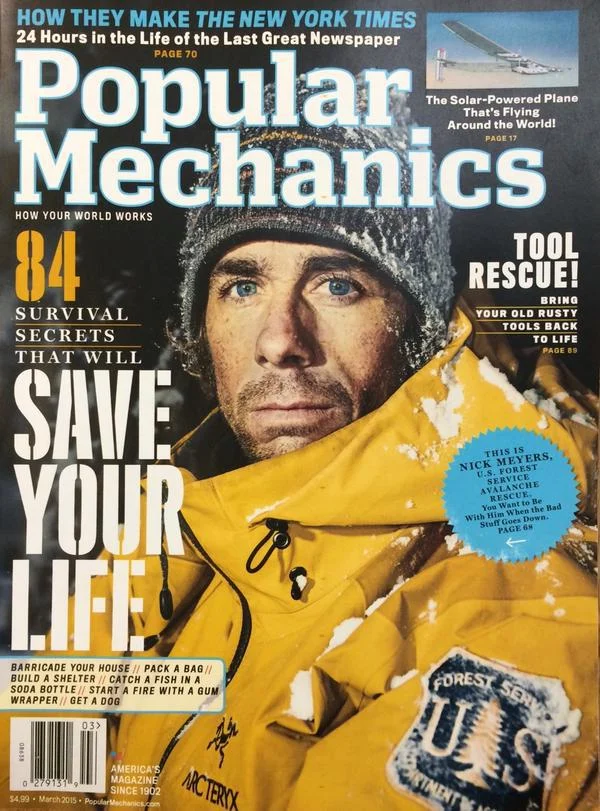
Nick Meyers, a prominent figure in mountaineering safety and a seasoned expert in avalanche preparedness, has achieved significant national recognition through his appearance on the cover of the esteemed Popular Mechanics magazine. Meyers, who holds the dual roles of Director of the Mount Shasta Avalanche Center and Lead Climbing Ranger on Mount Shasta, was featured in the publication for his in-depth knowledge and practical experience in surviving and rescuing individuals from treacherous avalanche conditions. The feature highlights Meyers’ dedication to safety in extreme environments and his role in protecting those who venture into the often-unforgiving mountain landscapes.
The Significance of the Popular Mechanics Feature
The inclusion of Nick Meyers on the cover of Popular Mechanics is a testament to the growing public interest in outdoor recreation safety and the specialized skills required to navigate hazardous terrains. Popular Mechanics, a magazine with a long-standing reputation for its focus on science, technology, and practical applications, chose to spotlight Meyers’ expertise in its pages, underscoring the critical importance of avalanche rescue knowledge. This prominent placement introduces a broad audience to the complex challenges faced by mountain professionals and the essential gear and techniques that can mean the difference between life and death.
The article within Popular Mechanics delves into the specific survival essentials that an avalanche rescue expert like Meyers consistently carries. This detailed examination provides readers with practical insights into preparedness, not just for professional rescuers, but also for recreational enthusiasts who may encounter similar environments. The magazine’s editorial decision to feature Meyers likely stems from his extensive experience on Mount Shasta, a stratovolcano that presents unique meteorological and geological challenges, including a high propensity for avalanches, especially during winter and spring months.
Background: Mount Shasta and Avalanche Risks
Mount Shasta, a majestic peak in Northern California, stands at 14,179 feet and is a popular destination for climbers, skiers, and snowboarders. However, its imposing stature and diverse weather patterns also make it a region with significant avalanche risks. The Mount Shasta Avalanche Center, under Meyers’ directorship, plays a vital role in monitoring snowpack conditions, forecasting avalanche danger, and disseminating crucial safety information to the public. The center’s work is instrumental in preventing accidents and ensuring the safety of individuals engaging in activities on and around the mountain.
Avalanches are dynamic and potentially catastrophic events, triggered by a combination of factors including steep slopes, accumulated snowpack, and specific weather conditions. The U.S. Forest Service, which often partners with avalanche centers, reports that avalanche fatalities, while statistically rare compared to other outdoor activities, can be devastating. The National Avalanche Center (NAC) database, a comprehensive resource for avalanche incidents, indicates that human factors are a primary trigger in a significant percentage of avalanche accidents. This underscores the importance of education, awareness, and the expertise of individuals like Meyers.
The Mount Shasta region experiences substantial snowfall, often compounded by strong winds that create unstable snow layers. This necessitates constant monitoring and analysis of snowpack stability. Meyers and his team at the Mount Shasta Avalanche Center are responsible for conducting snow pit analyses, observing weather patterns, and utilizing advanced forecasting models to assess the likelihood of avalanches. Their expertise is not only theoretical but also deeply rooted in practical, on-the-ground experience, often involving dangerous expeditions to gather crucial data.
Chronology of Recognition
While the exact date of the Popular Mechanics feature’s publication is not specified in the provided text, the news of Nick Meyers’ cover story likely circulated through professional networks and outdoor enthusiast communities. The recognition from a mainstream publication like Popular Mechanics represents a culmination of years of dedicated work by Meyers in the field of avalanche safety and mountaineering rescue. His role as Lead Climbing Ranger on Mount Shasta involves not only routine patrols and safety checks but also the critical responsibility of responding to emergencies, including avalanche rescues.
The Popular Mechanics article itself, as referenced, is titled "10 Survival Essentials an Avalanche Rescue Expert Always Carries." This title suggests a focus on practical, actionable advice, making the content highly relevant to a wide readership. The magazine’s editorial process would have involved extensive research, likely including interviews with Meyers and potentially his colleagues, to ensure accuracy and depth. The cover placement signifies a significant editorial decision to elevate this topic and the individual at its forefront.
Supporting Data and Expert Analysis
The effectiveness of avalanche safety measures and the importance of expert knowledge are supported by data. According to the Colorado Avalanche Information Center (CAIC), a leading resource in avalanche education and forecasting, human error is a contributing factor in over 90% of avalanche fatalities. This statistic highlights the critical role of education, decision-making, and the experience of professionals like Meyers.
The gear and techniques discussed in the Popular Mechanics article would likely encompass a range of essential items for avalanche survival. These typically include:
- Avalanche Transceiver: A vital electronic device used to locate buried victims.
- Probe: A collapsible pole used to pinpoint the exact location of a buried victim once a transceiver signal is detected.
- Shovel: A sturdy, collapsible shovel used to excavate a buried victim.
- Appropriate Clothing and Layers: Essential for maintaining body temperature in extreme cold.
- Navigation Tools: Including GPS devices, map, and compass, crucial for orientation in challenging conditions.
- First-Aid Kit: Comprehensive and tailored for wilderness environments.
- Emergency Shelter: Such as a bivy sack or emergency blanket.
- Communication Devices: Satellite phones or personal locator beacons (PLBs) for areas without cell service.
- Sufficient Food and Water: To sustain energy levels during extended periods in the wilderness.
- Knowledge of Snowpack and Weather: The most critical "tool" of all, enabling informed decision-making.
Meyers’ expertise would be invaluable in explaining not only the function of these tools but also the nuanced understanding required to interpret avalanche conditions. This includes recognizing signs of instability, such as recent avalanche activity, persistent weak layers in the snowpack, and specific weather patterns like rapid temperature increases or heavy snowfall.
Official Responses and Community Impact
The recognition of Nick Meyers by Popular Mechanics serves as an indirect endorsement of the work undertaken by the Mount Shasta Avalanche Center and the broader U.S. Forest Service initiatives in outdoor safety. While specific official statements from the U.S. Forest Service regarding this particular feature are not provided, such recognition typically garners positive attention for the agency and its employees. It reinforces the value of specialized roles like avalanche forecasting and mountain rescue.
The broader impact of this feature extends to the outdoor recreation community. By highlighting Meyers’ expertise, Popular Mechanics encourages a greater emphasis on education and responsible behavior among skiers, snowboarders, climbers, and hikers. This can lead to a reduction in avalanche-related incidents and fatalities. The article provides a tangible resource for individuals seeking to improve their understanding of avalanche safety, potentially inspiring them to take courses or seek out more information.
Broader Implications and Future Outlook
Nick Meyers’ presence on the cover of Popular Mechanics signifies a growing awareness of the critical role that specialized knowledge plays in ensuring safety in challenging environments. It elevates the importance of avalanche science and rescue techniques from a niche concern to a topic of broader public interest. This increased visibility can have several positive implications:
- Increased Funding and Support: Greater public awareness can translate into increased support for avalanche centers and safety initiatives, potentially leading to more resources for research, forecasting, and education.
- Enhanced Public Education: The feature can act as a catalyst for more individuals to seek out avalanche safety courses and resources, thereby reducing the overall risk of incidents.
- Professional Recognition: It provides significant recognition for the dedication and expertise of professionals like Meyers, attracting talent to the field of mountain safety and rescue.
- Technological Advancement: By showcasing essential gear and techniques, the article may also subtly encourage the development and adoption of new technologies in avalanche safety.
The presence of a professional like Meyers, deeply embedded in the practical realities of mountain rescue, on a publication like Popular Mechanics bridges the gap between theoretical knowledge and real-world application. It underscores that effective survival and rescue in extreme conditions are not solely about advanced technology but also about deep understanding, experience, and preparedness. This recognition is a valuable contribution to the ongoing efforts to make mountain environments safer for all who choose to explore them.
The blog post from the U.S. Forest Service, likely shared to celebrate Meyers’ achievement, would have provided an internal perspective and further details on his contributions. The direct link to the Popular Mechanics article allows readers to access the primary source of this recognition, providing them with the expert insights shared by Meyers himself. This collaborative approach to sharing information exemplifies a commitment to public safety and the dissemination of valuable knowledge. The image accompanying the original post, a photograph of Meyers, further personalizes this recognition, allowing readers to connect a face with the expertise being celebrated. This visual element, combined with the editorial content, creates a comprehensive narrative of Meyers’ significant contribution to the field of avalanche safety.
