

The landscape of snowsports instruction is continuously evolving, driven by a persistent quest for more effective and efficient teaching methodologies. At the heart of this evolution lies the challenge many instructors face: how to navigate a vast repertoire of drills and activities to pinpoint the most impactful ones for individual students. This challenge is precisely what J. Scott McGee and Jacob Crawford address in their recent contribution to the Fall 2025 issue of 32 Degrees, proposing a dynamic reinterpretation of the Static, Simple, Complex, Applied (SSCA) strategy outlined in the foundational Teaching Snowsports Manual. Their work promises to refine how instructors approach movement analysis and introduce new movement patterns, offering a structured yet flexible framework to enhance student learning and instructor efficacy across all levels of snowsports.
The Foundation of Structured Snowsports Education
For decades, organizations such as the Professional Ski Instructors of America and American Association of Snowboard Instructors (PSIA-AASI) have been instrumental in standardizing and elevating snowsports instruction. Their comprehensive Teaching Snowsports Manual serves as a cornerstone reference for instructors, detailing pedagogical principles and practical techniques. Within this manual, systematic teaching models are presented to ensure a consistent, high-quality learning experience for students. One such model, the Static, Simple, Complex, Applied (SSCA) four-phase process, is a fundamental strategy for introducing new movements to students.
The SSCA model, in its traditional linear progression, is designed to break down complex motor skills into manageable steps, allowing students to build proficiency incrementally. The Static phase initiates the learning process by introducing a movement without any sliding motion. This allows students to concentrate solely on the sensory experience and the precise mechanics of the movement, free from the added demands of balance and external forces encountered while in motion. For instance, an instructor might ask a student to practice tipping their knees to engage ski edges while standing still on flat terrain.
Following this, the Simple phase transitions the newly introduced movement onto snow, but in a controlled, low-complexity environment. This could involve a traverse, a straight run, or a single turn, enabling students to become comfortable with the new movement pattern while gliding, without the cognitive load of linking multiple turns. This step is crucial for connecting the static, theoretical understanding to the practical sensation of movement on skis or a snowboard.
The Complex phase then challenges students to integrate the new movement into linked turns. This is where the skill begins to be truly owned, as students practice and refine the movement within the dynamic context of continuous turning. Drills focusing on specific fundamentals, like "railroad track arcs" to emphasize leg tipping and edging, are typically introduced here to reinforce the desired movement pattern.
Finally, the Applied phase brings the learning experience full circle, guiding students to incorporate the new movement into their "normal" skiing or riding in relevant terrain. This phase ensures that the learned skill is not isolated but becomes an integral part of their overall technique, reinforcing the learning in real-world scenarios that align with their personal goals. This structured progression has been a powerful tool, providing a clear pathway for skill acquisition and development.
A Dynamic Reinterpretation: Beyond Linear Progression
While the traditional linear SSCA progression offers a robust teaching framework, McGee and Crawford propose a more dynamic interpretation, viewing the four phases not merely as sequential steps but as versatile "lenses" and "building blocks" that can be strategically ordered and reordered to cater to the specific needs of each student. This innovative perspective transforms SSCA from a rigid pathway into an adaptive toolkit, significantly enhancing its utility for movement analysis (MA) and lesson planning.
This dynamic approach acknowledges that effective instruction often requires flexibility. Instead of strictly moving from Static to Applied, instructors can leverage different phases at various points in the lesson, particularly when diagnosing issues or reinforcing specific skills. This is especially pertinent given the diverse learning styles and existing skill sets that instructors encounter daily on the slopes. Studies in motor learning consistently show that while structured progressions are vital, the ability to adapt and personalize instruction leads to higher engagement and faster skill acquisition.
Movement Analysis Through the Applied Lens
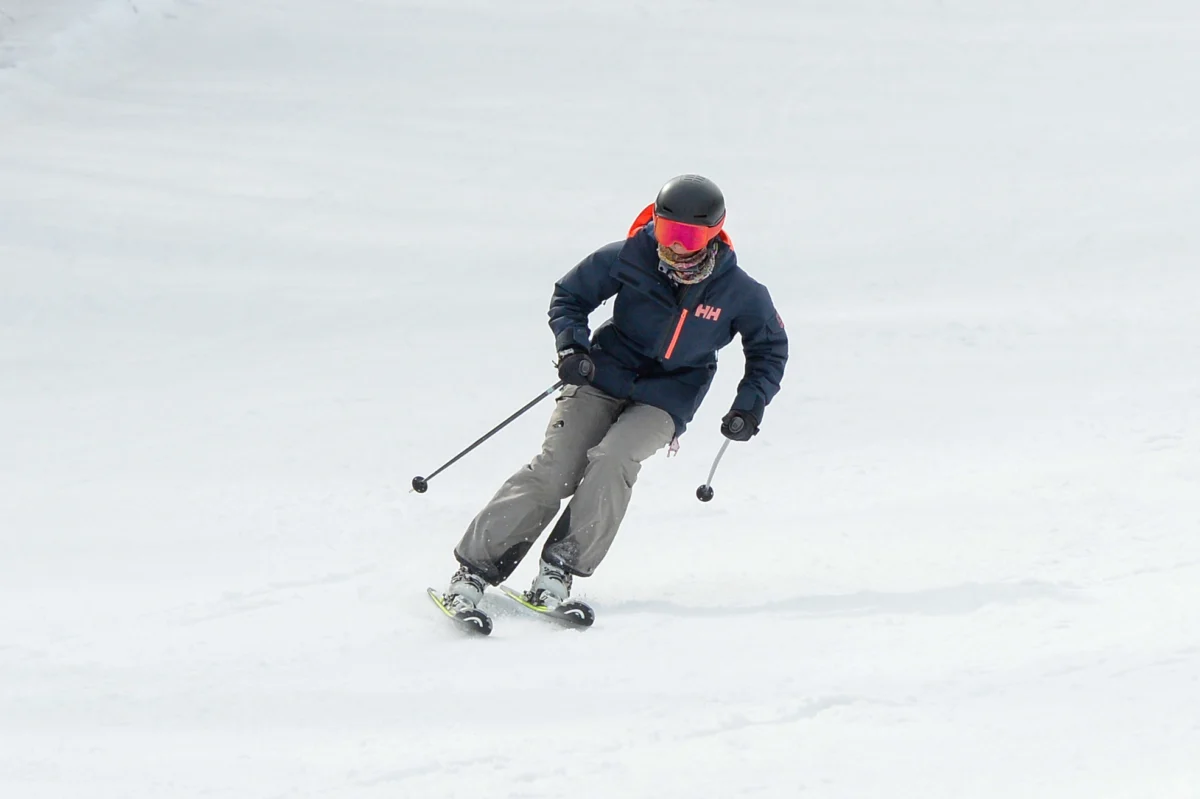
One of the most significant shifts proposed by McGee and Crawford is to commence movement analysis not from a theoretical standpoint, but directly through the Applied phase. When an instructor first observes a student, they are typically witnessing the student performing their "normal" skiing or riding—executing turns in the terrain they aspire to improve in. This could range from basic parallel turns on groomed slopes to advanced carving or navigating moguls.
Conducting the initial movement analysis in this applied setting offers several strategic advantages. Firstly, it immediately aligns the instructor’s observations with the student’s stated goals. By watching the student in their desired context, the instructor can more easily identify movements that, if made more effective or efficient, would have the greatest impact on achieving those goals. This goal-oriented approach fosters student motivation and provides clear relevance to the instruction. For instance, if a student wants to ski steeper terrain more confidently, observing their current technique on a moderate slope immediately highlights specific areas for improvement that directly relate to their objective.
Furthermore, utilizing the applied phase at the outset provides a tangible benchmark for progress. The last activity of the lesson can involve repeating the same turns in the same terrain, allowing students to visibly and experientially recognize the improvements they’ve made. This concrete demonstration of progress is a powerful motivator, reinforcing the value of the instruction. While the applied lens helps narrow down a list of potential areas for improvement, even this refined list often contains too many movements to address effectively in a single lesson. This necessitates a "higher resolution" lens to pinpoint the most critical intervention.
Achieving Precision with the Static Lens
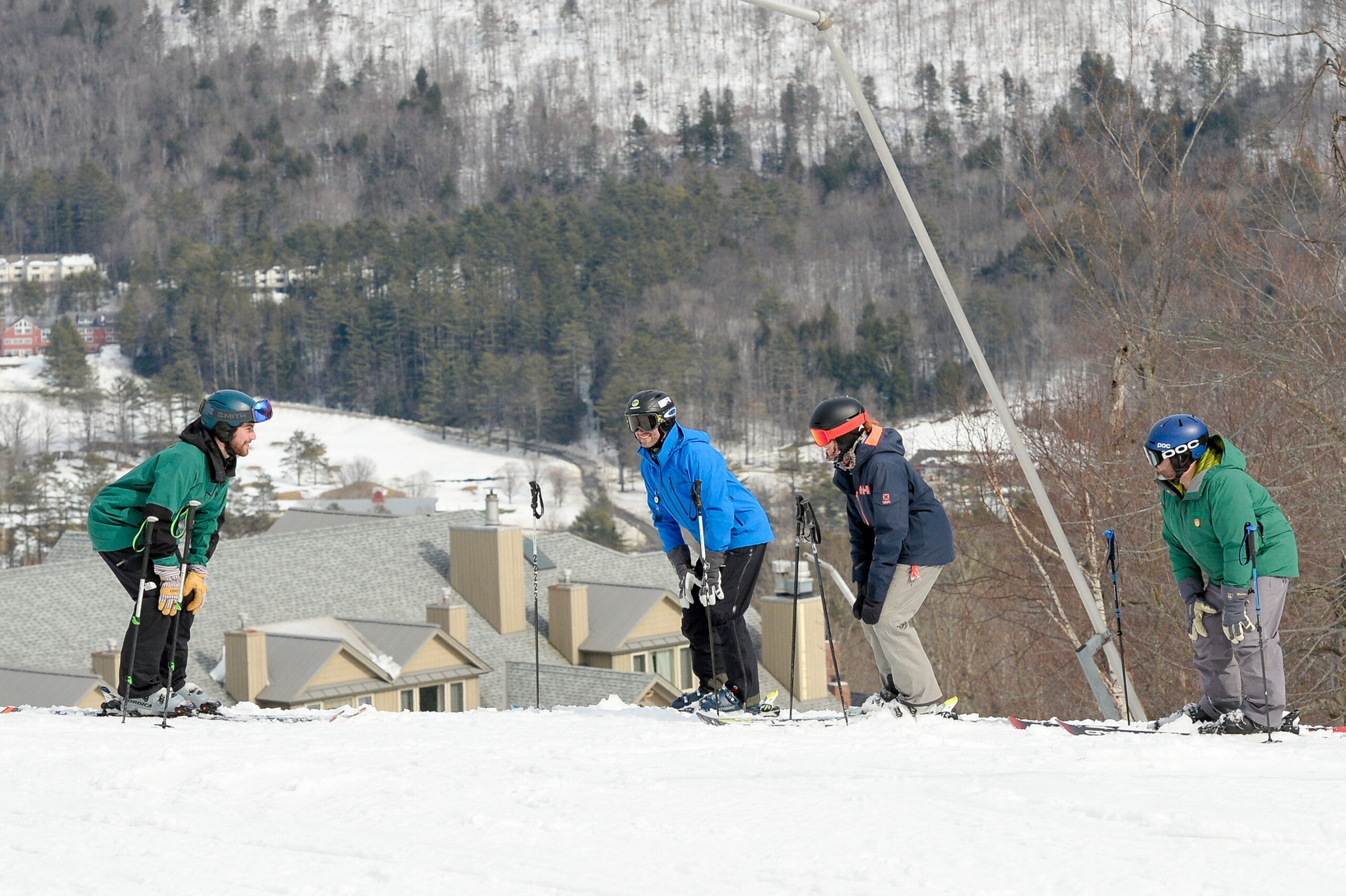
To achieve this higher resolution and identify the most impactful single movement to address, McGee and Crawford advocate for using the Static phase as a diagnostic lens. This involves asking a crucial question: "Can I replicate this observed movement while standing still?" If a movement cannot be isolated and replicated in a static position, it suggests that it has not yet been reduced to a single, identifiable cause-and-effect relationship.
The static phase excels at isolating these cause-and-effect relationships. By stripping away the complexities of speed, balance, and terrain, it allows both instructor and student to focus on the pure mechanics of a movement. For example, if an instructor observes a student struggling to achieve consistent edge angles (as illustrated in the example image where Heather shows different edge angles on her inside and outside skis), the static lens allows for a precise diagnosis. The instructor can demonstrate how tipping the legs directly influences the edge angles of the skis while standing still, perhaps even using hands to guide the knees. This helps the student feel and understand the direct correlation between a specific body movement and a ski performance outcome.
It is acknowledged that some dynamic movements are not entirely replicable statically without modification. Instructors might need to reduce the magnitude of the movement or use props or a friend for support. However, the core principle remains: the ability to isolate and demonstrate a single movement statically is key to understanding its fundamental cause-and-effect on ski performance. This precision allows instructors to focus on the single most impactful change that will unlock further progress for the student.
Bridging the Gap: Complex and Simple Phases in Action
Once the critical movement for change has been identified using the applied and static lenses, the Complex and Simple phases become the dynamic tools for implementing that change. This is where the instructor dips into their "bag of tricks," selecting drills and activities specifically designed to reinforce the desired movement pattern.
The Complex phase is where the new movement is practiced within the context of linked turns. Here, the instructor pulls out a drill—such as "railroad track arcs," "phantom turns," or "garlands"—that specifically emphasizes the fundamental or movement pattern in a turning context. The choice of drill is crucial; it must be directly relevant to the identified movement and allow for repetition and refinement. For example, if the static analysis revealed an issue with insufficient leg tipping, a complex phase drill would be chosen that exaggerates or simplifies the tipping action during linked turns, helping the student internalize the new pattern.
The Simple phase then acts as a crucial bridge, reducing the complexity of the chosen drill to a single turn, traverse, or straight run. This step is vital for clearly connecting the complex activity back to the new movement identified in the static phase. If a student is struggling with a complex drill, reverting to the simple phase allows them to isolate the specific part of the movement that needs attention, build confidence, and ensure they fully grasp the mechanics before re-integrating it into linked turns. This iterative process of moving between simple and complex helps solidify the new movement pattern, ensuring it is practiced correctly and effectively.
Broader Implications for Snowsports Education
This dynamic reinterpretation of the SSCA model by McGee and Crawford holds significant implications for the future of snowsports instruction. Firstly, it empowers instructors with a more flexible and diagnostic framework, moving beyond a rigid checklist approach to a more responsive, student-centered methodology. This adaptability is critical in an environment where students present with varying abilities, learning styles, and specific goals.
Secondly, by providing clearer "lenses" for movement analysis, the model enhances instructor effectiveness. The ability to precisely identify the most impactful single movement to change, and then systematically introduce and reinforce that change, leads to more targeted and efficient lessons. This, in turn, translates to faster progress for students, greater satisfaction with their learning experience, and ultimately, increased retention in snowsports. Industry data consistently shows that positive learning experiences are key drivers for continued participation in recreational activities.
Furthermore, this approach contributes to the professional development of instructors. By encouraging a deeper understanding of cause-and-effect relationships in skiing and riding, it fosters a more analytical and insightful teaching style. Certification bodies like PSIA-AASI continuously seek to refine their teaching standards, and methodologies that enhance diagnostic skills and adaptive lesson planning are invaluable. The availability of resources like the First Chair Podcast episode, "Build Better Lessons: A Smarter Way to Create Progressions," featuring McGee and Crawford, further underscores the industry’s commitment to disseminating such innovative pedagogical approaches.
The dynamic SSCA model also implicitly promotes safety. By ensuring that new movements are introduced and practiced in controlled, progressive steps, students are less likely to be overwhelmed or attempt skills beyond their current capabilities, thereby reducing the risk of injury. A clear, structured progression builds confidence and competence, essential components for safe and enjoyable snowsports participation.
Conclusion
J. Scott McGee and Jacob Crawford’s dynamic approach to the Static, Simple, Complex, Applied model represents a significant refinement in snowsports instruction. By reframing the SSCA phases as diagnostic lenses and adaptable building blocks, they offer instructors a powerful methodology for precise movement analysis and effective skill development. This strategy, rooted in established pedagogical principles yet offering enhanced flexibility, promises to optimize the learning journey for countless snowsports enthusiasts, ensuring that every lesson is tailored, impactful, and ultimately, helps students achieve their goals on the mountain. As snowsports continue to evolve, innovative teaching frameworks like this will remain crucial for fostering a new generation of skilled and confident skiers and riders.
