

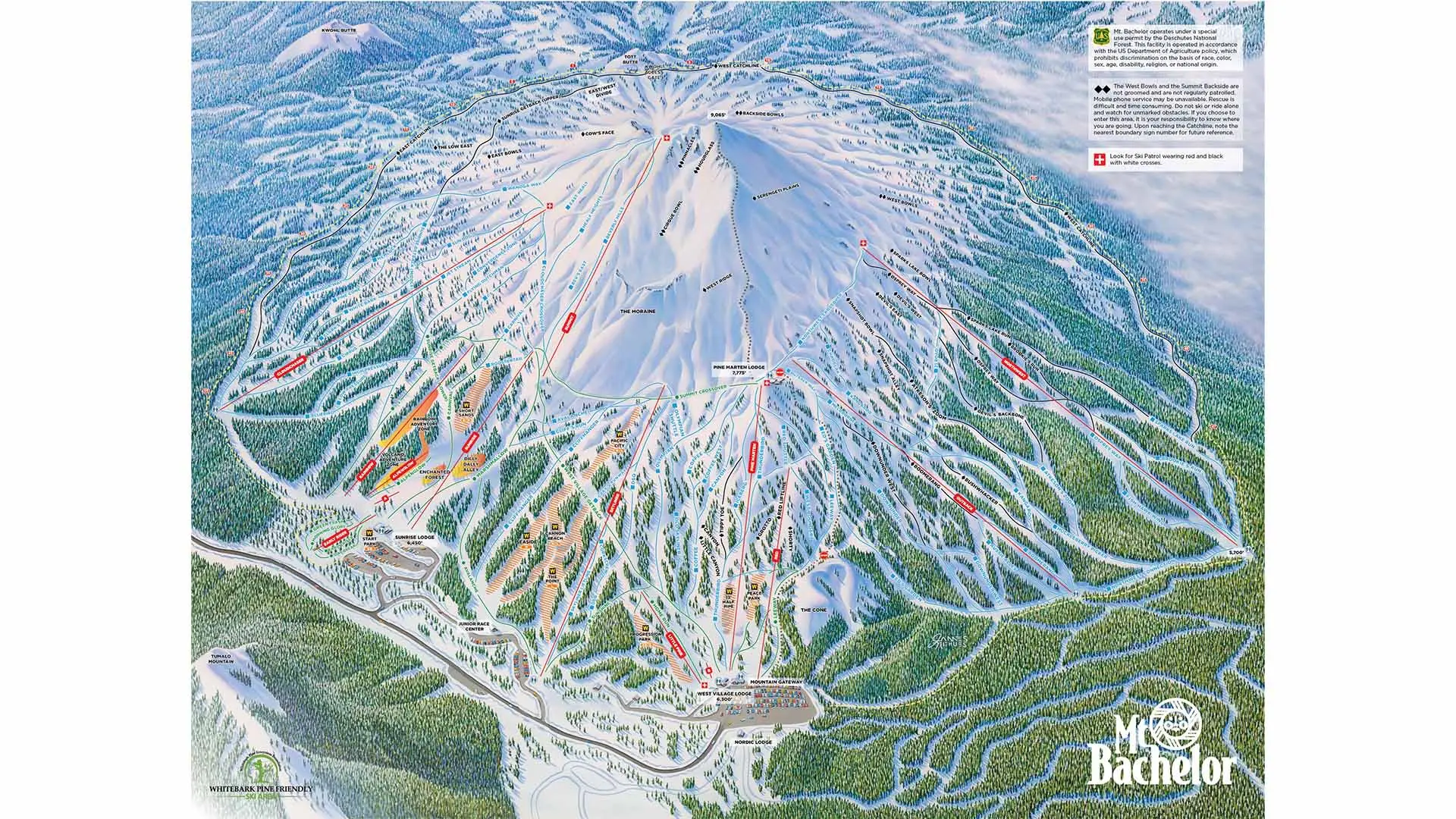
The Pacific Northwest ski community is enveloped in grief following a fatal accident at Mt. Bachelor, a renowned ski resort in Central Oregon. On Monday, March 9, 2026, Nigel Barry Young, a 65-year-old resident of Portland, Oregon, succumbed to injuries sustained during a skiing incident on an intermediate trail. The tragic event, which unfolded on the popular Wanoga Way run, serves as a stark reminder of the inherent risks associated with mountain sports, even on seemingly less challenging terrain.
The Incident: A Detailed Account
The accident occurred at approximately 2:22 p.m. on the aforementioned Wanoga Way trail, an intermediate slope situated on the east side of Mt. Bachelor, accessible via the Cloudchaser lift. Mr. Young was reportedly skiing with three friends when he lost control and crashed. His companions, who were skiing ahead of him at the time, did not directly witness the fall, leaving the precise dynamics of the incident under investigation. The trail, known for its consistent pitch and generally groomed conditions, is a favorite among intermediate skiers and families, making the severity of this accident particularly unsettling for the local ski community.
The weather conditions at the time of the incident were reported as typical for early March, with clear skies and moderate temperatures, suggesting that external environmental factors were unlikely to be primary contributors to the crash. The snow surface, while generally well-maintained, can present varying conditions, including firm patches or unexpected soft spots, which can challenge even experienced skiers. Mr. Young was confirmed to be wearing a helmet, a crucial piece of safety equipment widely advocated by ski resorts and safety organizations. Despite this preventative measure, the injuries he sustained proved to be unsurvivable.
Emergency Response and Pronouncement of Death
Upon receiving the report of the accident, Mt. Bachelor Ski Patrol initiated an immediate and rapid response. Ski Patrol members, who are highly trained in emergency medical care and mountain rescue operations, arrived at the scene swiftly. They found Mr. Young without a pulse and not breathing, indicating a critical medical emergency.

The patrollers immediately commenced extensive cardiopulmonary resuscitation (CPR) and other life-saving measures. Recognizing the gravity of the situation, they concurrently coordinated with Bend Fire & Rescue medics, who were dispatched to provide advanced life support. Despite the combined, rigorous efforts of both Mt. Bachelor Ski Patrol and the Bend Fire & Rescue medical team, Mr. Young’s condition did not improve. At 2:56 p.m., just 34 minutes after the initial report, Nigel Barry Young was tragically pronounced dead at the scene. The efficiency and dedication of the emergency responders, though unable to change the outcome, underscore the critical role they play in ensuring skier safety and providing immediate aid.
Ongoing Investigation and Official Statements
The Deschutes County Sheriff’s Office has taken the lead in the investigation into the exact cause and circumstances surrounding Mr. Young’s fatal fall. This is standard procedure for any fatality occurring within the county’s jurisdiction. The Sheriff’s Office confirmed Mr. Young’s helmet use and stated that the nature of his injuries was such that they were not survivable. While the lack of direct witnesses presents a challenge, investigators are diligently working with Mt. Bachelor staff, reviewing any available information, including potential resort surveillance footage, forensic analysis of the accident site, and interviews with his skiing companions, to piece together the sequence of events that led to the crash.
A spokesperson for Mt. Bachelor issued a statement expressing profound sorrow over the tragic loss. "Our deepest condolences go out to the family and friends of Mr. Young during this incredibly difficult time," the statement read. "The safety and well-being of our guests and employees is our absolute highest priority. We are fully cooperating with the Deschutes County Sheriff’s Office in their investigation and will review our own internal protocols in light of this unfortunate event. This is a heartbreaking incident for our entire Mt. Bachelor family and the wider ski community." Such statements are typical in the aftermath of a resort fatality, balancing sympathy with an affirmation of safety commitments and cooperation with authorities.
Contextualizing Skiing Safety and Risks
Skiing, while a beloved recreational activity for millions, inherently carries risks. The National Ski Areas Association (NSAA) compiles annual statistics on skier and snowboarder fatalities and injuries across U.S. resorts. While skiing fatalities are relatively rare compared to the total number of participant days, they serve as potent reminders of the potential dangers. Over the past decade, the average number of fatalities in the U.S. has hovered around 35-40 per season, out of approximately 55-60 million skier visits annually. This translates to a fatality rate of roughly 0.6 to 0.7 per million skier visits, making it statistically less dangerous than some other common activities, but not without its serious hazards.
Head injuries remain a significant concern in skiing and snowboarding. The widespread adoption of helmets has dramatically reduced the incidence and severity of head trauma. Studies by organizations like the NSAA indicate that helmet use can reduce the risk of head injury by 30-50%. Mr. Young’s decision to wear a helmet, while ultimately not preventing a fatal outcome in this specific instance, highlights a responsible approach to mountain safety that is increasingly common among skiers of all ages and abilities. However, helmets are designed to mitigate impact, not eliminate all risks, particularly those associated with high-energy impacts or other complex trauma.

Intermediate trails like Wanoga Way are generally designed to be manageable for skiers who have progressed beyond beginner slopes. They typically feature moderate gradients, wider paths, and are often groomed to provide a consistent surface. However, even on such trails, speed control, awareness of changing snow conditions, and maintaining proper technique are paramount. Collisions with trees, other skiers, or static objects, as well as falls due to loss of control, can occur regardless of a trail’s difficulty rating. The inherent variability of mountain environments means that conditions can change rapidly, and even familiar runs can present unexpected challenges.
Mt. Bachelor: A Community Hub
Mt. Bachelor, situated on the eastern flank of the Cascade Range, is Central Oregon’s premier ski and snowboard destination. Known for its extensive terrain, often abundant snowfall, and unique volcanic landscape, it attracts visitors from across the Pacific Northwest and beyond. The resort operates over 4,300 acres of lift-accessible terrain, with a diverse range of runs catering to all skill levels, from gentle beginner slopes to challenging expert steeps and expansive glades. The Cloudchaser lift, which serves the Wanoga Way trail, is a high-speed quad that opened in 2016, significantly expanding access to the resort’s east side and popularizing runs in that area.
Beyond its physical attributes, Mt. Bachelor fosters a vibrant and tight-knit community. Many local residents consider it their "home mountain," cultivating a strong sense of camaraderie among its patrons and staff. This communal spirit makes incidents like Mr. Young’s death particularly impactful, reverberating through the lives of those who frequent the slopes and call Central Oregon home. The resort also plays a significant economic role in the region, supporting numerous jobs and drawing tourism dollars, making its operational integrity and safety record matters of public interest.
Broader Implications and a Somber Reminder
The news of Nigel Barry Young’s passing has resonated deeply within the broader action sports and outdoor community, especially for outlets like Teton Gravity Research (TGR), which has strong ties to Mt. Bachelor. The resort is famously the home mountain for TGR legend and local icon, Sage Cattabriga-Alosa, a professional skier known for his innovative style and deep appreciation for mountain environments. Sage has frequently lauded Mt. Bachelor for its distinctive "flows" and the unique character of its terrain and community. The occurrence of such a tragedy on these familiar and cherished slopes serves as a potent and heavy reminder of the unpredictable nature of the mountains.
This incident underscores that even in controlled resort environments, and on runs designated as intermediate, the mountains demand constant respect and vigilance. Whether one is navigating the wild, untracked expanses of the backcountry or cruising a well-groomed, familiar trail like Wanoga Way, the potential for unforeseen circumstances leading to serious injury or fatality always exists. Factors such as a momentary lapse in concentration, an unexpected change in snow texture, or a subtle error in judgment can have profound consequences.

The ski community, while grieving, often uses such tragedies as moments for collective introspection and renewed commitment to safety. Discussions inevitably arise about the importance of skill assessment, appropriate speed management, equipment maintenance, and understanding one’s own limits. While helmets are vital, they are part of a larger safety ecosystem that includes individual responsibility, resort safety measures, and mutual awareness among skiers.
As the investigation continues, the focus remains on understanding what transpired to prevent future incidents where possible, and to reinforce safety messaging. In the interim, the thoughts and condolences of the entire Mt. Bachelor community, the Portland area, and the wider world of snow sports extend to the family and friends of Nigel Barry Young. His untimely passing serves as a poignant and enduring reminder that the beauty and thrill of the mountains, while immensely rewarding, are always accompanied by an imperative for caution, respect, and preparedness.
